Needy Girl Overdose anime vs manga chapters comparison
There’s something deeply unsettling—and weirdly addictive—about watching Ame-chan spiral. Whether you first discovered her through the game, manga, or the recent anime, one thing is clear: this isn’t just another “cute girl with problems” story.
It’s a brutally honest look at internet fame, validation, and mental instability wrapped in pastel chaos.
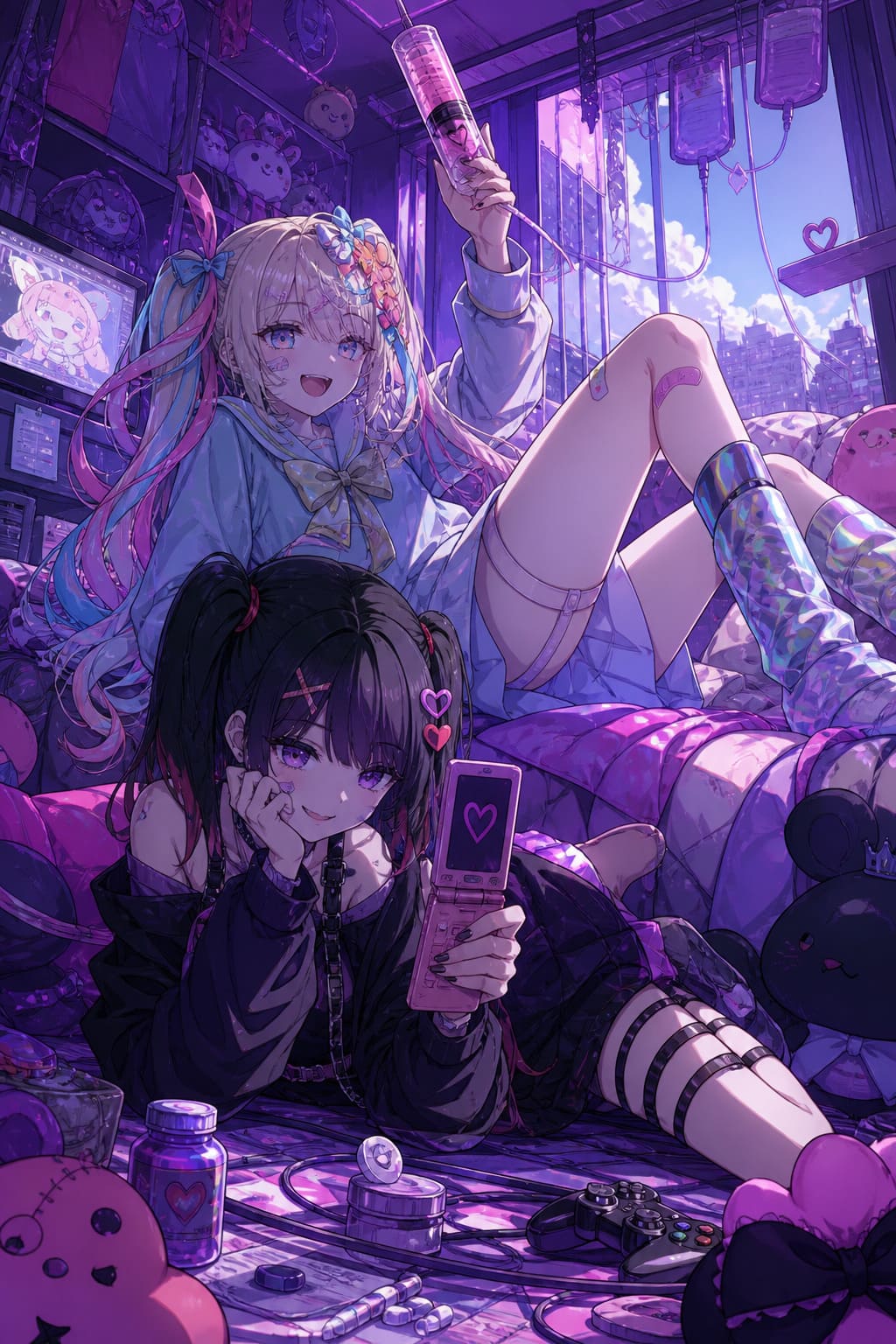
With the release of the anime adaptation, fans started debating hard: does the manga or the anime capture KAngel’s madness better?
After spending time with both, it becomes obvious that this isn’t a simple “one is better” situation. They feel like two very different interpretations of the same broken character.
Does Minato Kusunoki Find Out He’s an Exorcist? Kusunoki’s Garden of Gods Plot Twist Explained
The Origin: Why the Game Feels Impossible to Adapt
Before comparing anything, it’s important to understand the foundation. The original experience isn’t linear. It’s messy, fragmented, and full of choices that lead to wildly different outcomes. One moment you’re managing Ame’s schedule, the next you’re watching her descend into obsession or paranoia.
That creates a core problem for any adaptation. There is no single “true” story. Ame is not a stable character. And most importantly, the player is part of the experience. Both the manga and anime had to choose between following one route or creating something entirely new.
The Manga — A More “Human” Drama
The manga adaptation feels surprisingly grounded. It shifts the focus toward a more traditional narrative, making it easier to follow but also changing the emotional tone in subtle ways.
One of the biggest differences is P-chan. In the manga, he is a real, physical character—a former idol producer trying to guide or fix Ame. This immediately changes the dynamic, turning the story into something closer to a toxic relationship drama rather than pure psychological horror.
The tone leans more into slice-of-life moments mixed with uncomfortable humor. You still see Ame’s instability, but it’s framed through interactions rather than isolation. This makes her more relatable, but also less terrifying.
The trade-off is clear. By making P-chan real, the manga removes some of the loneliness that defined the original experience. Ame feels less like someone trapped in her own mind and more like someone stuck in a complicated relationship.
The Anime — Pure Psychological Chaos
The anime takes the opposite approach and leans heavily into the psychological aspects. Instead of feeling like a retelling, it comes across as a continuation or alternate route where Ame has already reached a high level of fame.
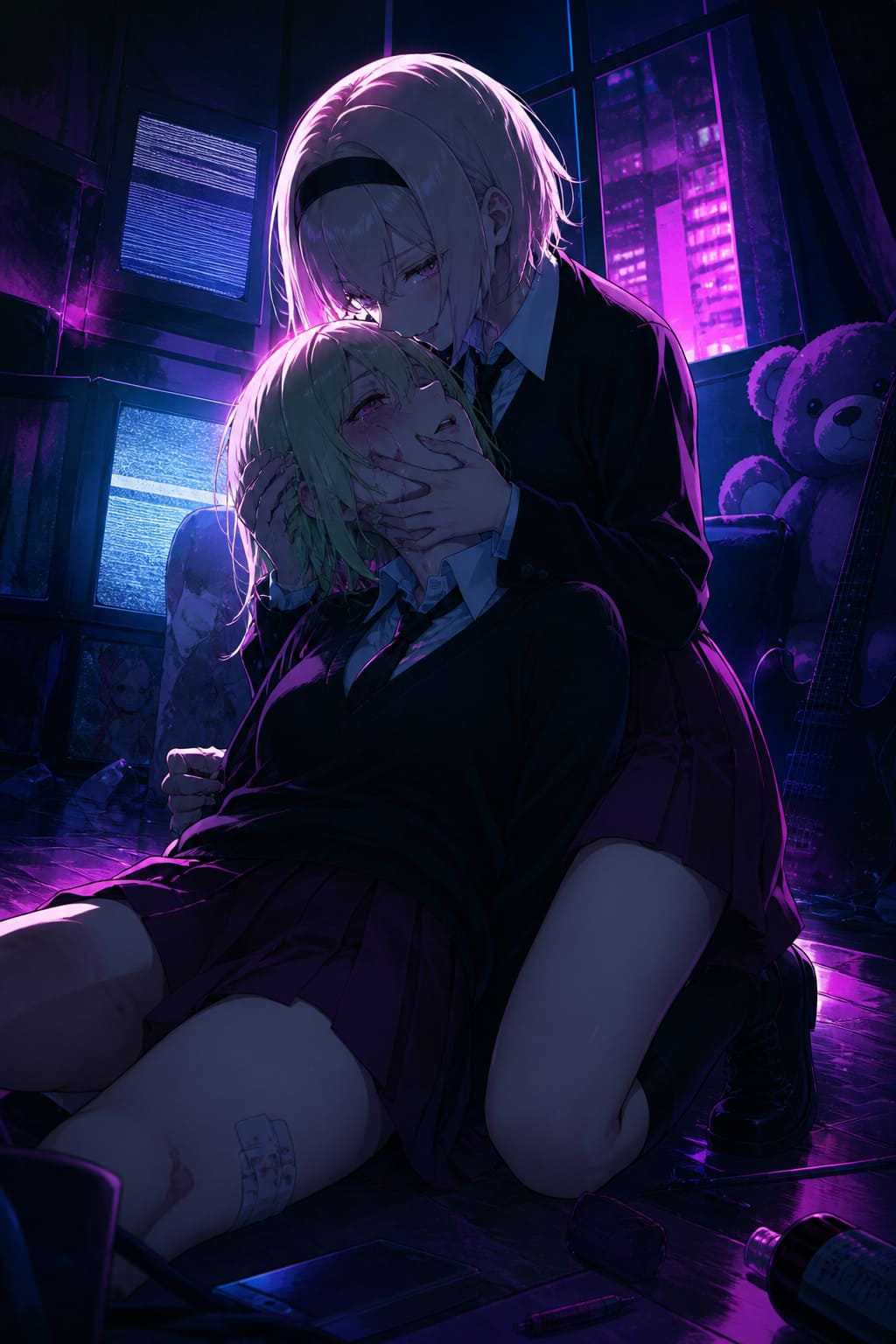
Here, the tone is much darker and more intense. Fame doesn’t stabilize Ame—it pushes her further into instability. The pressure of maintaining her persona becomes overwhelming, and the line between Ame and KAngel starts to blur even more.
P-chan is handled very differently. Rather than being clearly real, he feels ambiguous. There is a strong suggestion that he might be more of a psychological construct than a physical person. This brings back the isolation that made the original so disturbing.
Visually, the anime stands out immediately. It uses glitch effects, UI overlays, chat messages, and aggressive color shifts to simulate the digital environment. The contrast between bright streaming scenes and the dull reality of Ame’s life creates a constant emotional tension.
Manga vs Anime — Key Differences
The differences between the two versions are easier to understand when placed side by side.
| Aspect | Manga | Anime |
| Story Structure | Linear narrative | Feels like sequel or alternate route |
| P-chan | Real person | Possibly imaginary |
| Tone | Drama with slice-of-life elements | Psychological and intense |
| Focus | Relationship dynamics | Mental collapse and fame pressure |
| Visual Style | Expressive but grounded | Stylized, glitch-heavy, immersive |
| Accessibility | Easier to follow | More abstract and demanding |
Which One Feels More Authentic?
This depends on what you’re looking for. The manga feels like a version of the story where everything exists in a more realistic framework. The anime feels like a distorted reflection of the original concept pushed to its limits.
If the goal is to understand Ame as a person, the manga does a better job. If the goal is to feel what it’s like to be inside her mind, the anime is far more effective.
From a thematic perspective, the anime feels closer to the original intent. It preserves the discomfort, the confusion, and the sense that things are constantly slipping out of control.
Pacing and Emotional Impact
Pacing plays a huge role in how each version affects the audience. The manga develops slowly, giving space for dialogue and character interaction. This makes it easier to process but less overwhelming.
The anime moves much faster and often feels chaotic. It jumps between moods and uses visual storytelling instead of explanation. This creates a stronger emotional impact but can also be harder to follow.
In simple terms, the manga builds tension gradually, while the anime hits you with it immediately and repeatedly.
Fan Reception and Divided Opinions
Reactions from fans are split, and it’s easy to see why. People who prefer structured storytelling tend to lean toward the manga. They appreciate the clarity and the more grounded approach to characters.
Those who connected with the original experience usually prefer the anime. They see it as a more faithful representation of the emotional chaos and psychological themes.
Neither side is wrong. They’re just responding to different strengths.
Which One Should You Experience First?
If you’re new, starting with the original interactive experience gives the best understanding of the world and its mechanics. After that, the anime works well as an extension that explores deeper psychological themes.
The manga can then be seen as an alternate interpretation, offering a different perspective on the same characters.
If you skip the original, the choice depends on preference. The anime is better for emotional intensity, while the manga is better for clarity and structure.
Final Thoughts: Two Interpretations of the Same Character
The most interesting part of this comparison is not deciding which version is better, but understanding how each one reshapes the same core idea.
The manga presents a version of Ame that feels more grounded and understandable. The anime presents a version that feels unstable, fragmented, and difficult to fully grasp.
Both are valid. Both highlight different aspects of her character. And together, they show just how flexible—and unsettling—this story can be.
At its core, this isn’t just a story about a streamer. It’s about identity, validation, and the psychological cost of constantly performing for an invisible audience. Whether you prefer the slower, character-driven approach of the manga or the intense, chaotic energy of the anime, both versions succeed in leaving a lasting impression.