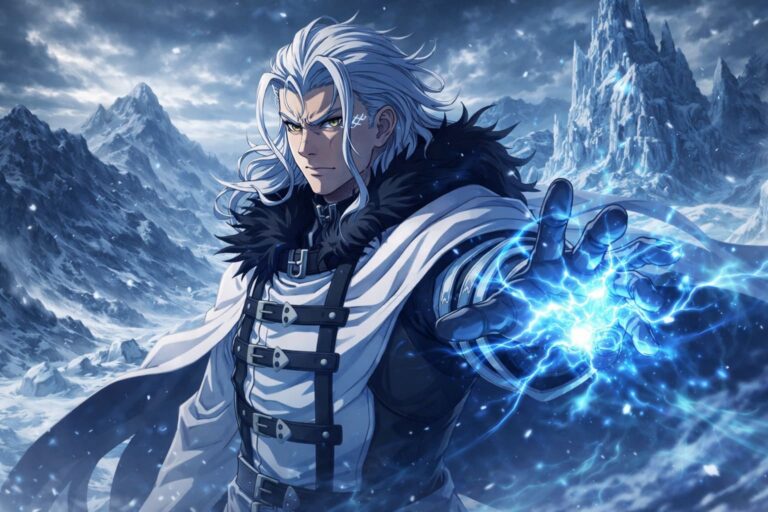
Oshi no Ko Season 3 Recap: Aqua Hoshino’s Revenge Spiral and the Cost of Absolute Justice
A Darker Turn for Oshi no Ko
If there is one thing Oshi no Ko consistently does well, it’s escalation—but Season 3 feels less like an escalation and more like a descent.
What started as an idol industry drama has fully transformed into something much heavier: a psychological revenge story where every emotional connection becomes collateral damage.

In this season, Aqua Hoshino is no longer just searching for truth. He is actively shaping reality around his revenge, treating people, relationships, and even art itself as tools. And honestly, watching that transformation is both fascinating and uncomfortable.
Season 2 ended with the emotional intensity of the 2.5D stage play arc, but Season 3 shifts the focus inward. The real battlefield is no longer the stage—it’s perception, media, and human psychology.
The Truth About Hikaru Kamiki Changes Everything
One of the biggest turning points of the season is the reveal of Hikaru Kamiki as the true father of Aqua and Ruby.
What makes this twist so unsettling isn’t just the identity itself—it’s the implications. Kamiki isn’t a simple villain. He is portrayed as someone shaped by the entertainment industry’s darker undercurrents, someone who weaponizes vulnerability and charm as masks.
Aqua’s initial belief that justice could be achieved through legal means quickly collapses. The moment he understands Kamiki’s background and legal ambiguity, something in him changes. This isn’t just disappointment—it’s permission. Permission to step outside the system entirely.
And that’s where Aqua’s real descent begins.
The 15-Year Lie: A Film That Becomes a Weapon
At the center of Aqua’s strategy is a fictional film titled The 15-Year Lie. On the surface, it appears to be a biographical dramatization of Ai Hoshino’s life and death. In reality, it is something far more dangerous: a structured psychological trap.
Aqua doesn’t just want to tell a story—he wants to engineer consequences.
What the film is designed to do:
- – Public Exposure: Reframe Ai’s death in a way that forces the audience to question who was really behind it
- – Psychological Pressure: Recreate emotional triggers tied to Kamiki’s past trauma
- – Forced Emergence: Push Kamiki into acting, breaking his carefully maintained invisibility
What makes this approach chilling is how calculated it is. Aqua isn’t reacting anymore—he is directing. Not just a movie, but real life itself.
Relationships Become Collateral Damage
Perhaps the most emotionally painful part of Season 3 is watching Aqua deliberately destroy his own relationships.
He doesn’t do it out of anger. He does it out of strategy.
Akane Kurokawa: The Break That Hurts Most
Akane becomes one of the first people to fully understand Kamiki’s identity. Instead of relief, this creates a new problem—she gets too close to Aqua’s path.

To protect her, Aqua ends the relationship.
It’s framed as cold, but it’s actually one of the clearest examples of his self-sacrificial logic: if everyone near him becomes a target, distance becomes protection.
But that logic also isolates him completely.
Kana Arima: The Light He Refuses to Touch
Kana represents something different. She isn’t part of the revenge system in Aqua’s mind—she is the opposite of it.

He sees her as “light,” and that makes her dangerous to his world, not because she is harmful, but because she reminds him of what he is losing.
So he pushes her away too.
In one of the more controversial narrative choices, Aqua even leaks information about Ai’s secret to protect Kana’s career trajectory. It’s a trade: truth for safety. Pain for preservation.
But every trade like this chips away at who he is.
Ruby Hoshino: The Mirror of Revenge
While Aqua becomes methodical and restrained, Ruby becomes something far more volatile.
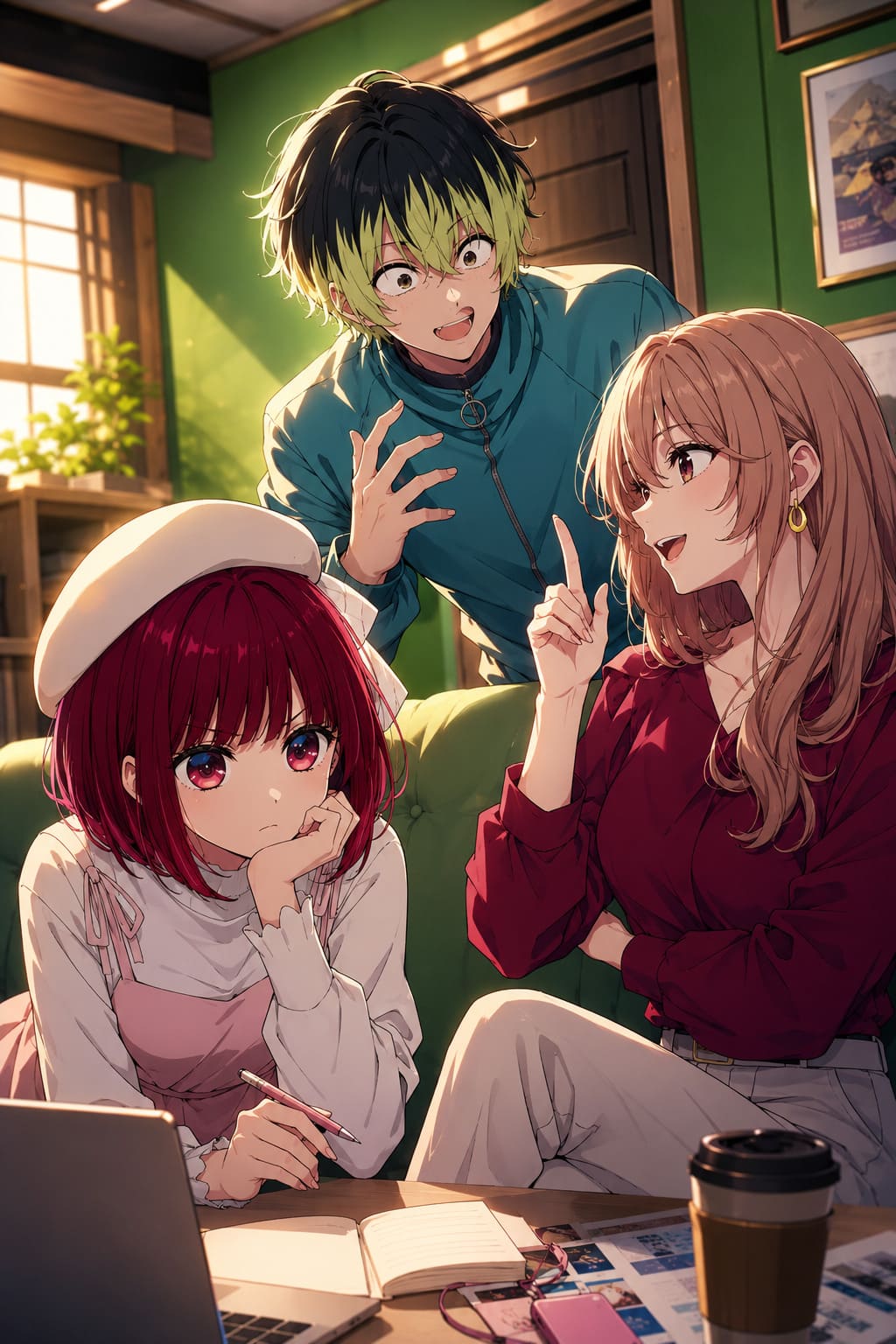
Her discovery of the truth about Gorou’s death triggers a transformation that mirrors Aqua’s, but without his control. The symbolic “dark stars” in her eyes represent a complete emotional surrender to revenge.
The twins begin Season 3 on opposite ends of the same trauma: Aqua suppresses emotion to execute strategy, while Ruby amplifies emotion to fuel purpose.
For a long time, they cannot understand each other at all.
Until they finally do.
The revelation of their past identities—Gorou and Sarina—is one of the most emotionally loaded moments in the story. It doesn’t heal them, but it connects them. And that connection changes the scale of everything that follows.
Aqua’s Final Philosophy: Justice or Self-Destruction?
By the final arc of the season, Aqua’s mindset becomes dangerously clear.
He no longer sees himself as someone who can return to a normal life. Instead, he views himself as a tool designed to end Kamiki’s existence—nothing more.
There is a growing belief that he shares something irreparably “tainted” with his father. That belief becomes justification for self-erasure.
This is where the revenge story becomes something darker than revenge.
It becomes acceptance of annihilation.
Key Character Trajectories (Season 3 Overview)
| Character | Arc Direction | Core Change |
|---|---|---|
| Aqua Hoshino | Strategic isolation | From seeker of truth to architect of revenge |
| Ruby Hoshino | Emotional escalation | From idol ambition to revenge-driven identity |
| Akane Kurokawa | Protective awareness | Gains truth, loses relationship |
| Kana Arima | Innocent light | Becomes something Aqua actively distances from |
| Hikaru Kamiki | Hidden antagonist | Revealed as psychological manipulator behind the tragedy |
The Cliffside Mindset: The Endgame Begins
As production of The 15-Year Lie approaches completion, everything shifts toward confrontation. But this isn’t framed as a typical final battle.
It’s something more tragic.
Aqua’s plan is not just to expose Kamiki—it is to ensure that Kamiki’s end is absolute, public, and irreversible.
At the same time, Aqua himself seems to be preparing for a form of symbolic disappearance. The implication isn’t just that he might die—it’s that he has already mentally accepted that outcome.
And that’s what makes the final stretch of Season 3 so heavy. Nobody is trying to “win” anymore. They are just trying to resolve pain in the only ways they understand.
Final Thoughts: A Revenge Story That Refuses Comfort
What makes Season 3 of Oshi no Ko so effective isn’t just its plot twists or reveals—it’s how emotionally consistent it is in its darkness.
Aqua’s revenge isn’t glamorous. It’s not heroic. It’s methodical, isolating, and slowly self-destructive. Every step forward costs him something that cannot be recovered.
And yet, from a narrative perspective, it’s hard to look away.
Because underneath all the manipulation and strategy, there is still a boy trying to make sense of a tragedy that never should have happened.
What Comes Next?
As the story moves toward its final arcs, the central question is no longer “Will Aqua succeed?” but rather: what will be left of him if he does?
And perhaps more importantly, whether Ruby, Kana, Akane, or anyone else can survive the fallout of a revenge plan that has already gone too far to simply stop.
If Season 3 is the setup, then what comes next won’t just be a conclusion—it will be a consequence.