Witch Hat Atelier vs. Harry Potter: Why Adults Are Switching to the “Anti-Harry Potter” Manga
There was a time when Harry Potter felt untouchable. For a whole generation, the world of Hogwarts was fantasy. The castles, secret classes, weird candy, moving staircases, and dangerous forests created the perfect escape. A lot of us grew up with Hogwarts. And honestly? That emotional connection never really disappears.
But as anime and manga fans got older, many started wanting something different from magical fiction. Not darker for the sake of being edgy. Not more violent. Just… smarter. More reflective. More willing to question the systems inside its own world.
That’s where Witch Hat Atelier completely surprised me.
I went into it expecting a cozy fantasy manga with beautiful art. What I found instead was probably the most thoughtful “magic school” story I’ve experienced in years — one that feels designed for readers who still love fantasy wonder but now see the cracks in stories they once accepted without question.
And honestly, I finally understood why so many fans call it the “anti-Harry Potter.”
Magic That Feels Earned Instead of Inherited
One thing that hit me immediately in Witch Hat Atelier is how magic actually works.
In Harry Potter, magic is basically genetic. You either have it or you don’t. Even though the series talks about prejudice against Muggle-borns, the world still revolves around people who are naturally born special. The system itself never changes.
In Witch Hat Atelier, the core idea is radically different:
Anyone can learn magic.
That single concept changes everything.
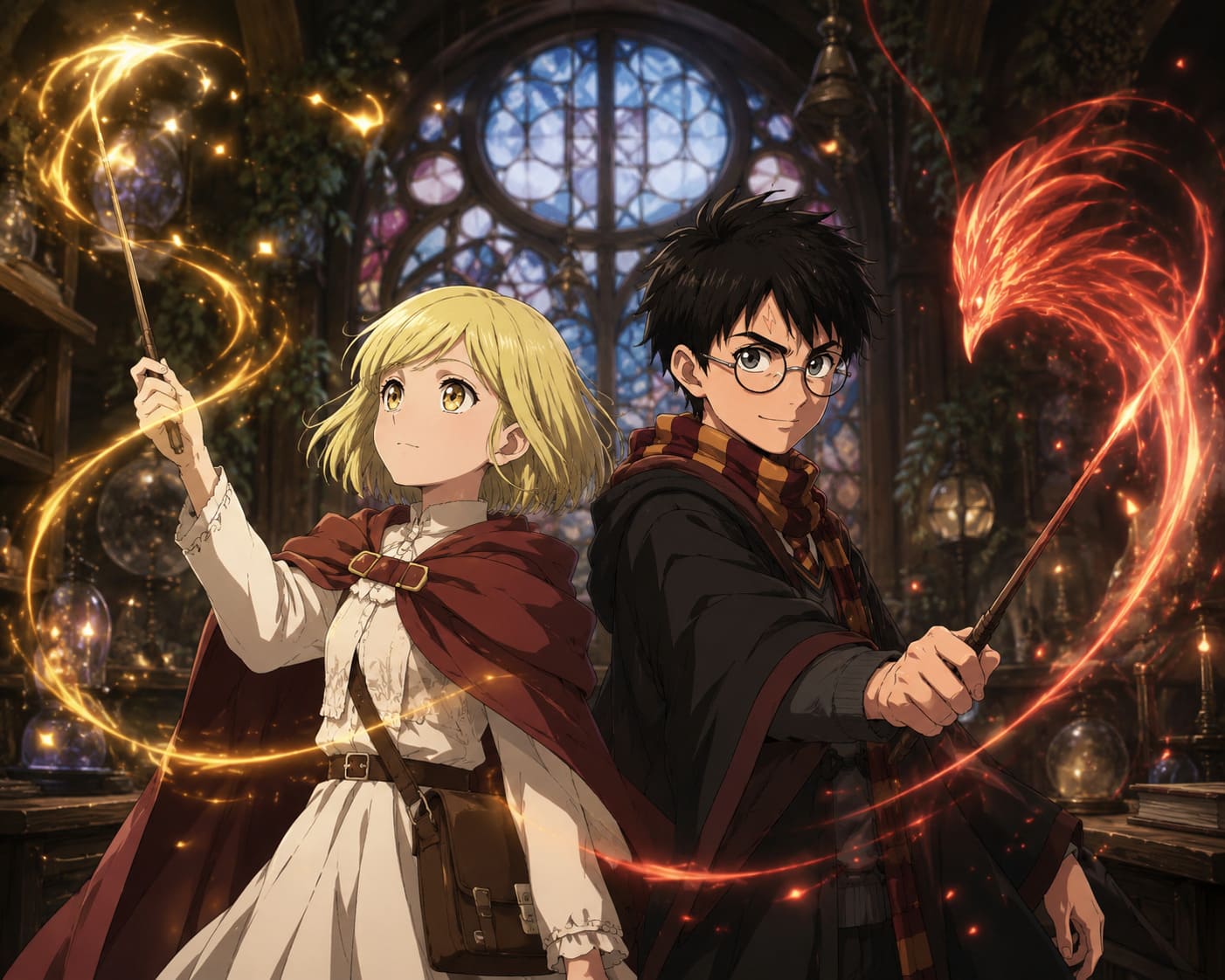
Magic in the series is built around drawing symbols, circles, and patterns with special ink. It’s treated more like architecture, engineering, or illustration than supernatural destiny. Characters experiment with spells, fail repeatedly, improve techniques, and develop personal styles.
It feels creative instead of convenient.
As someone who loves fantasy anime, I think this is why the series connects so strongly with adult audiences. The magic system respects the reader. Problems aren’t solved because a character suddenly unlocks hidden power or because “love magic” beats evil. Characters succeed because they study, think, adapt, and sometimes make painful mistakes.
There’s a real sense of craftsmanship in every spell.
And visually? Watching magic literally being drawn onto the page is incredible.
The Story Actually Questions Its Own World
A lot of older fans revisiting Harry Potter eventually notice something uncomfortable:
The wizarding world is kind of a mess… and almost none of its deeper problems are truly fixed.
The hierarchy stays intact. The social structure survives. The elite still control magical knowledge. Even the treatment of magical creatures often gets brushed aside after brief acknowledgment.
Meanwhile, Witch Hat Atelier builds its entire narrative around questioning authority.
The witches known as the “Pointed Caps” claim they hide magic from ordinary people for safety reasons. And at first, that sounds reasonable. But the deeper the story goes, the more morally complicated that decision becomes.
The manga constantly asks difficult questions:
- Who gets to control knowledge?
- Does restricting power actually protect people?
- Is hiding magic ethical if it could help the sick or disabled?
- At what point does protection become oppression?
That’s the kind of writing that stays in your head after you finish a chapter.
The series doesn’t hand out easy answers either. Even the mentors and authority figures feel human. Some genuinely want peace. Others clearly abuse their influence. Most exist somewhere in the gray area between idealism and fear.
For me, that complexity is what elevates the manga beyond “just another fantasy series.”
Witch Hat Atelier vs Frieren Beyond Journey’s End: Fantasy Anime Battle
Coco Is a Much More Relatable Protagonist
Coco instantly became one of my favorite fantasy protagonists because she doesn’t feel like a chosen savior.
She feels like a kid who genuinely loves learning.
That difference matters.
A lot of modern fantasy protagonists are built around destiny or hidden greatness. Coco, on the other hand, starts from curiosity and admiration. Her journey feels emotional because it’s tied to effort, guilt, wonder, and responsibility rather than prophecy.
Watching her slowly understand how dangerous magic can be makes the story far more mature than its whimsical art style initially suggests.
And unlike many fantasy stories, the emotional consequences actually linger. Mistakes matter. Trauma matters. Fear matters.
The manga never forgets that power can permanently change people.
The Art Is Honestly Unreal
I genuinely think Kamome Shirahama is one of the best fantasy artists working today.
Every page of Witch Hat Atelier looks handcrafted with obsessive detail. The clothing folds, architecture, magical symbols, forests, libraries, and creature designs all feel alive. Some panels look closer to illustrated storybooks or medieval fantasy art than traditional manga layouts.
There’s also this amazing contrast in tone:
The world looks warm and magical on the surface, but underneath there’s something unsettling hiding everywhere.
The forbidden magic users — the Brimmed Caps — are especially memorable because their designs feel eerie without relying on cheap horror tropes. Their presence changes the atmosphere immediately whenever they appear.
The series understands that fantasy works best when beauty and danger exist together.
Why Adult Anime Fans Connect With It So Strongly
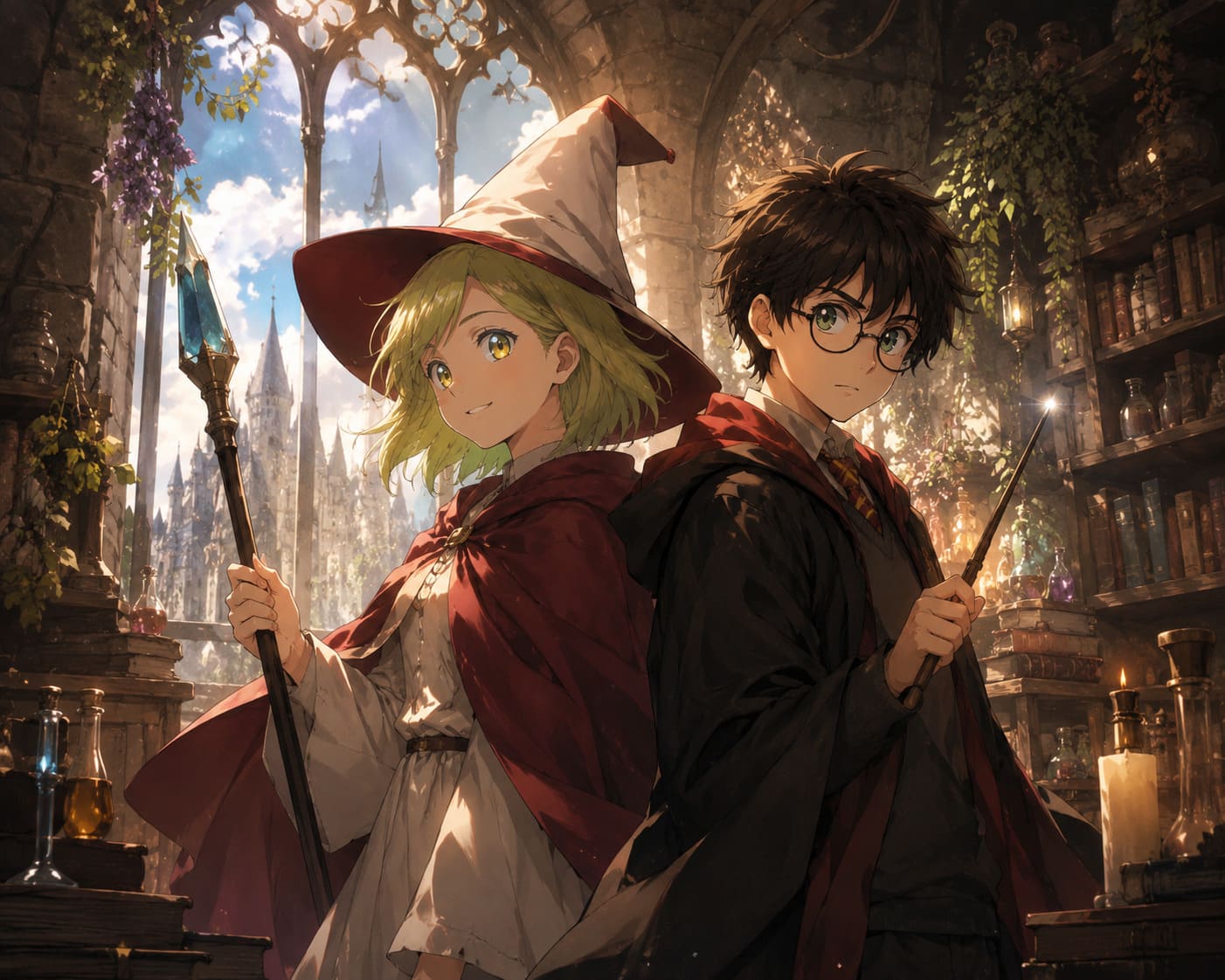
I think Witch Hat Atelier arrived at the perfect time.
A lot of anime and manga fans who grew up during the massive Harry Potter era are now adults looking for fantasy stories that still feel magical without ignoring real-world themes.
And this manga delivers exactly that.
It explores:
| Theme | Why It Works |
|---|---|
| Knowledge & Control | Magic is treated like restricted information, not just entertainment. |
| Disability & Accessibility | The story handles magical assistance with surprising sensitivity. |
| Mentorship | Teachers are flawed people, not perfect archetypes. |
| Social Class | The world openly critiques inequality and gatekeeping. |
| Creativity | Magic rewards imagination and precision. |
What I especially appreciate is that the manga never feels preachy. It doesn’t stop the story to lecture readers. These themes naturally grow out of the world itself.
That balance is incredibly hard to pull off.
The Anime Adaptation Could Become Huge
With the upcoming Witch Hat Atelier anime adaptation generating massive hype among fantasy anime fans, I honestly think the series is about to explode globally.
And unlike some adaptations that rely entirely on action scenes going viral, Witch Hat Atelier has something more lasting:
Atmosphere.
It has that rare fantasy feeling where simply existing in the world feels comforting and mysterious at the same time. Very few modern series manage that balance anymore.
If the adaptation captures even half of Shirahama’s visual magic, it could easily become one of the defining fantasy anime of the decade.
Final Thoughts
I’ll always respect Harry Potter for introducing so many people to fantasy storytelling. Its cultural impact is undeniable.
But Witch Hat Atelier feels like the evolution of that childhood wonder into something more thoughtful, artistic, and emotionally mature.
It still believes in magic.
It still believes in curiosity.
But it also understands that systems deserve scrutiny, knowledge shouldn’t belong only to elites, and growing up means learning that even beautiful worlds can hide painful truths.
For anime and manga fans who want fantasy that feels both comforting and intelligent, Witch Hat Atelier might honestly be the best magical story being told right now.