Himekishi wa Barbaroi no Yome Episode 6 Review: Now a Dark Fantasy
There are always certain episodes in seasonal anime that completely redefine how viewers perceive a series, and Episode 6 of Himekishi wa Barbaroi no Yome is exactly that kind of turning point. What initially feels like another comedic culture-clash story suddenly evolves into something far more serious, disturbing, and thematically rich.
Until this point, the anime had been balancing light romance, tribal humor, and fantasy world-building.
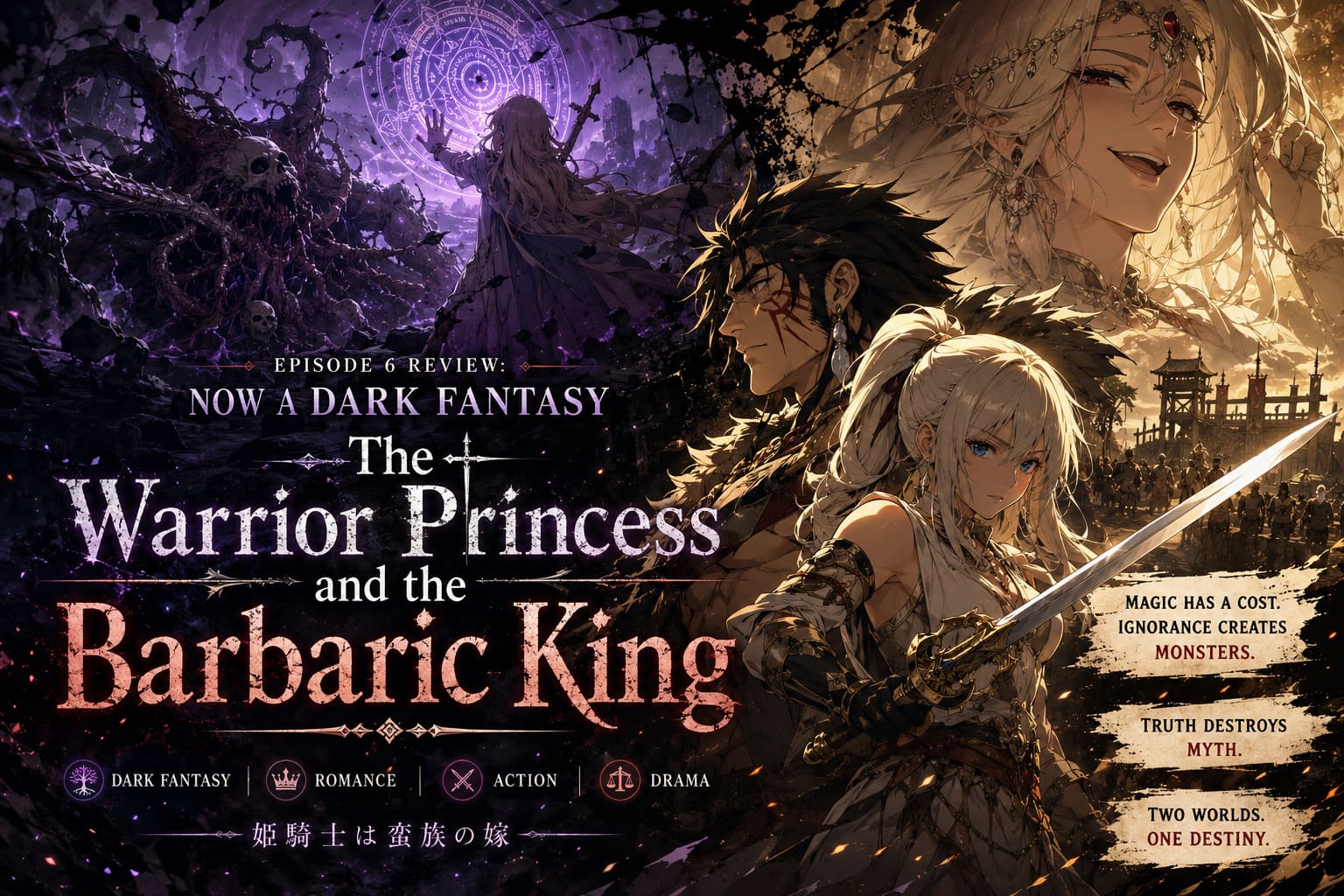
However, Episode 6 titled “Man-Made Disasters” breaks that balance entirely and pushes the narrative into ecological horror, religious critique, and major lore revelations.
The Warrior Princess and the Barbaric King Episode 6: Everything Changes
Episode 6 Overview: When Fantasy Comedy Turns Into Consequence-Based Horror
The arrival of Sister Alyssa Malcius changes the tone of the story almost instantly. Unlike Serafina, who gradually adapted to the eastern tribes, Alyssa enters the world fully conditioned by western religious ideology. She is not just a character — she is a representation of institutional belief systems colliding with reality.
Her misunderstanding of Serafina’s situation becomes the catalyst for disaster. Instead of recognizing cultural differences, she assumes oppression and immediately escalates the situation using high-level divine magic.
The Magic System and Its Hidden Cost
One of the most interesting aspects of this episode is how it expands the rules of magic in the world. Priestly arts are not free or harmless — they require balance.
Repeated use of high-level magic without proper catalysts begins to drain the environment itself, creating a dangerous feedback loop that destabilizes nature.
- Overuse of divine magic consumes environmental energy
- The land becomes sterile and lifeless
- Magical imbalance leads to catastrophic manifestations
- Fiends are born from environmental collapse
This system turns magic from a simple power fantasy into a responsibility-based mechanic where ignorance leads to destruction.
The Barbarian’s Bride Episode 6 Review: The Dark Fantasy Twist
Alyssa Malcius: Faith, Misinterpretation, and Tragedy
Alyssa is one of the most controversial characters introduced so far. She is not malicious, but deeply indoctrinated. Her worldview is shaped entirely by the Illdoren Kingdom’s doctrine, which prevents her from interpreting reality correctly.
She believes she is saving Serafina from barbaric oppression, but in reality, she is escalating a situation she does not understand.
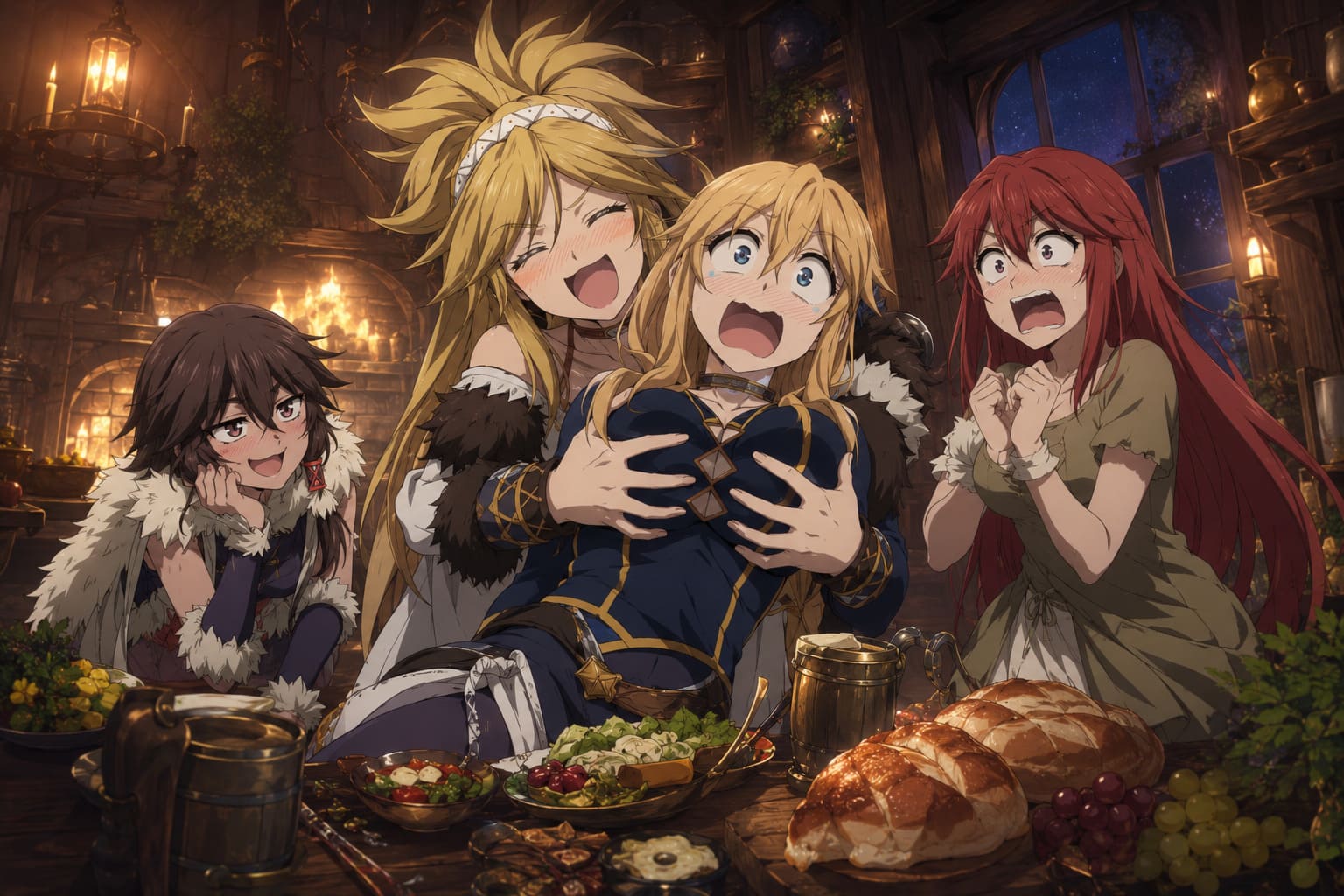
Key Misinterpretations
- She sees Serafina’s engagement ring as a slave collar
- She assumes Veor is a cruel conqueror
- She interprets cultural practices as violence
- She ignores Serafina’s actual consent and happiness
This misunderstanding leads directly to her reckless use of magic, which triggers the central disaster of the episode.
The Fiend Encounter: Man-Made Ecological Horror
As Alyssa continues casting magic without restraint, the environment collapses into a void of drained energy. From this void emerges one of the most disturbing creatures in the series so far — a massive Fiend composed of tentacles, skeletal fragments, and shifting organic matter.
This scene is visually shocking, but its meaning goes far beyond spectacle.
The True Nature of the Fiend
The Fiend is not a natural monster. It is a consequence. A manifestation of environmental destruction caused by reckless magical overuse.
In other words, it is a “man-made disaster.”
- Born from ecological imbalance
- Not inherently evil, but reactive
- Represents nature collapsing under exploitation
- Symbolizes institutional ignorance
The horror element is amplified by Alyssa being physically overwhelmed and trapped by the creature’s tentacle-like appendages, emphasizing her total loss of control over the situation she created.
Veor and Serafina: Strength, Balance, and Execution
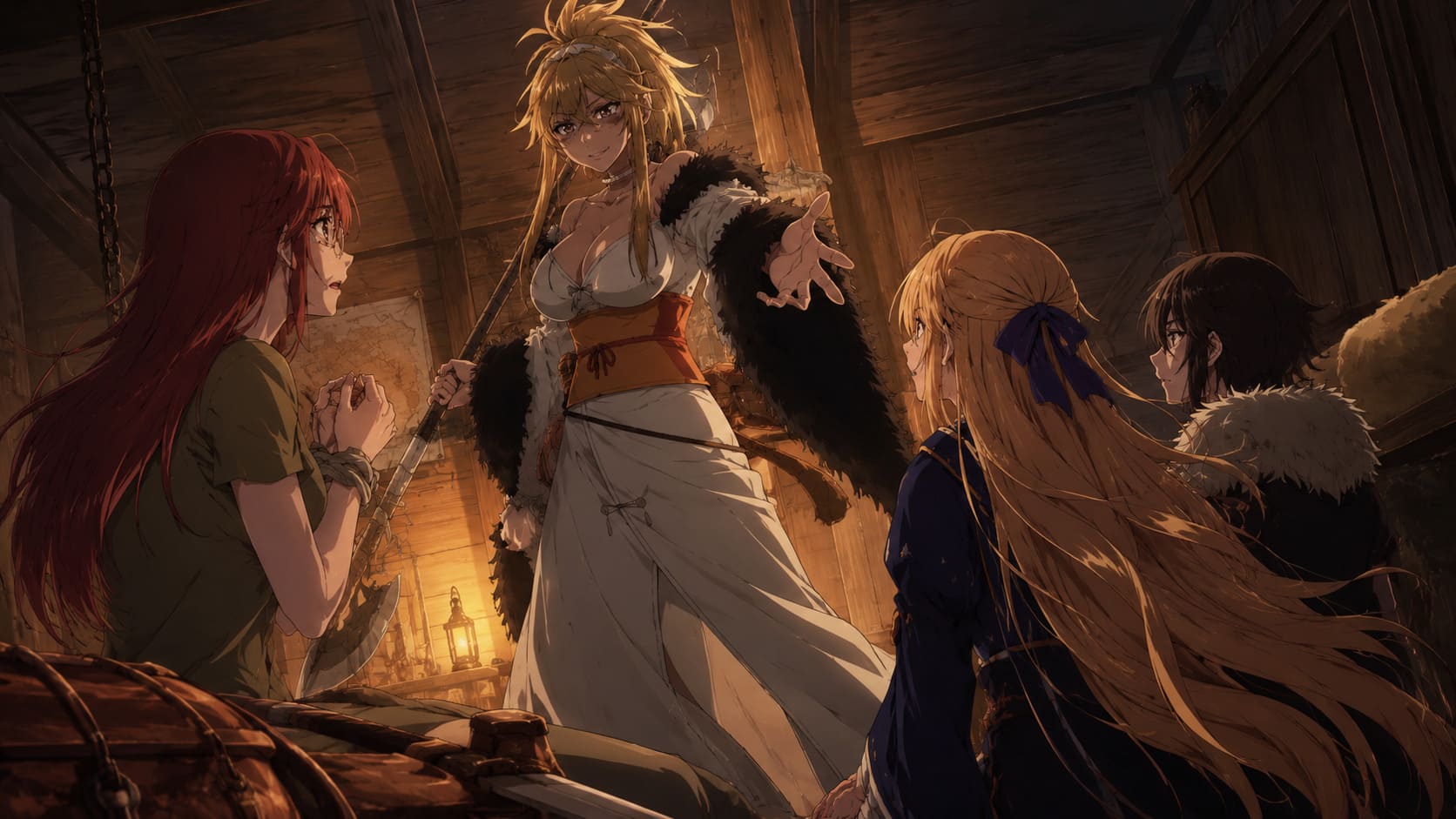
When the Fiend reaches full strength, King Veor intervenes with overwhelming authority. His Thundering Voice ability destabilizes the creature, creating an opening for Serafina to deliver the final blow.
This moment reinforces one of the strongest themes of the series — balance between strength and understanding.
| Character | Role in Episode 6 |
|---|---|
| Veor | Represents controlled power and environmental awareness |
| Serafina | Acts as disciplined execution and battlefield precision |
| Alyssa | Represents uncontrolled faith and systemic ignorance |
| Fiend | Physical embodiment of environmental collapse |
The Wysteresia Reveal: Myth vs Reality Collapse
After the battle, the episode shifts sharply into comedy and lore expansion. Alyssa invokes the legendary Saint Princess Wysteresia as a symbol of western moral superiority.
However, Veor casually reveals that Wysteresia is his mother, completely destroying the mythological narrative built by the church.
This moment is both hilarious and thematically important, as it exposes how history can be distorted by institutions for ideological purposes.
Wysteresia’s Real Personality
Instead of being a pure saintly figure, Wysteresia is energetic, chaotic, and completely unfiltered. Her reunion with Serafina is both emotional and comedic, instantly dismantling Alyssa’s worldview.
- She openly supports Serafina staying in the east
- She behaves in a playful and chaotic manner
- She rejects the rigid moral image assigned to her
- She represents truth replacing propaganda
Thematic Depth: What Episode 6 Is Really About
Beneath the fantasy action and comedy, Episode 6 is fundamentally about perception versus reality. The anime continues to challenge the idea that “civilization” automatically equals morality.
Instead, it presents a world where:
- Nature has rules that must be respected
- Power without understanding leads to destruction
- Religious institutions may distort truth
- So-called “barbarians” may live more harmoniously than “civilized” societies
Final Thoughts: A Turning Point for the Series
Episode 6 of Himekishi wa Barbaroi no Yome is the moment where the series fully commits to its identity. It is no longer just a romantic fantasy comedy — it becomes a layered narrative about ideology, consequence, and truth.
The combination of dark ecological horror, emotional character conflict, and sudden comedic lore reversal makes this episode one of the strongest entries so far.
More importantly, it reframes the entire story: not as a tale of conquest or romance alone, but as a slow unraveling of misunderstood truths between two worlds.