The Warrior Princess and the Barbaric King Episode 6: Why Malcius is a Monster
The biggest shock in Episode 6 of The Warrior Princess and the Barbaric King (Himekishi wa Barbaroi no Yome anime series) was not the fiend itself. It was the realization that the real danger was never the monster, but the ideology that created it.
What started as a fantasy romance filled with culture clashes and light comedy suddenly transformed into a dark exploration of magic, ecology, and religious fanaticism.
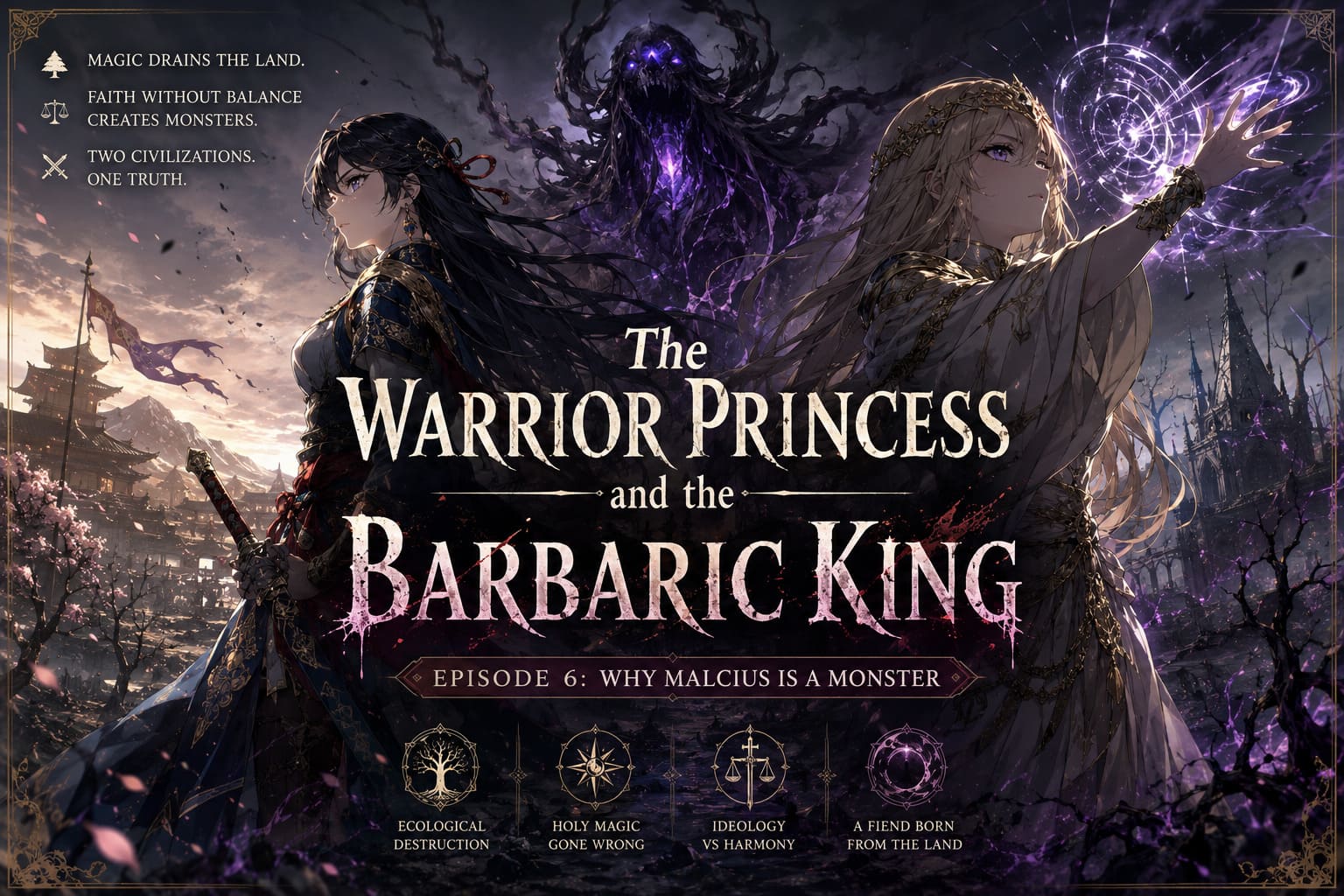
Episode 6 instantly became one of the most discussed moments of the Spring 2026 anime season.
Episode 6 Completely Changes the Meaning of Magic
Until this episode, “holy magic” felt like a standard fantasy system. Healing spells, purification, and divine techniques were presented as inherently good.
Episode 6 completely redefines this assumption.
Himekishi wa Barbaroi no Yome Episode 6 Review: Now a Dark Fantasy
Malcius does not summon a fiend through forbidden ritual. Instead, she demonstrates that holy magic itself becomes destructive when used recklessly without a stabilizing catalyst.
Every spell she casts drains the surrounding environment. Trees wither, grass dies, and the land slowly turns lifeless. Magic is no longer just energy — it becomes consumption.
Key idea behind the system
The episode introduces a disturbing concept: magic requires balance. Without it, it behaves like an ecological parasite.
- Spells drain life force from nature
- Mana becomes unstable and corrupted
- Repeated casting accelerates environmental decay
- Extreme damage triggers supernatural consequences
That final consequence is the fiend.
Why Malcius Never Understood the Consequences
Malcius is not portrayed as secretly evil. She genuinely believes she is performing divine justice.
The key question raised by the episode is simple: why does she not understand the consequences of her actions?
The Warrior Princess and the Barbaric King Episode 6: Everything Changes
The most widely discussed interpretation is that the Western Kingdom has been practicing destructive magic for so long that the environment has already been exhausted.
In such a world, no one would witness fiend creation anymore, because there is nothing left to consume.
Western vs Eastern worldview
| Western Kingdom | Eastern Lands |
|---|---|
| Uses aggressive holy magic | Lives in harmony with nature |
| Spiritually depleted environment | Rich mana ecosystems |
| Believes in divine superiority | Maintains ecological balance |
This contrast turns the entire conflict into an ideological tragedy rather than a simple war.
The Fiend Is Not Summoned — It Is Created
One of the most important revelations is that the fiend is not the result of a dark ritual.
It is a spontaneous manifestation born from accumulated environmental destruction.
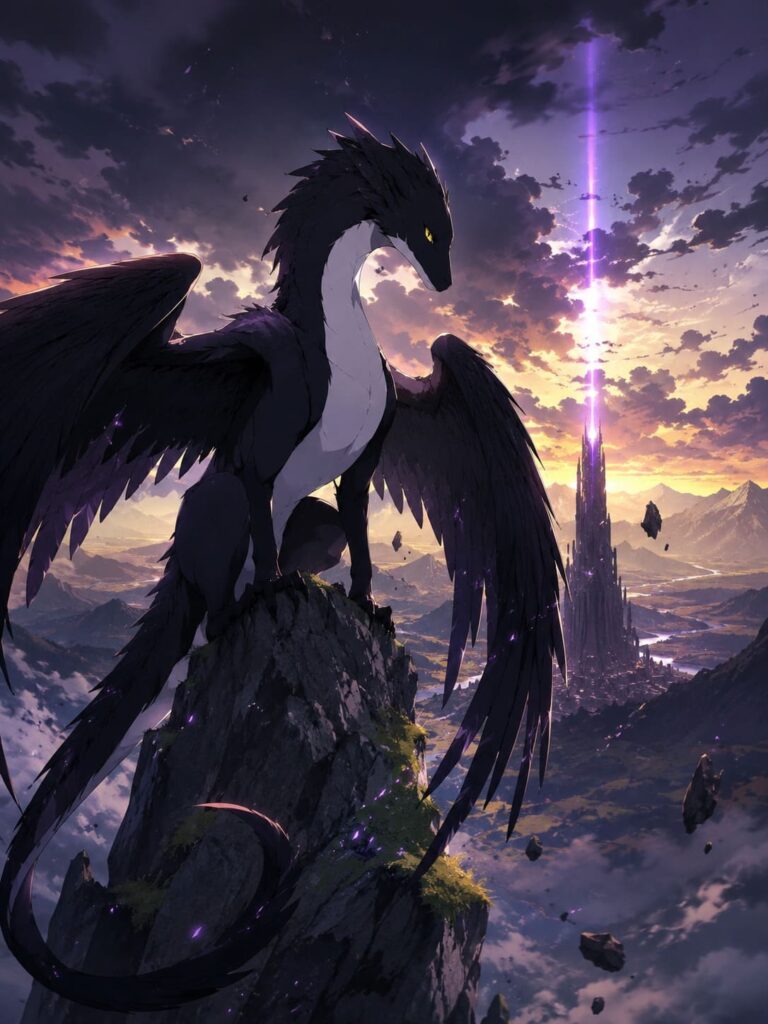
As Malcius continues casting without restraint, the land reaches a critical threshold. At that point, negative energy condenses into a physical entity — the fiend.
Interpretation of the event
Rather than being a demon from another world, the fiend represents the land itself reacting to abuse.
- Not summoned, but generated
- Not evil by nature, but reactive
- Not controlled, but emergent
Veor’s Silence During the Crisis
One of the more debated moments in Episode 6 is Veor’s decision not to immediately intervene.
On the surface, it looks like inaction. However, his behavior suggests careful restraint rather than ignorance.
Veor appears to understand the consequences of interrupting a political and spiritual figure from the West too aggressively. His hesitation is tied not to weakness, but to the risk of escalation between civilizations.
Community Reaction and the Controversial Scene
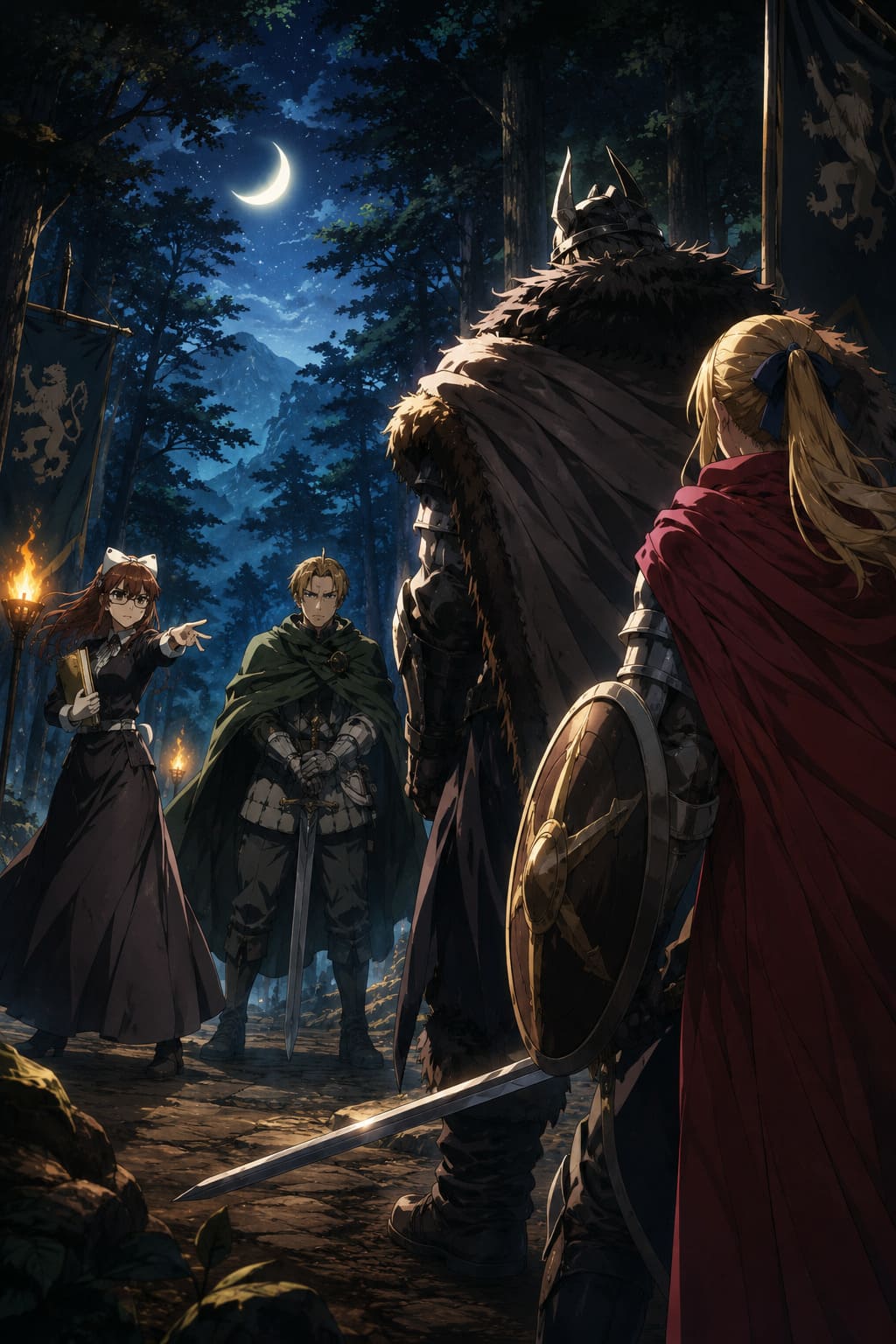
Once the fiend appears, the tone of the episode shifts again into horror territory. The attack sequence quickly became one of the most controversial moments of the season.
Some viewers criticize the scene for leaning into exaggerated visual shock, while others interpret it as symbolic destruction of ideological purity.
Two main interpretations
- Critical view: The scene breaks immersion with unnecessary stylization and distracts from the lore.
- Supportive view: The scene represents the complete collapse of Malcius’ self-proclaimed purity and authority.
Regardless of interpretation, it became one of the most discussed moments online.
Serafina’s Role and the Turning Point
The emotional core of Episode 6 belongs to Serafina. Watching her homeland’s ideology indirectly cause ecological destruction forces her into a deep internal conflict.
Her character arc begins shifting from loyal knight to questioning observer.
Internal conflict themes
- Faith vs reality
- Duty vs morality
- Identity vs truth
This episode plants the foundation for her eventual transformation.
The Real Theme of Episode 6
Beyond magic systems and political conflict, Episode 6 is ultimately about responsibility.
The episode suggests that destruction does not always come from villains or monsters. Sometimes it comes from belief systems that refuse to question themselves.
The fiend is not the cause of the disaster — it is the consequence.
Final Thoughts
Episode 6 of The Warrior Princess and the Barbaric King marks a turning point for the entire series. It transforms the narrative from a fantasy romance into a layered commentary on ideology, ecology, and power.
Whether future episodes continue this direction remains uncertain, but one thing is clear: after this episode, the story can no longer return to its original simplicity.
Something fundamental has already broken — and it may never be repaired.