Does Rimuru Go Back to the Human World at the End? TenSura Ending Explained
For years, isekai anime have struggled with endings. Some series never finish, some rush the final arc, and others completely forget the emotional reason fans started watching in the first place. But when it comes to That Time I Got Reincarnated as a Slime, the finale actually delivers something surprisingly satisfying: Rimuru gets everything he ever wanted without betraying the core of his character.
And honestly, that’s probably why fans still debate the ending across Reddit threads, anime forums, and light novel communities years later.
The biggest question people always ask is simple:
Does Rimuru really return to Earth at the end of TenSura?
Yes — but the way the story handles it is far more interesting than a basic “hero goes home” conclusion.
Rimuru Doesn’t Abandon Tempest — And That’s the Best Part
One thing many fans dislike in older isekai stories is when the protagonist suddenly leaves behind the fantasy world they spent hundreds of chapters building. It makes the emotional investment feel pointless.
TenSura avoids that mistake completely.
By the end of the story, Rimuru Tempest has evolved into something far beyond a normal Demon Lord. After surviving the final cosmic-scale conflict, he essentially becomes a transcendent being capable of manipulating time, dimensions, souls, and reality itself.
Instead of choosing between Earth and Tempest, Rimuru creates a solution that feels perfectly in-character:
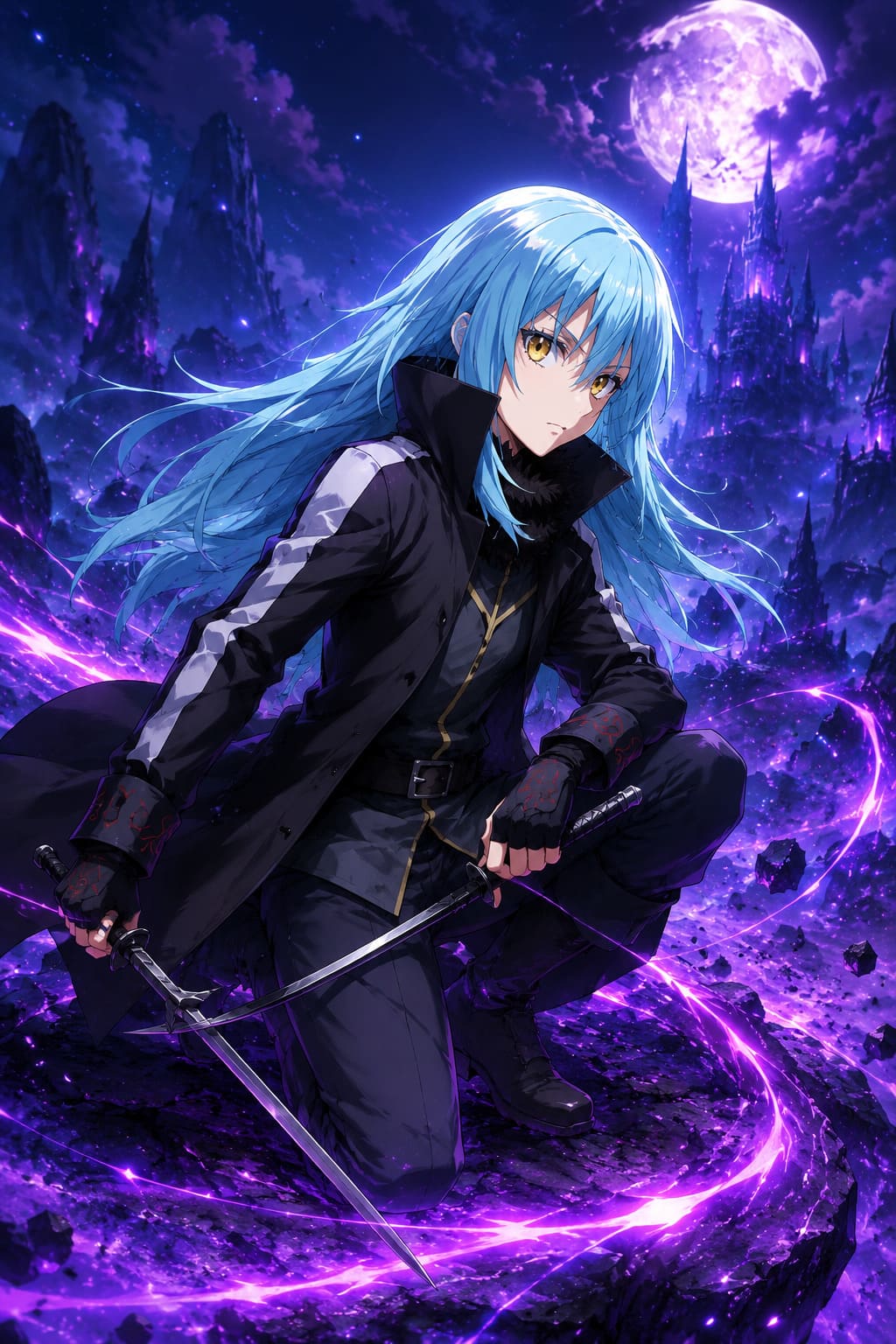
- He keeps ruling the Monster Federation.
- He returns to modern Japan.
- He exists in both worlds simultaneously.
And somehow, it never feels cheap.
What makes this work is that the series spent years building Rimuru as a leader who values connection. He never wanted power just for the sake of domination. He wanted comfort, friendships, stability, and a place where everyone around him could live peacefully.
The ending reflects that philosophy perfectly.
The Final Arc Goes Completely Cosmic
If you only watch the anime, you probably expect TenSura to stay a kingdom-building fantasy forever. But the late story escalates into full-on reality-warping insanity.
During the climax, Rimuru gets thrown into the literal end of space and time through a temporal exile technique. Imagine drifting in a dead universe where stars no longer exist and time itself has practically stopped moving.
Most characters would break mentally.
Rimuru basically ascends into godhood instead.
While he remains dormant, Ciel — arguably the most overpowered AI-like support ability in anime history — continues analyzing existence itself for what amounts to countless ages.
By the time Rimuru awakens, he has access to nearly infinite energy and abilities that surpass even the setting’s creator-level beings.
This is the moment where TenSura quietly stops being a normal fantasy series and turns into something closer to cosmic science fantasy.
And weirdly enough, fans loved it.
A lot of anime communities expected the ending to become messy because of the absurd power scaling, but the emotional focus on Rimuru’s humanity kept the story grounded.
Saving Satoru Mikami Was the Perfect Emotional Payoff
The most underrated part of the ending is not the final battle.
It’s the hospital scene.
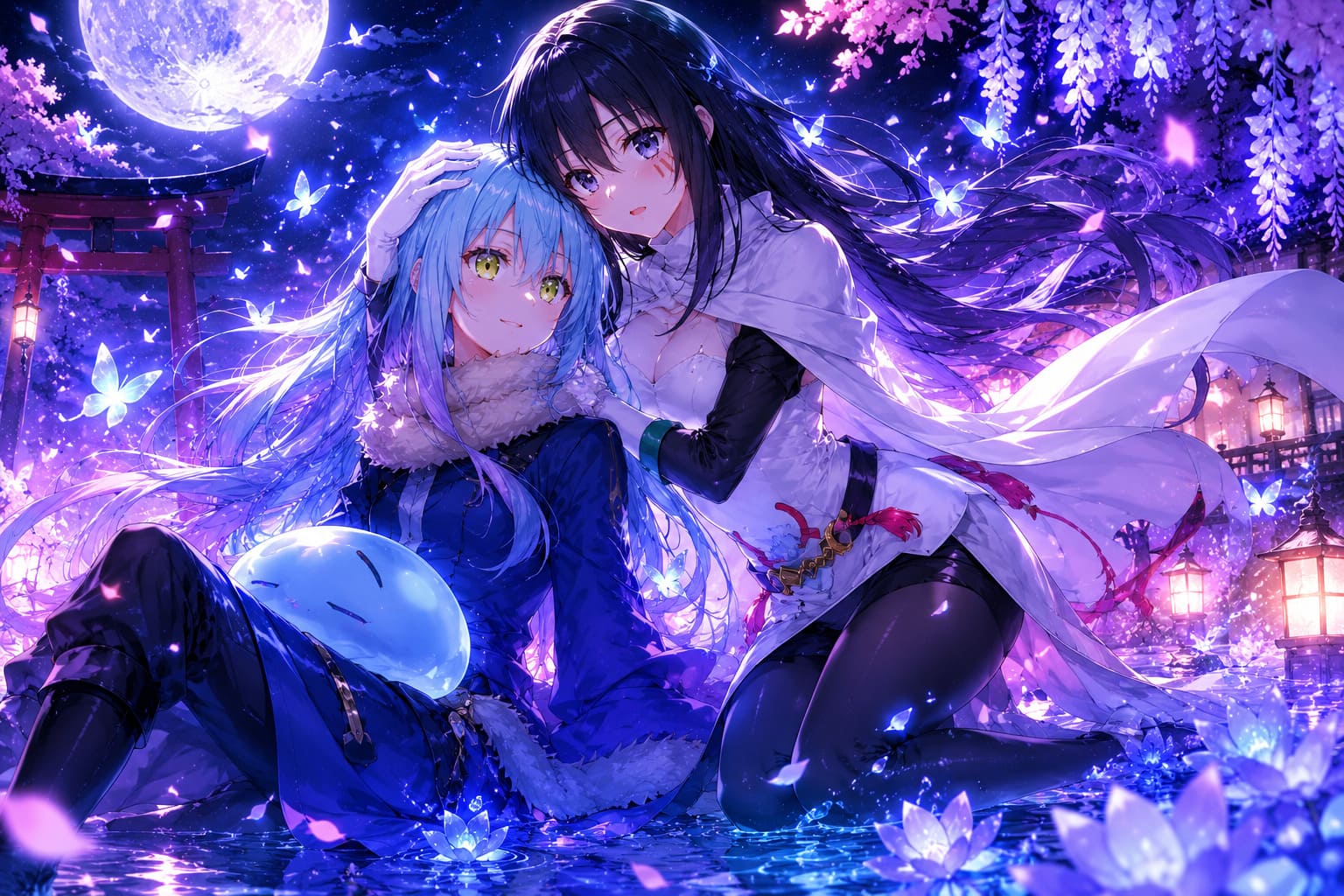
After becoming essentially omnipotent, Rimuru decides to revisit the moment his original human self, Satoru Mikami, died protecting his coworker from a random attacker.
Instead of accepting the tragedy as fate, Rimuru fixes it.
That scene hits harder than most action moments because it closes the loop on the entire story.
The lonely office worker who died without regrets finally gets a second chance at life.
Not reincarnation.
Not fantasy escapism.
An actual second chance.
And the method is peak TenSura absurdity:
| Event | What Rimuru Does |
|---|---|
| Fatal stab wounds | Instantly heals them |
| Missing soul | Creates an artificial spiritual core |
| Dead body problem | Uses Parallel Existence to inhabit it |
| Returning to Earth | Opens dimensional pathways freely |
It sounds ridiculous on paper, but within TenSura’s late-game lore, it actually makes sense.
More importantly, it feels emotionally earned.
The “It Was a Dream” Twist Is Smarter Than People Think
Some fans initially misunderstood the final lines because the story intentionally frames them like a meta joke.
When Satoru wakes up in the hospital, he reflects on his memories as Rimuru and casually says something along the lines of:
“I had a strange dream… about being reincarnated as a slime.”
At first glance, it almost sounds like the series is pulling a cheap “none of it was real” ending.
But that’s not what happens.
The implication is that Satoru remembers everything. The fantasy world existed. Tempest existed. Rimuru existed.
The clever twist is that Satoru later writes down the story of his adventures, effectively becoming the narrator of his own legend.
It creates this strange loop where the series itself becomes the in-universe retelling of Rimuru’s memories.
Honestly, for an isekai ending, that’s pretty creative.
Why Fans Connected So Much With Rimuru’s Dual Life
A huge reason the ending works is because it fulfills two fantasies at once.
Rimuru doesn’t reject modern life completely, but he also doesn’t abandon the fantasy world where he truly found happiness.
He gets both.
And unlike many overpowered protagonists, Rimuru never loses the ordinary parts of himself.
Even after becoming one of the strongest beings in fiction, he still cares about:
- Manga.
- Food.
- Technology.
- Hanging out with friends.
- Entertainment from Earth.
That balance is what keeps him likable.
The after-story material even reveals that Rimuru periodically syncs memories between his Earth self and fantasy self so he can bring modern ideas back to Tempest.
Which honestly sounds exactly like something Rimuru would do.
Web Novel vs Light Novel: Which Ending Is Better?
This debate still divides the fandom.
The original Web Novel ending is simpler and more direct. It focuses heavily on Rimuru saving Satoru and achieving his dual existence.
The Light Novel version expands the scale dramatically:
- Multiversal politics.
- Dimension-crossing technology.
- Deeper Veldanava lore.
- Larger cosmic threats.
- More world-building consequences.
Personally, many readers feel the Light Novel handles the lore better, but the Web Novel delivers the cleaner emotional conclusion.
Neither version ruins the core message though.
Rimuru finally gains:
- A family.
- A home.
- Peace.
- Control over his own destiny.
That’s ultimately what TenSura was always about.
Final Thoughts
A lot of isekai protagonists spend their stories trying to escape reality.
Rimuru is different.
By the end of That Time I Got Reincarnated as a Slime, he doesn’t erase his old life or completely replace it with fantasy wish fulfillment. Instead, he bridges both worlds together.
That’s why the ending feels so satisfying compared to many other long-running light novel series.
Rimuru returns to Earth, saves Satoru Mikami, keeps ruling Tempest, and still gets to enjoy the small things that made him human in the first place.
For an overpowered slime who accidentally became a god, that’s honestly the most fitting conclusion possible.