Delicious in Dungeon Ending Explained: How the Manga Concludes Falin’s Fate, Laios’s Curse, and the Winged Lion
For years, fantasy anime have relied on the same predictable formula: defeat the final villain, save the world, everyone gets their perfect happy ending. But Delicious in Dungeon (also known as Dungeon Meshi) completely avoids that trap. Ryoko Kui’s masterpiece delivers something far more emotional, mature, and unforgettable.
After finishing the manga, it’s honestly difficult not to think about it for days. The ending doesn’t just wrap up the story — it redefines everything the series was trying to say from the very beginning about food, survival, humanity, and desire.
Studio Trigger already proved with the anime adaptation that this series is something special, but the manga’s conclusion elevates it into legendary territory. If you came into Dungeon Meshi expecting “funny cooking anime inside a dungeon,” the ending completely changes your perspective.
Laios vs The Winged Lion Was the Most “Dungeon Meshi” Finale Possible
Most fantasy stories would end with some giant magical beam attack or an overpowered transformation. Instead, Dungeon Meshi stays true to itself until the very last moment.
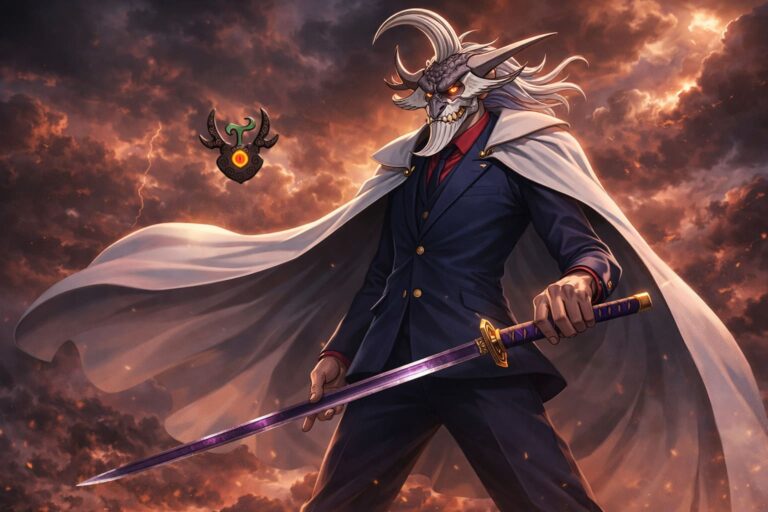
The true enemy, the Winged Lion, is one of the most unique antagonists in modern fantasy manga. It isn’t evil in the traditional sense. It’s an ancient being that feeds on human desire itself. Dreams, ambition, greed, hope — all of it becomes fuel for the creature.
What makes the finale brilliant is how Laios defeats it.
He doesn’t overpower the Lion with strength.
He literally eats it.
That sounds absurd on paper, but in context it becomes one of the most satisfying conclusions in anime/manga fantasy. Laios transforms into a monstrous form inspired by the creatures he admired his entire life and devours the Winged Lion’s endless hunger. By consuming the concept behind the creature’s existence, he strips it of purpose entirely.
It’s weird, creative, symbolic, and completely perfect for this series.
Honestly, very few manga endings stay this faithful to their core themes.
Laios’s Curse Is Painful in the Best Way
The part that really stayed with fans after the manga ended wasn’t the victory itself — it was the price Laios had to pay.
Before disappearing, the Winged Lion curses him so his deepest wish can never be fulfilled.
At first, readers naturally assume that wish is saving Falin. But the story reveals something deeper: Laios’s true obsession was always monsters themselves. He loved understanding them more than understanding people.
So the curse becomes cruelly ironic.
From that moment onward, every monster fears Laios and instinctively runs away from him.
- He can never study them naturally again
- He can never approach them peacefully
- He can never fully reconnect with the thing he loved most
For a character whose entire personality revolved around monster fascination, that punishment hits surprisingly hard.
And yet, it’s also what makes his character arc complete.
Instead of escaping into fantasy and obsession, Laios is forced to live among humans and finally accept genuine relationships. He becomes King of the restored Golden Kingdom, ruling over Melini while carrying the terrifying title:
“The Devourer of All Things Horrible.”
That nickname alone sounds like something straight out of dark fantasy mythology.
Why Fans Connected With Laios So Much
A lot of anime protagonists are unrealistically charismatic. Laios isn’t.
- He’s awkward
- Socially strange
- Hyper-fixated on niche interests
- Better at understanding monsters than people
That made him feel incredibly human.
By the end of the story, he never magically transforms into a perfect king. He simply grows enough to accept the people who already cared about him all along.
That’s what makes his ending feel earned.
Falin’s Rescue Is the Emotional Heart of the Entire Story
Everything in Dungeon Meshi started with saving Falin, and thankfully the manga never loses focus on that goal.
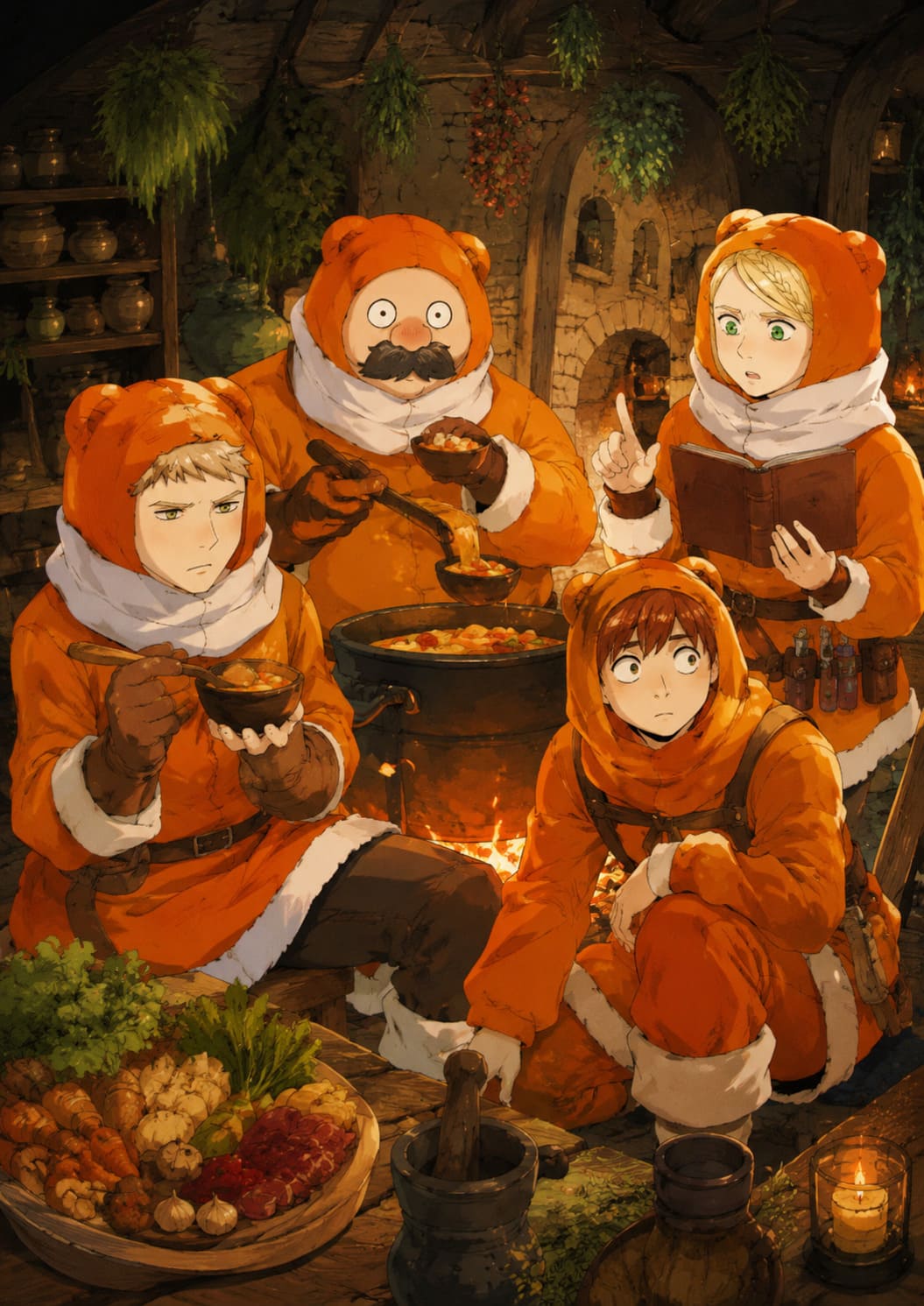
After the dungeon collapses, Falin’s soul is still tied to the Red Dragon’s remains. The solution the party comes up with is peak Dungeon Meshi logic:
They save her by cooking and eating the dragon completely.
Instead of one dramatic battle scene, the finale turns into a massive seven-day feast involving nearly every important ally introduced throughout the series.
Characters from different races, kingdoms, and factions all gather together to help consume the dragon flesh piece by piece until nothing remains attached to Falin’s soul.
It’s honestly one of the most beautiful uses of the series’ food themes.
Eating in Dungeon Meshi was never just comedy or survival mechanics. It represented connection, coexistence, and accepting the cycle of life itself.
When Falin finally awakens again, the moment feels fully deserved.
She isn’t restored perfectly, though — and that detail matters.
She still retains some monster-like traits, including feathers and altered eyesight. But instead of rejecting those changes, she embraces them naturally.
That choice perfectly reflects the manga’s message: people are shaped by their experiences, and healing doesn’t always mean returning to who you were before.
Every Main Character Gets a Surprisingly Mature Ending
One thing that makes the finale stand out is how grounded every resolution feels. Nobody gets a fairy-tale ending where all their problems disappear.
Everyone sacrifices something. Everyone changes. But they still move forward.
| Character | Ending |
|---|---|
| Marcille | Learns to accept mortality instead of trying to control life and death. She remains near Laios as a magical advisor while embracing the importance of temporary connections. |
| Senshi | Brings his knowledge of cooking, agriculture, and sustainability to the surface world while continuing to mentor others through food. |
| Chilchuck | Helps stabilize the halfling population after the political chaos before finally reconnecting with his family in a healthier environment. |
| Izutsumi | Accepts her beast-like nature instead of endlessly searching for a cure and slowly opens herself emotionally to others. |
| Falin | Chooses freedom, travel, and discovery rather than staying tied to royal responsibilities after her resurrection. |
| Laios | Becomes king while permanently losing the ability to connect with monsters, forcing him to fully embrace humanity instead. |
That balance between happiness and sacrifice is exactly why the ending feels authentic.
Where to Read Delicious in Dungeon Manga After Season 1 Ending: Complete Guide
Why Dungeon Meshi’s Ending Works Better Than Most Fantasy Manga
A lot of manga finales fail because they become too focused on spectacle.
Dungeon Meshi does the opposite.
Even during world-ending stakes, the story remains deeply personal and grounded in its original themes.
- Food connects people
- Survival has meaning
- Desire can both save and destroy us
- Living means continuing forward despite change
The final message lands because the series spent years building toward it naturally.
One of the last ideas the manga leaves readers with is essentially this:
Eating is proof that we choose to keep living.
That line alone summarizes the entire story perfectly.
Delicious in Dungeon Season 2 Release Schedule: When Is the Anime Returning to Netflix?
Final Thoughts
As an anime fan, this ending honestly feels rare nowadays. It respects the audience’s intelligence without trying to force artificial tragedy or cheap fanservice endings.
Ryoko Kui created a fantasy world that feels alive in ways most modern series never achieve. The monsters have ecosystems. The food has meaning. The characters evolve realistically. And the ending understands that true happiness isn’t about getting everything you wanted.
It’s about learning how to live with what remains.
If Studio Trigger adapts the rest of the manga with the same quality as Season 1, anime-only viewers are in for one of the best fantasy conclusions of the decade.