Delicious in Dungeon Ending Explained: What Happens to the Kingdom of Melini?
When I first started watching and reading Delicious in Dungeon, I honestly thought it would stay a quirky fantasy series about cooking monsters inside a dungeon. Funny party dynamics, weird recipes, some dark lore in the background — that was the vibe.
But by the final chapters, Ryoko Kui somehow turned this bizarre fantasy comedy into one of the most emotionally satisfying endings in modern anime and manga.
And the biggest surprise? The ending is not really about defeating the final boss. It’s about rebuilding a broken world.
The Kingdom of Melini becomes the heart of that message.
The Golden Kingdom Finally Returns
For most of the story, the Golden Kingdom feels almost mythical. Buried underground for centuries, frozen in time by ancient magic, and swallowed by the dungeon itself, it’s treated like a tragic memory rather than a real nation.
That completely changes after Laios defeats the Winged Lion.
Once the source of the dungeon’s endless mana disappears, the entire dungeon system starts collapsing. Normally, you would expect total destruction at this point. Instead, Ryoko Kui goes for something much more hopeful.
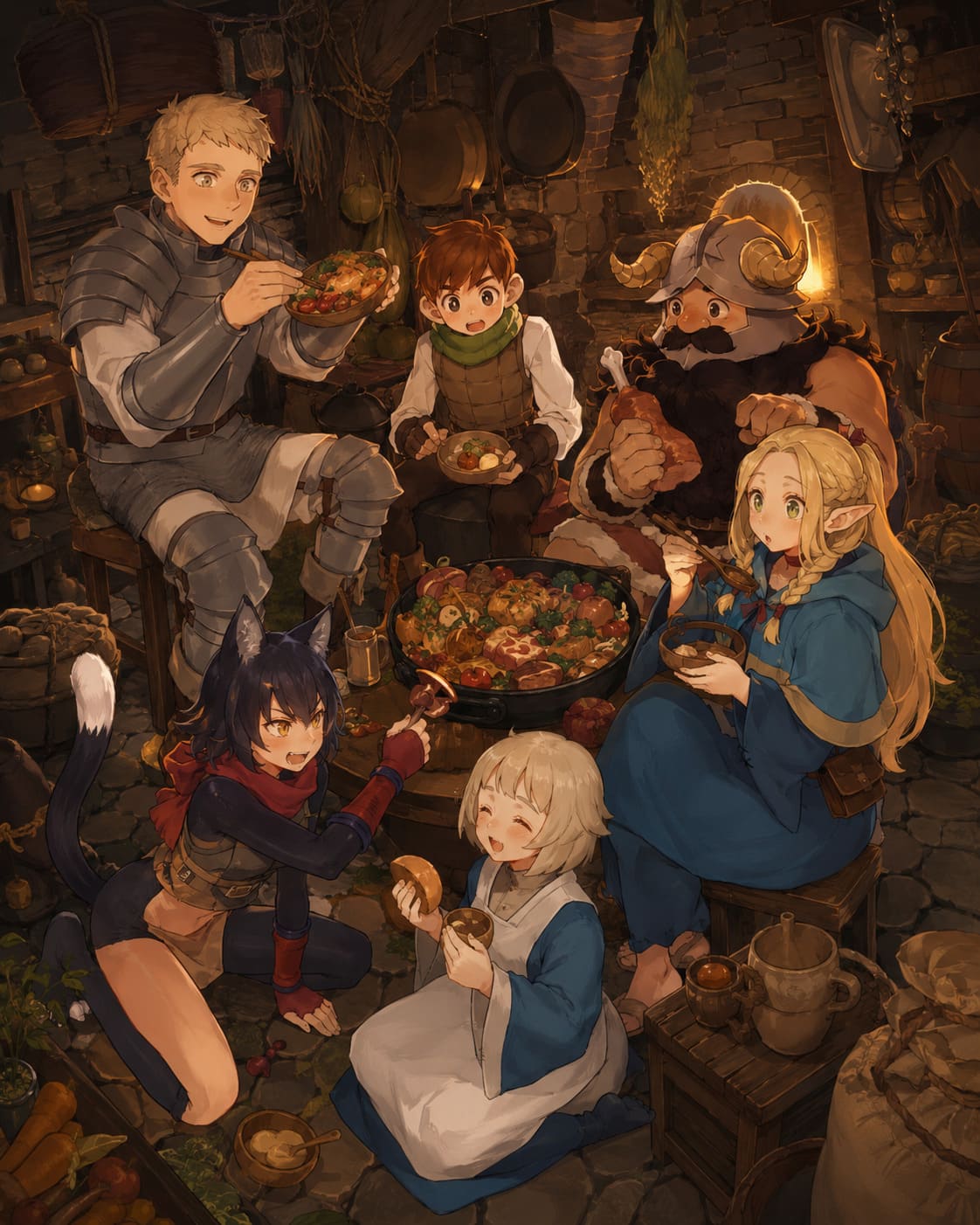
The ancient kingdom literally rises back to the surface.
That moment honestly felt magical. After hundreds of chapters underground, seeing Melini return to sunlight feels symbolic for the entire story. The people trapped in immortality finally get a second chance to actually live.
Not survive.
Not endlessly repeat the same cycle.
Live.
And that’s what makes the ending hit so hard emotionally.
Laios Becoming King Somehow Makes Perfect Sense
If someone told me during the early chapters that Laios Touden would become king, I probably would’ve laughed.
This is a guy obsessed with monster anatomy, weird food combinations, and saying the most socially awkward things possible at the worst moments.
But somehow… he becomes exactly the ruler Melini needs.
Why Laios Works as a King
Instead of ruling through fear or ambition, Laios builds Melini around things he genuinely understands:
- Food security
- Ecosystems
- Equality between races
- Sustainable living
- Protecting ordinary people
That sounds simple, but it actually makes him radically different from most fantasy rulers.
A lot of anime kings are warriors or political masterminds. Laios is neither. He’s basically a fantasy biology nerd who accidentally saves the world because he cares too much about monsters and people.
And weirdly enough, that compassion becomes Melini’s greatest strength.
The Ending’s Most Cruel Twist
Even though the finale feels hopeful, Ryoko Kui refuses to give Laios a completely happy ending.
The Winged Lion curses him one final time.
And honestly? This curse is brutal precisely because it’s so personal.
Laios’ deepest dream was always to understand monsters and coexist with them. That obsession defined his entire personality from chapter one.
After the curse, monsters become absolutely terrified of him.
Not hostile.
Terrified.
They flee before he can even approach them.
It’s one of the smartest bittersweet endings I’ve seen in fantasy manga because the curse creates two completely opposite outcomes at the same time.
| Benefit for Melini | Cost for Laios |
|---|---|
| Monsters avoid the kingdom completely | Laios can never study monsters again |
| Citizens live in peace | His greatest passion is gone |
| Melini becomes incredibly safe | He loses personal fulfillment |
This is where the ending becomes much deeper than people expected.
Laios saves everyone, but he quietly sacrifices the thing that made him happiest.
And he accepts it.
That acceptance feels painfully mature.
Melini Becomes One of Anime’s Most Interesting Fantasy Kingdoms
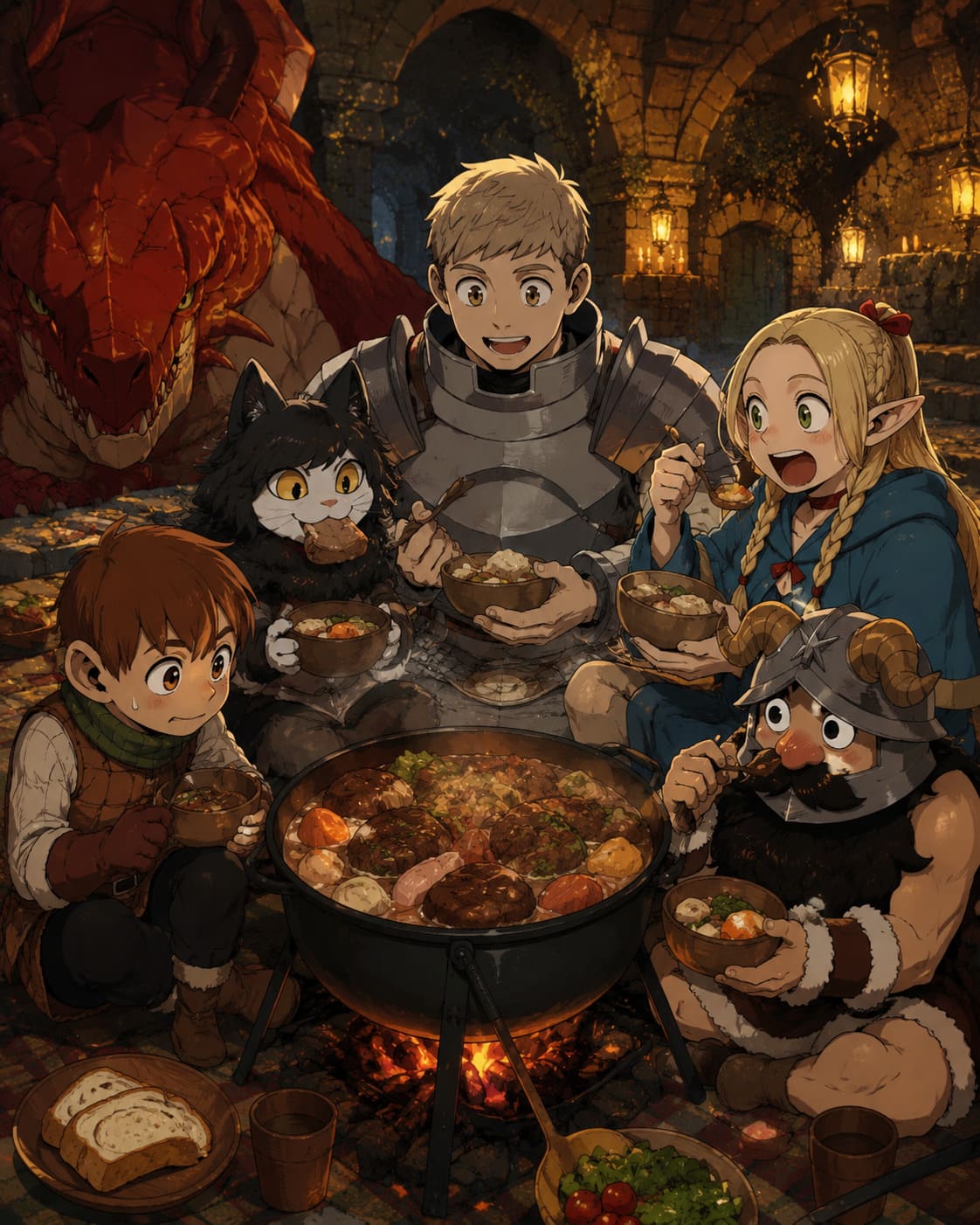
What I love most about the ending is that Melini doesn’t become a generic “perfect kingdom.”
It feels alive.
Different races coexist naturally, former enemies work together, and food becomes a cultural foundation instead of just survival.
That part feels very Delicious in Dungeon.
Food was always more than comedy in this series. Cooking represented trust, understanding, and adapting to the world rather than conquering it.
Melini reflects that philosophy perfectly.
Instead of building a militaristic empire, Laios creates a kingdom focused on coexistence.
Honestly, it’s refreshing compared to darker fantasy series that rely entirely on war and political betrayal.
Marcille and Laios Have One of the Best Relationships in Fantasy Manga
Fans still debate whether Laios and Marcille are romantic by the end, but personally, I think the ambiguity is what makes their relationship work so well.
They genuinely feel like soulmates regardless of labels.
Marcille staying beside Laios after everything they survived together feels completely natural. She becomes one of the key figures holding Melini together politically and magically.
And considering her long half-elf lifespan, there’s something quietly emotional about knowing she’ll probably carry the memory of this era far into the future.
Their relationship never needed dramatic confessions to feel important.
The trust between them already says enough.
Falin’s Ending Might Be the Most Beautiful Part
Falin’s resurrection could have easily turned into a cliché fantasy miracle.
Instead, it becomes one final expression of the series’ core identity: eating together.
To fully separate Falin from the dragon chimera body, everyone gathers for a massive feast and literally consumes the dragon portions piece by piece.
It sounds insane out of context.
But in Delicious in Dungeon, it feels weirdly heartfelt.
The act of eating becomes healing.
Community becomes salvation.
And Falin returning with traces of dragon traits still remaining was the perfect decision. Ryoko Kui avoids a cheap “everything goes back to normal” ending.
Because things shouldn’t return to normal after experiences like this.
People change.
Bodies change.
The world changes.
WITCHRIV Chapter 28: Official Release Date, Chapter 27 Breakdown, and Reddit Fan Theories
The Dungeon Era Officially Ends
One detail I think many fans overlook is how massive the ending’s worldbuilding implications actually are.
With the Winged Lion gone:
- Artificial mega-dungeons disappear
- Dungeon Lords can no longer exist
- Desire-fueled corruption ends
- The balance of magic fundamentally changes
That means the entire world enters a new era.
For centuries, civilizations lived in fear of dungeon catastrophes and magical disasters. Melini becomes proof that the world can finally move forward.
And that’s why the ending feels optimistic despite its melancholy.
It’s not pretending suffering never happened.
It’s showing that people can still build something better afterward.
Final Thoughts
Very few fantasy manga manage to balance comedy, emotional depth, political consequences, and worldbuilding as naturally as Delicious in Dungeon.
What started as “anime characters cooking monsters” evolved into a surprisingly thoughtful story about desire, community, identity, and rebuilding society after trauma.
The Kingdom of Melini represents all of that.
Laios doesn’t become a legendary king because he’s powerful.
He becomes legendary because he understands hunger — both literal and emotional.
And honestly, that makes him one of the most human fantasy protagonists I’ve seen in years.