Why Delicious in Dungeon Season 2’s “Dark Shift” Will Shock Netflix Viewers
When I first started watching Delicious in Dungeon, I expected exactly what most people expected: goofy fantasy adventures, weird monster recipes, and a cozy RPG atmosphere that felt like comfort food in anime form. And honestly? Season 1 delivered that perfectly. Every episode felt like sitting around a campfire with friends while someone experimented with cooking giant scorpions and living armor.
But after finishing the manga and rewatching parts of the anime, I genuinely think a huge portion of Netflix viewers still have no idea what kind of story they’ve actually signed up for.
Season 2 is where Dungeon Meshi stops being “the funny cooking anime” and transforms into something far more intense, emotional, and honestly disturbing at times. And I mean that as the biggest compliment possible.
A lot of anime fans online keep calling it the series’ “dark shift,” but I don’t even think that description fully captures how dramatic the tonal evolution really is. This isn’t just the story getting slightly more serious. It’s the moment where the series completely tears apart the illusion that the dungeon is some quirky fantasy playground.
And when Netflix-only viewers experience that shift for the first time, social media is going to explode.
The Cozy Fantasy Vibe Was Never the Full Story
One thing that made Season 1 so refreshing was how safe everything felt. Even when characters died, it rarely carried lasting emotional weight because resurrection magic existed inside the dungeon system. Death felt temporary. The party could fail, regroup, eat something bizarre, and continue moving forward.
That atmosphere created trust between the show and its audience.
Then Falin’s resurrection changed everything.
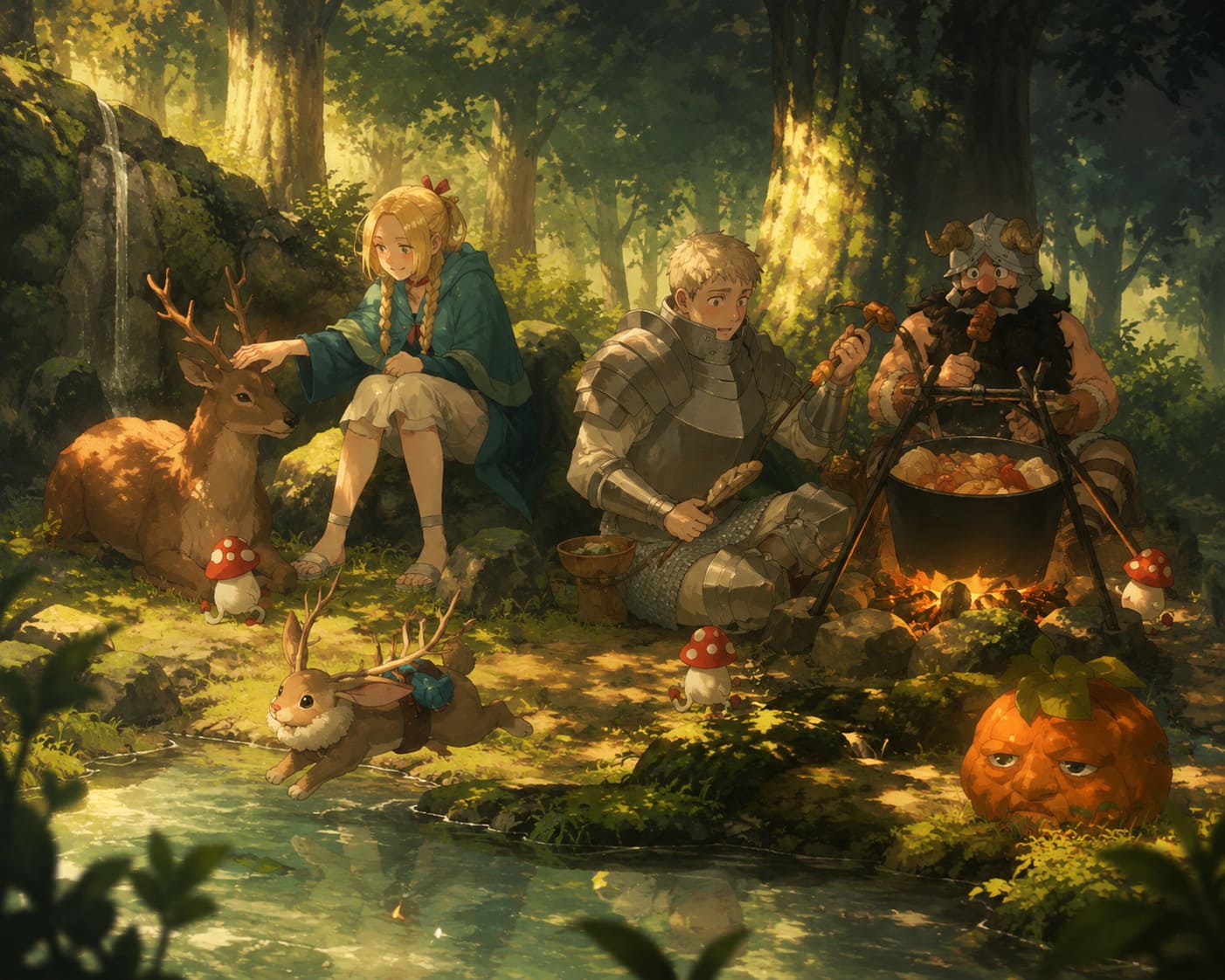
The moment forbidden magic entered the story, Dungeon Meshi quietly crossed a line that many viewers probably didn’t notice yet. Suddenly resurrection wasn’t just a gameplay mechanic anymore — it became horror. The consequences became physical, emotional, and deeply psychological.
Season 2 fully commits to that idea.
Falin’s chimera transformation is honestly one of the most unsettling developments in modern fantasy anime because it destroys the comforting rules the series spent an entire season building. The dungeon no longer feels adventurous. It starts feeling infected.
And the scariest part is that the characters themselves slowly realize they may already be too deep to escape it.
Marcille’s Character Arc Is Going to Surprise People
I think casual viewers still see Marcille mostly as the comedic reaction character. She’s expressive, emotional, dramatic, and constantly horrified by Laios’ obsession with monster cuisine. But manga readers know she eventually becomes one of the most emotionally complex characters in the entire story.
Season 2 dives directly into her fear of loss, mortality, and separation.
What makes her arc fascinating is that her motivations are completely understandable. She doesn’t use forbidden magic because she’s power-hungry. She uses it because she cannot emotionally accept losing the people she loves.
That’s what makes her dangerous.
There’s a tragic quality to Marcille that reminds me of classic fantasy characters who slowly convince themselves that terrible decisions are justified if the goal is noble enough. The deeper the story goes, the more blurred the line between “saving someone” and “controlling fate” becomes.
And honestly, I think a lot of viewers are going to end up sympathizing with her even while realizing she’s crossing ethical boundaries.
That internal conflict is where Dungeon Meshi becomes genuinely brilliant.
Laios Stops Being Just “The Funny Monster Guy”
This is probably the biggest shock waiting for anime-only fans.
Laios’ obsession with monsters has always been treated as a joke. He’s socially awkward, hyper-fixated, and endlessly fascinated by bizarre creatures in ways that make everyone around him uncomfortable. Early on, it feels harmless and funny.
Later? Not so much.
Season 2 starts examining Laios from an outside perspective, especially through characters who don’t automatically trust him. And once the story does that, you realize how unsettling some of his behavior actually is.
There are moments where his emotional disconnect from normal human reactions becomes genuinely uncomfortable. His empathy toward monsters often feels stronger than his empathy toward people. The story intentionally forces viewers to question whether Laios is uniquely capable of understanding the dungeon… or whether the dungeon appeals to him because he already thinks differently from everyone else.
That’s such a risky direction for a protagonist, and I love the series for committing to it.
The World Gets Much Bigger — And Much Crueler
Season 1 mostly feels isolated inside the dungeon. The outside world barely matters.
That changes dramatically once the Canaries arrive.
The introduction of the Western Elves and their elite anti-magic forces completely changes the tone of the story. Suddenly the dungeon isn’t just a dangerous ecosystem — it’s part of a larger political nightmare involving forbidden knowledge, historical atrocities, and authoritarian control.
The Canaries don’t feel like heroic fantasy adventurers. They feel like institutional enforcers.
That contrast works incredibly well because Laios’ group still behaves like a messy found family trying to survive together while the outside world treats them as dangerous criminals meddling with forces beyond human control.
It adds tension to every interaction.
The Winged Lion Changes the Entire Meaning of the Series
Without spoiling too much, the true nature of the dungeon is where Dungeon Meshi evolves from fantasy adventure into something much closer to cosmic horror.
The Winged Lion is easily one of the most fascinating antagonistic forces I’ve seen in recent anime fantasy storytelling because it doesn’t operate through simple destruction. It manipulates desire itself.
That idea completely reframes the show’s obsession with food and consumption.
At first, eating monsters represented survival, curiosity, and cultural connection. Later, the concept of “consumption” becomes psychological and existential. Desire itself becomes dangerous.
The deeper the story goes, the more the dungeon feels alive in the worst possible way.
And honestly? Some scenes later in the manga genuinely reminded me more of psychological horror series than traditional fantasy anime.
Delicious in Dungeon: Chilchuck Tims Family Backstory And Daughters Explained
Why Studio Trigger Is Perfect for This Evolution
I’ve seen people online wondering whether Studio Trigger can handle the darker material.
Personally, I think they’re the perfect studio for it.
Their exaggerated expressions and dynamic animation already gave Season 1 incredible energy, but those same strengths are going to make the horror moments hit even harder. Trigger excels at visual chaos, emotional intensity, and sudden tonal whiplash.
That’s exactly what Dungeon Meshi becomes later on.
| Season 1 Elements | Season 2 Evolution |
|---|---|
| Bright fantasy adventure | Claustrophobic horror atmosphere |
| Cozy cooking scenes | Visceral body horror |
| Comedic dungeon exploration | Psychological breakdowns |
| Fun monster encounters | Existential threats |
| Warm color palettes | Heavy shadows and oppressive environments |
The contrast itself becomes part of the storytelling.
This Is Why the Series Became a Modern Fantasy Masterpiece
What makes Delicious in Dungeon special isn’t just that it becomes darker.
It’s that the darker material feels completely earned.
Looking back, the signs were always there. The ecosystem logic. The obsession with hunger. The moral ambiguity of resurrection. The emotional isolation of the characters. Ryoko Kui built the foundation carefully from the beginning.
Season 2 simply removes the mask.
And once that happens, the series transforms into something far more memorable than a simple gimmick anime about cooking monsters.
It becomes a story about obsession, desire, grief, identity, and the terrifying things people justify when they’re afraid to lose someone they love.
Netflix viewers expecting another season of lighthearted fantasy comfort food are about to experience one of the wildest tonal evolutions anime has delivered in years.
And honestly?
I can’t wait to watch everyone collectively lose their minds over it.