Who Does Laios End Up With in Delicious in Dungeon? The Ending Explained
When I finished Delicious in Dungeon, one thing became immediately clear to me: Ryoko Kui never wanted this story to be about “who gets the girl.” And honestly? That is exactly why the ending works so well.
In modern anime and manga, fans are almost trained to expect a final romantic payoff. Somebody confesses, somebody gets married, and the audience gets a neat little relationship conclusion before the credits roll. But Dungeon Meshi does something far more interesting. It gives its characters emotional fulfillment without forcing them into a standard romance formula.
And that is why people are still debating Laios’ ending months after the manga concluded and the anime exploded in popularity worldwide.
So… does Laios end up with anyone?
The short answer is no — at least not officially. But the longer answer is much more fascinating.
By the final chapters of Delicious in Dungeon, Laios Touden becomes the King of Melini after the collapse of the Golden Country and the defeat of the Winged Lion. Instead of ending with a wedding or romantic confession, the story closes with Laios surrounded by the people who survived the dungeon alongside him.
That choice feels incredibly intentional.
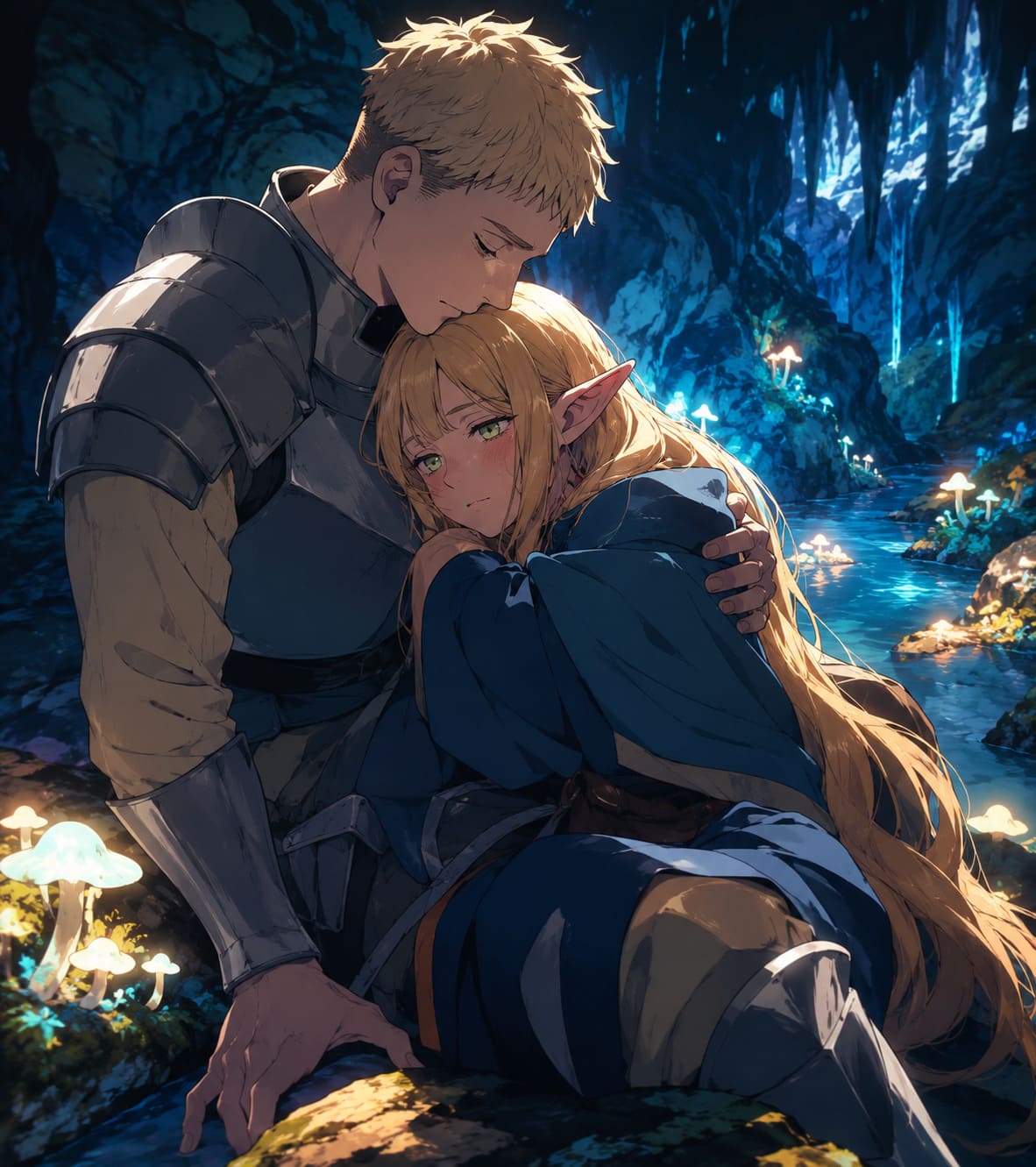
Laios is not written like a typical fantasy protagonist. He is awkward, obsessive, socially disconnected at times, and deeply fascinated by monsters in ways most people around him simply cannot understand. His passions are weird. His priorities are weird. And somehow that makes him one of the most lovable protagonists in modern fantasy anime.
For someone like Laios, a traditional romance ending almost would have felt forced.
What he gains instead is:
- A kingdom that finally accepts him
- Friends who genuinely understand him
- A purpose larger than dungeon exploration
- A family rebuilt after unimaginable trauma
That emotional payoff hits harder than a rushed confession ever could.
The Curse That Makes the Ending Bittersweet
One of the most overlooked parts of the finale is Laios’ curse.
After consuming the desires of the Winged Lion, Laios permanently gains an aura that causes monsters to flee from him. For anyone else, this would sound useful. For Laios, it is heartbreaking.
This is a man who spent the entire story fascinated by monsters — not just as enemies, but as living creatures with ecosystems, biology, and culinary value. Monsters were his greatest passion.
And in the end, he loses the ability to truly connect with them.
That irony is painfully good writing.
Ryoko Kui gives Laios the responsibility of protecting a kingdom, but takes away the thing he personally loved most. It is a classic fantasy trade-off, and it quietly turns the ending into something melancholic beneath all the optimism.
Why Fans Ship Laios and Marcille So Hard
Even though the manga never confirms a romance, the biggest ship in the fandom is easily Laios x Marcille.
And honestly, I understand why.
Their relationship has the kind of chemistry that does not need loud romantic scenes to feel meaningful. It is built slowly through trust, exhaustion, survival, and emotional dependence.
Some moments especially stand out:
| Moment | Why Fans Care |
|---|---|
| Laios reacting emotionally to Marcille’s future | Shows how deeply he values her happiness |
| Marcille remaining beside him after the ending | Suggests long-term emotional commitment |
| Their domestic-looking epilogue scenes | Feels intentionally intimate without confirmation |
| Their contrasting personalities | Chaos meets emotional grounding |
What makes the pairing interesting is that Ryoko Kui never pushes it too hard. The story leaves enough ambiguity that readers can interpret them as romantic soulmates or simply lifelong companions.
Personally, I think that ambiguity is the best part.
A confirmed relationship might actually weaken the subtle emotional realism between them. Their bond already feels complete without needing labels.
Marcille Might Actually Be the Emotional Core of the Entire Story
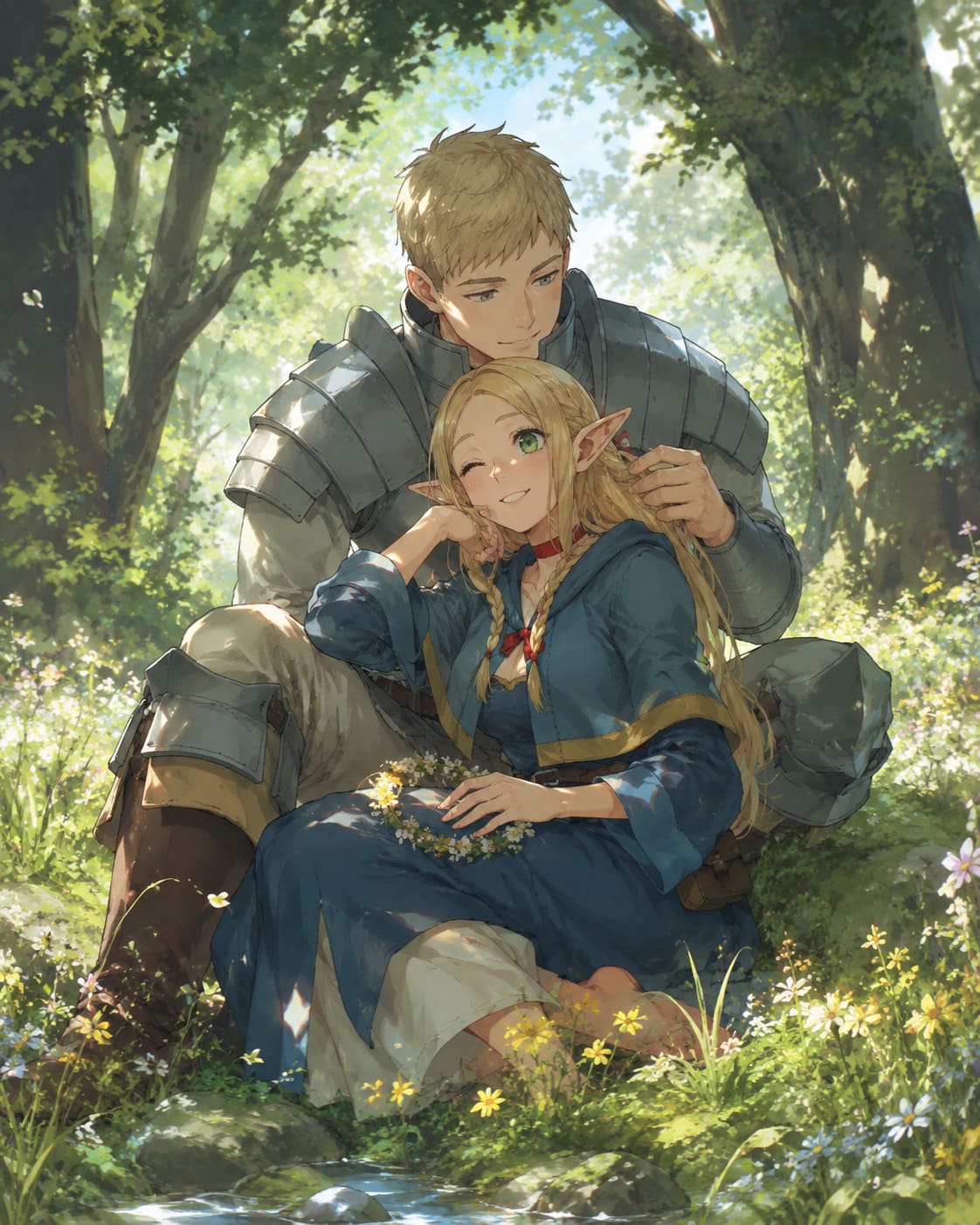
One thing anime fans often overlook is that Marcille drives a massive amount of the plot emotionally.
Her fear of losing people is central to everything.
As a half-elf, Marcille is painfully aware that she will outlive many of the people she loves. That fear is what pushes her toward forbidden magic and desperate decisions throughout the story.
And when you look at the ending through that lens, her staying in Melini with Laios becomes incredibly meaningful.
Not because it guarantees romance.
But because it guarantees belonging.
For perhaps the first time in her life, Marcille finds a place where she is fully accepted — surrounded by people who know her flaws, her mistakes, and her fears, yet still choose her anyway.
That emotional security matters more than whether she kisses somebody in the final chapter.
The Other Side of the Fandom: Kabru and Falin Discussions
Of course, Dungeon Meshi fans are famous for having multiple interpretations of every relationship.
Two other major perspectives always appear in community discussions.
Laios and Kabru
This dynamic became much more popular near the end of the manga.
Kabru understands politics and human behavior better than almost anyone in the series, while Laios understands monsters and survival instincts. Together, they oddly balance each other perfectly.
Their post-ending partnership running Melini has massive “political duo” energy, and many fans love the contrast between Kabru’s calculated intelligence and Laios’ chaotic sincerity.
Marcille and Falin
This might honestly be the fandom’s most emotionally charged ship.
Marcille’s devotion to saving Falin drives huge portions of the narrative. She breaks rules, risks her future, and descends deeper into darkness because she cannot accept losing her.
There is an intensity there that many readers interpret romantically.
And unlike some anime fandom ships that rely entirely on headcanon, this one genuinely has strong emotional material backing it up.
Why Delicious in Dungeon Season 2’s “Dark Shift” Will Shock Netflix Viewers
Why the Ending Feels More Mature Than Most Fantasy Anime
A lot of fantasy series struggle because they treat romance like a final reward.
Delicious in Dungeon avoids that trap entirely.
Instead, the story focuses on something much more human: community.
The entire manga is about people eating together, surviving together, and slowly learning to understand each other despite their differences. Food is never just food in this series. Meals become trust, grief, healing, and identity all at once.
That is why the ending resonates so strongly.
Laios does not “win” a romantic partner.
He wins a future.
He ends up surrounded by people who stayed beside him after seeing his strangest, weakest, and most broken sides. In many ways, that is far more meaningful than a simple romance conclusion.
Final Thoughts
If you went into Delicious in Dungeon expecting a clean romantic ending, the finale might initially feel surprising. But the more I thought about it, the more I realized Ryoko Kui made exactly the right choice.
Laios ending up officially with someone would have narrowed the emotional scope of the story. Leaving things open allows every relationship to remain important — friendship, family, loyalty, and companionship all carry equal emotional weight.
And honestly, that feels rare in anime now.
Whether you ship Laios with Marcille, Kabru, nobody at all, or simply believe the man’s true soulmate was monster cuisine, the ending succeeds because it respects the complexity of human connection.
In the end, Dungeon Meshi was never really asking “Who does Laios love?”
It was asking what kind of life is worth sharing with others.
And that answer was far more satisfying.