Marriagetoxin Ending Debate: Why Gero and Kinosaki Changed the Story
When people first hear about Marriagetoxin, they usually focus on the obvious selling points. An assassin protagonist. Poison-based combat. Deadly clan politics. Over-the-top matchmaking missions. On paper, it sounds like another action-heavy Shonen series with a quirky romantic premise.
But after following both the manga and the recent anime adaptation, I’ve become convinced that the real reason Marriagetoxin stands out isn’t its fights at all.
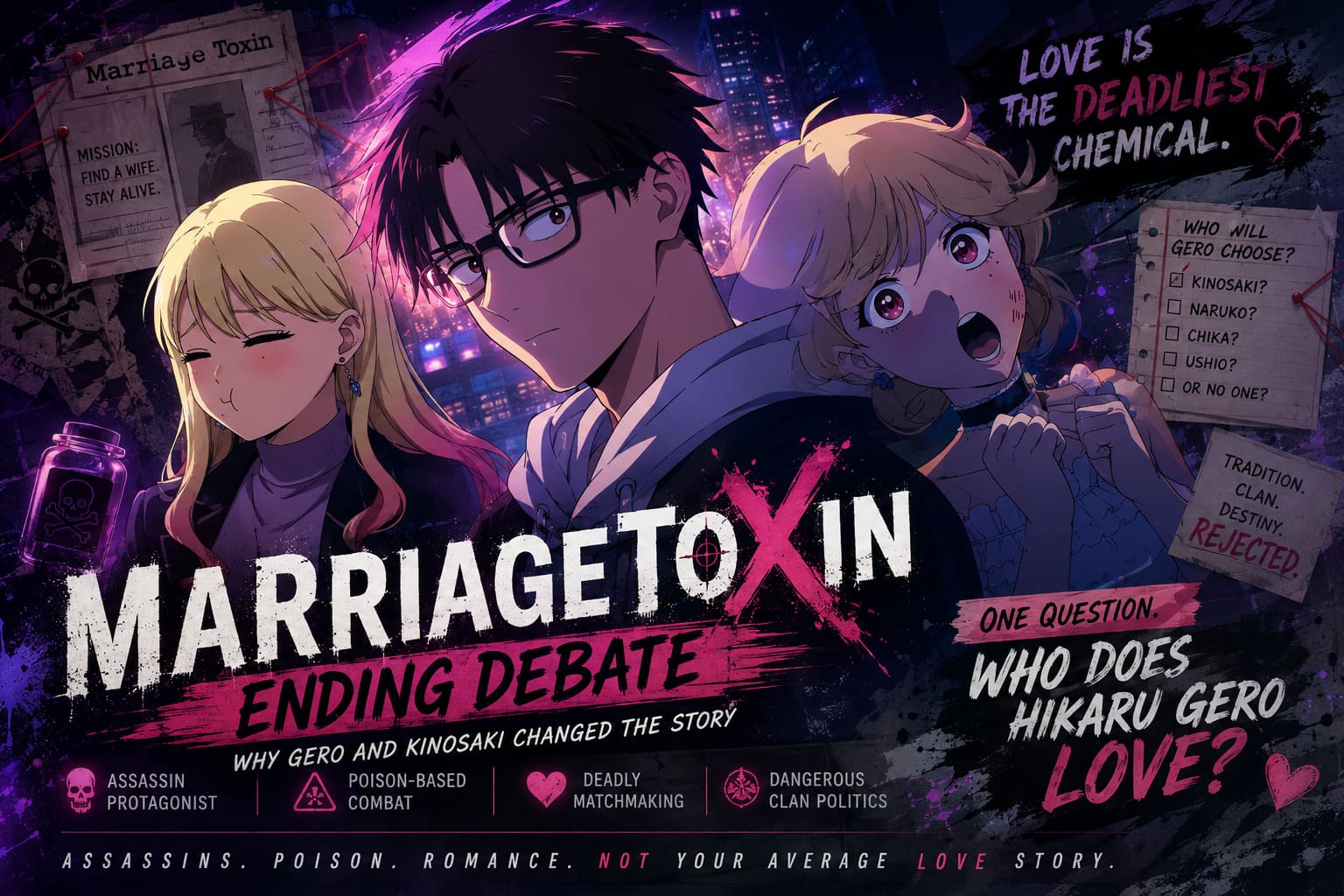
It’s the uncomfortable question hiding underneath everything:
Who does Hikaru Gero actually love?
And honestly, that question has sparked one of the most interesting fandom debates I’ve seen in years.
Coco vs Agott: The Best Character Rivalry in Witch Hat Atelier
Why Marriagetoxin Feels Different From Typical Harem Series
Most harem manga follow a formula we’ve all seen countless times.
A male protagonist meets multiple potential love interests. Fans choose sides. Shipping wars begin. Eventually, one girl wins while everyone else becomes emotional collateral damage.
Marriagetoxin never felt interested in following that formula.
What makes the series refreshing is that nearly every major heroine has her own ambitions, goals, and future outside of Gero. They aren’t written as satellites orbiting the protagonist. They are capable people who existed before he entered their lives and will continue existing after.
That may sound like a small detail, but it completely changes how readers approach the story.
Why Qifrey Is the Most Tragic Character in Witch Hat Atelier
Instead of asking:
“Which girl deserves to win?”
Many readers eventually start asking:
“Does this story even need a traditional winner?”
That shift is what separates Marriagetoxin from many modern romance-action hybrids.
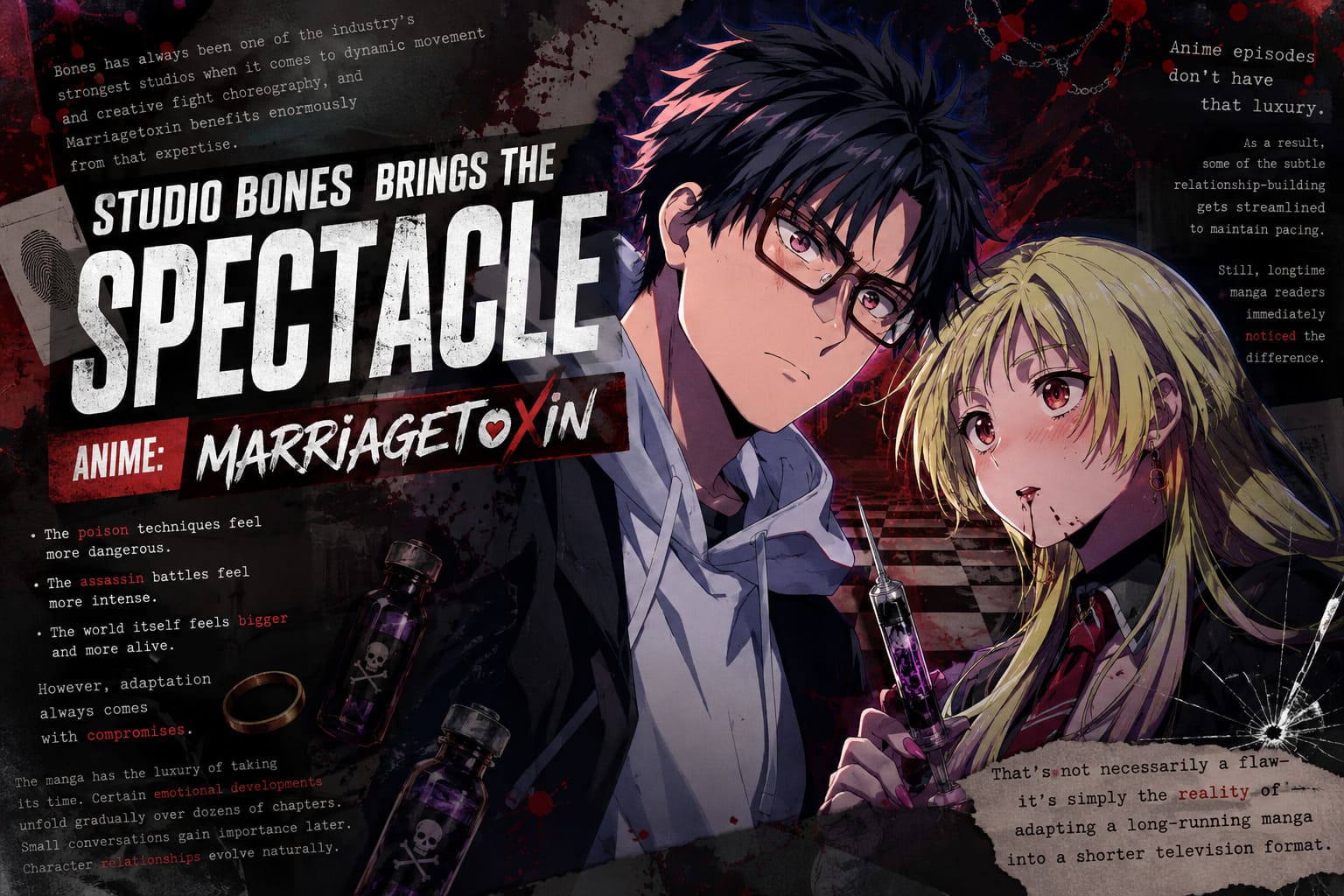
Studio Bones Brings the Spectacle
The anime adaptation deserves credit for one thing above all else: making the action look incredible.
Bones has always been one of the industry’s strongest studios when it comes to dynamic movement and creative fight choreography, and Marriagetoxin benefits enormously from that expertise.
- The poison techniques feel more dangerous.
- The assassin battles feel more intense.
- The world itself feels bigger and more alive.
However, adaptation always comes with compromises.
The manga has the luxury of taking its time. Certain emotional developments unfold gradually over dozens of chapters. Small conversations gain importance later. Character relationships evolve naturally.
Anime episodes don’t have that luxury.
As a result, some of the subtle relationship-building gets streamlined to maintain pacing. That’s not necessarily a flaw—it’s simply the reality of adapting a long-running manga into a shorter television format.
Still, longtime manga readers immediately noticed the difference.
The Real Heart of the Story: Gero and Kinosaki
Let’s talk about the elephant in the room.
No discussion about Marriagetoxin can avoid the relationship between Hikaru Gero and Mei Kinosaki.
At first, Kinosaki seems like comic relief.
A cross-dressing marriage scam artist helping a socially awkward assassin find a wife?
That sounds ridiculous.
Yet chapter after chapter, episode after episode, something unexpected happens.
Their partnership becomes the emotional foundation of the entire series.
- Whenever Gero is confused, he turns to Kinosaki.
- Whenever he struggles socially, Kinosaki helps him.
- Whenever things fall apart, Kinosaki is there.
Over time, their relationship begins feeling more significant than many of the official romantic candidates.
And that’s where the fandom exploded.
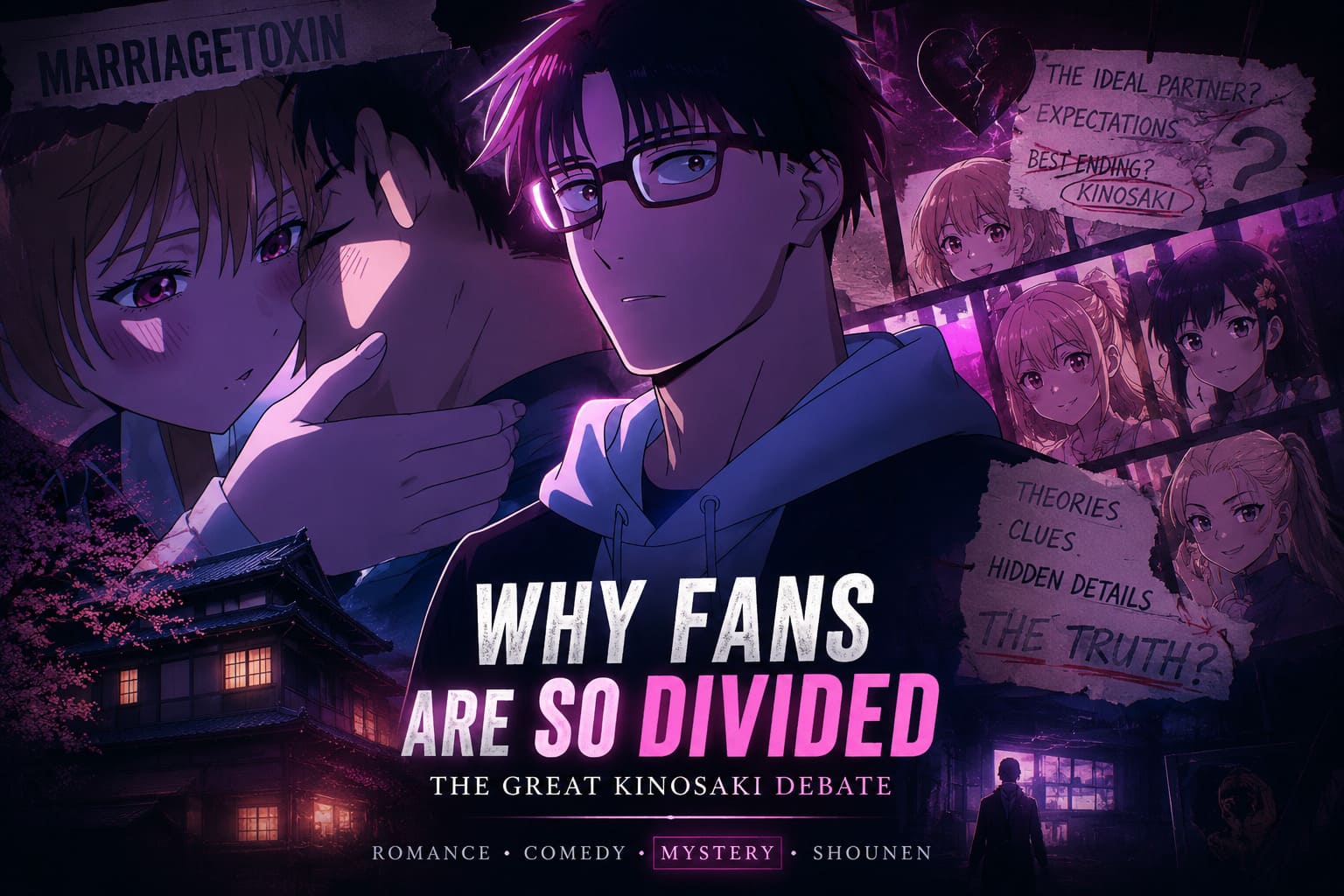
Why Fans Are So Divided
I’ve spent plenty of time reading discussions across forums, social media, and fan communities, and the divide generally falls into three major camps.
Team Gerosaki
These fans believe the story has been building toward Gero and Kinosaki from the beginning.
Their argument is simple.
Marriagetoxin is fundamentally about rejecting restrictive traditions.
Gero rebels against family expectations. He protects his sister’s freedom. He challenges toxic clan values.
From this perspective, choosing Kinosaki would perfectly reinforce the series’ themes about personal choice and authentic happiness.
Traditional Romance Supporters
On the opposite side are fans who expected a more conventional ending.
Many readers became attached to characters like Naruko, Chika, Ushio, or other candidates introduced throughout the story.
For them, the romantic journey was always about finding the best female partner for Gero.
Some feel that shifting toward Kinosaki as the final romantic choice would dramatically change the expectations established early in the series.
The Mystery-Theory Crowd
Then there are the theorists.
You know the type.
Every fandom has them.
These fans spend hours analyzing dialogue, clues, and hidden details searching for a massive twist that could completely redefine Kinosaki’s identity or role in the story.
Personally, I think the series works best when it commits to the themes it has already developed rather than relying on a last-minute shock reveal.
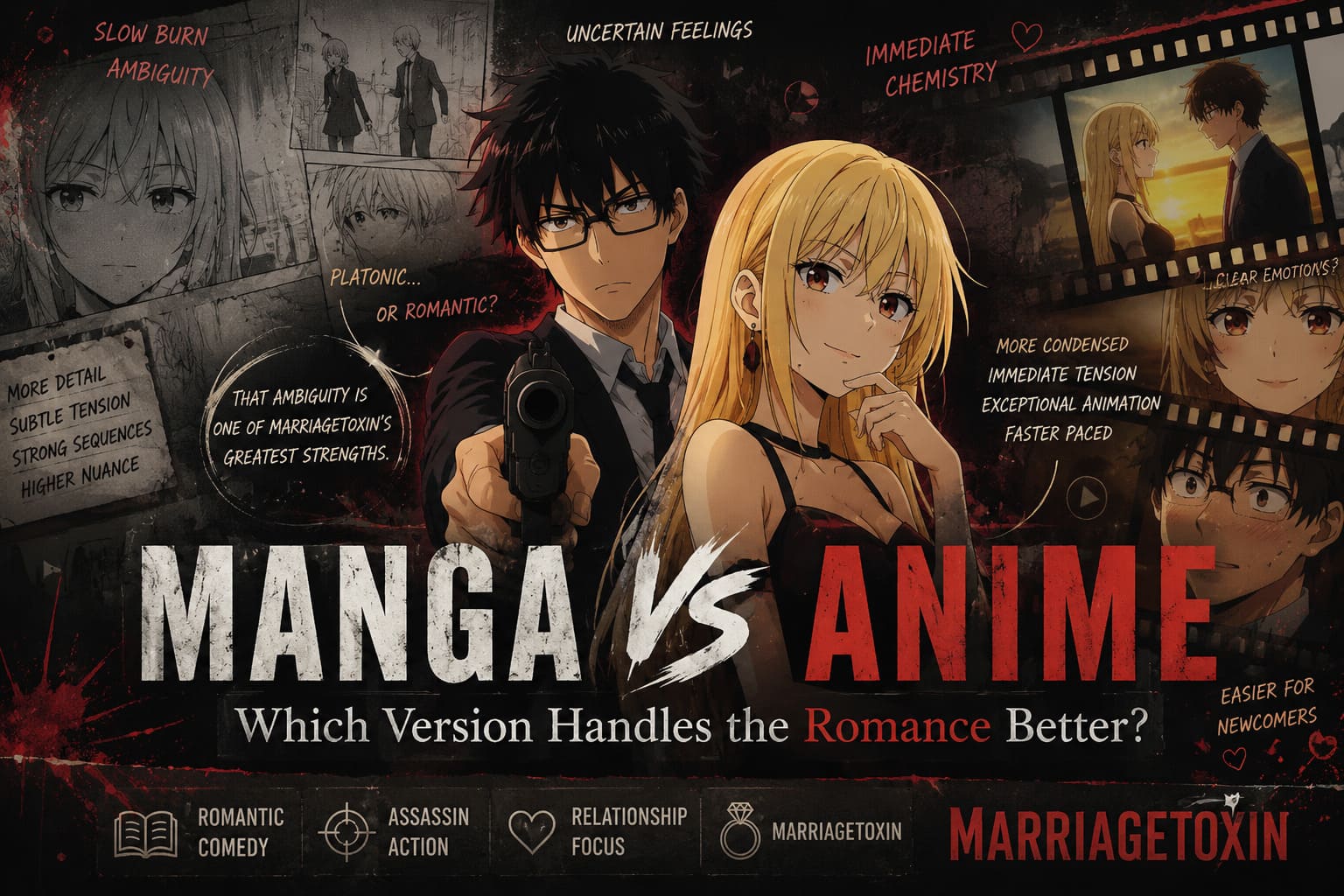
Manga vs Anime: Which Version Handles the Romance Better?
This is where my opinion might be unpopular.
I actually think the manga handles the romantic tension more effectively.
Not because the anime is bad.
Far from it.
The anime excels at making emotions visible. Voice acting, music, animation, and direction create immediate chemistry between characters.
But the manga allows readers to sit with uncertainty.
The slow pacing creates ambiguity.
You constantly wonder whether certain interactions are romantic, platonic, or something existing somewhere between the two.
That ambiguity is one of Marriagetoxin’s greatest strengths.
The anime sometimes makes those emotional signals feel more obvious than they do on the page.
| Aspect | Manga | Anime |
|---|---|---|
| Character Development | More detailed | More condensed |
| Romantic Tension | Subtle and gradual | More immediate |
| Action Sequences | Strong | Exceptional |
| Emotional Nuance | Higher | Faster-paced |
| Accessibility | Requires commitment | Easier for newcomers |
What I Think the Ending Should Do
At this point, I care less about who Gero ends up with and more about whether the conclusion stays true to the story’s themes.
The best endings aren’t always the safest ones.
They’re the ones that feel earned.
Whether the manga chooses:
- Kinosaki
- One specific heroine
- An open-ended conclusion
- A completely unexpected outcome
The important thing is that the decision reflects Gero’s personal growth rather than fan pressure.
Too many series change direction because authors become afraid of controversy.
Marriagetoxin has built its reputation on challenging expectations.
It would be a shame if the finale suddenly became predictable.
Final Thoughts
Marriagetoxin started as a bizarre combination of assassins, poison techniques, matchmaking schemes, and family drama.
Somehow, it evolved into one of the most fascinating relationship stories currently running in modern manga.
The anime adaptation delivers spectacular action and introduces the franchise to a much wider audience, but the manga remains the richer experience when it comes to character relationships and emotional complexity.
Regardless of which side of the shipping war you support, one thing is clear:
People care.
And in today’s crowded manga and anime landscape, creating characters that inspire this much passionate discussion might be the series’ greatest achievement.