A Questionnaire on the Mouth Chapter 3 Release date, Chapter 2 Analysis
If there’s one horror manga that’s completely caught me off guard this year, it’s A Questionnaire on the Mouth. I expected something unsettling simply because Shuzo Oshimi is involved, but Chapter 2 delivered something much more disturbing than jump scares or graphic horror. It builds fear through contradictions, guilt, and the terrifying possibility that memory itself cannot be trusted.
After finishing the chapter, I immediately went back and reread parts of Chapter 1 because there were so many small details that suddenly carried a completely different meaning. That’s usually a good sign with psychological horror—the story rewards readers who pay attention instead of simply shocking them with monsters.
For anyone following the series on MANGA Plus, Chapter 2 feels like the point where the mystery finally begins revealing its true shape without actually giving away its biggest secrets.
Chapter 3 Release Date
Thankfully, fans won’t have to wait long to see where the story goes next. Chapter 3 is officially scheduled to release on July 17, 2026. Like previous installments, it will launch simultaneously worldwide through MANGA Plus at 11:00 AM ET / 8:00 AM PT. Considering how Chapter 2 ends, it’s easily one of my most anticipated manga releases of the month.
Chapter 2 Turns the Story Into an Investigation
One of my favorite decisions in this chapter is how the narrative completely abandons a traditional perspective.
Instead of showing everything as a straightforward flashback, we’re given two separate recorded testimonies from people who survived the same night.
At first glance they seem to describe identical events.
They absolutely do not.
Each recording quietly exposes flaws in the other until readers realize someone is hiding the truth—or perhaps everyone is remembering things differently after experiencing unimaginable trauma.
That approach immediately made the story feel less like a ghost tale and more like a psychological investigation.
What makes this structure work so well:
- Every testimony introduces new facts instead of repeating scenes.
- Contradictions appear naturally instead of feeling forced.
- Readers become investigators rather than passive observers.
- Every new detail raises even more questions.
It creates the uncomfortable feeling that nobody—not even the narrator—can be fully trusted.
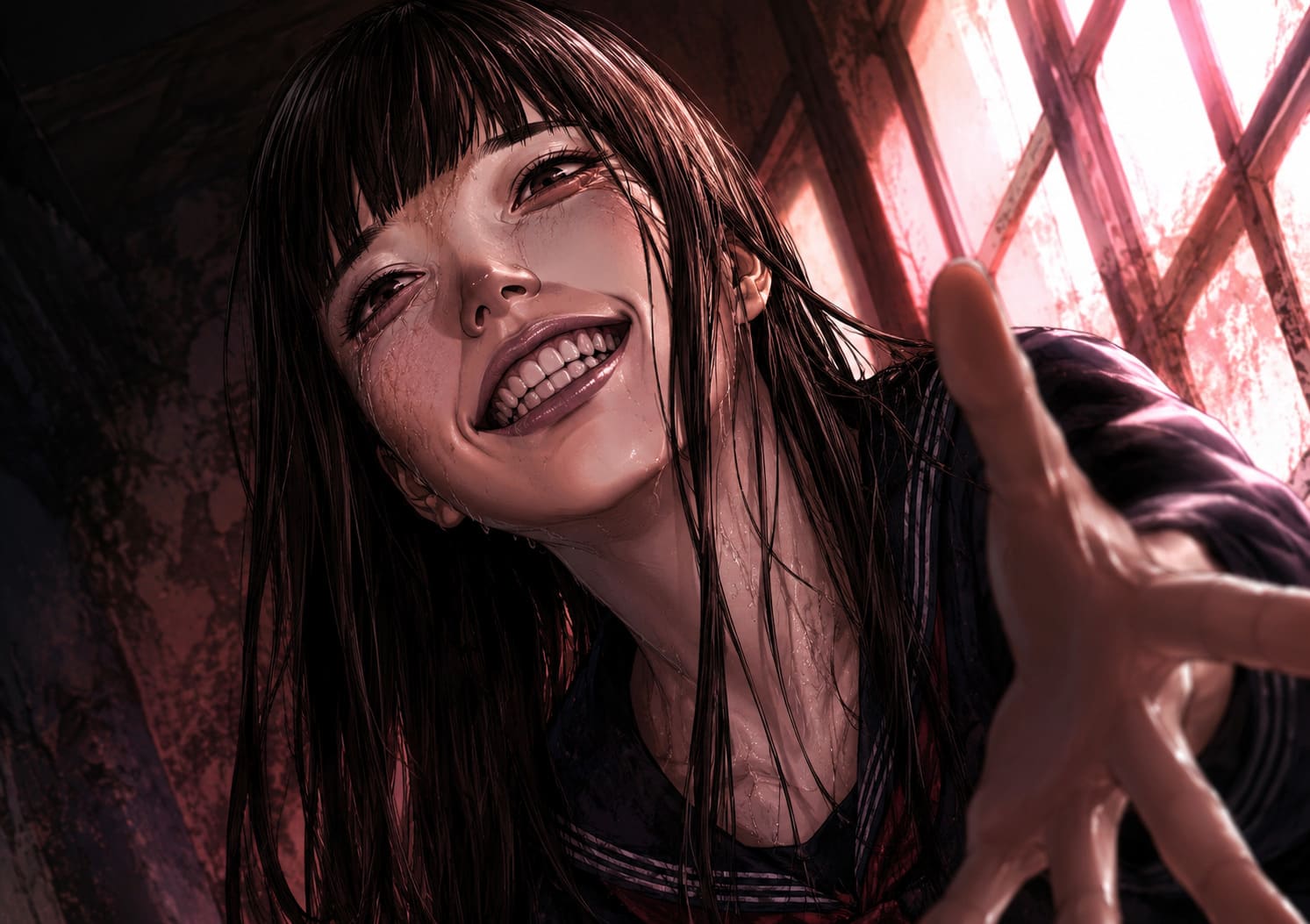
Mirei Completely Changes Everything
If Tatsuya’s recording establishes the mystery, Mirei’s recording tears it apart.
She doesn’t simply add information.
She rewrites the emotional context behind almost every event.
Suddenly we learn about the complicated relationship between An, Shota, and Tatsuya. Their visit to the cemetery wasn’t just a random test of courage between friends.
There was unresolved jealousy.
There were lingering emotions.
There was tension before anyone even entered the graveyard.
That matters because Oshimi has always been excellent at showing that people often create their own emotional disasters long before anything supernatural appears.
The curse almost feels like something waiting for broken relationships to expose themselves.
The Tree Scene Is Disturbing for All the Right Reasons
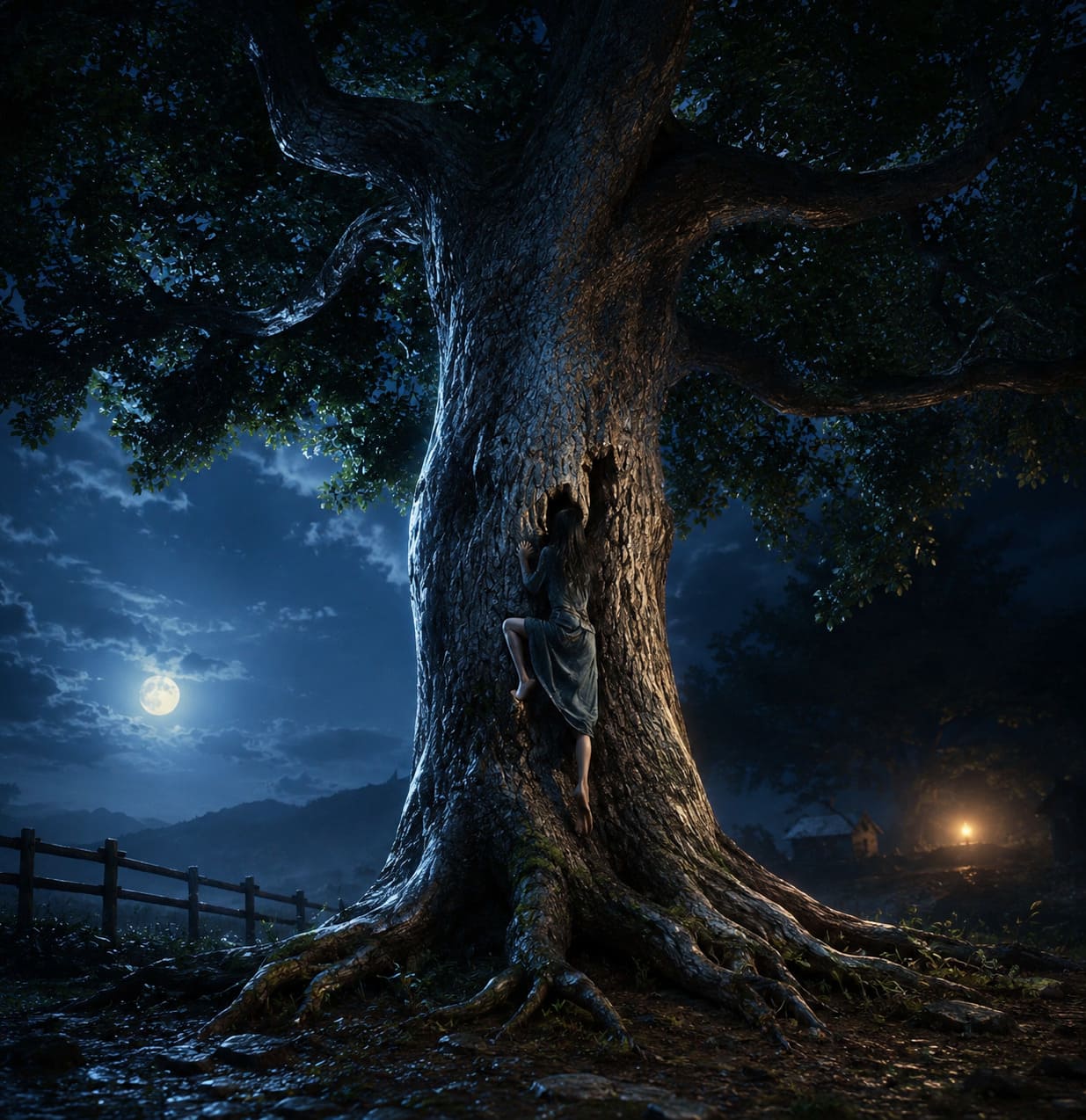
The visual highlight of the chapter is obviously An’s encounter with the mysterious tree.
Yet surprisingly, I don’t think the horror comes from the grotesque mouth transformation.
Instead, it’s the way Oshimi draws obsession.
An climbing higher and higher while repeating the same word feels strangely realistic despite the supernatural context.
Readers aren’t simply watching someone become possessed.
They’re watching someone completely lose control over their own body.
That difference is what makes the sequence memorable.
Rather than relying on gore, the artwork emphasizes expressions, body language, and uncomfortable silence.
That’s classic Oshimi.
The Real Horror Isn’t the Curse
Personally, the most chilling moment wasn’t the mutation.
It was Tatsuya’s reaction afterward.
Seeing someone obviously traumatized while casually insisting that everything is “nothing serious” says far more about human nature than any monster ever could.
That single moment completely changed how I viewed his character.
Whether he’s lying intentionally or simply refusing to accept reality doesn’t even matter.
His denial becomes another layer of horror.
It’s the kind of scene that stays in your head because it feels believable.
People really do minimize terrible situations when they’re overwhelmed.
Comparing the Two Testimonies
| Tatsuya’s Version | Mirei’s Version |
|---|---|
| Focuses on the cemetery challenge. | Focuses on the group’s hidden relationships. |
| Claims events unfolded quickly. | Reveals several important conversations beforehand. |
| Avoids discussing An’s behavior in detail. | Witnesses An’s terrifying transformation. |
| Presents himself as frightened. | Presents herself as someone trying to save a friend. |
| Leaves many unanswered questions. | Connects several missing pieces together. |
This contrast is probably my favorite storytelling device so far.
Neither testimony necessarily feels completely false.
But together, they prove neither tells the entire story.
Why Everyone Is Already Talking About Chapter 3
After Chapter 2, I completely understand why discussion threads exploded.
The manga quietly introduces dozens of unanswered questions without making readers feel manipulated.
Among the biggest mysteries still hanging over the story are:
- Who is actually conducting these interviews?
- Why are these recordings being collected?
- Why does the system appear to “accept” certain testimonies?
- What exactly happened during the ride home?
- What caused An’s death?
These aren’t random cliffhangers.
They’re directly connected to the central mystery, which makes theorizing surprisingly enjoyable.
My Personal Theory
Like many readers, I’m starting to think the interviews themselves are more important than the cemetery.
The mysterious questionnaire doesn’t behave like an ordinary investigation.
Instead, it almost feels like something supernatural evaluating people’s honesty.
That’s why Mirei’s testimony stands out so much.
Unlike Tatsuya, she openly admits what she experienced, even if it sounds impossible.
If the series continues following this idea, then future chapters may become less about discovering what happened that night and more about determining who is actually capable of telling the truth.
That would perfectly match Oshimi’s recurring themes.
His stories rarely focus on external monsters.
They’re usually about the lies people tell themselves.
Why Oshimi Was the Perfect Artist for This Story
Fans of Blood on the Tracks or The Flowers of Evil will probably recognize several familiar strengths.
Oshimi has always excelled at:
- Uncomfortable facial expressions.
- Emotionally exhausting conversations.
- Slow psychological tension.
- Ordinary settings becoming deeply unsettling.
Those strengths fit this adaptation almost perfectly.
Even scenes where characters are simply talking carry an incredible amount of pressure.
Sometimes a single facial expression says more than an entire page of dialogue.
That’s something very few manga artists can consistently achieve.
Hey! Devil Girl! Chapter 7 Release Date, Speculation, and Complete Chapter 6 Chronological Analysis
Expectations for Chapter 3
I’m trying not to predict every twist because psychological horror usually works best when it surprises readers.
Still, there are a few developments I’d genuinely love to see.
- A new testimony from another survivor that adds an entirely different perspective.
- More answers about the mysterious questionnaire and who is collecting these recordings.
- A deeper explanation of the beach framing device.
- Additional clues surrounding An’s death and the strange curse connected to the tree.
Right now the beach scenes feel disconnected from the cemetery, but that’s almost certainly intentional.
If everything eventually connects together, this could become one of Oshimi’s most fascinating mystery projects.
Final Thoughts
After reading Chapter 2 twice, I came away impressed not because it scared me, but because it trusted readers to pay attention.
The horror isn’t built around monsters jumping out from the darkness.
It’s built around conflicting memories, emotional guilt, and tiny inconsistencies that slowly reshape everything you thought you understood.
That’s the kind of psychological storytelling I always hope to find in modern horror manga.
If Chapter 3 manages to maintain this momentum while answering even a few of the larger mysteries, A Questionnaire on the Mouth could become one of the standout horror manga of the year.
With the official Chapter 3 release set for July 17, 2026, fans won’t have to wait much longer to discover whether the next testimony uncovers even darker truths or simply deepens the mystery. Either way, this is one of those rare series that becomes more fascinating the longer you think about it.