Choujin X Elden Ring Connection: How FromSoftware Inspired Sui Ishida’s Dark Masterpiece in 2026
Dark fantasy fans have been eating well in 2026, and Choujin X has become one of the biggest reasons why. Sui Ishida already proved his talent years ago with Tokyo Ghoul, but this manga has grown into something completely different. It doesn’t rely on familiar shonen formulas or straightforward storytelling. Instead, it throws readers into a broken world that refuses to explain itself, rewarding anyone willing to slow down and connect the pieces.
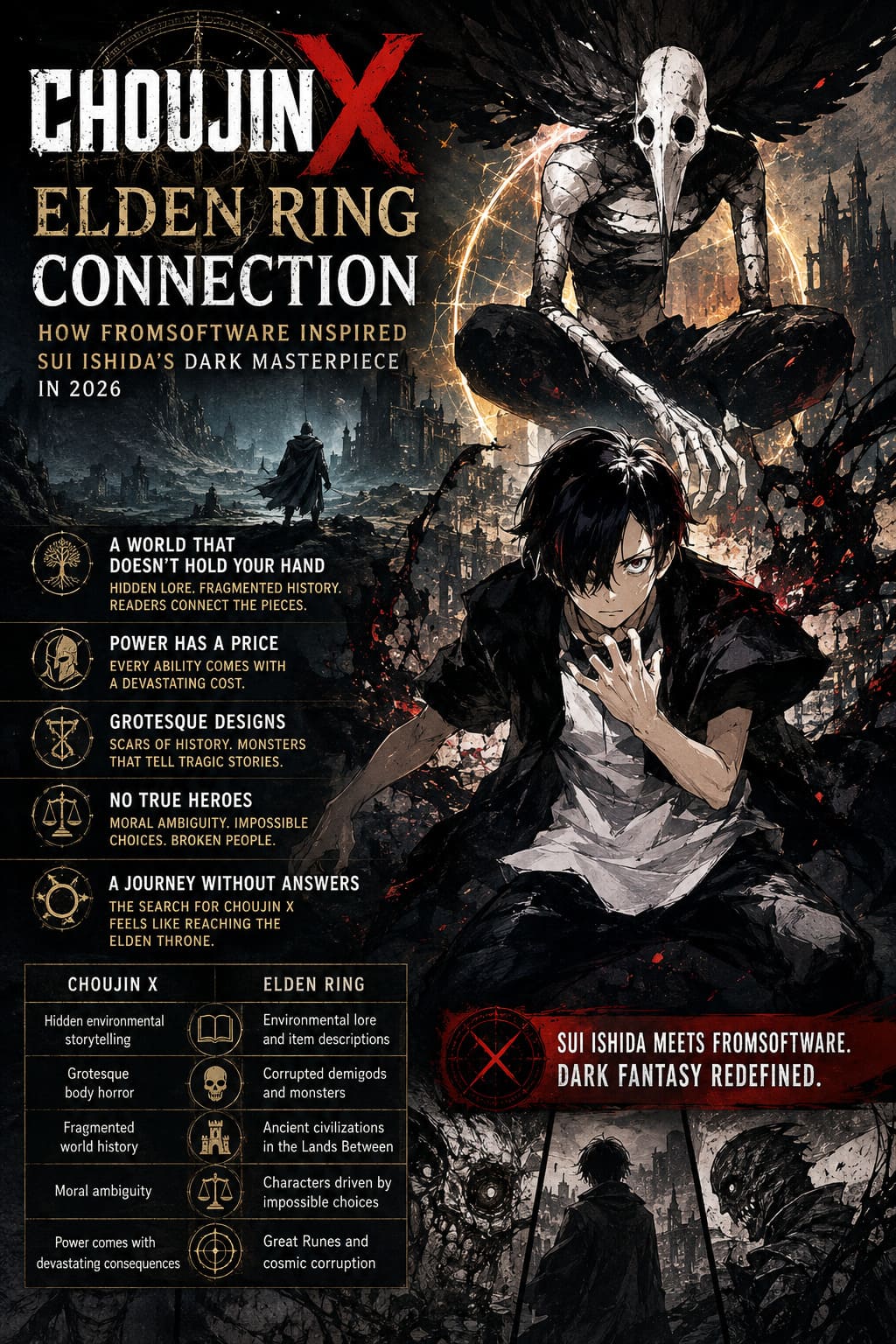
After spending months following discussions on anime forums, Reddit, and YouTube, one comparison keeps showing up again and again: Elden Ring. At first, I thought people were stretching things just because both series fall into the dark fantasy category. The more chapters I read, though, the harder it became to ignore the similarities. Not because Choujin X copies FromSoftware, but because it embraces the same philosophy of storytelling that made Elden Ring unforgettable.
Choujin X Calamity Prophecy Explained: Who Is The Real Beast of Destruction?
A World That Doesn’t Hold Your Hand
One of my favorite things about Choujin X is how little it actually tells you. Modern manga often introduces a mentor who conveniently explains every rule of the universe. Ishida goes in the opposite direction, trusting readers to figure things out themselves.
That’s exactly how exploring Elden Ring feels.
Instead of giant information dumps, the manga scatters its history across conversations, forgotten locations, strange symbols, and seemingly insignificant characters. A random comment made dozens of chapters ago suddenly becomes important later, rewarding attentive readers rather than spoon-feeding answers.
This approach creates a completely different reading experience. Rather than rushing through chapters to reach the next fight, fans constantly revisit older pages looking for hidden clues. Every abandoned building, mysterious artifact, or cryptic flashback feels like discovering another piece of a giant puzzle. It’s the same excitement players experience when reading item descriptions after defeating a difficult boss in a FromSoftware game.
Both worlds expect you to participate instead of simply watching events unfold.
The Artwork Has Become Much Darker
If you’ve followed Ishida’s artistic evolution since Tokyo Ghoul, you’ve probably noticed how dramatically his style has changed.
His newer illustrations feel rougher, heavier, and far more chaotic. Thick ink lines, unsettling textures, and distorted anatomy give Choujin X an atmosphere that constantly feels unstable. Even during quiet moments, there’s a sense that something horrifying could happen at any second.
That’s where the Elden Ring comparison becomes impossible to ignore. The monsters don’t simply exist to look intimidating—they carry visible scars of history, tragedy, and corruption.
Some designs honestly remind me of the kind of enemies that make you stop moving for a second in a FromSoftware game just to admire how disturbing they are.
| Choujin X | Elden Ring |
|---|---|
| Hidden environmental storytelling | Environmental lore and item descriptions |
| Grotesque body horror | Corrupted demigods and monsters |
| Fragmented world history | Ancient civilizations scattered across the Lands Between |
| Moral ambiguity | Characters driven by impossible choices |
| Power comes with devastating consequences | Great Runes and cosmic corruption |
The similarities become even stronger during some of the manga’s biggest confrontations. Characters like Queem, the terrifying Beast Apostles, and several ancient Choujin possess that same overwhelming presence FromSoftware bosses are famous for. They’re frightening not simply because they’re powerful, but because every transformation hints at countless forgotten stories behind them.
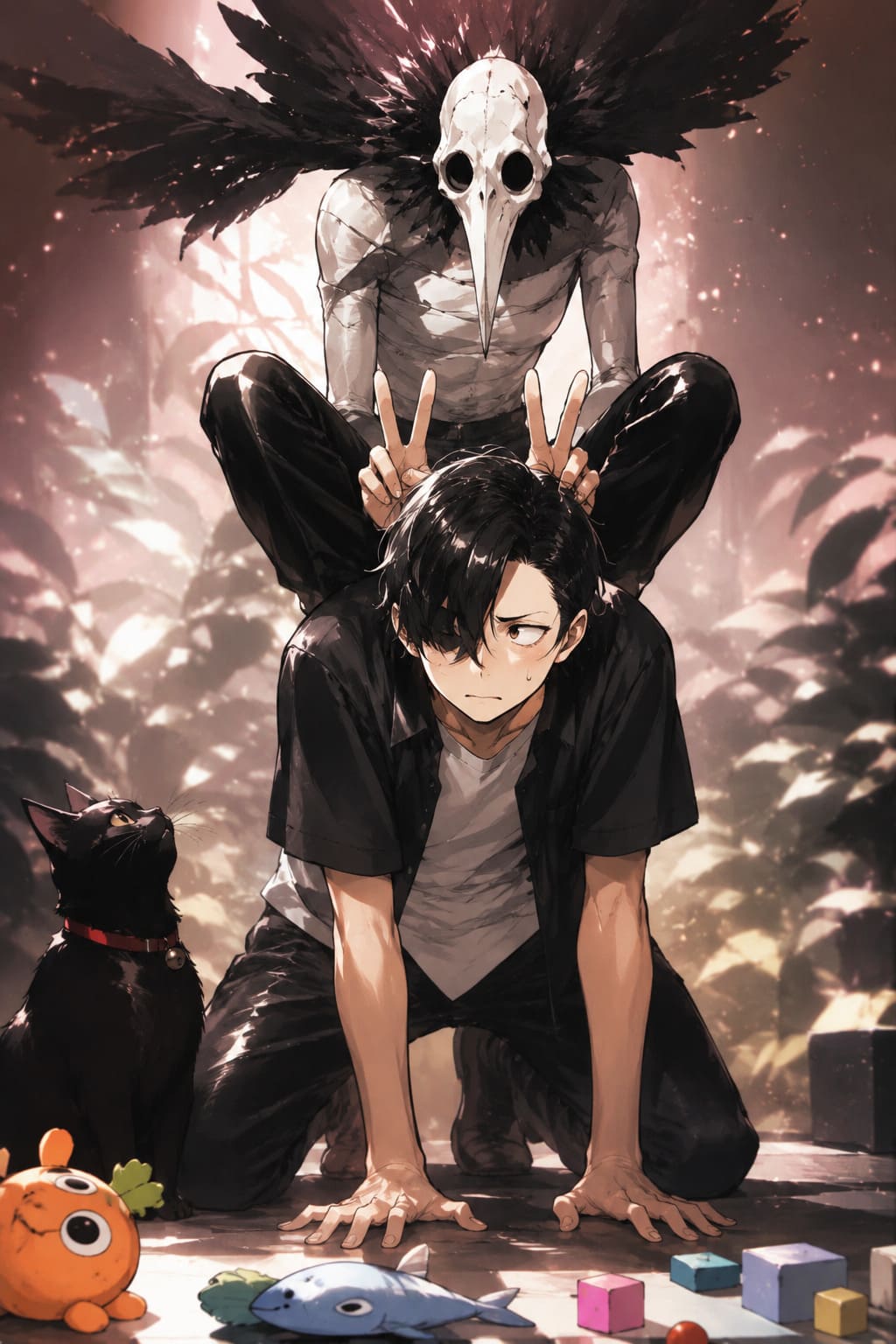
Nobody Is Truly a Hero
Another reason the comparison works so well is the way both stories treat power. In many action series, gaining new abilities means becoming stronger, more confident, and closer to victory.
Not here.
In Choujin X, every new ability feels like another step toward losing your humanity. Power changes bodies, personalities, and even memories. Characters rarely celebrate becoming stronger because they understand there’s always a terrible price waiting somewhere down the road.
That’s incredibly similar to Elden Ring. The Lands Between are filled with legendary warriors who sacrificed everything chasing greatness. Every major figure carries emotional wounds alongside physical ones. Winning often feels less like a triumph and more like surviving another nightmare.
The same emotional weight hangs over Ishida’s cast. Tokio, Azuma, and Ely aren’t following traditional hero journeys. They’re trapped inside a system where destiny keeps forcing impossible decisions upon them. Watching their relationships slowly evolve is honestly more stressful than many of the battles themselves because you constantly wonder who will break first.
The Search for Choujin X Feels Like a Journey Toward the Elden Throne
One parallel that fans have discussed throughout 2026 is the overall structure of the story.
Both worlds revolve around powerful individuals trying to shape the future while larger, almost incomprehensible forces manipulate events behind the scenes.
The mysterious Calamity, the search for the next Choujin X, and the growing importance of inherited power all create a narrative where nobody fully understands the rules anymore.
Instead of presenting a clear battle between good and evil, Ishida fills the story with uncertainty. Some characters genuinely want to save humanity. Others believe destruction is the only path forward. Many aren’t even sure which side they’re standing on anymore.
That uncertainty is exactly what makes both universes feel so fascinating. Every major revelation raises even more questions instead of providing comfortable answers.
Why This Blend Works So Well
I don’t think Choujin X succeeds simply because it borrows ideas from dark fantasy games.
What makes it special is how naturally those influences fit Ishida’s own strengths. His greatest talent has always been exploring damaged people trying to survive impossible situations. By combining that psychological focus with mysterious world-building inspired by modern dark fantasy, he has created something that feels familiar while still standing on its own.
Instead of copying FromSoftware’s formula, Ishida adapts its mindset. He trusts readers to think. He rewards patience. He embraces ambiguity. Most importantly, he refuses to explain every mystery the moment it appears.
That confidence is surprisingly rare, even among today’s biggest manga series.
The Anime Could Introduce an Even Bigger Audience
With the Choujin X anime adaptation finally arriving later in 2026, a lot of newcomers are about to discover why longtime manga readers have been so obsessed with this series.
Some people will come expecting another Tokyo Ghoul. Others will simply be curious after hearing the hype.
I have a feeling many of them will leave with the same impression I did: this isn’t just another supernatural action manga. It feels like reading the manga equivalent of exploring a dangerous FromSoftware world, where every chapter hides another secret and every answer creates two more mysteries.
If you enjoy stories that respect your intelligence instead of constantly explaining themselves, Choujin X deserves your attention. The Elden Ring inspiration is definitely there, but Ishida transforms those ideas into something unmistakably his own. That’s what makes this series one of the strongest dark fantasy manga of 2026—and honestly, one I can’t stop recommending.