Black Torch Season 2: Jiro Azuma Character Analysis – Rogue High Schooler and Animal Whisperer
There are plenty of anime protagonists who start out as loud, reckless teenagers and eventually grow into serious heroes. Jiro Azuma feels different. He has the attitude, temper, and fighting ability of a classic delinquent, but underneath all that aggression is a surprisingly gentle character who has spent most of his life feeling more comfortable around animals than people. That contrast is one of the main reasons I think Jiro works so well as the lead of Black Torch.
Created by Tsuyoshi Takaki, Black Torch combines supernatural action, ninja traditions, Japanese folklore, and a cast of characters who are much more complicated than their first appearances suggest. As the story moves into the territory associated with Season 2, Jiro’s role becomes even more interesting. He is no longer simply the troublesome high schooler who happens to be incredibly good at fighting. He is a shinobi, a human-mononoke hybrid, a reluctant government operative, and the partner of Rago, one of the most dangerous supernatural beings in the story.
What I like most about Jiro is that none of these identities completely replaces the others. He doesn’t suddenly become a perfect hero. He remains stubborn, sarcastic, emotional, and occasionally reckless. That’s exactly what makes his development so satisfying.
Jiro Azuma Isn’t Your Typical Shonen Protagonist
At first glance, Jiro looks like someone we’ve seen countless times in battle shonen. He’s a teenager with a bad attitude, a tendency to get into fights, and a natural talent for combat. If you only watched his introduction, it would be easy to assume that he’s simply another hot-headed protagonist waiting for his big power-up.
But Jiro’s motivation is actually much more grounded. He isn’t obsessed with becoming the strongest person alive, becoming famous, or proving himself to some legendary master. He doesn’t begin his journey with a huge dream that he announces every five minutes. Instead, he has a very simple instinct: protect the people and creatures he cares about.
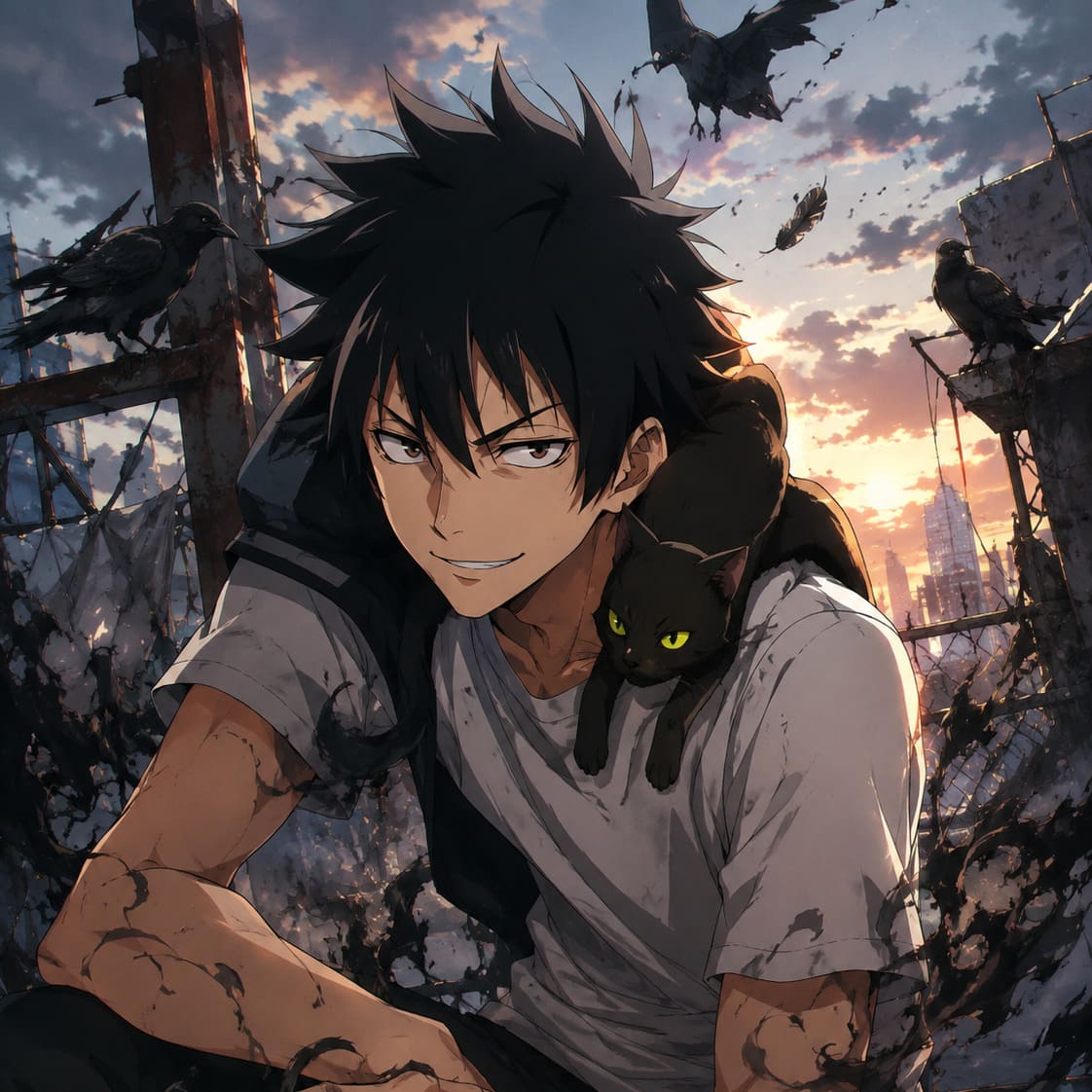
That makes his rough personality much easier to understand. Jiro can be aggressive, but his aggression usually has a reason behind it. He reacts particularly strongly when he sees someone weaker being mistreated. His personality isn’t built around cruelty; it’s built around a very rough version of compassion.
Season 2 gives this side of him more room to breathe. Once Jiro becomes involved with the Bureau of Espionage, his refusal to blindly follow orders becomes a recurring source of conflict. He doesn’t suddenly become comfortable with authority just because he’s working for the government. If an order goes against what he believes is right, there’s a good chance Jiro is going to ignore it.
Honestly, I think that’s one of his best qualities. In a world full of supernatural organizations, secret rules, ancient grudges, and political decisions, having one character who simply asks, “Why should I do that?” is refreshing.
The Shinobi Legacy That Shaped Jiro
Jiro’s combat abilities aren’t something he discovers overnight. His grandfather, Toshimasa Azuma, raised him according to the traditions of an ancient shinobi lineage. Martial arts, stealth, physical conditioning, and combat techniques were part of Jiro’s childhood rather than something he chose later in life.
This background is important because it explains why Jiro can hold his own before supernatural abilities enter the picture. He already understands movement, timing, close-range combat, and how to react when an opponent is trying to kill him.
However, his heritage is also a burden.
For years, Jiro sees the ninja lifestyle as something imposed on him. It separates him from ordinary students and makes a normal teenage life almost impossible. The more he learns about his family, the more complicated his relationship with his grandfather becomes.
One of the most interesting ideas surrounding Jiro in the later story is the difference between inheriting a weapon and choosing how to use it. His shinobi abilities were given to him through upbringing, but what Jiro ultimately does with them is his own decision.
That distinction matters. Jiro isn’t trying to escape his heritage forever. Instead, he gradually learns to take ownership of it. The ninja techniques that once felt like a family curse become tools he can use to protect the people who matter to him.
His Ability to Talk to Animals Is More Important Than It Looks
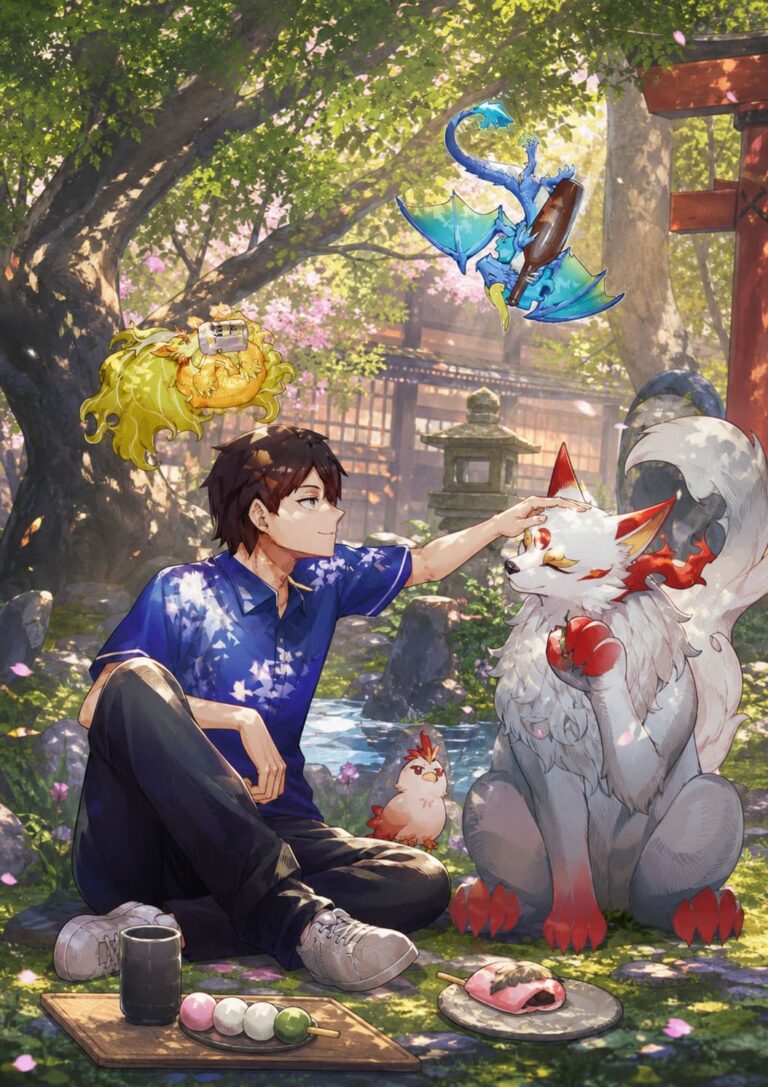
One of the details that initially makes Jiro seem almost comical is his ability to communicate with animals. He can understand them and speak with them naturally, which sounds like a strange superpower for a character who otherwise spends so much time punching supernatural enemies into walls.
But this ability actually explains a huge part of Jiro’s personality.
As a child, other people didn’t understand him. His unusual relationship with animals made him an outsider, and bullying pushed him even further away from normal social circles. Animals became the companions he could trust without worrying about judgment.
That history gives his relationship with animals a completely different meaning. They aren’t just a cute gimmick attached to his character. They represent the part of Jiro that he rarely shows to other humans.
And once he becomes involved with the Bureau of Espionage, this ability can become surprisingly useful:
- Cats and other urban animals can help gather information in places humans might overlook.
- Birds can provide an aerial perspective during reconnaissance.
- Dogs and other animals can create distractions or help locate people and threats.
I particularly like this aspect of Jiro because it connects his childhood loneliness to his usefulness as an operative. Something that once made him feel strange becomes one of his greatest advantages.
Jiro and Rago: The Relationship That Defines Black Torch
Of course, it’s impossible to talk about Jiro without talking about Rago.
Rago initially appears to be a black cat, but that appearance hides the truth. He is actually a legendary mononoke known as the Black Star of Doom. After Jiro saves the badly injured creature, their lives become permanently connected.
When Jiro is fatally wounded by another mononoke, Rago chooses to merge with him. The result is one of the central concepts of Black Torch: Jiro becomes a human capable of wielding the power of a powerful mononoke while still retaining his own identity.
This is where the series gets especially interesting.
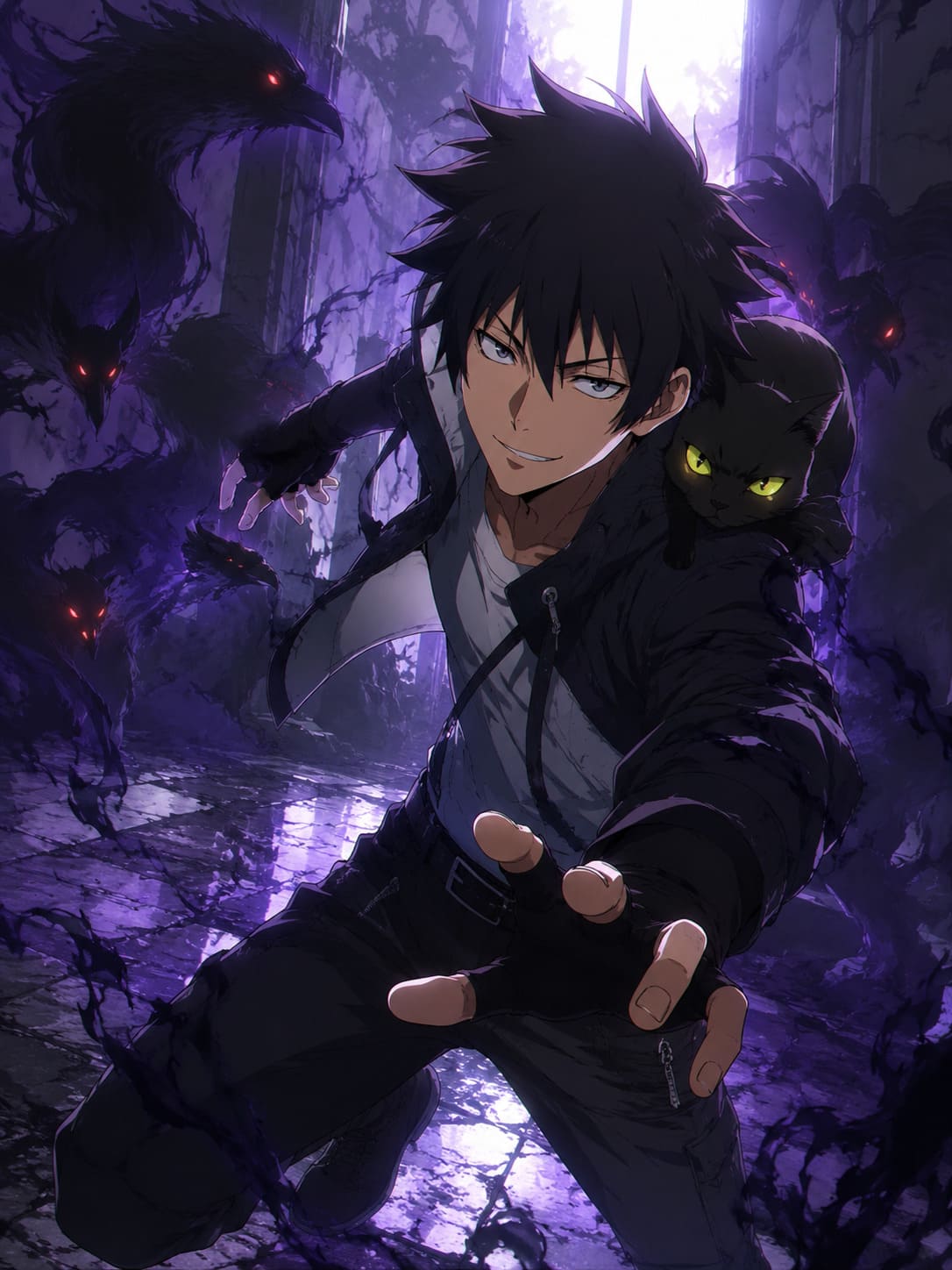
Jiro and Rago aren’t simply a protagonist and an evil creature trapped inside him. Their relationship feels much more like a partnership. Both characters are outsiders in their own ways, and both have experienced isolation. Jiro sees Rago as more than a weapon, while Rago gradually develops genuine trust in the human who saved him.
Their personalities also complement each other. Jiro tends to act first and think later, while Rago provides another perspective. During combat, their connection becomes almost instinctive.
And visually, their combined abilities are exactly the kind of thing I want from a supernatural ninja series. Jiro’s physical martial arts are enhanced by Rago’s monstrous aura, giving his fighting style a darker and more dangerous edge.
Techniques involving the Cicada Shell, rapid repositioning, and manifestations of Rago’s enormous claws and tail show just how far Jiro has moved from being an ordinary teenager.
There is, however, an obvious price.
Jiro can no longer fit neatly into the category of “human.” The government has reasons to fear what he carries inside him, while some mononoke see him as a traitor who possesses something that should belong to their world. That leaves Jiro stuck between two sides that don’t completely trust him.
Jiro and Reiji Kirihara: A Rivalry That Actually Makes Sense
Another important part of Jiro’s development comes from his relationship with Reiji Kirihara.
Reiji is almost the opposite of Jiro. He is disciplined, controlled, technically precise, and much more willing to follow established rules. Jiro is impulsive, emotional, and constantly questioning the people around him.
So naturally, they don’t get along.
Reiji’s hatred of Jiro is also more than a simple personality clash. His family has suffered because of mononoke, which makes the idea of a human willingly carrying one almost impossible for him to accept.
From Reiji’s perspective, Jiro is potentially a disaster waiting to happen.
From Jiro’s perspective, Reiji is another person judging him without actually understanding him.
That’s why their rivalry works. Neither character is completely wrong.
Their conflict becomes particularly interesting when the team is forced to confront psychological illusions and personal trauma. Reiji has to deal with painful memories connected to his family, while Jiro and Rago are confronted with fears surrounding control and the possibility of losing themselves.
Over time, Reiji begins to understand something important: Jiro isn’t dangerous because he has Rago inside him. Jiro is dangerous because he possesses tremendous power and still has to make his own choices about how to use it.
Is Black Torch Manga Finished Or Ongoing? Status, Sequel, and Anime Comeback Explained
Why Jiro Works So Well as a Modern Anime Hero
There is a reason characters like Jiro continue to attract fans. Modern anime audiences seem increasingly interested in protagonists who aren’t endlessly optimistic or perfectly obedient.
Jiro has some of the qualities associated with characters such as Ichigo Kurosaki, Sasuke Uchiha, and Megumi Fushiguro, but he doesn’t feel like a copy of any of them. His combination of ninja heritage, delinquent attitude, animal communication, and supernatural fusion gives him his own identity.
For me, the biggest selling point is the contrast between his appearance and his personality.
| Jiro’s Side | What It Reveals |
|---|---|
| Delinquent fighter | His anger and willingness to confront injustice |
| Shinobi | His discipline, instincts, and combat experience |
| Animal communicator | His empathy and emotional vulnerability |
| Rago’s partner | His ability to trust someone completely different from himself |
| Bureau operative | His growing responsibility and maturity |
Put all of those sides together and Jiro becomes much more than the “cool guy” of the cast. He has genuine contradictions, and those contradictions are what make him feel human.
Jiro Azuma’s Biggest Strength Isn’t His Power
If you ask me what makes Jiro compelling, I wouldn’t say it’s Rago’s aura, his ninja techniques, or even his animal communication. Those abilities are cool, but they’re not the reason I care about him.
It’s his loyalty.
Jiro has spent much of his life feeling like he doesn’t belong. Instead of allowing that isolation to turn him completely bitter, he forms incredibly strong attachments to the few people and animals he trusts. Once someone becomes part of his circle, Jiro is willing to put himself in serious danger for them.
That makes his fights feel more personal than the usual “hero versus villain” formula. He isn’t trying to save the universe simply because he’s the protagonist. His motivations are much smaller and, in my opinion, much more believable.
He protects the people he considers his own.
That is also why the possibility of Jiro losing control of Rago is so frightening. The greatest threat isn’t simply that he could become stronger than everyone else. It’s that he could lose the identity he has fought so hard to build.
What Could Come Next for Jiro in Black Torch Season 2?
Jiro’s future is particularly interesting because he sits directly between the human and mononoke worlds. Neither side can completely accept him, yet both sides have a reason to pay attention to him.
The more Jiro learns about Rago and the mononoke conflict, the harder it becomes for him to remain neutral. At some point, he will have to decide what kind of person he wants to be and whether his definition of “human” even matters anymore.
His relationship with Reiji should also continue evolving. Their rivalry has plenty of potential because they represent two completely different answers to the same question: how should someone fight monsters without becoming one?
And then there is Rago. Their partnership is strong, but the danger surrounding Rago’s power isn’t going anywhere. The stronger Jiro becomes, the more attention he is likely to attract from enemies who understand exactly what the Black Star of Doom represents.
Final Thoughts on Jiro Azuma
Jiro Azuma is the kind of protagonist I usually end up enjoying more as a series progresses. He isn’t instantly perfect, and he doesn’t need to be. His personality has rough edges, his decisions can be questionable, and his relationship with authority is practically nonexistent. But underneath all of that is a character with a remarkably strong sense of loyalty.
What makes Black Torch stand out is how naturally these different parts of Jiro’s identity fit together. The delinquent, the shinobi, the animal whisperer, and Rago’s human partner aren’t separate gimmicks. They are pieces of the same character.
That’s why Jiro feels like more than another supernatural battle-shonen protagonist. He’s an outsider who has finally found people and creatures worth fighting for, even if the world around him still doesn’t know what to make of him.
If Black Torch Season 2 continues pushing that idea, Jiro could become one of the more memorable new-generation anime protagonists. Not because he’s the strongest, but because every increase in his power also raises a more interesting question: how much of Jiro Azuma can remain Jiro Azuma when the monster inside him keeps getting stronger?
And honestly, that’s the part of his story I’m most interested in seeing.