Shangri-La Frontier vs. Solo Leveling: Why Their Game Systems Feel Worlds Apart
If you’ve been anywhere near the anime community in the last couple of years, you’ve seen the endless debates: Shangri-La Frontier or Solo Leveling? As someone who’s been deep in both fandoms and spent way too many late nights scrolling through discussions and fan theories, I don’t think the real difference is about which one is better. It’s about what kind of system fantasy you personally want to experience.
Both series revolve around game-like mechanics and protagonists who grow beyond their limits. Both deliver intense fights and satisfying progression. But the feeling of their worlds and the way their systems function are completely different. One is built around mastery and skill expression, the other around explosive power scaling and domination.
Skill Expression vs Power Accumulation
At the heart of the contrast lies a philosophical divide. Shangri-La Frontier treats its system like a real competitive VRMMO, while Solo Leveling turns its system into a divine engine of evolution designed to create a singular apex predator.
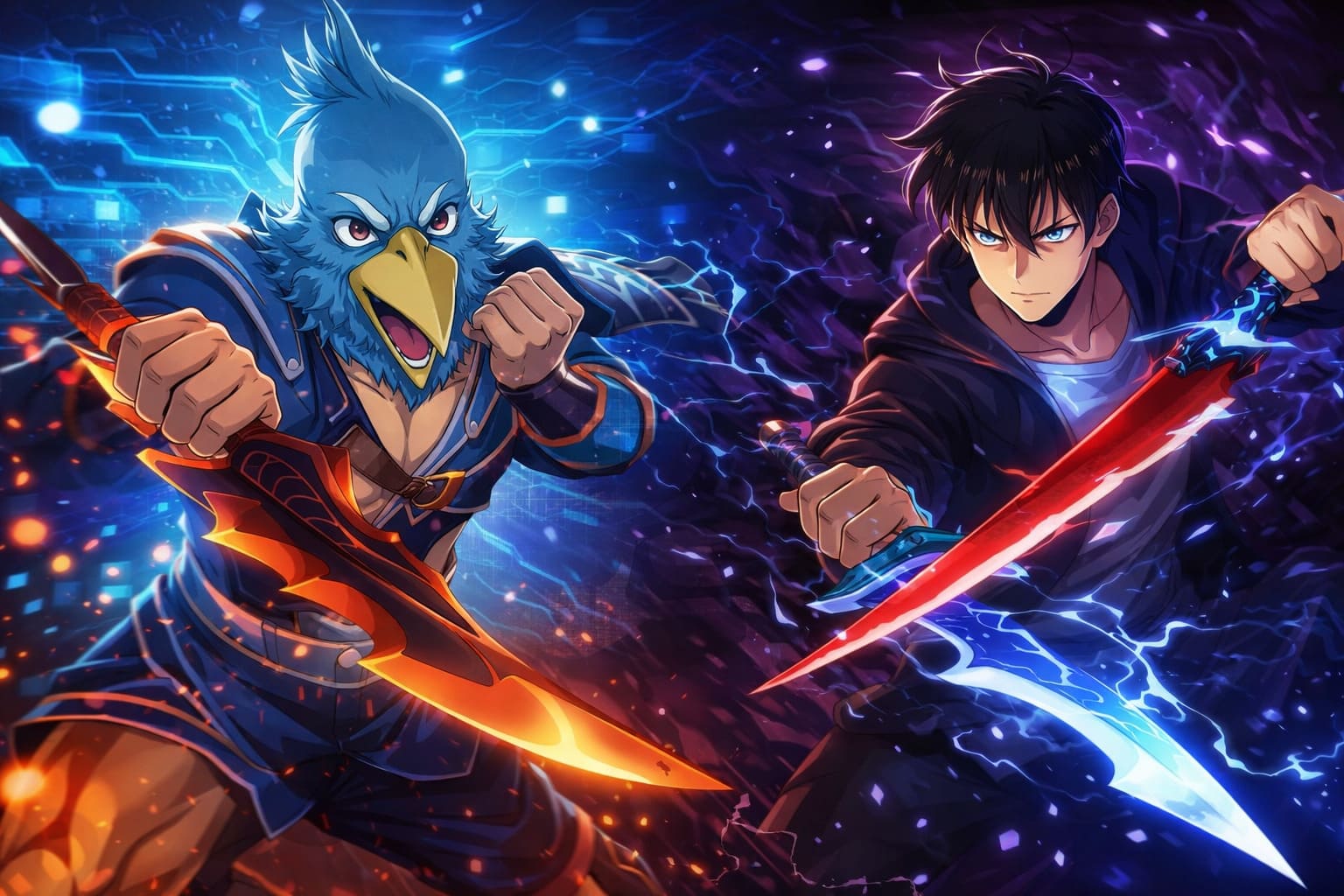
Shangri-La Frontier: The Skill-Based Playground
Sunraku isn’t powerful because the game hands him broken abilities. He’s powerful because he is genuinely good at playing games. As a so-called “trash-game hunter,” he thrives on mastering poorly designed, unfair, or brutally difficult games. When he enters Shangri-La Frontier, he doesn’t rely on inflated stats to survive. Instead, he deliberately lowers his defense, focuses on agility, and pushes a high-risk, high-reward playstyle that demands precision.
- He reads enemy hitboxes with extreme focus.
- He studies attack patterns and timing windows.
- He abuses environmental mechanics creatively.
- He wins through execution, not numerical superiority.
His battles feel like tactical puzzles. Every dodge matters. Every parry is intentional. When he defeats a boss, it feels like watching a speedrunner crack an impossible challenge rather than witnessing an unstoppable force bulldozing content.
Solo Leveling: The Stat-Driven Ascension
In Solo Leveling, the system is not a game designed for entertainment. It is a supernatural mechanism that allows Sung Jin-woo to evolve beyond the limitations of normal hunters. From the moment he gains access to leveling, his progression follows a clear and addictive pattern: gain experience, allocate stat points, unlock stronger abilities, repeat.
- Strength increases raw damage output.
- Agility boosts speed and combat dominance.
- New skills unlock devastating abilities.
- Shadow Extraction multiplies his battlefield presence.
Early on, Jin-woo struggles and must rely on strategy. However, as his stats skyrocket, encounters shift from desperate survival to overwhelming superiority. The thrill comes from watching him outscale everything around him. The fights transform into spectacles of power rather than strategic duels.
Sunraku vs. Kirito: The Ultimate Gaming Skills Comparison (2026 Analysis)
Stakes Define the Tone
One of the biggest differences between these two systems is consequence. The stakes behind each fight shape the emotional atmosphere of the entire series.
| Element | Shangri-La Frontier | Solo Leveling |
|---|---|---|
| System Type | Commercial VRMMO | Supernatural survival mechanism |
| Death Consequence | Loss of items or experience | Real-world death |
| Accessibility | Millions of players | Exclusive to Jin-woo |
| Tone | Competitive and adventurous | Dark and high-stakes |
In Shangri-La Frontier, failure is frustrating but not fatal. This allows experimentation, humor, and social dynamics to flourish. Sunraku can wear a ridiculous bird mask and still engage in epic boss fights without the narrative collapsing under tragedy.
In Solo Leveling, the system carries constant pressure. Failing a daily quest can lead to brutal punishment. Entering a dungeon is not a recreational activity but a life-threatening mission. This intensity gives the story a darker edge and makes Jin-woo’s evolution feel like a necessary adaptation rather than a hobby.
World-Building Through Mechanics
Another major divide lies in how each world interacts with its system. Shangri-La Frontier feels like a living MMO ecosystem. There are hidden quests, rare bosses, unique lore threads, and layered mechanics that reward curiosity. Other players theorycraft, compete, and collaborate. Discoveries spread socially, just like in real online games.
Solo Leveling, by contrast, isolates its protagonist. While society revolves around hunters and ranked power levels, only Jin-woo can truly grow beyond his assigned tier. The system singles him out. This transforms the narrative into a story of singular transcendence rather than communal exploration.
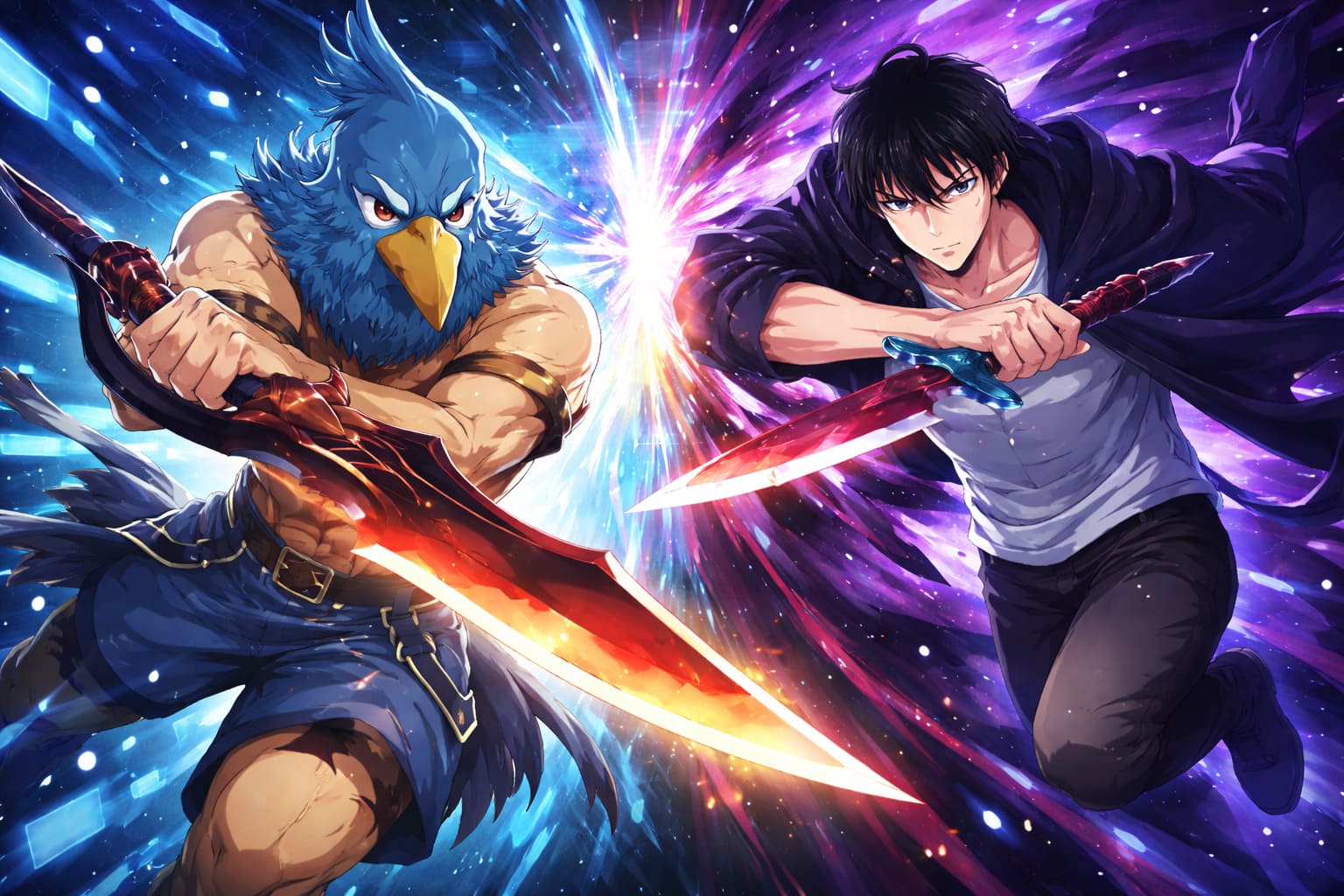
Combat Presentation and Energy
The difference in system design translates directly into combat delivery. Solo Leveling emphasizes impact, speed, and destructive force. Each attack carries cinematic weight. The animation highlights the sheer dominance of Jin-woo as he dismantles enemies with overwhelming presence.
Shangri-La Frontier focuses on choreography and flow. Because Sunraku operates as a fragile glass cannon, every movement is deliberate. The camera work often highlights narrow dodges, precise spacing, and clever use of terrain. The excitement comes from technical execution rather than raw devastation.
Why They Feel So Different
Ultimately, the divide can be summarized simply. Solo Leveling is about becoming the final boss. Shangri-La Frontier is about defeating the final boss through skill. One centers on exponential stat growth and linear dominance. The other prioritizes player ingenuity, horizontal progression, and mechanical mastery.
As a fan, I find myself drawn to both for different reasons. When I want pure adrenaline and the satisfaction of watching an underdog transform into an unstoppable legend, Solo Leveling delivers perfectly. When I crave the nostalgic thrill of mastering difficult mechanics and outplaying impossible odds, Shangri-La Frontier hits harder.
Neither system is objectively superior. They simply fulfill different fantasies. One celebrates overwhelming power. The other celebrates mastery. And in a genre saturated with RPG-inspired stories, having both approaches thrive is something anime fans should appreciate.
Whether you prefer the crushing dominance of stat supremacy or the razor-sharp tension of skill-based combat, both series prove that “systems” in anime can be more than just numbers on a screen. They can define tone, shape character growth, and ultimately determine how victory feels when it finally arrives.