The Seven Great World Powers Explained: Ranking in Mushoku Tensei
If you’ve spent any time watching or reading Mushoku Tensei: Jobless Reincarnation, you already know that power in this world isn’t just measured by reputation or rumors. It’s literally written in stone.
One of the most intriguing concepts in the series is the Seven Great World Powers, a legendary ranking that represents the absolute peak of strength in the world. For fans, this list isn’t just background lore—it’s a core part of the story that shapes politics, fear, and even the goals of the strongest characters.
As someone who has followed the series from anime to light novel discussions on forums and Reddit, I honestly think this ranking system is one of the coolest power hierarchies in modern fantasy anime. It blends mythology, history, and real stakes in a way that makes every fight feel meaningful.
Let’s break down how it works and why it matters so much.
What Are the Seven Great World Powers?
The Seven Great World Powers are the strongest combatants in the world of Mushoku Tensei: Jobless Reincarnation.
The system was created centuries ago by Laplace after the devastating Second Great Human-Demon War.
To ensure the rankings remain accurate, Laplace placed mysterious stone monuments across the world. These monuments automatically update whenever a member is defeated.
That means the ranking is not symbolic — it’s dynamic.
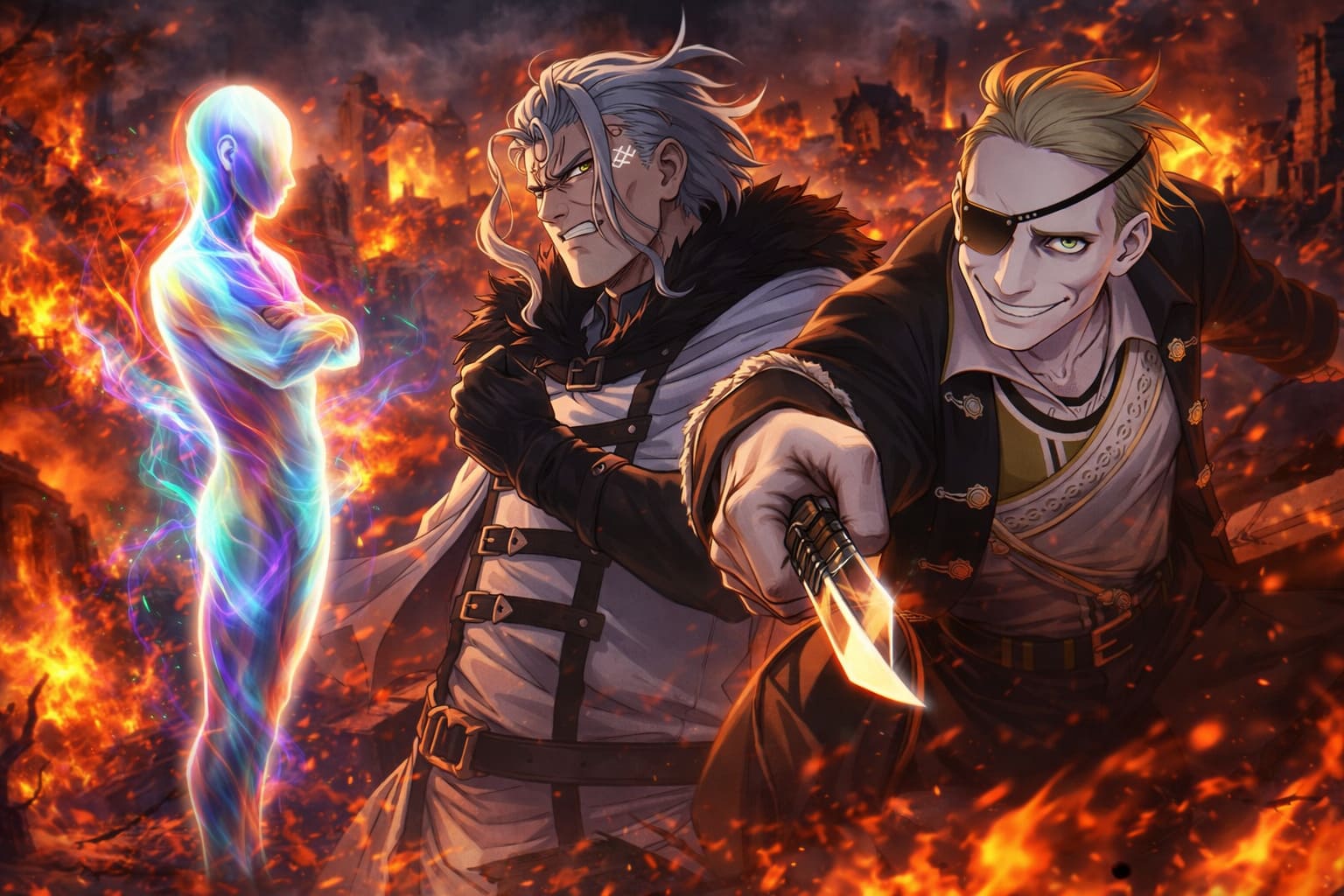
How the System Works
A few simple rules define the ranking:
- Defeat Rule – To take someone’s rank, you must defeat them in battle.
- No Killing Required – Victory alone is enough to claim their position.
- Title Succession – Some ranks (like Sword God) pass through generations of masters.
- Massive Power Gap – The top four are essentially mythical beings, while the bottom three are legendary but still mortal warriors.
This creates a fascinating dynamic where the lower ranks change occasionally, while the top ranks remain almost untouchable.
The Seven Great World Powers (Early Timeline)
Here’s what the ranking looks like around the start of the main story.
| Rank | Title | Current Holder | Status |
|---|---|---|---|
| 1 | Technique God | Laplace (Technique Side) | Missing |
| 2 | Dragon God | Orsted | Active |
| 3 | Fighting God | Badigadi (Armor) | Sealed / Missing |
| 4 | Demon God | Laplace (Demon Side) | Sealed |
| 5 | Death God | Randolph Marianne | Active |
| 6 | Sword God | Gal Farion | Active |
| 7 | North God | Aleksander Rybak | Active |
Just reading this list already tells you something important: the strongest beings in this world are closer to legends than people.
The Upper Four: Monsters of Legend
The top four ranks are essentially walking natural disasters.
1. Technique God – Laplace
Laplace is the creator of the entire ranking system.
After being split into two entities during a battle with the Dragon God Urupen, this half retained his combat knowledge and techniques but lost the overwhelming mana of his other half.
He remains ranked #1 simply because no one has ever managed to defeat him.
2. Dragon God – Orsted
Orsted is widely considered the true strongest character in the entire series.
What makes Orsted terrifying is not just raw strength.
He has lived through countless time loops, gaining knowledge of nearly every spell, fighting style, and strategy imaginable.
His only major limitation is slow mana recovery, forcing him to choose his battles carefully.
3. Fighting God – Badigadi (with Armor)
This title technically belongs to the legendary Fighting God Armor, a terrifying artifact created by Laplace.
When worn by the immortal demon king Badigadi, the armor boosts his power to a level capable of rivaling even Orsted.
The catch?
The armor often drives its wearer insane.
So while it grants unimaginable power, it’s also one of the most dangerous weapons in the entire world.
4. Demon God – Laplace
The other half of Laplace became the Demon God.
This version retained the massive mana reserves and magical power, but lost the strategic genius and battle aura.
Four hundred years before the main story, this entity nearly destroyed the world during the Laplace War before being sealed away.
And the terrifying part?
His return is inevitable.
The Lower Three: The Peak of Human Strength
Compared to the godlike upper ranks, the bottom three represent the ultimate level a mortal warrior can realistically reach.
5 – Death God
Randolph Marianne is one of the most unusual characters in the series.
Despite being the 5th strongest person in the world, he casually works as a chef.
His unpredictable combat style makes him incredibly dangerous.
6 – Sword God
Gal Farion represents the pinnacle of the Sword God Style, which focuses on overwhelming speed.
The philosophy is simple:
Kill your opponent before they even understand the fight has started.
7 – North God
Aleksander Rybak (also known as Kalman III) is the descendant of the legendary North God lineage.
He wields the mythical King Dragon Sword Kajakuto, a weapon capable of manipulating gravity.
Needless to say, that makes fights with him extremely unfair.
Rudeus and the Ranking System
Eventually, even the main protagonist enters this legendary list.
Rudeus Greyrat earns a place among the Seven Great World Powers after defeating North God Kalman III in a brutal battle.
He takes the 7th rank and gains the title “Quagmire.”
What makes this moment especially cool is that Rudeus becomes the first person in history to hold a World Power rank without a “God” or “King” title.
For fans, this moment perfectly shows how far he has come—from a useless shut-in in his past life to one of the strongest figures in the world.
Why Fans Love This Power System
From a storytelling perspective, the Seven Great World Powers are brilliant because they accomplish several things.
- They establish a clear power ceiling.
- They create long-term tension about Laplace’s return.
- They show how terrifying characters like Orsted truly are.
- They give Rudeus a believable growth path.
Instead of random power scaling, the series uses this system as a global benchmark for strength.
And honestly, that’s one reason Mushoku Tensei: Jobless Reincarnation feels so immersive compared to many other fantasy anime.
When a character approaches the level of the Seven World Powers, you know something huge is about to happen.