Ame-chan manga backstory in Yostar Pictures anime
There’s something deeply uncomfortable about watching a character who feels too real. That’s exactly why Ame-chan from Needy Streamer Overload has stuck with so many people—including me.
She isn’t just another chaotic anime girl with cute mannerisms and edgy dialogue. She feels like someone who could exist behind any screen, on any platform, right now.
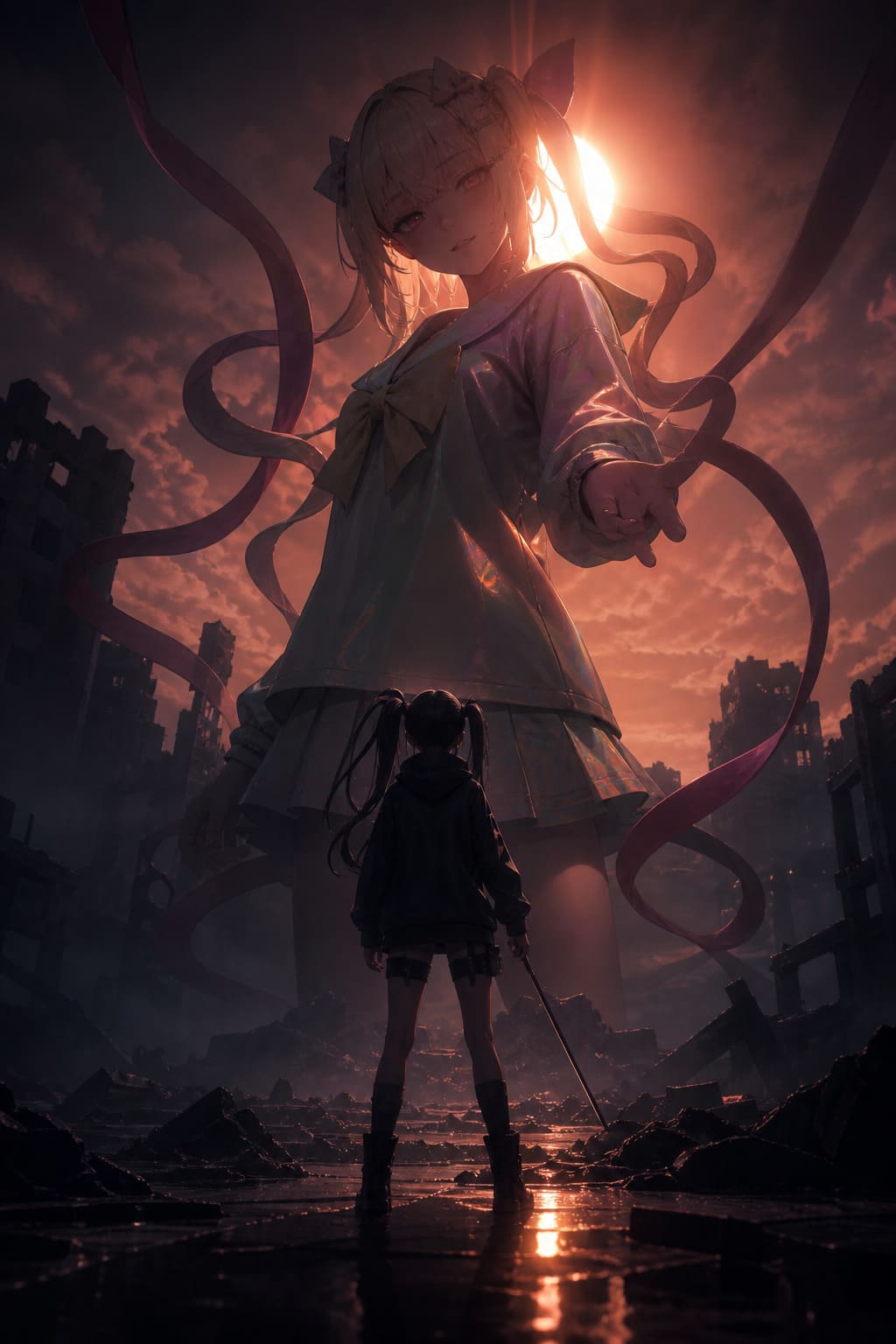
With the upcoming anime adaptation by Yostar Pictures, I don’t think we’re just getting a retelling of the game.
We’re about to see something heavier—something more grounded. And honestly, I’m both excited and a little worried about how hard it might hit.
Yamagami Mountain God Forms and Abilities: Guide to Kusunoki’s Garden of Gods
Ame-chan Before KAngel: Not Just “Tragic,” But Familiar
Most anime backstories fall into predictable patterns—loss, loneliness, maybe a dramatic turning point. Ame-chan’s past feels different because it’s not dramatic in a cinematic way. It’s messy and uncomfortable.
From what we know through the game and expanded material, her childhood wasn’t defined by a single traumatic event. It was a slow, grinding environment of neglect.
- Constant tension between parents
- Emotional absence from her father
- A deeply disturbing lack of boundaries from her mother
- Financial instability that crossed into morally dark territory
That last point is especially hard to process. The implication that her mother considered pushing her into exploitation isn’t just “dark storytelling”—it reframes everything about Ame-chan’s later behavior.
It makes you realize: she didn’t “become unstable”—she adapted to survive.
Dropping Out, Shutting Down, Logging In
Another thing that hits differently is how ordinary her downward spiral starts.
She didn’t leave school because she was rebellious or chasing dreams. She left because she couldn’t handle being there anymore. Bullying, isolation, and the pressure of social expectations pushed her into becoming a shut-in.
And then came the internet.
Not as an escape in a romanticized way—but as a replacement for reality.
What really stuck with me is this idea that Ame-chan didn’t just “go online”—she rebuilt herself there. The persona of KAngel isn’t a mask she wears occasionally. It’s the version of herself she wishes was real.
The “Parasite” Phase Nobody Talks About Enough
One of the most unsettling parts of her backstory is the period where she survives by drifting between people—staying with acquaintances, online connections, anyone who would take her in.
It’s easy to gloss over this, but think about what it means.
- No stable home
- No long-term relationships
- Constant dependence on others
- Always one mistake away from being alone again
That kind of life doesn’t just create insecurity. It rewires how you see people.
You stop trusting intentions. You start seeing relationships as temporary. And at some point, you begin to believe your only value is what you can offer.
When you look at Ame-chan through that lens, her obsession with attention and validation doesn’t feel exaggerated anymore—it feels inevitable.
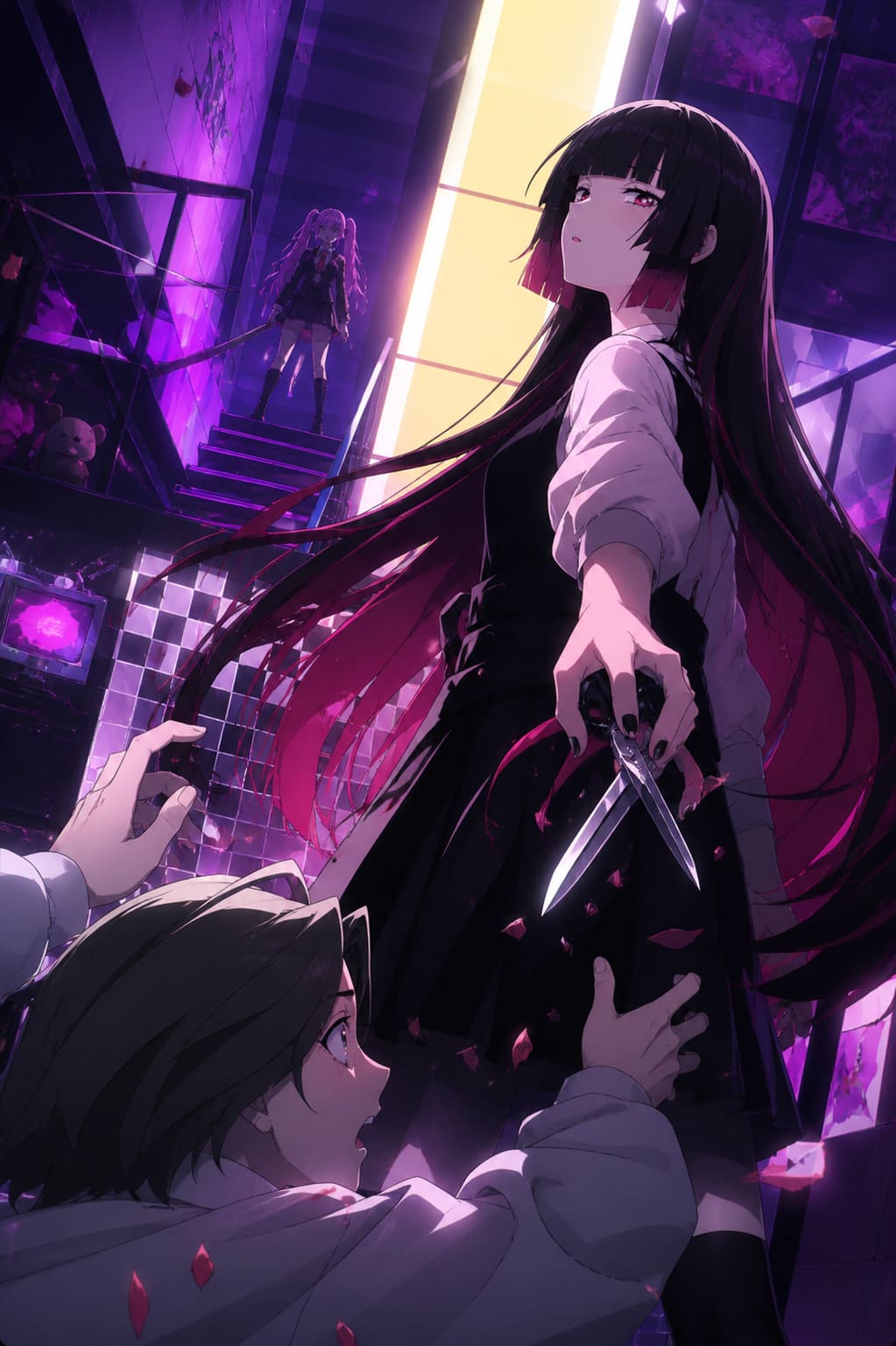
Mental Health: The Part the Anime Can’t Soften
The manga Run With My Sick takes things even further by leaning into her mental state more directly. While it never labels her explicitly in a clinical way, the patterns are hard to ignore.
- Extreme mood swings
- Fear of abandonment
- Impulsive decisions
- Self-destructive tendencies
A lot of fans interpret this as traits similar to Borderline Personality Disorder, and whether that’s intentional or not, it fits disturbingly well.
What I appreciate (and also find difficult) is that her behavior isn’t glamorized. It’s chaotic, uncomfortable, and sometimes frustrating to watch.
And that’s important.
Because if the anime stays true to this, it won’t just be “dark for style”—it will be emotionally exhausting in a very real way.
P-chan: Person, Player, or Projection?
This is probably the most interesting part going into the anime.
In the game, P-chan is you. In the manga, P-chan feels like a real person. But the deeper lore suggests something else entirely.
There’s a strong interpretation that P-chan might not be fully real—that they represent a coping mechanism, a way for Ame-chan to externalize support she never received.
If the anime leans into this idea, it could completely change how the story feels.
Imagine scenes where P-chan is present in one moment, absent in another, conversations feel slightly “off,” and reality subtly contradicts what we’re seeing.
That kind of storytelling would push the anime into psychological territory that’s way deeper than most adaptations.
What Yostar Pictures Might Do Right (or Wrong)
Yostar Pictures has proven they can handle atmosphere. Their work tends to look clean, stylized, and visually confident.
But this story isn’t just about visuals.
| Element | Why It Matters | Risk |
|---|---|---|
| Tone Balance | Needs to mix “cute” and disturbing seamlessly | Too much cuteness can weaken impact |
| Pacing | Ame’s descent should feel gradual, not rushed | Fast pacing ruins emotional weight |
| Psychological Depth | Core of the story | Oversimplifying her makes her generic |
| Visual Style | Glitch, neon, “yami-kawaii” aesthetic | Style over substance danger |
If they get this balance right, the anime could be something special. If not, it might just become another “dark aesthetic” show without real depth.
Why Ame-chan Feels So Relevant Right Now
What makes her story hit harder today is how close it is to reality.
- Validation is measured in numbers
- Online identity can feel more important than real life
- Burnout and anxiety are normalized
- Loneliness exists even when you’re constantly connected
Ame-chan is basically an extreme version of these pressures—but not by much.
That’s the scary part.
She isn’t a fantasy. She’s a reflection.
The Aesthetic Trap: Cute Outside, Collapse Inside
One of the most brilliant aspects of Needy Streamer Overload is how it uses aesthetics to mislead you.
- Pastel colors
- Sparkly overlays
- Energetic streams
- Idol-like charm
But underneath that is something much darker.
- Medication
- Emotional breakdowns
- Dependency
- Isolation
The contrast is what makes it work.
If the anime captures that duality—where every “cute” moment feels slightly off—it will stay true to what made the original so impactful.
Final Thoughts: This Isn’t a Comfortable Story—And That’s the Point
I don’t think Ame-chan is meant to be liked in the traditional sense. She’s meant to be understood—and maybe even recognized.
That’s what makes her story stick.
It’s not about watching someone fall apart for entertainment. It’s about seeing how someone gets there in the first place.
And if the anime really dives into her past—her loneliness, her instability, her desperate need to matter—it could turn Needy Streamer Overload into something more than just an adaptation.
It could become one of those rare anime that people don’t just watch, but feel.