Flower and Asura Manga Ending in August: Release Date, Studio Bind Anime, and What to Expect for the Finale
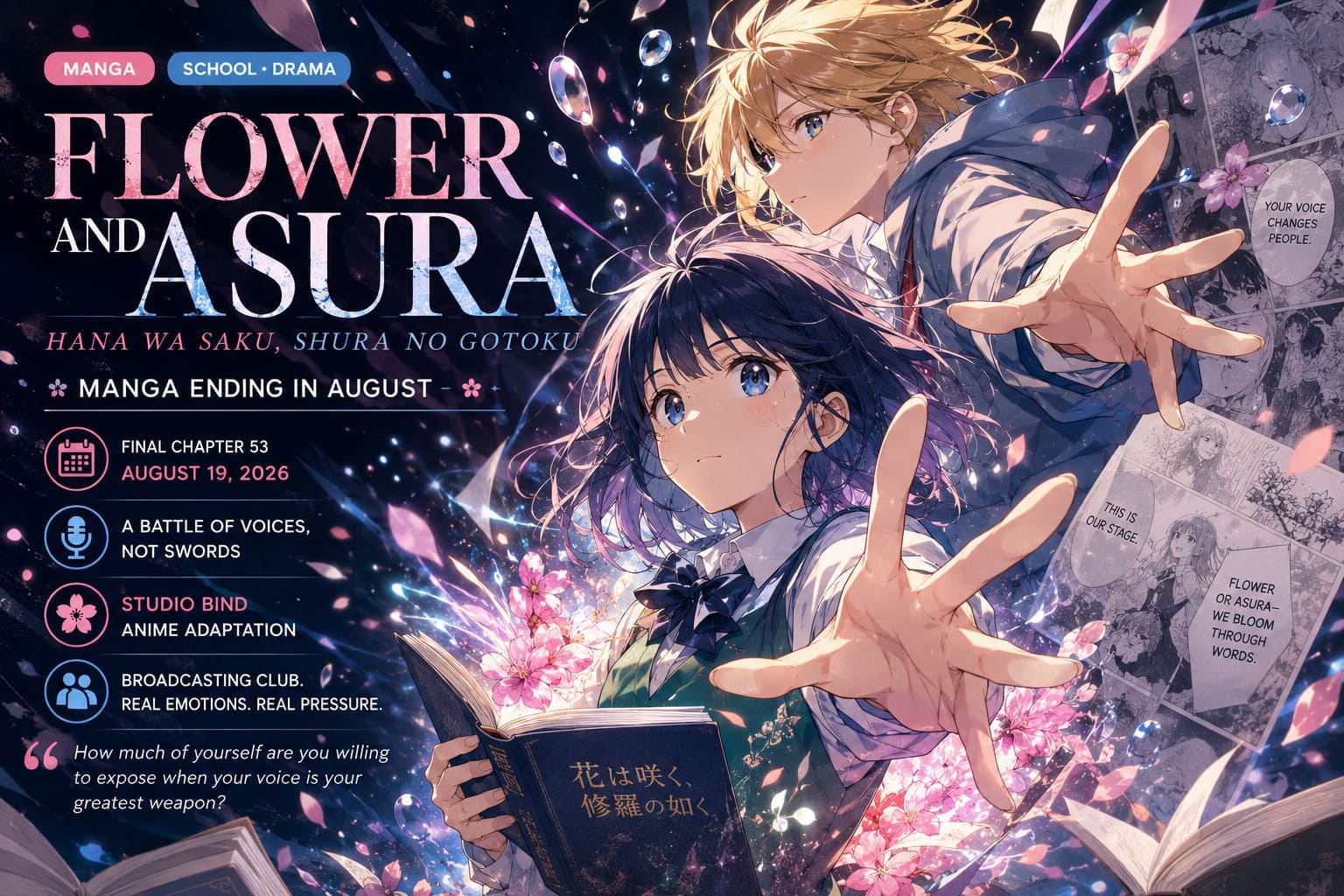
Not every manga needs sword fights, supernatural powers, or over-the-top tournament arcs to leave a lasting impression. Flower and Asura (Hana wa Saku, Shura no Gotoku) proved that years ago, and now its journey is almost over. The manga is officially set to conclude with Chapter 53 on August 19, 2026, bringing an emotional end to a story that quietly built one of the most passionate fanbases in modern seinen.
As someone who reads way too many manga every season, I honestly think Flower and Asura never received the mainstream attention it deserved outside Japan. It doesn’t constantly trend on social media, and it rarely appears in ‘Top 10’ recommendation lists. Yet anyone who gave it a chance usually came away saying the same thing: ‘Why isn’t everyone talking about this?’ With the ending finally approaching, it feels like the perfect time to appreciate what made this series so different.
LV999 no Murabito Season 2 Studio Production Status, Leaks & Release Date Speculation
A Story That Turns Reading Into a Battlefield
At first glance, the premise sounds almost impossible to sell. Instead of athletes chasing championships or heroes saving the world, the story follows Hana Haruyama, a high school girl living on a tiny island whose greatest talent is simply reading stories aloud. That description hardly screams excitement, yet the manga somehow transforms spoken words into moments that feel as intense as the final round of a sports anime.
Everything changes after Hana meets Mizuki Usurai, the ambitious leader of her school’s broadcasting club. Mizuki immediately recognizes that Hana possesses something incredibly rare. Her voice isn’t just beautiful—it changes people. She can calm a room, inspire an audience, or emotionally overwhelm listeners within seconds, and that ability becomes the foundation of every rivalry, performance, and emotional breakthrough that follows.
Instead of asking who can punch harder or run faster, Flower and Asura asks a much more interesting question: How much of yourself are you willing to expose when your voice is your greatest weapon? That’s the kind of conflict that stays with you long after finishing a chapter because it feels surprisingly real.
It Feels Different From Almost Every School Manga
I’ve read countless school series over the years, and many eventually blur together. Different uniforms, different clubs, and familiar character dynamics can make even good manga feel repetitive. Flower and Asura never had that problem because its competitive environment feels completely fresh from the very beginning.
The broadcasting club becomes a believable arena where confidence, breathing techniques, stage presence, timing, and emotional control matter just as much as natural talent. Every performance carries genuine tension because a single mistake can completely change the atmosphere. That’s probably why so many readers compare it to Chihayafuru, even though the two series focus on entirely different activities.
What Makes Flower and Asura Stand Out
- A unique competitive setting instead of another sports club.
- Emotion-first storytelling where character growth matters more than spectacle.
- Psychological rivalries that feel grounded and believable.
- Beautiful visual symbolism that gives every performance extra emotional weight.
None of these elements are revolutionary on their own, but together they create something refreshingly original. It’s one of those manga that quietly earns your respect chapter after chapter instead of trying to impress you immediately with shocking twists.
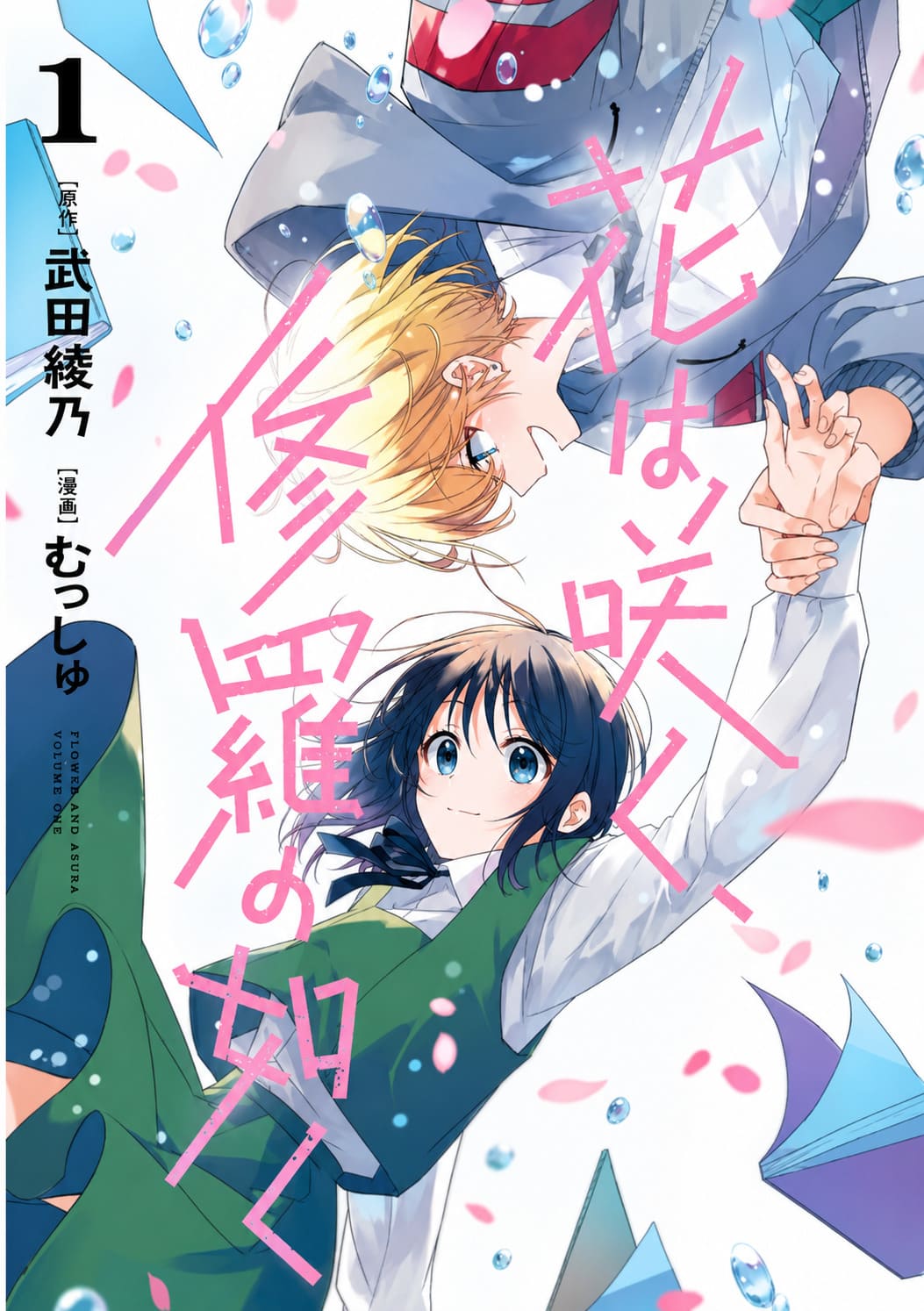
Ayano Takeda Knows Exactly How to Write Pressure
If you’ve already experienced Sound! Euphonium, you’ll immediately recognize Ayano Takeda’s writing style. She has an incredible understanding of talented young people who constantly battle their own expectations. Rather than relying on traditional villains, she builds conflict around insecurity, perfectionism, jealousy, ambition, and the fear of never being good enough.
That approach fits Flower and Asura perfectly. Hana isn’t trying to become stronger than everyone else. She’s trying to understand what kind of performer she truly wants to become, and watching that gradual transformation feels much more rewarding than seeing a protagonist suddenly unlock some unbelievable new power. It feels personal, believable, and surprisingly relatable.
Musshu’s Artwork Does the Impossible
One thing that impressed me from the very first volume was the artwork. Drawing action scenes is challenging enough, but drawing sound is an entirely different level of difficulty. Somehow Musshu manages to make spoken performances feel visually explosive without relying on exaggerated effects or unnecessary visual noise.
During Hana’s recitations, flowers bloom across the pages, darkness swallows backgrounds, and symbolic imagery reflects the emotional impact of every sentence. The manga isn’t trying to literally show what readers hear. Instead, it visualizes what listeners experience emotionally, and that’s exactly why those scenes leave such a lasting impression.
Why the Visual Style Works So Well
| Feature | Why It Works |
|---|---|
| Visual metaphors | Represent emotion rather than literal sound. |
| Character expressions | Make every performance feel personal and vulnerable. |
| Clean panel layouts | Allow dialogue and pacing to create tension naturally. |
| Symbolic imagery | Reinforces the central ‘Flower’ versus ‘Asura’ theme. |
The Anime Helped More People Discover It
Everything changed when Studio Bind adapted the series in early 2025. Thanks to the studio’s reputation after Mushoku Tensei, expectations were already high, and fortunately the adaptation delivered exactly the kind of atmosphere longtime readers hoped for.
Rather than trying to force flashy action into a quiet story, the anime embraced silence, subtle facial expressions, strong voice acting, and careful direction. Those choices helped viewers understand why the manga had earned so much praise in Japan long before the adaptation arrived. It also introduced many Western fans to competitive broadcasting, something that almost never appears in anime.
After watching the anime, thousands of viewers immediately picked up the manga because they wanted to continue Hana’s journey. Honestly, I was one of the people recommending exactly that, because the source material still offers some of the series’ strongest emotional moments.
Why The Ending Has Fans Nervous
Chapter 53 isn’t simply another manga finale. It’s the conclusion of nearly five years spent watching Hana gradually discover herself through performance, friendship, rivalry, and countless moments of self-doubt. Naturally, readers are hoping those emotional investments receive a satisfying payoff.
Some fans want Hana and Mizuki’s relationship to receive a clear romantic conclusion, while others believe their bond works best as an artistic partnership built on mutual respect. Personally, I think forcing romance simply because the story is ending would undermine everything that made their relationship special. Their connection has always been strongest when both characters inspire each other to become better performers.
Whatever direction the creators choose, I hope the ending stays true to the manga’s identity instead of chasing an easy crowd-pleasing finale. Sometimes an honest ending leaves a stronger impression than a perfectly wrapped-up one.
Why I’ll Miss This Manga
I don’t expect Flower and Asura to suddenly become one of the highest-selling manga after its conclusion. That’s never really been its role within the industry. Instead, I think it’ll gradually earn the same reputation as other overlooked classics that readers discover years later before wondering why they ignored them for so long.
Its greatest achievement wasn’t reinventing manga storytelling. It was proving that voice, emotion, vulnerability, and artistic performance can create just as much suspense as any battle manga or sports series. That’s a surprisingly rare accomplishment in today’s market, where louder stories often receive the most attention.
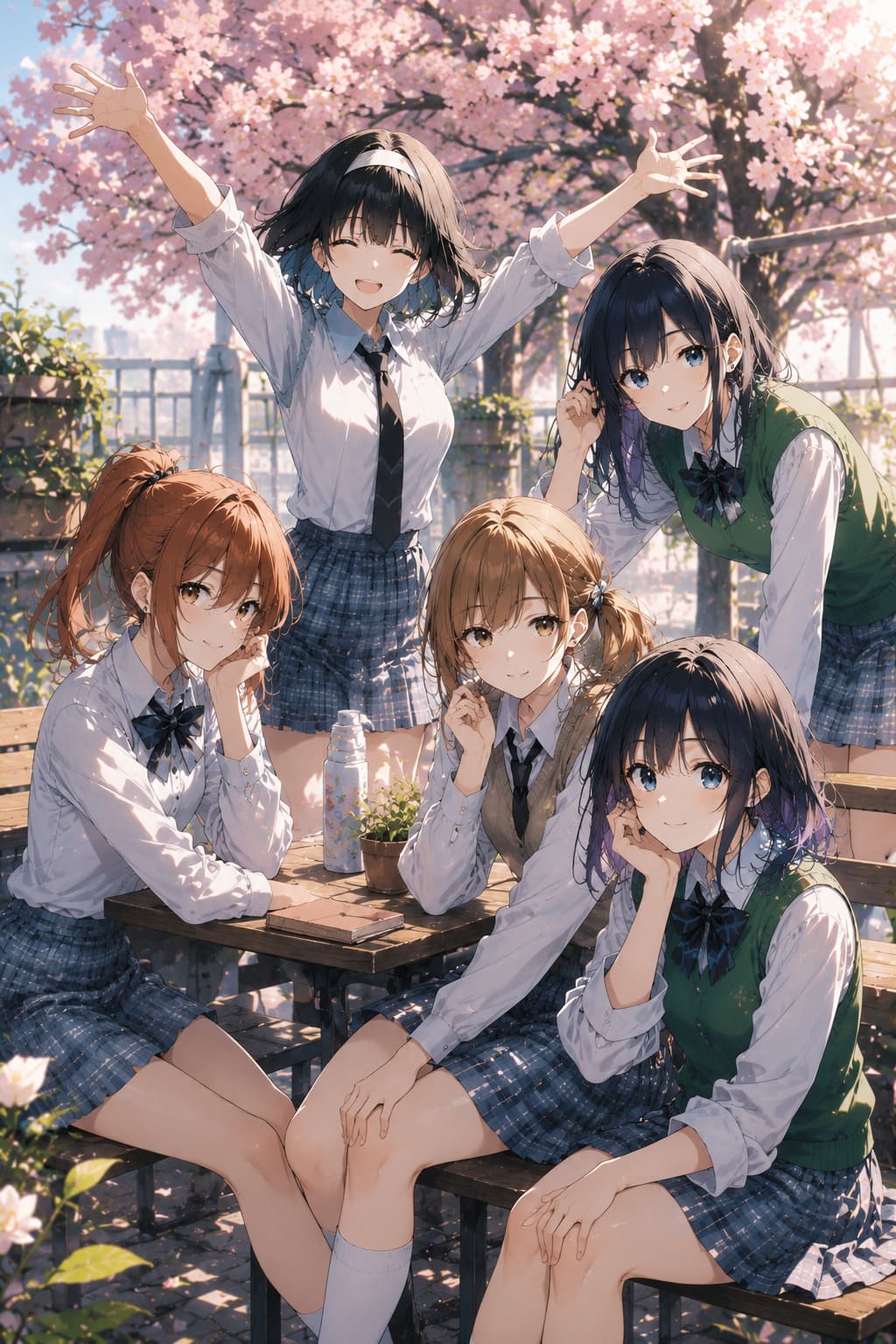
Final Thoughts
August 19, 2026, will undoubtedly be a bittersweet day for longtime readers. Watching Hana Haruyama deliver her final performance feels less like reaching the finish line and more like saying goodbye to someone you’ve quietly rooted for over the years. Whether the finale answers every lingering question or intentionally leaves some emotions unresolved, Flower and Asura has already earned its place as one of the most distinctive coming-of-age manga released in the past decade.
If you’ve only seen the anime—or you’ve skipped the manga because the premise sounded too quiet—this is the perfect time to catch up before the final chapter arrives. Some stories don’t need spectacular battles or impossible powers to stay memorable. Sometimes one unforgettable voice is all it takes.