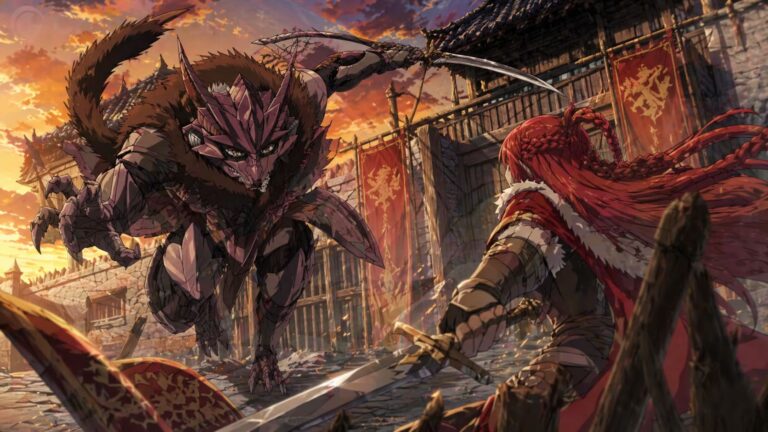
Hell Mode Summon Guide: Allen’s Summons List and Evolutions
If you’ve been sleeping on Hell Mode: The Hardcore Gamer Dominates in Another World with Garbage Balancing, you’re missing one of the most satisfying slow-burn power systems in modern isekai. At first glance, Allen (formerly Kenichi Yamada) looks nerfed into oblivion—100x EXP requirements is basically developer-level trolling. But the deeper you go, the clearer it becomes: his Summoner class is completely busted.
This isn’t your typical “summon a wolf and call it a day” setup. Allen’s system is layered, strategic, and honestly feels like a mix between a gacha game, RTS mechanics, and min-max RPG madness. Let’s break down why his summon system is so addictive—and low-key broken.
The Core Idea: Summons Are More Than Just Units
What makes Allen stand out isn’t just that he summons creatures—it’s how those summons scale and interact with him.
Instead of being disposable fighters, his summons act like permanent stat boosters, tactical tools for scouting and utility, and late-game nukes with cooldown abilities. Even when they’re not physically present, Allen still gets passive buffs, which already puts him ahead of most isekai protagonists who rely purely on raw stats.

How the Summoning System Actually Works
Here’s the quick breakdown without the fluff.
- MP Cost Scaling: Stronger summons require exponentially more mana.
- Grimoire Limit: Starts with just 10 slots and expands over time.
- Passive Buffs: Each summon contributes to Allen’s stats passively.
- Awakened Skills: High-tier summons unlock ultimate abilities with cooldowns.
- Rank System: From H to S, with huge power gaps.
The genius here is that it forces Allen to think like a strategist instead of relying on brute force.
Where to Read Hell Mode Manga After Season 1: Chapter Guide & Season 2 News
Early Game Feels Weak—But It’s a Setup
Let’s be real: early Hell Mode is rough. His first summons are underwhelming, featuring creatures like grasshoppers for agility, rabbits for basic combat, moles for digging, and mice for stealth scouting.
Nothing flashy, but that’s intentional. These summons build a foundation of versatility rather than power. While other characters focus on direct combat, Allen is already building a multi-role toolkit that pays off later.
The First Real Power Spike (Rank F to E)
This is where things finally start getting interesting. At Rank F, Allen gains access to aerial scouting and more reliable combat support units.
But Rank E is the real turning point. He unlocks support-type summons, defensive tank units, and improved battlefield control. The standout is the Stone-type summon with its awakened ability that allows it to self-destruct when enemies get too close.
This is the moment you realize the system isn’t just about stats, but about creative and strategic use of abilities.
Mid-Game Means Tactical Domination (Ranks D to C)
By this stage, Allen transitions from survival to dominance. His summons now include environment-specific units like aquatic types, and their power begins to rival trained fighters.
This is also where synergy becomes key. Combining different summon types creates layered strategies that overwhelm enemies. The heavy grind of Hell Mode starts to pay off as Allen’s scaling begins to outpace everyone else.

Late Game Is Just Unfair (Ranks B to A)
Once Allen reaches high-tier summons, things become completely unbalanced—in his favor.
| Rank | Type | Role | Key Strength |
|---|---|---|---|
| B/A | Dragon | AoE Damage | Massive destructive power |
| B/A | Spirit | Magic Control | Elemental versatility |
| B/A | Angel | Support/Hybrid | Healing and offense combined |
Dragons alone would be overpowered in most series, but combined with Allen’s entire system, it becomes overwhelming.
Evolution System: Where Things Get Crazy
This is where Hell Mode truly stands out from other isekai.
Synthesis allows Allen to combine materials and summon cards to create stronger or hybrid units, making progression feel meaningful and customizable.
Strengthening adds permanent stat boosts that stack over time, with high-level upgrades providing massive increases.
Command Roles completely change the game. Soldiers gain large stat boosts and reduced cooldowns, while Generals take it even further with massive stat increases, shorter cooldowns, and the ability to upgrade other summons automatically.
This system transforms Allen from a simple summoner into a full-scale army commander.
Why This System Feels So Good
From a fan perspective, Allen’s progression feels incredibly rewarding. Unlike typical isekai stories with fast and easy power-ups, Hell Mode emphasizes slow growth, constant optimization, and meaningful choices.
Every summon matters, every upgrade feels earned, and the payoff is worth the grind. Watching Allen evolve from struggling beginner to unstoppable force makes the journey genuinely satisfying.

Strategic Summary
| Rank | Focus | Gameplay Role |
|---|---|---|
| H–G | Utility | Exploration and setup |
| F | Entry Combat | Basic offense |
| E | Control | Defense and support |
| D–C | Mastery | Balanced combat |
| B–A | Power | High-end destruction |
| S | Endgame | Ultimate units |
Final Thoughts: A Hidden Gem Power System
Allen’s summoner build is one of the most satisfying progression systems in modern anime and light novels. It rewards patience, strategy, and creativity in a way that few series manage to achieve.
The brutal experience curve might seem like a disadvantage, but it ultimately makes his power feel earned and justified. By the time he commands Generals and deploys awakened abilities with perfect timing, it becomes clear that he hasn’t just survived Hell Mode—he has mastered it completely.