Inside Science SARU’s Creative Genius: How the Jaadugar: A Witch in Mongolia Behind-the-Scenes Making-of Video Explains the Anime Masterpiece
There are anime that impress you because every frame is packed with effects, camera movement, and visual fireworks. Then there are shows like Jaadugar: A Witch in Mongolia, which grab your attention by doing almost the opposite. Watching the series, I kept getting the feeling that the creators were more interested in making the world feel lived-in than making every scene scream for attention. That instinct is a huge part of why the series has stood out during the Summer 2026 anime season, and Science SARU’s 25-minute behind-the-scenes making-of video makes it much easier to understand where that feeling comes from.
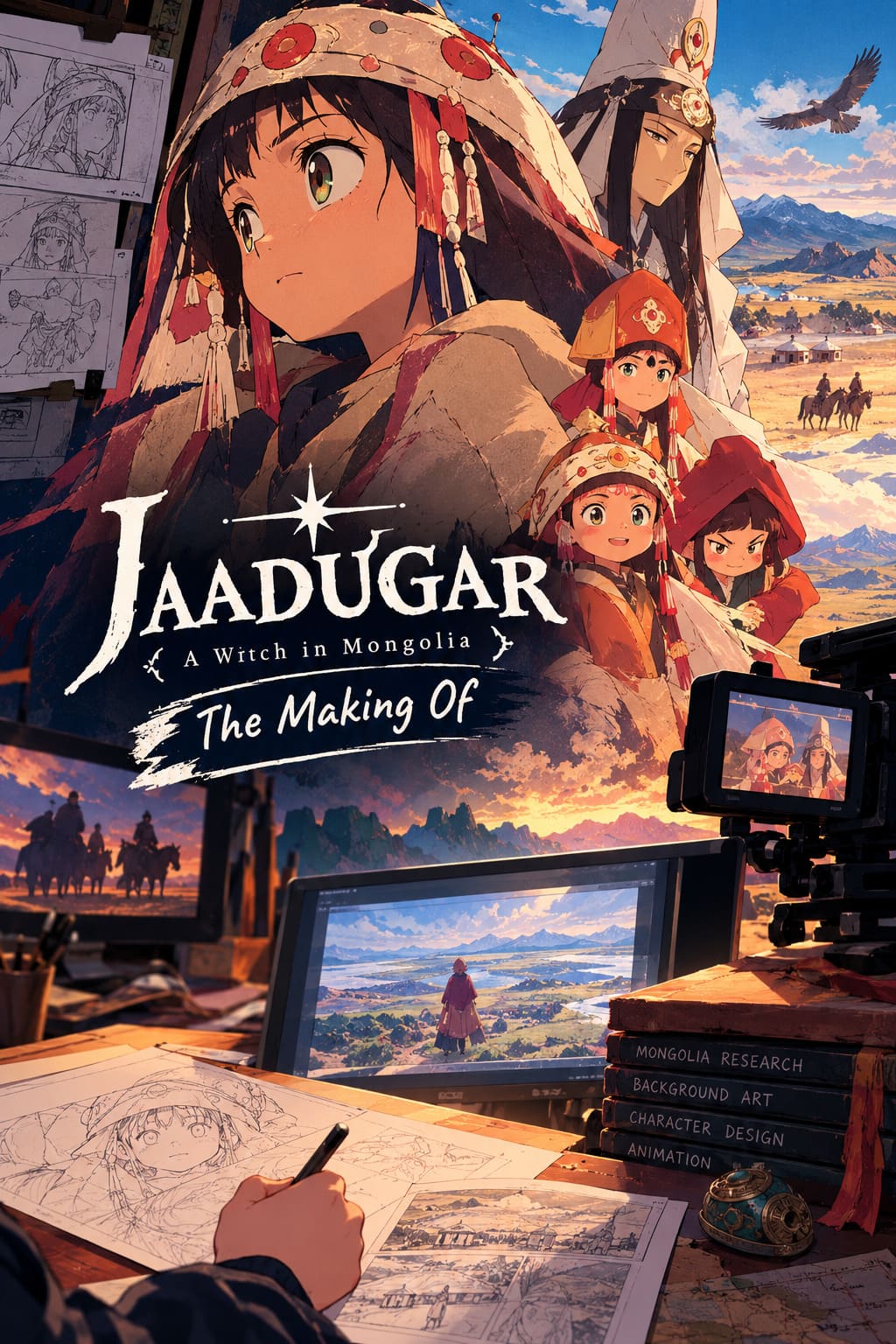
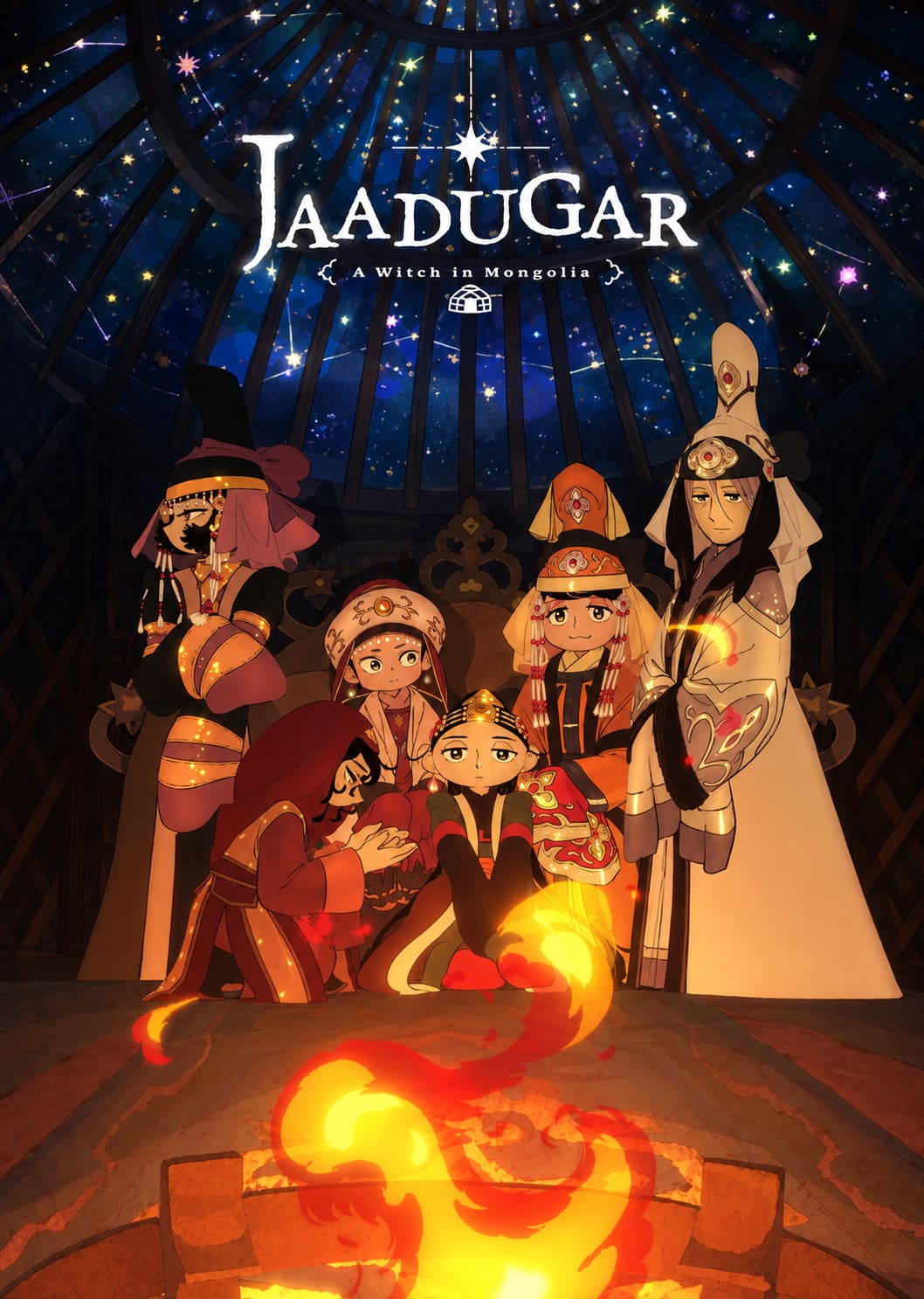
The documentary is basically a backstage pass into the production of an anime that refuses to treat historical drama as just another excuse for spectacle. Based on Tomato Soup’s manga A Witch’s Life in Mongol (Tenmaku no Jaadugar), the adaptation follows Sitara, a young woman from Tus whose life is violently redirected by the Mongol conquests. Her journey eventually connects her with Töregene, and from there the story becomes a fascinating mixture of survival, politics, knowledge, and personal ambition. What surprised me most about the making-of is how deliberately Science SARU built the anime around those quieter ideas instead of simply turning the source material into a conventional TV production.
Arcanadea Anime Release Date, Teaser Trailer, Studio, and Cast Revealed for January 2027 Premiere
The Manga’s Rough Beauty Wasn’t Something Science SARU Wanted to “Fix”
This is probably my favorite part of the entire production story. Tomato Soup’s manga has a wonderfully loose, almost illustrated-storybook appearance, and that kind of artwork can be surprisingly difficult to animate. A studio can easily make the images technically smoother while accidentally removing the exact personality that made the manga special in the first place. Science SARU clearly understood that danger, so instead of forcing Jaadugar into a standard polished anime template, the team developed visual techniques specifically for this adaptation.
The documentary shows how the animators approached the line work, including a particularly clever method associated with character designer and chief animation director Kenichi Yoshida. Lines around parts of the characters were selectively erased rather than being left as perfectly clean digital contours. It sounds like a tiny production trick, but the effect is surprisingly important: characters retain a slightly handmade, imperfect quality that sits naturally beside the textured backgrounds.
That choice gives Jaadugar: A Witch in Mongolia an unusual softness. Personally, I think this is one of those cases where a little imperfection makes the animation feel more human. The characters don’t look like they’ve been dropped into a historical museum diorama; they look like illustrations that somehow learned how to breathe.
Naoko Yamada’s Influence Is Easier to Feel Than to Explain
Naoko Yamada’s involvement is another major reason the series has such a distinct emotional rhythm. Anyone familiar with her work on K-On! or The Colors Within knows that she has a particular talent for making small gestures and pauses carry enormous emotional weight. Her role here as executive director isn’t about turning every scene into an emotional showcase. Instead, the documentary suggests that she helped establish a production philosophy where silence, body language, atmosphere, and the passage of time could matter just as much as dialogue.
That approach works especially well for a story about people living through enormous historical changes. Sitara isn’t a superhero who can punch her way through the Mongol Empire, and the series doesn’t need her to be one. Her intelligence, education, adaptability, and ability to understand the people around her are the real sources of her strength. For me, that’s much more interesting than watching another historical anime inflate its protagonist into an unstoppable genius.
The Mongolia Research Makes the World Feel Much More Convincing
If there’s one thing that can instantly destroy a historical anime for me, it’s a setting that feels like modern anime characters wearing period costumes. Jaadugar largely avoids that trap, and the making-of documentary reveals just how much work went into achieving it. Members of the production team traveled to Mongolia, filmed the landscape, studied cultural details, and looked at historical objects and surviving traditions rather than relying entirely on generic reference material.
Seeing the actual research footage changes the way I look at the finished episodes. The huge open landscapes aren’t simply there because they look pretty. The camps, objects, architecture, clothing, and everyday details are part of a much bigger attempt to make the period feel believable. The studio also consulted specialists in Islamic architecture and historical advisers, which helped the production team handle the Iranian and Central Asian elements with considerably more care.
| Production Element | Why It Matters |
|---|---|
| On-site Mongolia research | Helps ground landscapes, nomadic culture, and environmental details |
| Historical consultation | Adds credibility to the political and social setting |
| Islamic architecture research | Strengthens the visual authenticity of Iranian and Persian locations |
| Hand-finished line work | Preserves the manga’s loose, illustrated personality |
| Restrained voice direction | Keeps the drama mature and believable |
It’s Not Trying to Give You Easy Answers
The political side of Jaadugar: A Witch in Mongolia is another reason I think the show works so well. The story puts its characters inside a world where survival often requires compromise, and the documentary makes it clear that the creative team wasn’t interested in turning that complexity into a simple good-versus-evil story. Director Abel Góngora handles the episode-to-episode storytelling while Yamada helps shape the broader emotional identity, with series composition writer Kanichi Kato contributing to the structure of the narrative.
That combination gives the anime a slower, more deliberate pulse than many seasonal shows. It trusts the viewer to sit with uncomfortable situations instead of immediately explaining exactly who deserves sympathy. For a story dealing with conquest, slavery, political power, gender, education, and survival, I honestly think that’s the smarter approach. The lack of easy moral answers is part of what makes the characters feel like people rather than pieces on a historical chessboard.
The Voice Acting Is Quiet on Purpose
The same philosophy carries over into the performances. Akira Sekine voices Sitara/Fatima, while Ami Koshimizu plays Töregene and Jun Saito voices Muhammad, and the behind-the-scenes material shows how the cast was encouraged to avoid the exaggerated delivery that anime sometimes relies on. There are no constant emotional explosions simply because a scene needs to feel dramatic. Instead, the performances are controlled, often understated, and allowed to sit naturally within the historical setting.
I really appreciate that decision. A story this grounded could have been completely undermined by overly theatrical performances, especially during scenes dealing with grief, fear, political calculation, or quiet determination. The restrained acting lets tiny changes in tone do the heavy lifting. Sometimes a character sounding tired or uncertain tells you more than a dramatic speech ever could.
Why the Making-Of Video Actually Adds Something
Normally, I watch behind-the-scenes anime content once, enjoy a few production drawings, and move on. This one feels different because it answers questions I genuinely had while watching the show. Why do the characters have those slightly rough outlines? Why do the environments feel so textured? Why does the series seem comfortable leaving so much space between major emotional moments? The documentary provides context for all of those choices without making the production process feel like a marketing lecture.
It also reminded me how easy it is to forget just how many people are involved in creating an anime. A finished episode can feel effortless when you’re sitting on the couch watching it, but that apparent simplicity comes from hundreds of individual decisions about research, layouts, animation, backgrounds, acting, editing, direction, and sound. Jaadugar’s behind-the-scenes feature makes those invisible decisions visible.
My Final Take: This Is Exactly the Kind of Anime I Want More Of
What makes Jaadugar: A Witch in Mongolia memorable isn’t one spectacular sakuga sequence or some giant production gimmick. It’s the consistency of its artistic decisions. Science SARU took the manga’s distinctive visual identity seriously, researched the historical world with unusual care, and built the direction and performances around a story that benefits from patience.
After watching the making-of material, I actually appreciate the anime more than I did before. Knowing that the rough line work was an intentional choice makes those visuals feel richer, while seeing the Mongolia research gives the environments another layer of meaning. The documentary doesn’t just tell me that the creators cared; it shows exactly how they cared.
And honestly, that’s what sticks with me. In a season full of anime competing to be louder, faster, and bigger, Jaadugar: A Witch in Mongolia is comfortable being thoughtful. It doesn’t need to constantly remind you that it’s expensive or ambitious. It simply builds its world, lets its characters breathe, and trusts the audience to pay attention. If you’re a fan of historical anime, character-driven storytelling, or Science SARU’s more adventurous projects, the making-of feature is absolutely worth watching alongside the series.