Kyoto Animation’s Renaissance: Minoru Ota and the Long-Awaited ‘Sparks of Tomorrow’
For anime fans around the world, Kyoto Animation has always held a special place in our hearts—a studio that combines breathtaking visuals with deeply human storytelling. But after the tragedy of 2019, many wondered whether the magic could ever return.
Fast forward to 2026, and hope shines brighter than ever with the announcement of Minoru Ota making his series directorial debut with the steampunk epic Sparks of Tomorrow (20 Seiki Denki Mokuroku).
This isn’t just another anime release. For fans, it’s a statement: Kyoto Animation is back, stronger, and reinventing itself for a new era.
One Piece Chapter 1179: Release Date, Predictions, and Full Recap of Chapter 1178
Who Is Minoru Ota? From Animator to Visionary Director
Minoru Ota’s name may not have dominated headlines—yet—but within the anime community, his work has quietly influenced some of the studio’s most iconic projects. Before this, Ota was known primarily as a key animator and episode director, contributing to Kyoto Animation’s signature blend of nuanced character acting and vibrant world-building.
Career Highlights:
- Key Animation: Contributed to visually stunning series like A Silent Voice and Love, Chunibyo & Other Delusions!
- Episode Direction: Directed standout episodes, including Episode 9 of Miss Kobayashi’s Dragon Maid S, widely regarded as a fan favorite.
- Mentorship Lineage: Trained under Takuya Yamamura (Tsurune), learning the delicate art of “cinematic realism” in 2D animation.
Ota’s progression is a perfect reflection of Kyoto Animation’s philosophy: cultivate talent internally and trust your homegrown visionaries. Now, he’s stepping into the spotlight to lead a full series—a move fans are calling a “passing of the torch.”
The World of ‘Sparks of Tomorrow’
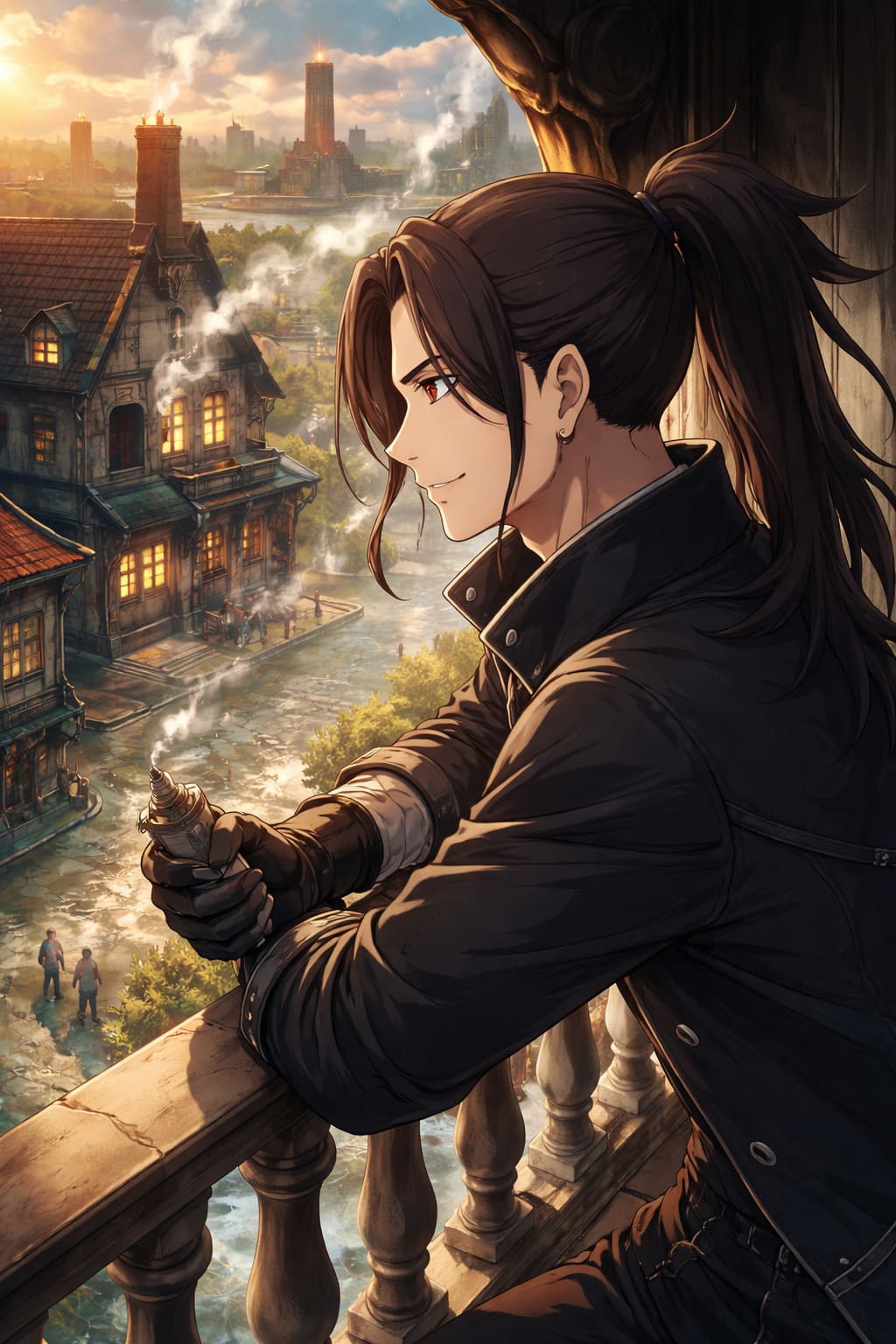
Set in an alternate 1907, the series imagines a Kyoto powered by steam engines and early electrical innovations, a world caught between tradition and a futuristic vision. The original light novel, written by Hiroshi Yuki and illustrated by Kazumi Ikeda, earned an honorable mention in the 8th Kyoto Animation Awards in 2017, cementing its status as a story worth telling.
Premise & Plot Highlights:
- Protagonists:
– Kihachi Sakamoto (voiced by Yuma Uchida), a boy burdened by the loss of his brother and a shared dream of electricity.
– Inako Momokawa (voiced by Sora Amamiya), a spirited girl hiding her own ambitions and grief. - Quest: Together, they seek the elusive “20th Century Electrical Catalog”, a prophetic book that promises a personal and technological revolution.
- Conflict: Inako faces an arranged marriage and escapes with Kihachi, sparking an adventure that intertwines historical Japan with imaginative steampunk inventions.
Fans on Reddit and MyAnimeList have called the revival of this story a “miracle,” particularly after its uncertain fate following the 2019 studio fire.
Why Ota Is the Perfect Choice
Stepping into a directorial role, especially at Kyoto Animation, isn’t about flashy credentials—it’s about understanding the studio’s soul. Ota has spent years mastering the subtleties of storytelling that define the “KyoAni touch.”
Directorial Comparison:
| Feature | Dragon Maid S | Sparks of Tomorrow (Expected) |
|---|---|---|
| Character Acting | Micro-expressions convey deep emotion without dialogue | Inako’s clumsiness & Kihachi’s grief shown through subtle gestures |
| Visual Pacing | Episode 9 balanced high-energy comedy with quiet, intimate moments | Steampunk world with mechanical action contrasted by serene Kyoto scenery |
| Background Integration | Characters feel grounded in their environments | Weight of brass, steam, and industrial machinery feels tangible |
Yamamura Influence:
Mentored by Takuya Yamamura, Ota has inherited a “cinematic realism” approach—lighting, focus, and composition will make the Meiji-era world feel alive, as if you could step into it.
The Creative Powerhouse Behind Ota
Kyoto Animation has not left Ota to navigate this ambitious world alone. Here’s a glimpse of the production dream team:
- Series Composition: Tatsuhiko Urahata (Violet Evergarden), ensuring narrative depth and emotional pacing.
- Character Design: Kohei Okamura (Free! The Final Stroke), promising fluid movement and expressive characters.
- Music: Hitomi Koto, blending traditional Japanese instruments with industrial, electrical motifs.
- Theme Songs: Opening by Luna Goami (Eureka Evrika), ending theme by Ginger Root.
This lineup guarantees that Sparks of Tomorrow isn’t just visually captivating—it’s an immersive sensory experience.
The Symbolism: More Than Just Anime
The release of Sparks of Tomorrow is symbolic in every sense. It marks Kyoto Animation’s rebirth—a studio recovering from tragedy, embracing new talent, and daring to dream again. Ota’s direction represents the studio’s commitment to nurturing human-first storytelling while pushing the boundaries of animation craft.
For fans, this series is a promise: Kyoto Animation isn’t merely continuing; it’s evolving.
Anticipation and Global Reach
- Premiere Date: July 5, 2026
- Streaming: Worldwide on Netflix
- Fan Reactions: Reddit threads and MAL forums are buzzing with excitement, calling the project a “once-in-a-decade” event.
Ota himself has described the series as a “story of regeneration”, mirroring the studio’s journey from tragedy to triumph. It’s rare for an anime to carry such emotional weight before a single frame is released—but with KyoAni and Ota at the helm, this feels like more than fiction; it’s a shared celebration of resilience.
Why Fans Should Be Excited
- Historical Steampunk Setting: Early 20th-century Kyoto brought to life with meticulous detail.
- Character-Driven Storytelling: Expect nuanced performances that reveal emotions wordlessly.
- Visual Mastery: Ota’s attention to micro-expressions and environmental realism promises animation that feels alive.
- Musical Innovation: Industrial sounds mixed with traditional Japanese instruments heighten the world-building.
- Cultural Significance: A symbolic return for a studio that means so much to global anime culture.
Final Thoughts
As July 2026 approaches, anticipation is at a fever pitch. Sparks of Tomorrow isn’t just an anime—it’s a statement of perseverance, creativity, and heart. Minoru Ota’s debut reflects the best of what Kyoto Animation stands for: technical brilliance fused with humanity, a love letter to both past and future generations of anime fans.
If you’ve ever been inspired by the gentle magic of a KyoAni production, or the thrill of a story that balances history with imagination, Sparks of Tomorrow promises to be an unforgettable experience. And for a studio that has endured and evolved, it’s the perfect beginning to a new era.