Marcille and Falin Relationship Analysis: Canon Depth, Lore, and Fan Theories Explained
When I first started watching Delicious in Dungeon (or Dungeon Meshi if you prefer the manga title), I expected clever monster recipes, chaotic dungeon fights, and maybe a few emotional moments here and there. What I absolutely didn’t expect was becoming emotionally invested in the relationship between Marcille Donato and Falin Touden to the point where I spent hours reading fan discussions, Reddit theories, and manga analysis threads at 2 AM.
And honestly, I think that says a lot about how brilliantly Ryoko Kui wrote these characters.
The relationship between Marcille and Falin is one of those rare anime dynamics that feels deeply personal no matter how you interpret it. Some fans see it as romantic. Others view it as an intense platonic soulmate connection. A lot of people even describe it as queerplatonic. The truth is that Dungeon Meshi never gives us a clean, easy answer — and that ambiguity is exactly what makes it special.
More Than Just a Rescue Mission
On the surface, the story begins with a classic fantasy setup: Falin gets eaten by the Red Dragon, and the party races back into the dungeon to save her before it’s too late.
But if you pay attention, Marcille’s emotional reaction immediately stands out from everyone else’s.
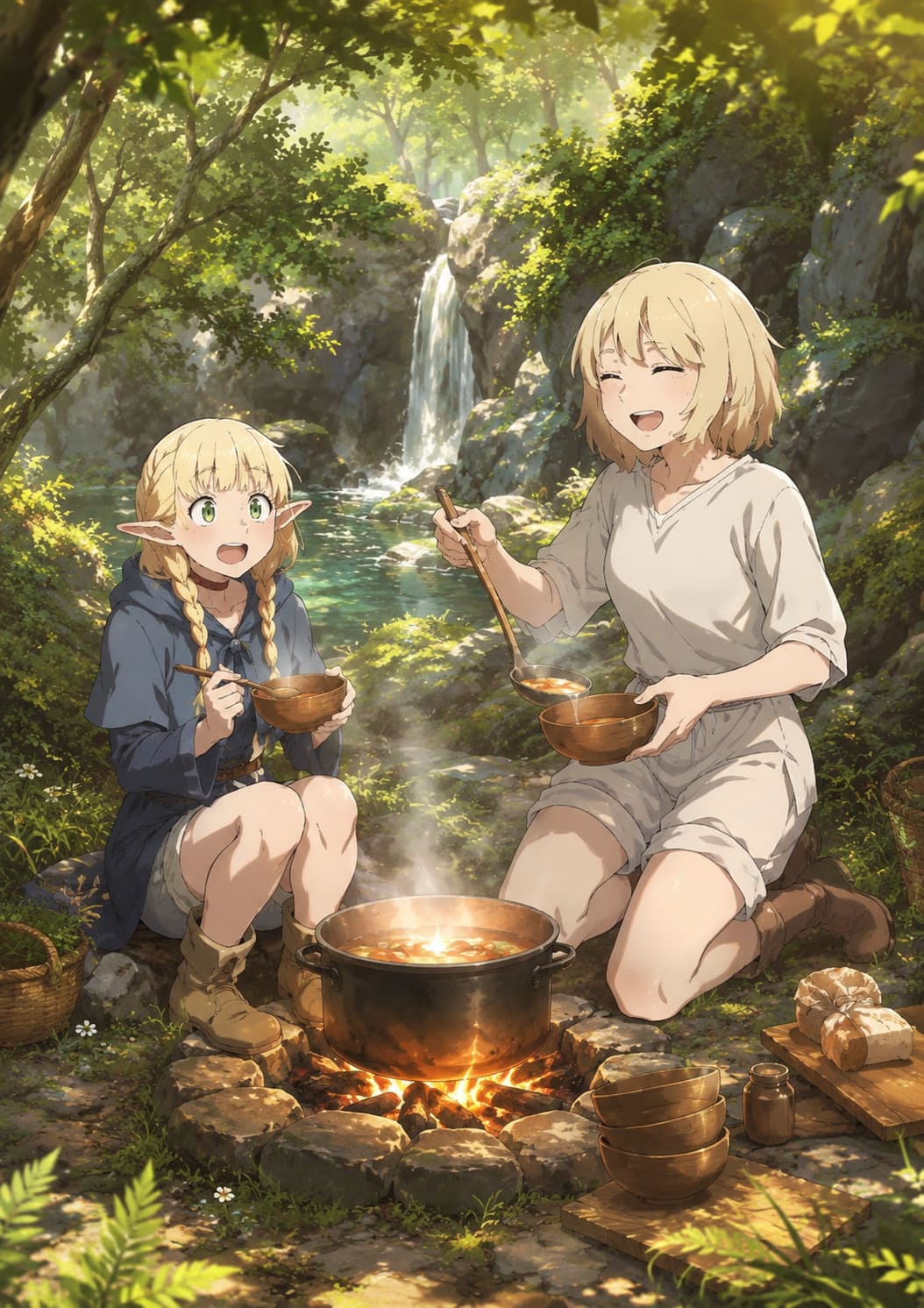
Laios is determined because Falin is his sister. Chilchuck worries about survival. Senshi focuses on practical solutions. Marcille, however, completely unravels emotionally. She throws herself into increasingly dangerous situations without hesitation, ignores common sense, and eventually crosses moral boundaries that most characters in this world would never even consider touching.
That’s not casual friendship energy.
Whether you interpret it romantically or not, Falin is clearly the single most important person in Marcille’s life.
And honestly, I think that emotional intensity is why the fandom latched onto “Farcille” so hard.
The Academy Backstory Changes Everything
The anime only hints at it early on, but the deeper lore from the manga and Adventurer’s Bible makes their history together even more heartbreaking.
Marcille and Falin were both outsiders long before they met each other.
Marcille’s Isolation
- Half-elves in Dungeon Meshi live with constant identity issues.
- Marcille fears outliving everyone she loves.
- She approaches magic academically and obsessively because she’s terrified of loss.
Falin’s Isolation
- Falin was treated as strange and unsettling because of her spiritual sensitivity.
- She struggled socially and often ate alone.
- Her natural approach to magic didn’t fit structured academic systems.
When these two meet at the academy, they essentially become each other’s safe place.
That detail matters because Ryoko Kui doesn’t portray their relationship as sudden or forced. Their bond is built over years of emotional dependence, trust, and shared loneliness. That foundation makes every later scene hit harder emotionally.
Why the Black Magic Scene Is So Important
If there’s one moment that defines Marcille’s devotion, it’s the forbidden resurrection magic.
In most fantasy anime, dark magic is treated almost casually. Dungeon Meshi handles it differently. Ancient black magic is terrifying, illegal, and morally catastrophic in this world. Using it could destroy Marcille’s future entirely.
And she still does it.
Not for power.
Not for glory.
Not because she wants recognition.
She does it because losing Falin is unacceptable to her.
That single decision says more about their relationship than a hundred romantic confession scenes ever could.
The “Romantic Coding” Debate
A huge part of the fandom discussion comes from how Ryoko Kui writes intimacy.
Marcille and Falin share moments that feel unusually soft and emotionally charged compared to typical anime friendships. The bath scenes, the quiet conversations, the physical closeness after resurrection — all of it is framed with incredible tenderness.
What makes it fascinating is that Kui never fully commits to overt romance tropes.
- no confession scene,
- no dramatic kiss,
- no official relationship label.
Instead, we get emotional realism.
And honestly, real relationships are often messy and difficult to categorize. That’s why so many fans connect with them.
Some viewers see undeniable sapphic subtext. Others see two traumatized people clinging to the only person who truly understands them.
Both readings work.
The Succubus Scene Everyone Still Talks About
If you’ve spent even five minutes in the Dungeon Meshi fandom, you already know about the Succubus discourse.
For people unfamiliar with it, Succubi in the series manifest as a person’s deepest desire. Marcille’s illusion initially appears as an idealized male elf figure, which some fans used as “proof” that she’s strictly heterosexual.
But personally, I think that interpretation misses the point completely.
The scene feels intentionally shallow compared to Marcille’s actual emotional behavior throughout the story. Fantasy attraction and emotional devotion aren’t always the same thing.
What matters more to me is how Marcille reacts to Falin herself.
Whenever Falin is endangered, Marcille loses composure immediately. She becomes reckless, emotional, irrational, protective, and vulnerable in ways she rarely does with anyone else.
That emotional contrast feels far more meaningful than one illusion sequence.
Who Does Laios End Up With in Delicious in Dungeon? The Ending Explained
Their Relationship Isn’t Perfect — And That’s Why It Works
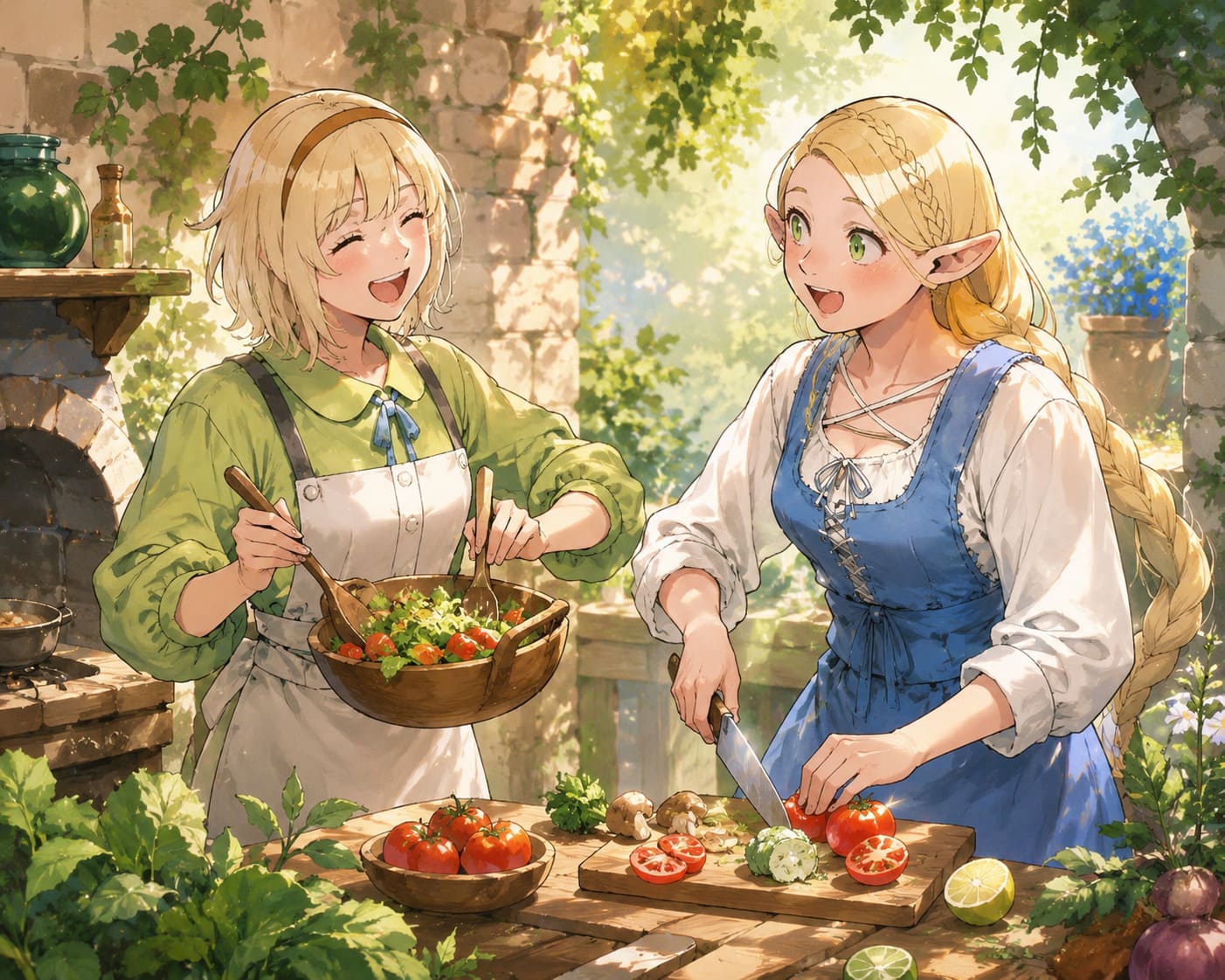
One thing I genuinely love about Ryoko Kui’s writing is that she avoids idealizing relationships.
Marcille sometimes infantilizes Falin without realizing it. She places Falin on a pedestal and assumes she fully understands her, but later discoveries prove that she actually overlooked important parts of Falin’s personality — especially Falin’s fascination with monsters and strange ecology.
That flaw adds realism.
A lesser writer would portray their bond as flawless emotional purity. Kui allows misunderstandings, projection, and emotional imbalance to exist naturally within the relationship.
It makes them feel human.
Why Fans Became So Attached to “Farcille”
I think the popularity of Marcille and Falin comes down to one simple thing:
Their connection feels emotionally earned.
Modern anime often rushes romance or relies heavily on clichés. Dungeon Meshi takes the opposite approach. Every moment between Marcille and Falin is built through subtle characterization, shared history, quiet gestures, and sacrifice.
That’s why the fandom exploded with essays, edits, fan art, and theories.
People aren’t just shipping two attractive characters together randomly. They’re responding to emotional depth that already exists in the source material.
Final Thoughts
At the end of the day, I don’t think there’s one “correct” way to interpret Marcille and Falin.
- romantic soulmates,
- queerplatonic partners,
- inseparable best friends,
- or chosen sisters.
All of those interpretations are supported by the emotional weight of the story.
What matters most is that Delicious in Dungeon created a relationship powerful enough to inspire this level of discussion in the first place. In a fantasy series full of monsters, dragons, magic systems, and absurd cooking scenes, the emotional core that people remember most is simply two lonely girls finding comfort in each other.
And honestly, that’s probably why their story feels so unforgettable.