Why Anime Studios Are Still Struggling Despite the Streaming Boom
Anime has never been bigger.
Every season seems packed with new hits, streaming platforms are fighting over exclusive licenses, and anime conventions across the world continue breaking attendance records. From Tokyo to New York, anime has transformed from a niche hobby into one of the most influential entertainment industries on the planet.
And yet, every time I read industry news, I see the same depressing headlines: another studio facing financial trouble, another production delayed, another wave of animator burnout stories.
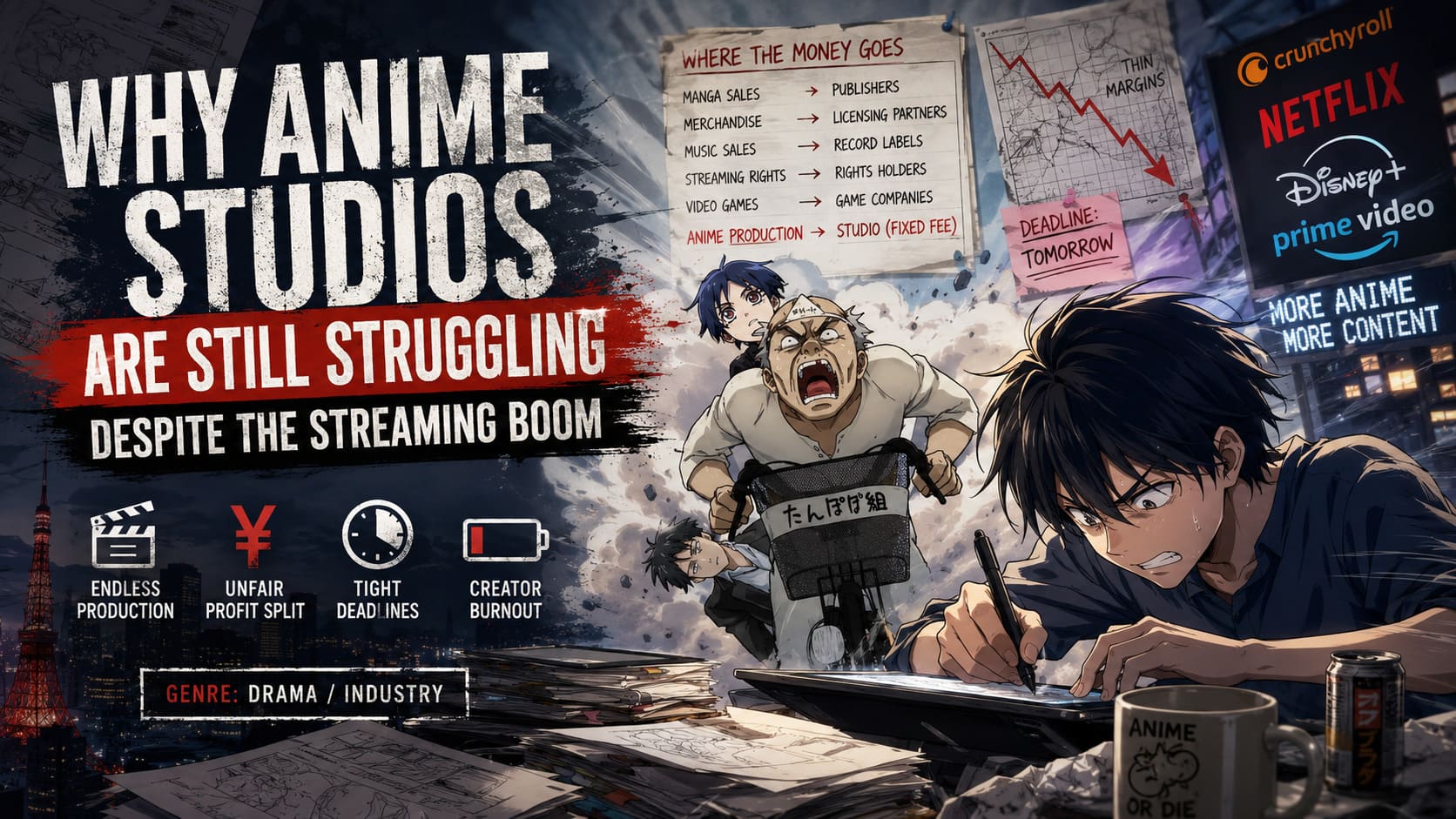
As a longtime anime fan, I find this contradiction fascinating and frustrating at the same time. How can an industry worth billions of dollars still struggle to keep its creators afloat?
The answer is more complicated than most people think.
Is Anime Still Just a Manga Advertisement in 2026?
Anime’s Biggest Problem: Success Doesn’t Always Reach the Studio
Most casual fans assume that when an anime becomes a global hit, the studio behind it automatically earns massive profits.
Unfortunately, that’s often not how the business works.
In Japan, many anime projects are funded through production committees. These committees typically consist of publishers, advertising companies, music labels, toy manufacturers, and other corporate investors. They provide the money needed to produce a series and, in return, own most of the rights.
The animation studio itself is frequently just a contractor hired to complete the work.
Think about that for a second.
A studio can spend years creating a beloved anime that dominates streaming charts worldwide, but the majority of long-term profits may go elsewhere.
Why the Kadokawa CEO Blames the Surge of New Anime Companies for Collapsing Profits
Where the Money Usually Goes
| Revenue Source | Who Often Benefits Most |
|---|---|
| Manga Sales | Publishers |
| Merchandise | Licensing Partners |
| Music Sales | Record Labels |
| Streaming Rights | Rights Holders |
| Video Games | Game Companies |
| Anime Production | Animation Studio (Fixed Fee) |
This is one of the biggest reasons the anime industry often feels upside down from the outside.
The people actually animating the show are frequently the last ones to enjoy the financial rewards.
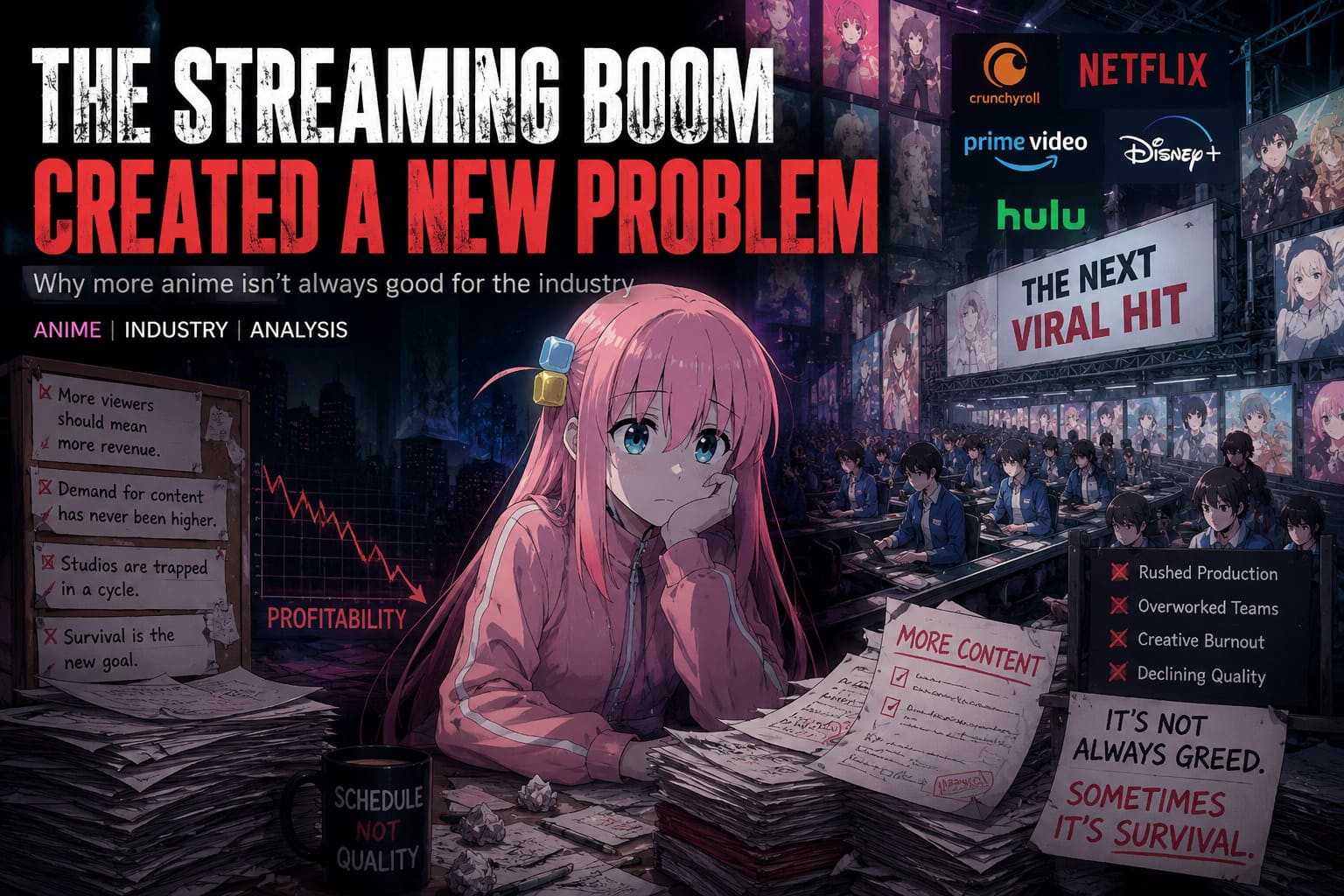
The Streaming Boom Created a New Problem
For years, anime fans believed that global streaming would solve the industry’s money issues.
In theory, more viewers should mean more revenue.
What actually happened is a bit more complicated.
Streaming companies desperately need content. Every platform wants the next viral hit. That demand has encouraged production committees to approve more projects than ever before.
The result is an industry producing an enormous number of anime while struggling to maintain quality and profitability.
Instead of creating breathing room, the streaming era has accelerated production schedules.
Many studios are now trapped in a cycle where they need to accept more projects simply to keep cash flowing through the business.
It’s not always greed.
Sometimes it’s survival.
Too Many Anime, Not Enough People
One issue that doesn’t get enough attention is the talent shortage.
Anime production relies on highly specialized artists, directors, animation supervisors, compositors, editors, and freelancers.
You can’t suddenly create thousands of experienced animators overnight.
Yet demand continues growing every year.
As a fan, I’ve noticed a clear trend over the last decade.
- More production delays
- More recap episodes
- More outsourcing
- More schedule collapses
- More visible quality drops
These problems aren’t happening because creators don’t care.
They’re happening because the industry is stretched beyond its limits.
When several major projects compete for the same pool of talented artists, costs rise and schedules become harder to maintain.
Studios end up fighting for manpower just to finish episodes on time.
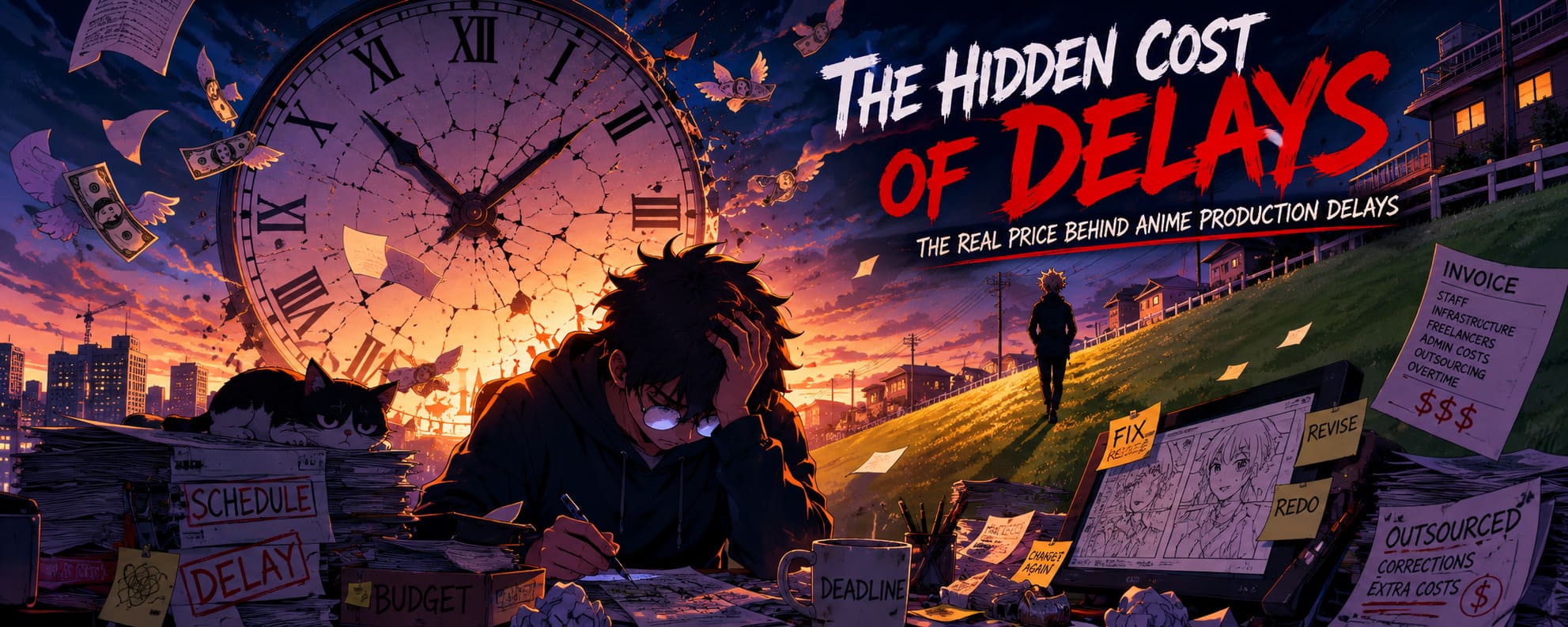
The Hidden Cost of Delays
Many fans underestimate how expensive production delays can be.
When an anime falls behind schedule, studios don’t simply pause and wait.
They continue paying staff, maintaining infrastructure, coordinating freelancers, and handling countless administrative costs.
Meanwhile, deadlines keep approaching.
This pressure often leads to emergency outsourcing.
Entire sequences may be sent to external teams in other countries to save time.
Sometimes the results are excellent.
Other times, corrections become so extensive that the studio spends additional money fixing the outsourced work.
In the worst cases, delays erase what little profit margin existed from the beginning.
For smaller studios, a single troubled production can become a financial disaster.
The Industry Runs on Passion — And That’s a Problem
This is the part that bothers me most.
Anime fans often celebrate the incredible dedication of creators.
But sometimes that dedication is being exploited.
Many young animators enter the industry because they genuinely love anime. They dream of working on the next great action scene or contributing to a legendary franchise.
The problem is that passion doesn’t pay rent.
Entry-level artists often earn surprisingly little considering the skill and effort required. Long hours have become normalized, and burnout remains a recurring issue.
Over time, many talented people simply leave.
They move into gaming, advertising, design, technology, or completely different careers that offer better pay and healthier working conditions.
Every departure creates another gap in the industry’s talent pipeline.
Eventually those gaps become impossible to ignore.
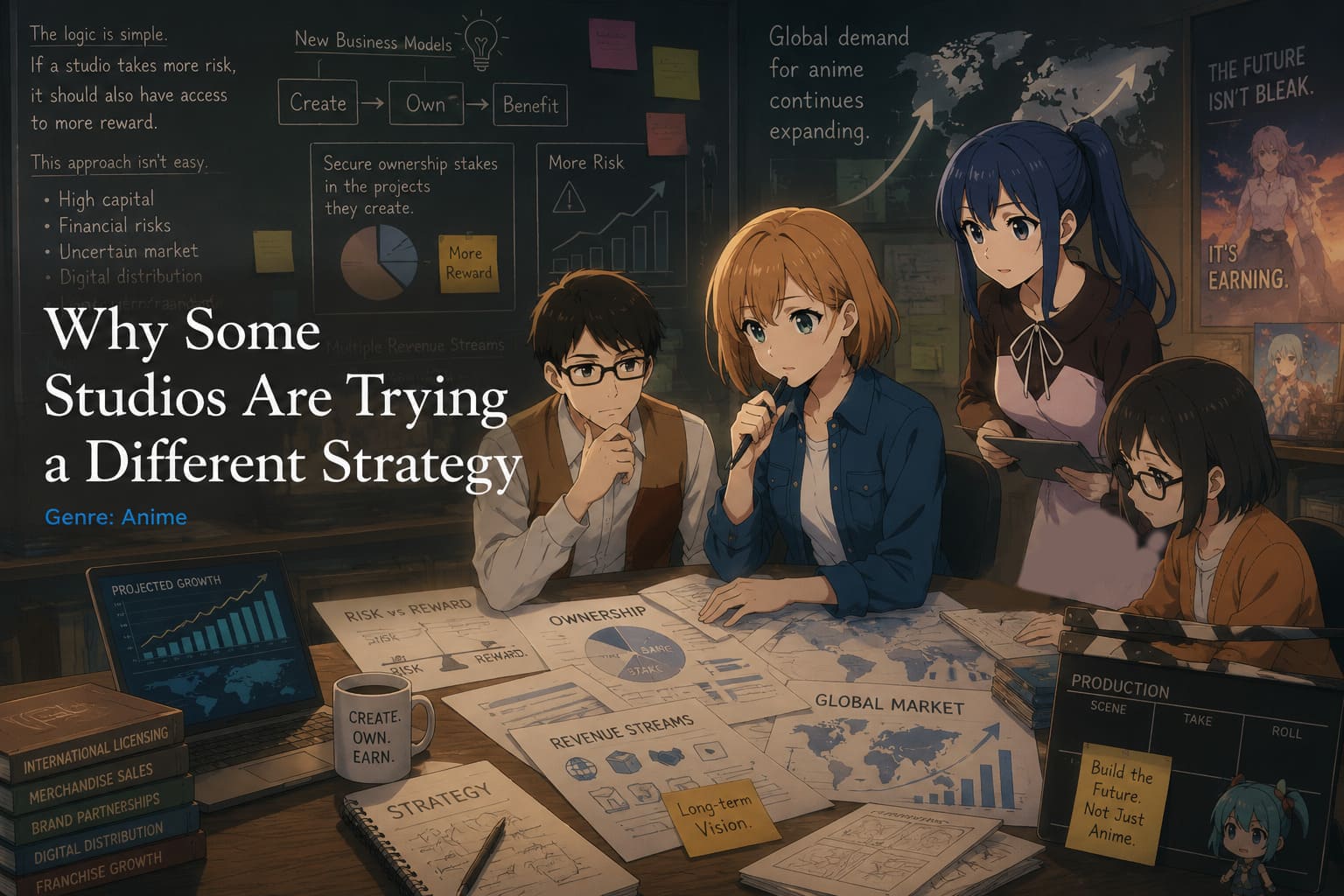
Why Some Studios Are Trying a Different Strategy
Despite all the challenges, I don’t think the future is entirely bleak.
Some studios have started experimenting with new business models.
Rather than acting solely as contractors, they are trying to secure ownership stakes in the projects they create.
The logic is simple.
If a studio takes more risk, it should also have access to more reward.
This approach isn’t easy.
Funding an anime independently requires significant capital and exposes studios to major financial risks.
However, if successful, it allows them to benefit directly from multiple revenue streams.
- International licensing
- Merchandise sales
- Brand partnerships
- Digital distribution
- Long-term franchise growth
Several industry leaders appear increasingly interested in this model as global demand for anime continues expanding.
My Take as an Anime Fan
The anime industry feels like a machine that is producing more value than ever while distributing that value in a deeply uneven way.
Fans around the world are spending money on subscriptions, figures, games, Blu-rays, and convention tickets because they love the stories and characters these studios bring to life.
Yet the people creating those worlds are often operating under intense financial pressure.
That’s the real paradox of modern anime.
- The audience is larger.
- The revenue is larger.
- The global influence is larger.
But for many studios and animators, the economic reality hasn’t improved nearly as much as fans assume.
If the industry wants sustainable growth, it can’t rely forever on overworked artists and razor-thin production margins. At some point, the financial structure has to evolve.
Because no matter how successful anime becomes internationally, an industry cannot remain healthy if the creators responsible for its success are constantly fighting just to stay afloat.