Will Serfort True Power Explained: Prime Pathos, Memory Loss, and the Sword’s Origin in Wistoria: Wand and Sword
When I first started watching Wistoria: Wand and Sword, I honestly expected another typical underdog story. A weak boy gets bullied at magic school, trains hard, and eventually proves everyone wrong. But the deeper the series goes, the clearer it becomes that Will Serfort is something far more terrifying — and far more tragic.
What makes Will such an interesting protagonist isn’t just his strength. It’s the feeling that he doesn’t fully belong in the world around him. Every major reveal in the manga slowly hints that Will was never supposed to be a “normal” mage in the first place. He’s not failing the system because he’s weak. He’s failing because the system literally cannot understand what he is.
And honestly? That’s what makes him one of the best modern shonen protagonists right now.
The Biggest Lie in Wistoria: Will Was Never “Magicless”
At the start of the story, everyone at Rigarden assumes Will has no magical talent. In a society where status is built entirely around mana and spellcasting, that instantly makes him an outcast.
But the truth is almost the complete opposite.
Will’s body doesn’t reject mana — it stores it.
Instead of releasing magic outward like normal mages, his body absorbs magical energy internally. That’s why traditional spells fail when he tries to cast them. His mana circulation works differently from every other person in the tower.
The more the manga explores this idea, the more obvious it becomes that Will was designed to function as a living weapon rather than a magician.
That changes everything.
Instead of being a failed mage, Will is essentially the missing half of the world’s ancient balance: the Sword meant to stand beside the Wand.
Why “Wis” Is One of the Coolest Power Systems in Modern Anime
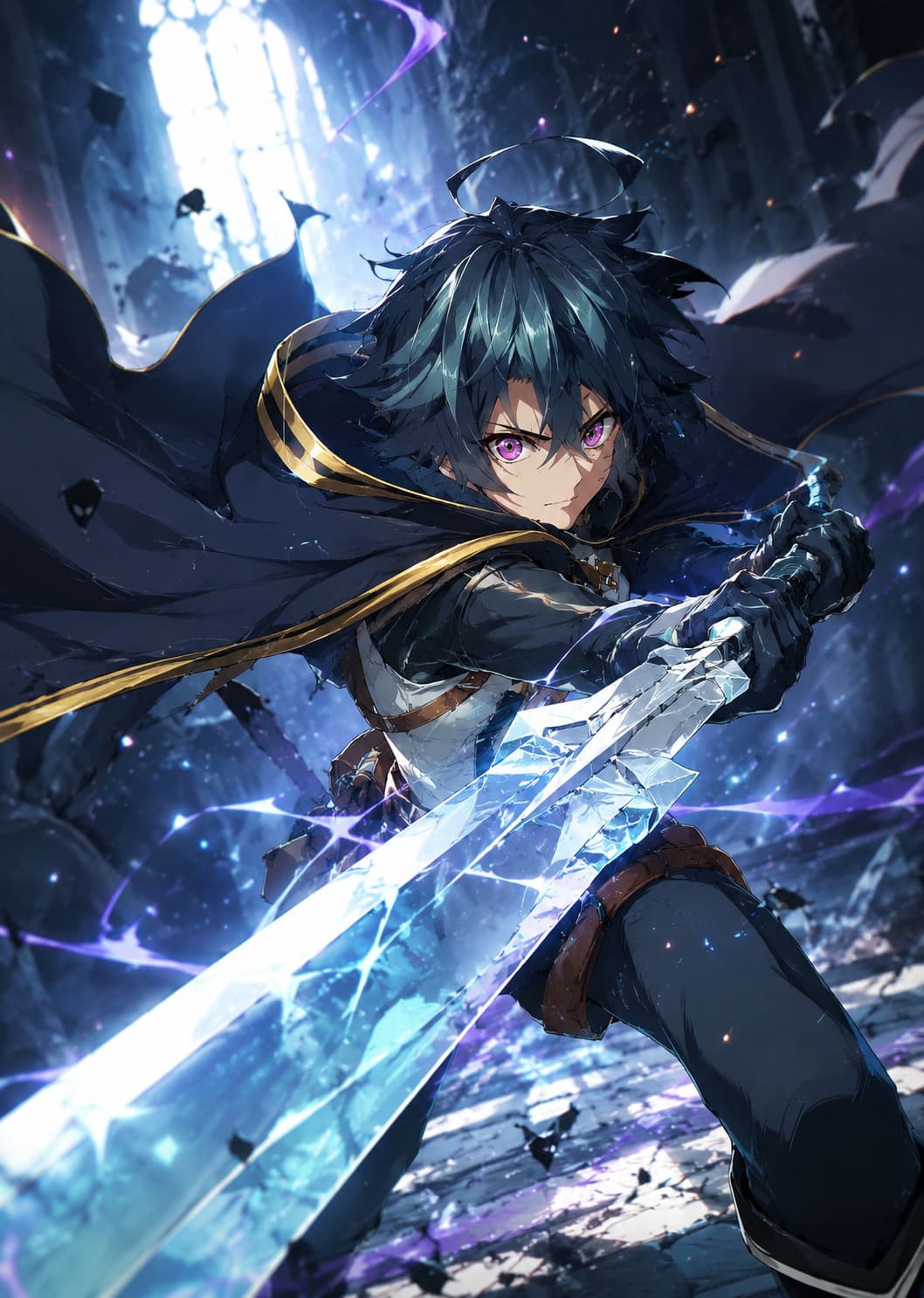
I genuinely think the “Wis” mechanic is one of the smartest combat systems introduced in recent fantasy manga.
Rather than firing spells directly, Will absorbs magic into his blade and transforms it into close-range destructive force. It gives his fights a completely different energy compared to traditional magic battles.
The series constantly reminds us that mages in Wistoria are overwhelming at long range but physically fragile. Will completely breaks that formula.
What makes his fighting style so satisfying is that every battle feels personal and brutal. He doesn’t stand still casting giant explosions. He dives directly into danger.
- Blocking devastating magic head-on
- Cutting through high-tier spells with pure force
- Combining physical swordsmanship with elemental magic
- Turning enemy attacks into fuel for his own power
The result feels closer to a fantasy action game than a standard magic anime.
Will Serfort vs. The Heavens: Who are the Celestial Invaders in Wistoria: Wand and Sword?
Prime Pathos Is More Emotional Than Most Anime Power-Ups
The moment the story introduced Prime Pathos, I realized Wistoria was aiming for something deeper than simple power scaling.
Unlike ordinary upgrades, Prime Pathos is tied directly to Will’s emotions and memories. He literally weaponizes emotional connections.
That concept alone is incredibly powerful from a storytelling perspective.
When Will recalls Elfaria’s magic, he can recreate fragments of it through his sword even when she isn’t present. His feelings become the trigger for combat evolution.
And honestly, that’s what makes Prime Pathos feel different from generic “rage mode” transformations in other shonen series.
Instead of:
“I’m angry, so now I’m stronger.”
Wistoria says:
“The people you love become part of your strength.”
That emotional foundation gives the power system far more weight.
Will’s Memory Loss Might Be the Saddest Part of the Entire Story
A lot of fans focus only on Will’s combat abilities, but I think his memory problems are actually the most disturbing mystery in the series.
The manga quietly hints that Will has been losing pieces of himself for years.
That changes the emotional meaning behind many scenes. Suddenly, his determination to protect memories, promises, and relationships feels desperate rather than inspirational.
The Grimoire Acta becomes especially unsettling once you realize it may not just be a diary.
It could literally be preserving Will’s identity.
One theory I personally love is that Will’s body is overloaded with compressed mana, and the pressure slowly damages his mind. Another possibility is even darker: someone intentionally sealed or fragmented his memories to stop the “Sword” from awakening too early.
Either way, his memory loss feels less like a side effect and more like a built-in limiter.
And that makes his character tragic in a way many action protagonists never reach.
Limit Off: The Moment Will Stops Feeling Human
Every time Will enters his white-haired “Limit Off” state, the atmosphere of the series changes instantly.
The transformation doesn’t feel heroic.
It feels dangerous.
That’s important.
Most anime transformations are designed to look cool or empowering. Will’s Limit Off instead creates fear — even among powerful characters. The reactions from elite mages tell us everything we need to know: whatever Will truly is, even the strongest people in Wistoria are terrified of it.
His white form feels less like a power-up and more like an ancient weapon partially awakening.
And the craziest part?
I don’t think we’ve seen its full potential yet.
The “True Sword” Theory Actually Makes Sense

The deeper Wistoria dives into ancient history, the harder it becomes to ignore the idea that Will was artificially created for a purpose.
The clues are everywhere:
| Mystery | Possible Meaning |
|---|---|
| Will absorbs magic instead of casting it | He was designed as a mana vessel |
| Finn calls him “the Sword” | His existence predates modern society |
| His memories are unstable | His humanity may be incomplete |
| Prime Pathos connects emotion to power | Human bonds stabilize the weapon |
| Limit Off changes his appearance entirely | His real form is being suppressed |
Personally, I think the “Fifth Element” theory is probably close to the truth.
Will represents the fusion of physical force and magic — something the current world has forgotten. The entire tower society became dependent on mages alone, and now the story is slowly revealing why that imbalance is dangerous.
If the Heavenly Invaders truly return, ordinary magic may no longer be enough.
That’s where Will comes in.
Why Will and Elfaria Represent the Real Meaning of Wistoria
At its core, Wistoria isn’t just about becoming stronger.
It’s about connection.
Will and Elfaria symbolize two halves of a broken world:
- The Wand
- The Sword
Separately, they are incomplete. Together, they represent balance.
That’s why their relationship matters so much to the story beyond simple romance. Elfaria never truly looked down on Will because, deep inside, she understood something the rest of society couldn’t see.
He wasn’t weak.
He was unfinished.
Final Thoughts
What makes Will Serfort such a compelling protagonist is that his greatest battle isn’t against monsters or rival mages.
It’s against the truth of his own existence.
Every revelation in Wistoria: Wand and Sword pushes the story closer to one terrifying possibility: Will may not simply become the strongest character in the series — he may become the very thing the world was created to fear.
And honestly, that’s exactly why I can’t stop reading this manga.