The Beginning After the End vs Solo Leveling: Battle for Manhwa Supremacy
If you’ve been anywhere near anime communities lately — Reddit threads, YouTube comment wars, Discord servers, or even TikTok edits — you’ve probably seen the endless debate: Solo Leveling vs The Beginning After the End. And honestly? As someone who reads way too much manhwa at 3 AM and re-reads favorite arcs instead of sleeping, I get why this argument never dies. These two series didn’t just become popular — they changed how global audiences discovered manhwa. But here’s the thing most comparison articles miss: this isn’t really about which one is more famous. It’s about what kind of experience you want as a reader.
Why These Two Series Keep Getting Compared
Both stories became massive entry points into Korean webcomics for Western readers. Solo Leveling introduced millions to the “system” power fantasy, while The Beginning After the End (TBATE) showed that manhwa-style storytelling could deliver deep fantasy world-building comparable to classic novels. Think of it like anime equivalents: Solo Leveling feels like watching a perfectly animated action blockbuster, while TBATE feels like committing to an emotional fantasy saga. Both are excellent, but they satisfy completely different reader expectations.
Storytelling: Fast Power Fantasy vs Emotional Epic
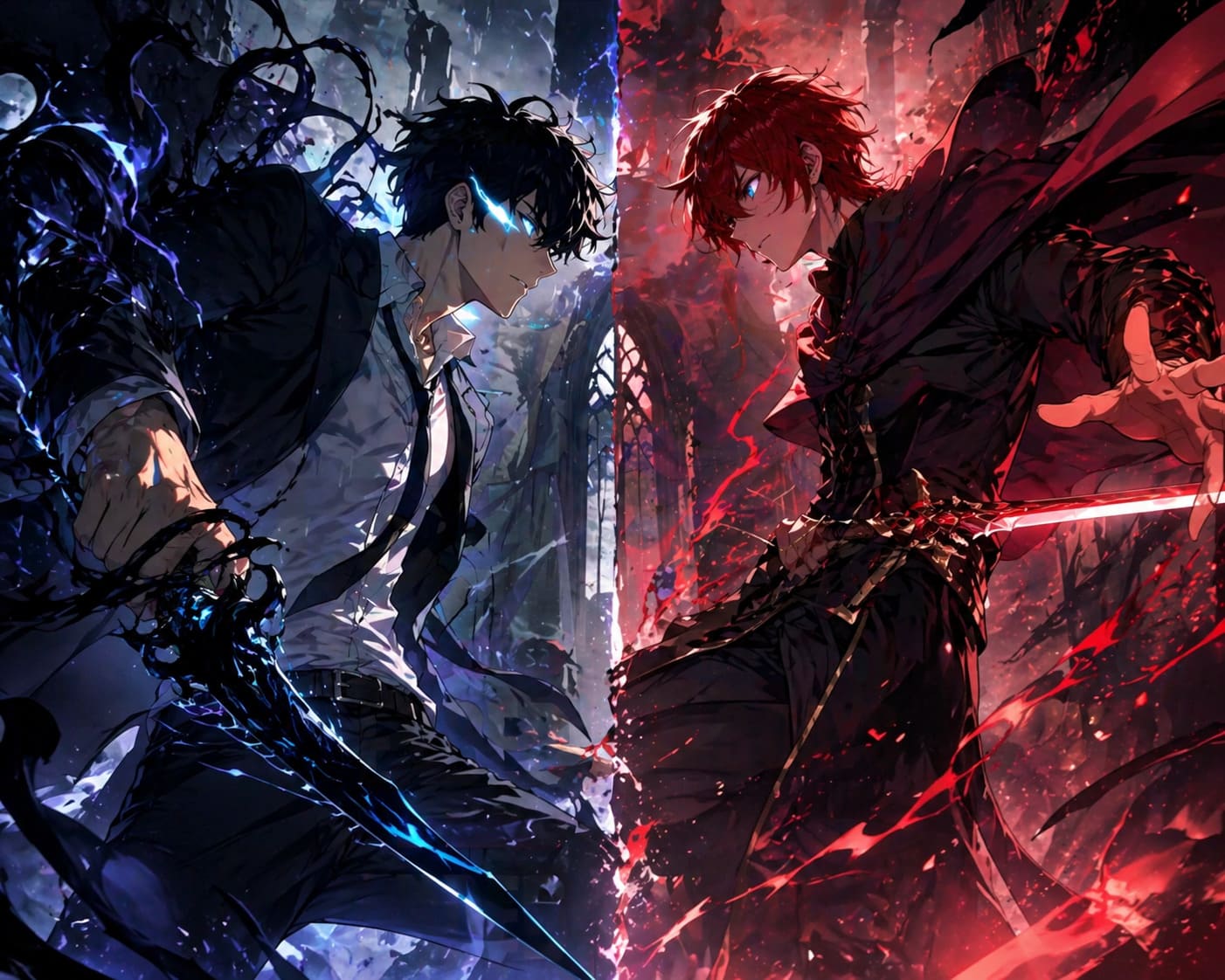
Solo Leveling — Pure Momentum
Reading Solo Leveling is like stepping onto a moving train that never slows down. You start with Sung Jinwoo, the weakest hunter alive, and watch him climb toward godhood at an almost addictive pace. Every chapter delivers stronger enemies, cooler abilities, escalating stakes, and unforgettable hype moments. The plot remains intentionally straightforward, and that simplicity becomes its greatest strength. Readers always understand the objective: survive, level up, and become stronger. The downside is that deeper political themes or layered subplots rarely take center stage. Once Jinwoo surpasses everyone else, tension shifts from wondering whether he will win to anticipating how spectacular his victory will look. And sometimes, that pure excitement is exactly why fans love it.
The Beginning After the End — A Story That Breathes
TBATE approaches storytelling from the opposite direction. Arthur Leywin is not simply gaining strength; he carries memories and emotional trauma from his past life as a king. His growth is emotional, psychological, and deeply personal. Instead of focusing purely on combat progression, the series explores layered world-building, evolving magic systems, international conflicts, and moral consequences tied to power. Loss has meaning, decisions reshape the narrative, and victories often come at painful costs. Rather than bingeable action alone, TBATE feels like reading a long-form fantasy novel where readers become emotionally invested in every outcome.
Top 15 Best Manhwa Like The Beginning After The End (2026 Recommendations)
Main Characters: The Lone Shadow vs The Burdened King
Sung Jinwoo — The Icon
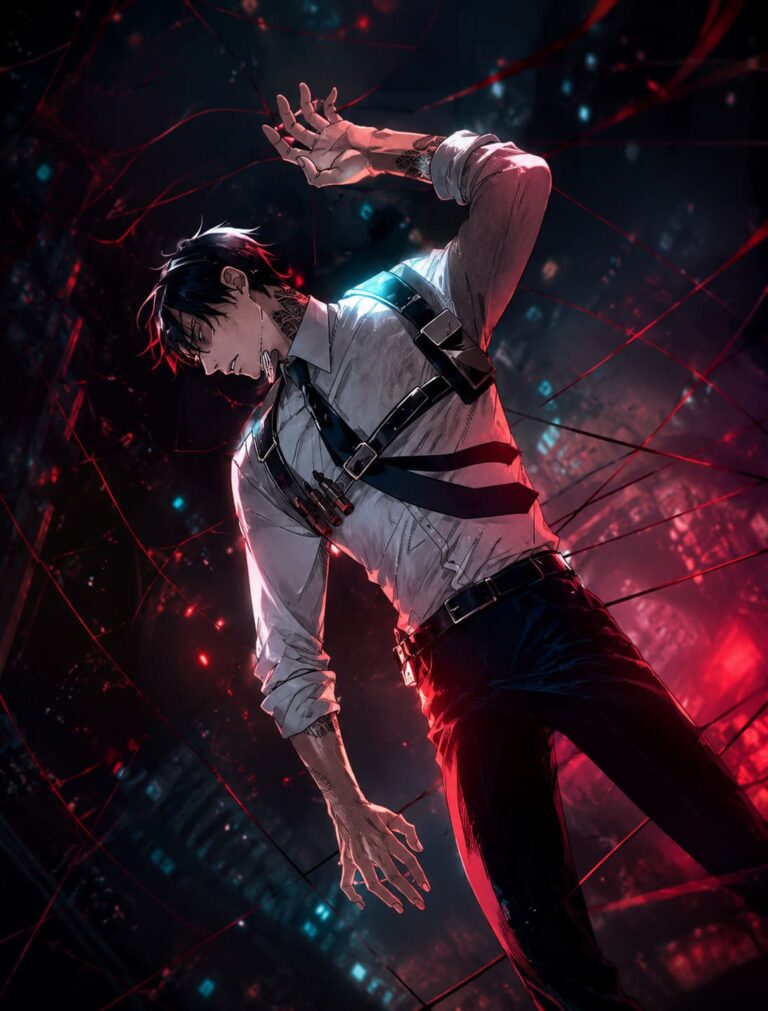
Sung Jinwoo’s appeal is immediate and universal. He evolves into a character defined by overwhelming power, calm confidence, and undeniable presence. With each arc he becomes stronger, cooler, and more intimidating. He embodies the ultimate power fantasy — a protagonist many readers secretly wish they could become. However, as his power reaches godlike levels, supporting characters gradually lose narrative importance, and the world begins revolving entirely around him. Jinwoo becomes legendary, but also emotionally distant, representing strength achieved through isolation.
Arthur Leywin — Growth Through Relationships
Arthur Leywin’s journey is built on relationships and emotional consequences. His story constantly returns to family bonds, friendships, mentorships, romance, and sacrifice. Unlike Jinwoo, Arthur experiences defeat, guilt, and personal loss that permanently shape his character. He questions his decisions and struggles under responsibility, making him feel profoundly human despite immense magical ability. This vulnerability allows readers to connect with him not just as a powerful hero but as a person growing alongside the world around him.
Art Style: The Visual Gap Everyone Talks About
| Aspect | Solo Leveling | TBATE |
|---|---|---|
| Visual Impact | Industry-defining | Strong fantasy aesthetic |
| Fight Scenes | Cinematic and explosive | More story-focused |
| Iconic Panels | Constant wallpaper material | Select standout moments |
| Consistency | Extremely high | Varies across arcs |
When discussing visuals, Solo Leveling often dominates the conversation. Its dramatic lighting, glowing color palettes, and unforgettable shadow soldiers set a global benchmark for manhwa art quality. Many panels became instantly recognizable icons within anime culture. TBATE delivers attractive fantasy visuals and expressive character moments, but it prioritizes narrative atmosphere rather than constant visual spectacle. While both series look impressive, Solo Leveling remains the undisputed leader in visual hype.
The Anime Effect Changed Everything
The release of the Solo Leveling anime adaptation dramatically expanded global interest in manhwa. Streaming audiences discovered Korean storytelling on an unprecedented scale, pushing webtoon discussions into mainstream anime culture. This success sparked renewed discussions about potential adaptations of other major titles. TBATE fans continue hoping for a high-quality anime version capable of capturing its darker war arcs and emotional complexity. The challenge lies in translating not only action but also the heavy emotional themes that define later parts of the story.
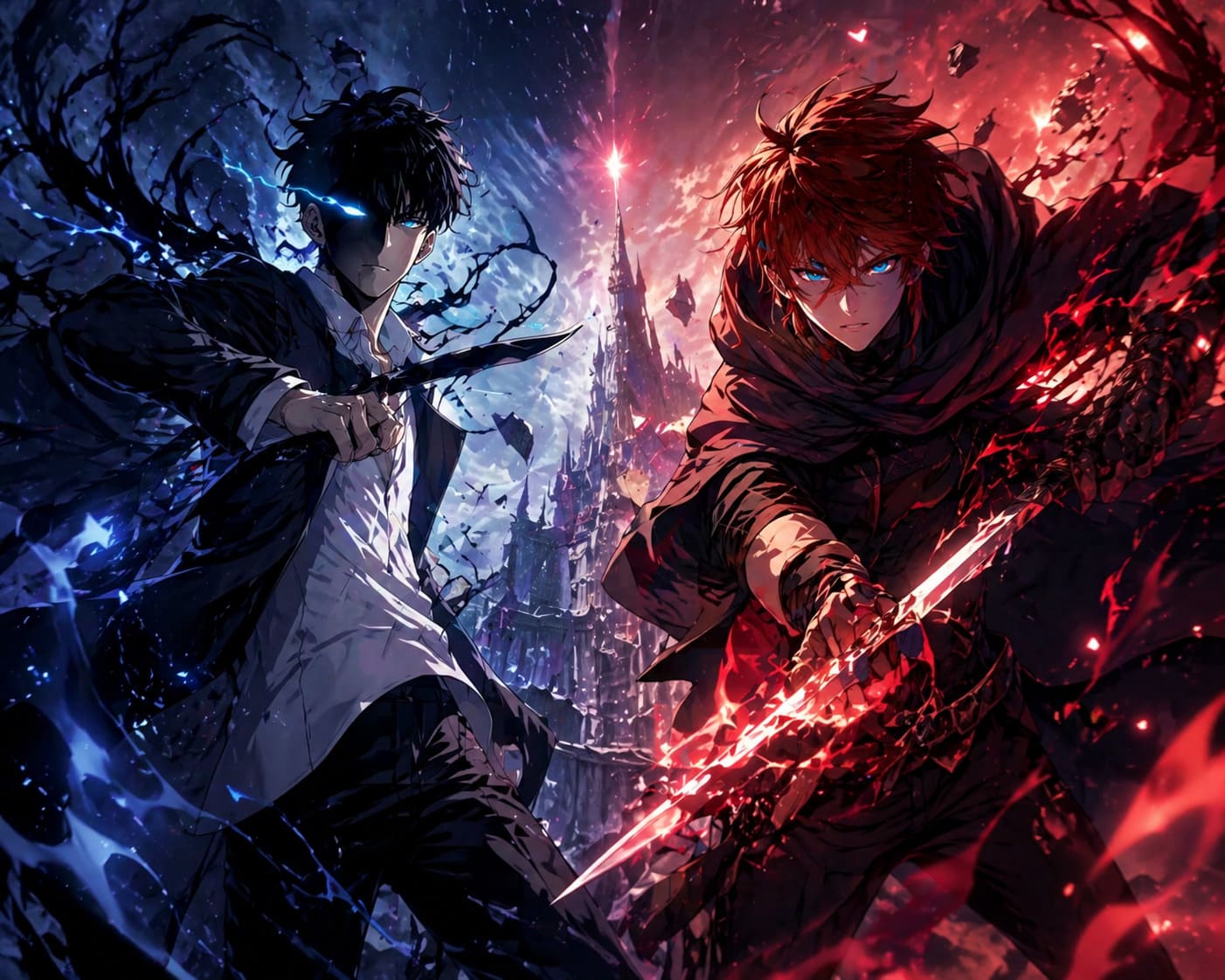
Which One Should Beginners Start With?
Most experienced readers give similar advice to newcomers exploring manhwa for the first time.
- Start with Solo Leveling if you want: instant excitement, fast pacing, clear progression systems, and visually unforgettable action.
- Move to TBATE when you want: deeper storytelling, character-driven drama, expansive world-building, and long-term emotional payoff.
Many readers naturally begin with Solo Leveling and eventually gravitate toward TBATE as they seek richer narratives and more complex storytelling experiences.
Head-to-Head Comparison
| Feature | Solo Leveling | The Beginning After the End |
|---|---|---|
| Core Appeal | Hype and Action | Story and Emotion |
| Protagonist Type | Overpowered Icon | Developing Hero |
| Pacing | Extremely Fast | Moderate |
| World-Building | Minimal | Extensive |
| Re-read Value | Fight Moments | Story Arcs |
| Beginner Friendly | Very High | Medium |
So… Which Manhwa Is Actually Better?
From the perspective of an anime fan, the answer depends entirely on what you seek from storytelling. Solo Leveling delivers the better immediate experience, filled with adrenaline, style, and constant excitement. The Beginning After the End delivers the stronger long-term narrative, focusing on growth, sacrifice, and emotional resonance. Solo Leveling feels like watching peak animation every week, while TBATE feels like growing alongside a hero through triumphs and tragedies over time.
Ultimately, these two series are not true rivals but complementary experiences representing different stages of fandom. One captures the thrill of discovering manhwa for the first time, while the other reveals the emotional depth and narrative potential the medium can achieve. That is why the debate continues — because both stories succeed in completely different ways, and together they define modern manhwa culture.