Sekiro No Defeat Anime Release Date, Episodes, Visual, and Production Details Explained
There are some video game adaptations that immediately make me nervous, and then there is Sekiro: Shadows Die Twice. FromSoftware’s brutal samurai adventure already feels like something that belongs in an anime, but turning that idea into an actual animated series is a completely different challenge. Now, with Sekiro No Defeat heading toward its January 2027 television premiere, I honestly can’t decide whether I’m more excited to see Wolf in motion or terrified that the anime will somehow lose what made the game so special.
The original Sekiro was never just another difficult action game. Its combat was built around posture, timing, aggression, and learning an opponent almost like a martial artist studying a rival. Add the bizarre mythology, the collapsing land of Ashina, immortal bloodlines, giant monsters, ninjas, and one of the most memorable versions of Sengoku-era Japan in gaming, and you have material that practically begs for animation. The announced eight-episode Sekiro No Defeat anime could finally give that world enough room to breathe.
And yes, the release plan is particularly interesting because this project has already had a theatrical life before becoming a television series. That makes the upcoming anime much more than a simple game-to-TV adaptation.
Studio KAI The Ramparts of Ice Season 2 Staff Changes: Full Breakdown and Studio Financial Analysis
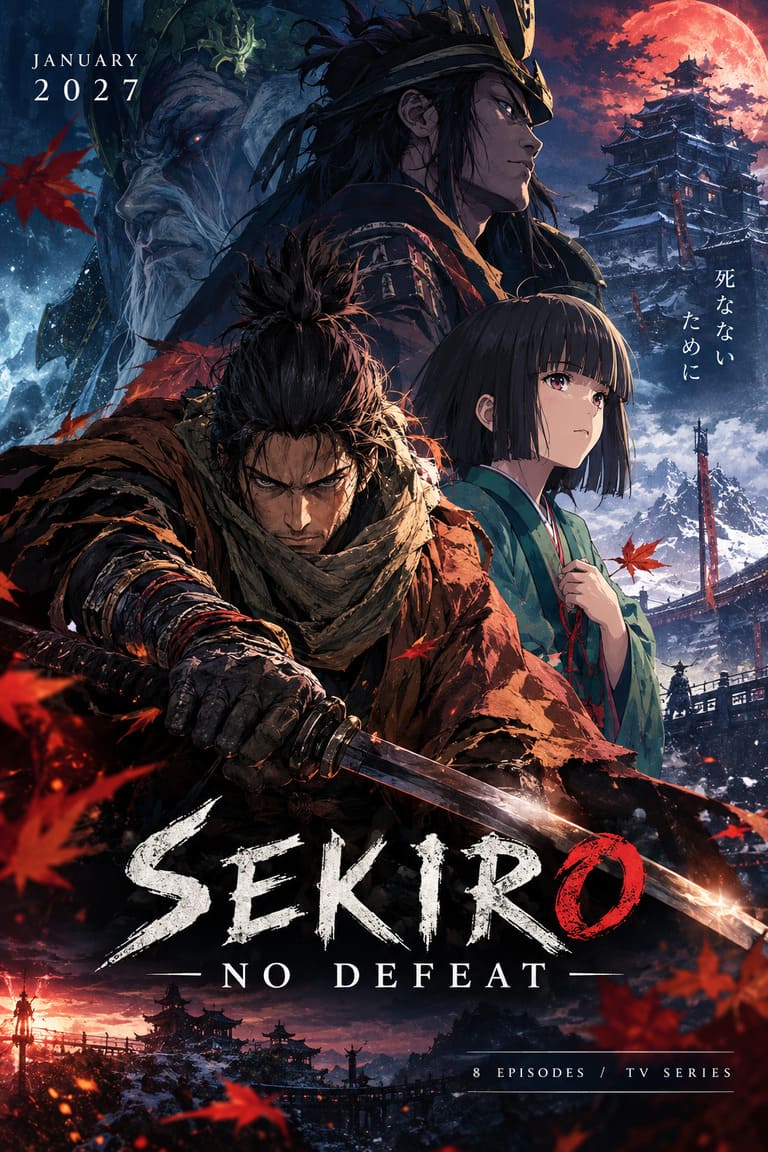
Sekiro No Defeat Release Date: January 2027
The biggest piece of information for fans is straightforward: Sekiro No Defeat is scheduled to premiere in January 2027 as an eight-episode television series.
That alone makes this one of the anime projects I’m keeping a very close eye on for the winter 2027 season. Eight episodes isn’t an enormous number, especially for a story as packed with locations, bosses, characters, mythology, and twists as Sekiro. Still, it is a major improvement over trying to force the entire experience into a single movie.
The anime is also being positioned as an expanded version of the theatrical project rather than simply taking the film and cutting it into eight pieces. That’s a huge distinction. If the production really uses those additional episodes to slow down the storytelling, develop Wolf and Kuro’s relationship, and give Ashina’s tragedy some breathing room, this format could work extremely well.
| Sekiro No Defeat Detail | Information |
|---|---|
| Anime Format | Television Series |
| Episodes | 8 |
| Premiere | January 2027 |
| Original Game | Sekiro: Shadows Die Twice |
| Animation Studio | Qzil.la |
| Production | ARCH / KADOKAWA |
| Director | Kenichi Kutsuna |
| Screenwriter | Takuya Satou |
| Character Designer | Takahiro Kishida |
| International Streaming | Crunchyroll |
Why the Eight-Episode Format Matters
This is probably the part of the announcement that interests me the most.
A Sekiro story can move incredibly fast even when you’re playing the game yourself. One minute you’re sneaking through Ashina, the next you’re fighting a terrifying creature, discovering another piece of the Dragon’s Heritage, and suddenly the entire political situation has changed. A movie has to compress all of that into a couple of hours.
That’s exactly where the theatrical version apparently ran into problems. The visual presentation could look fantastic while the narrative had to sprint from one major event to another. For someone who already knows the game, that might be manageable. For an anime-only viewer, though, I can easily imagine it becoming confusing.
The eight-episode structure gives the creators a chance to let the characters actually exist between the big fights. I want more Wolf and Kuro. I want more of Genichiro’s desperation. I want Ashina to feel like a place that is genuinely falling apart rather than simply a collection of boss arenas connected by gorgeous backgrounds.
And, obviously, I want the boss fights.
The Theatrical Version Came First
Before the television series, Sekiro No Defeat received a theatrical release in Japan on September 4, 2026. It was originally intended to have a short limited run, but interest reportedly pushed the theatrical engagement beyond its initial three-week plan.
That rollout gave the project an unusual advantage. The anime wasn’t being introduced quietly through a standard weekly broadcast. It had already been tested in front of audiences, festival viewers, and hardcore fans who knew exactly how demanding an adaptation of Sekiro would be.
The movie also appeared at international animation and genre festivals, including Annecy and Fantasia. Early reactions focused heavily on the animation quality and the choreography, which is exactly what I wanted to hear. If there is one thing Sekiro No Defeat absolutely cannot afford to get wrong, it’s the physicality of the combat.
A Hand-Drawn Sekiro Is Exactly What I Want
The project is being animated by Qzil.la, with ARCH and KADOKAWA involved in the production. One of the most appealing details is the emphasis on traditional 2D animation.
That choice feels perfect for Sekiro.
Modern anime can obviously produce spectacular CGI-heavy action, but Wolf’s fighting style needs weight. Every sword clash should feel dangerous. Every deflection should have that sharp, almost violent rhythm that players know from the game. I don’t want Wolf flying around the screen because it looks cool. I want him to move with the precision of someone who has survived hundreds of fights by reacting a fraction of a second faster than everyone else.
The creative team is also pretty stacked. Director Kenichi Kutsuna leads the project, while Takuya Satou handles the screenplay. Character designer Takahiro Kishida brings another major name to the production, and the background work is being overseen by art director Yuji Kaneko.
That combination gives me more confidence than a random game adaptation announcement would.
Wolf, Kuro, and Genichiro Lead the Cast
At the center of everything is Wolf, the shinobi later known simply as Sekiro. Daisuke Namikawa takes on the role, which is an interesting choice because Wolf isn’t exactly a character who spends half of every episode explaining his feelings.
That’s actually what makes the performance so important.
Wolf’s personality in the game is restrained, and much of his character comes through his actions rather than long emotional speeches. A good anime adaptation should understand that. Give him too many dramatic monologues and suddenly he stops feeling like Wolf.
Miyuki Satou voices Kuro, the Divine Heir, while Kenjiro Tsuda plays Genichiro Ashina. Tsuda’s voice is particularly easy to imagine coming out of Genichiro. He has that naturally intimidating tone that can make a character sound exhausted, furious, powerful, or all three at once.
The core relationship between these three characters should be the emotional engine of the anime.
What Is Sekiro No Defeat About?
The story remains rooted in the same mythic version of Sengoku Japan established by the game.
Ashina is surrounded by war and political instability, while the Interior Ministry prepares to move against the territory. Isshin Ashina, once the legendary warrior who established the clan’s power, is now aging and seriously ill. Genichiro sees the collapse coming and becomes increasingly desperate to find a way to preserve his homeland.
That desperation leads him toward Kuro and the Dragon’s Heritage, an extraordinary power connected to immortality.
Wolf is Kuro’s shinobi protector, but after being defeated by Genichiro, he loses his left arm and is left for dead. He eventually returns with a prosthetic arm created by the Sculptor, setting him on a violent journey through Ashina.
From there, things get wonderfully weird.
There are supernatural creatures, corrupted warriors, ancient traditions, forbidden powers, and some genuinely strange mythology. Yet underneath all of that, Sekiro is still a story about loyalty and the cost of obeying someone else’s rules.
That is something I really hope the anime understands.
The Boss Fights Are Going to Make or Break This Anime
Let’s be honest: plenty of people are going to watch Sekiro No Defeat because they want to see their favorite boss fights animated.
And I completely understand that.
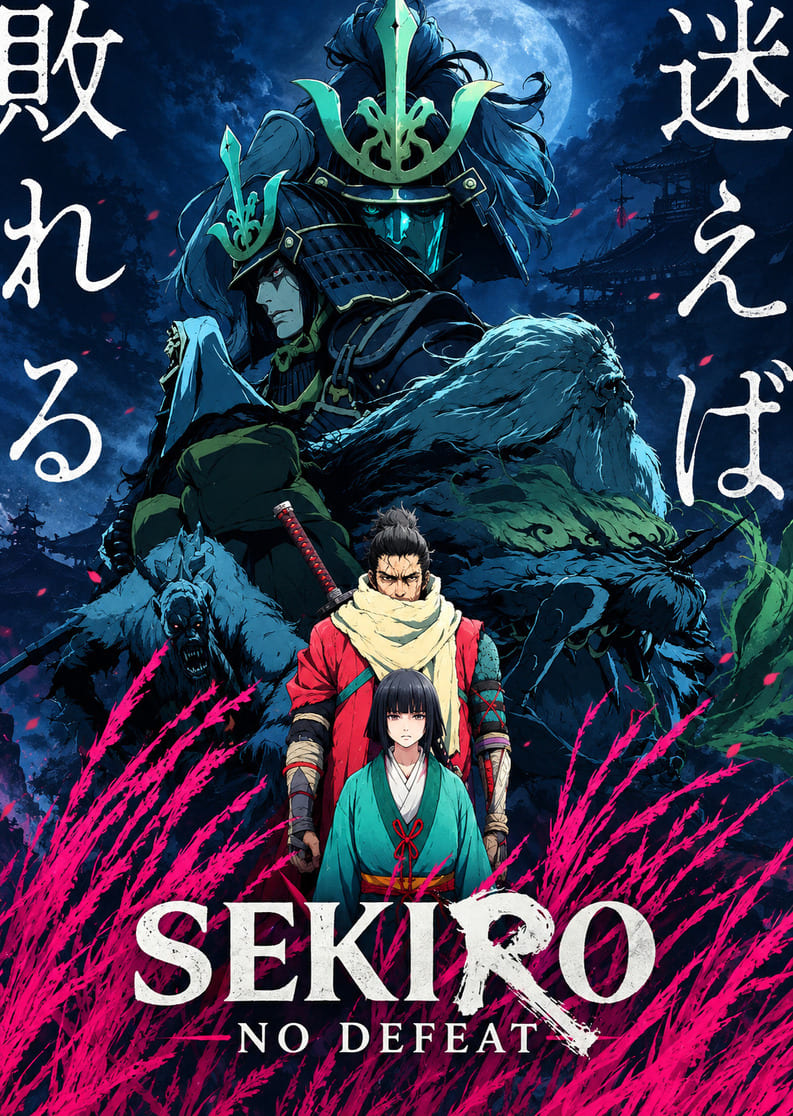
The Guardian Ape alone could make an entire episode memorable if the animation team gets the movement and brutality right. Ashina Castle, the supernatural environments, and Wolf’s confrontations with major warriors all provide opportunities for some ridiculous animation cuts.
But I hope the series doesn’t turn into a checklist of boss appearances.
The original game works because every major fight is connected to the journey. You learn something from each encounter, whether it’s about combat, the world, or Wolf himself. If the anime simply goes, ‘Here’s a boss, fight, next boss,’ it will miss the point.
The fights should tell the story.
Fans Are Already Debating What Will Be Cut
The eight-episode announcement has naturally started arguments among fans.
Some viewers are happy that the television format provides more room than the theatrical version. Others are wondering whether eight episodes can possibly cover everything.
- Which major bosses will receive full-length fights?
- How much of Ashina’s political conflict will be explored?
- Will the anime expand Wolf and Kuro’s relationship?
- How much supernatural lore will be explained?
- Will locations and side characters from the game receive meaningful screen time?
Personally, I’d rather see the anime cut a few secondary elements and properly develop the central story than try to include absolutely everything. Sekiro has enough material for a much longer adaptation, but quality matters more than checking every box from the game.
The Music Could Be Something Special
The musical side of the project is another reason I’m curious.
Shuta Hasunuma is providing the original score, while the production has also announced the use of Ryuichi Sakamoto’s ‘Blu’ as the primary theme.
That combination sounds very promising on paper. Sekiro has always had an unusual atmosphere, balancing brutal violence with quiet temples, snow-covered landscapes, religious imagery, and moments of strange beauty. The music needs to capture that contrast.
I don’t want every scene to sound epic. Sometimes the best Sekiro moments are the quiet ones immediately before everything goes horribly wrong.
My Biggest Hope for Sekiro No Defeat
If I could ask the production team for one thing, it would be simple: don’t try to make Sekiro more like a conventional anime.
The game already has an identity.
Let Wolf be quiet. Let fights have pauses. Let the world feel lonely. Let the characters look exhausted. Don’t turn every confrontation into a screaming power-up sequence. The appeal of Sekiro comes from restraint just as much as violence.
The anime also has an opportunity that the game didn’t always have: it can spend time showing what ordinary life in Ashina looks like while everything is collapsing. That would make the eventual battles hit much harder.
Sekiro No Defeat Could Be One of Winter 2027’s Most Interesting Anime
I’m cautiously excited for Sekiro No Defeat, mostly because this adaptation seems to understand that the source material needs room rather than just flashy action.
The January 2027 release, eight-episode structure, hand-drawn animation approach, experienced creative staff, and strong voice cast give the project plenty of reasons to pay attention. The theatrical version may have been able to demonstrate what the production can do visually, but the television series has the more difficult job of proving that Sekiro can work as a sustained anime story.
For longtime players, there is an obvious temptation to compare every frame to the game. I know I’ll probably do exactly that. But I’m hoping I can also watch Sekiro No Defeat as its own story, because the best game adaptations aren’t just animated copies of what we already experienced.
If Wolf’s journey can retain the game’s sense of danger, melancholy, bizarre mythology, and brutally satisfying swordplay, this could be a seriously memorable anime. January 2027 suddenly feels a lot more interesting.