Amduscias Poro Is the Best New Character in Iruma-kun Season 4
Ever since Welcome to Demon School! Iruma-kun returned with Season 4, the vibe of the series has changed in the best possible way.
The anime still has its chaotic comedy, wholesome Misfit Class energy, and ridiculous demon-school humor, but the Music Festival arc adds something heavier underneath it all. There’s tension now. Emotion. Obsession. Real stakes.
And almost all of that comes from one character: Amduscias Poro.
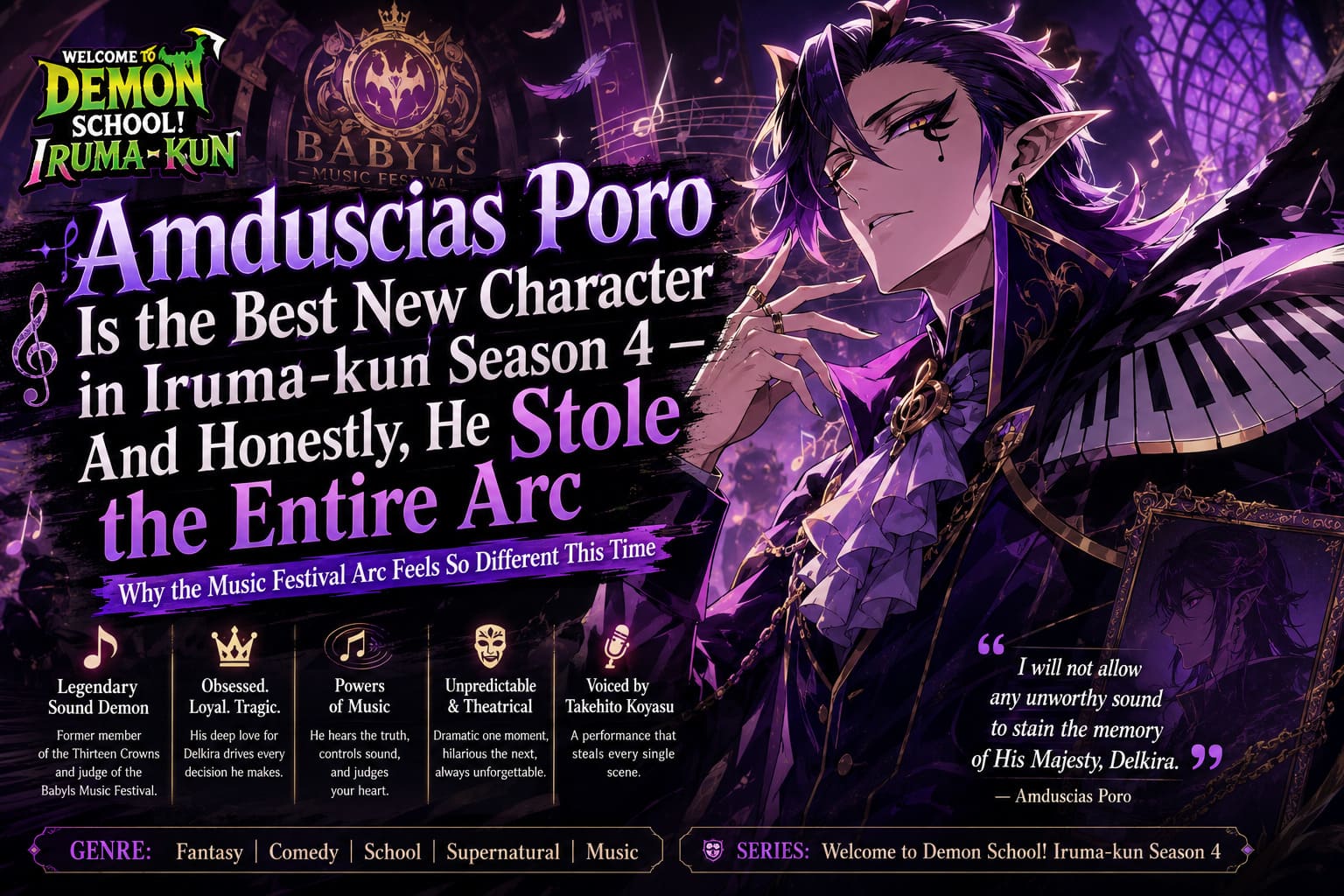
At first glance, Poro looks like the typical over-the-top elite demon designed to intimidate the protagonists for a few episodes. But the deeper the arc goes, the clearer it becomes that he’s way more than that.
He’s dramatic, bitter, loyal, emotional, terrifying, and honestly one of the most fascinating characters the series has introduced in years.
Iruma-kun Season 4: Has the Anime Finally Hit Its Peak?
As someone who has followed Iruma-kun since the early seasons, I genuinely think Poro is the kind of character that elevates the entire story. He doesn’t just test the Misfit Class — he forces the anime itself to mature.
Who Exactly Is Amduscias Poro?
Amduscias Poro is introduced as one of the official judges of the Babyls Music Festival, but calling him “just a judge” massively undersells him.
He’s known throughout the Netherworld as the Legendary Sound Demon, a former member of the elite Thirteen Crowns, and one of the few demons who had a deeply personal relationship with the missing Demon King, Delkira.
The moment Poro appears on screen, you can feel the atmosphere shift. He walks into Babyls like he owns the place, and honestly, with his history, maybe he kind of does.
What immediately makes him interesting is that his anger toward the Misfit Class doesn’t feel random or cartoonishly evil. To him, the Royal One classroom is sacred because it once belonged to Delkira. Seeing a bunch of loud first-years casually occupying it genuinely offends him on an emotional level.
That’s why his challenge to the class feels so important.
He doesn’t simply want them to perform well.
He wants them to prove they deserve to stand in a place connected to the king he still worships.
The Real Reason Fans Love Poro
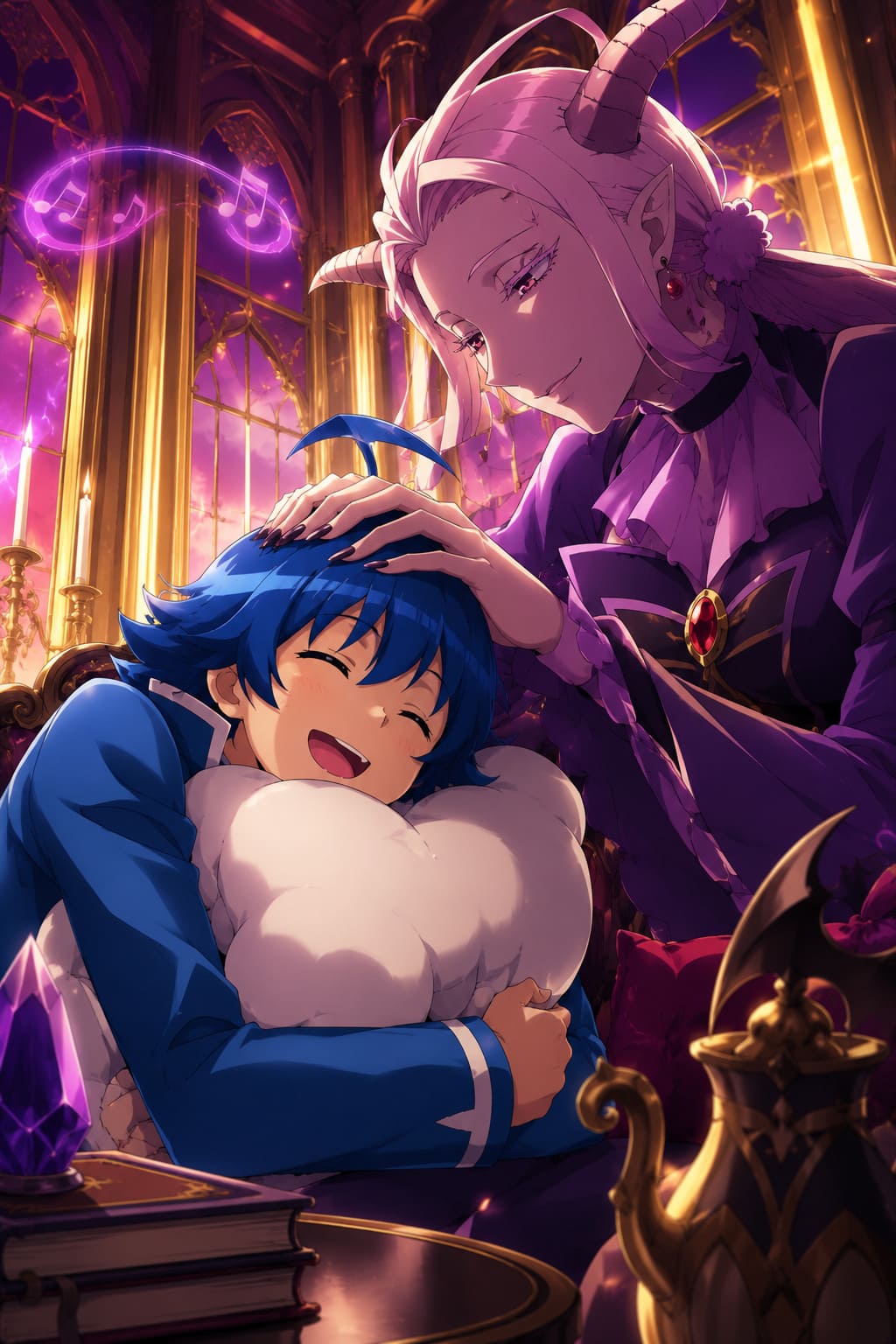
There are a lot of strong characters in Iruma-kun, but Poro instantly became fan-favorite material because he feels emotionally messy in a very human way.
Underneath all the arrogance and theatrical screaming, this is basically a demon who never moved on from losing someone important to him.
That’s what makes him memorable.
Instead of becoming another cold, untouchable antagonist, Poro constantly exposes his emotions. He’s dramatic to the point of absurdity, but somehow it works because the series commits fully to his personality.
Why the Music Festival Is Iruma-kun’s Most Heartfelt Arc Yet
What Makes Poro Stand Out
- His obsession with music feels authentic rather than gimmicky
- His loyalty to Delkira borders on tragic
- He’s intimidating without relying on brute force
- His reactions are hilarious while still emotionally meaningful
- He feels unpredictable in every scene
One minute he’s insulting students like a diva judge at a reality show, and the next he’s genuinely grieving over memories of Delkira.
That emotional instability makes every interaction with him interesting.
Poro’s Design Is Peak Iruma-kun Energy
One thing Iruma-kun has always done well is character design, and Poro might honestly be one of the best examples yet.
Everything about him screams performance art.
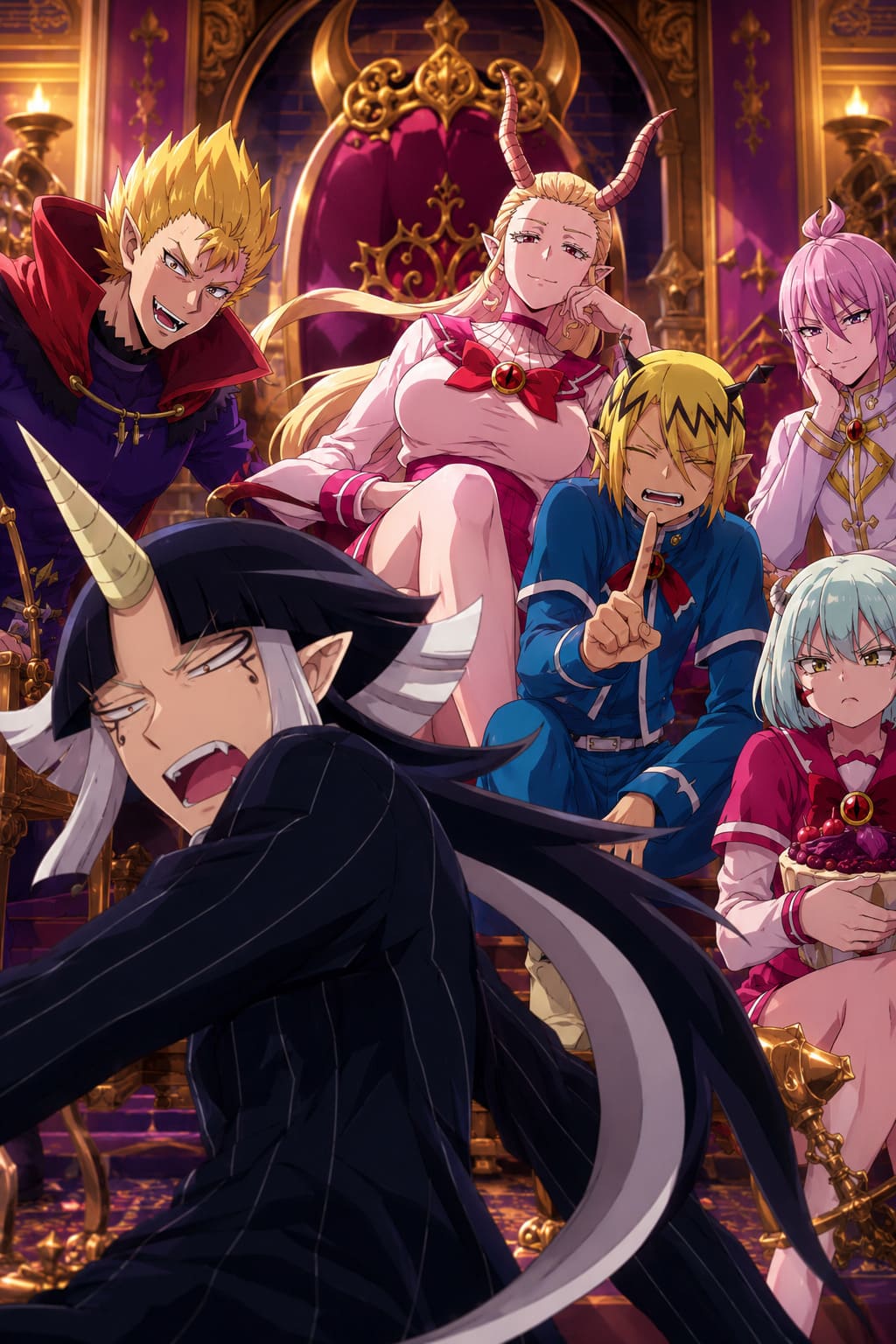
His tall, elegant frame, sharp facial features, exaggerated eyeliner, piano-themed wings, and dramatic outfits make him impossible to ignore. Even among demons, he looks extravagant.
And somehow the high heels actually make him feel more intimidating.
The anime clearly leans into the “musical aristocrat” aesthetic, and it fits perfectly. Poro doesn’t move like a warrior. He moves like someone performing on stage at all times.
That’s why every scene with him feels theatrical.
Even when he’s angry, it feels choreographed.
His Powers Are Way Scarier Than They First Appear
One of the coolest things about Poro is that his abilities are based on music instead of raw destruction.
In a lot of anime, sound powers can feel underwhelming, but Iruma-kun makes them genuinely intimidating.
Poro’s Main Abilities
| Ability | Why It’s Dangerous |
|---|---|
| Enhanced Hearing | He can sense emotions and lies through sound. |
| Music Magic | Creates physical barriers and restraints from musical energy. |
| Sonic Attacks | Can incapacitate high-ranking demons instantly. |
| Harmonic Analysis | Judges emotional synchronization during performances. |
What makes these powers scary is precision.
Poro doesn’t overpower enemies recklessly. He analyzes them emotionally and mentally first. He listens to the “sound” of their hearts before deciding whether they’re worthy.
That fits the Music Festival arc perfectly because this competition is about far more than technical skill.
Poro wants authenticity.
And that’s honestly terrifying for characters who are still trying to figure themselves out.
The Delkira Connection Changes Everything
The deeper the anime dives into Poro’s past, the more important he becomes to the larger story.
His relationship with Delkira isn’t treated like simple admiration. It’s deeply personal, emotional, and borderline obsessive.
Poro openly speaks about loving Delkira.
And honestly? The series doesn’t really try to downplay it.
That emotional attachment explains almost every decision he makes. He refuses to accept Delkira’s disappearance, and he reacts aggressively toward anything that feels like a replacement for the king.
Which is exactly why Iruma Suzuki unsettles him so much.
Iruma represents change.
Hope.
A possible future king.
And Poro simply isn’t ready for that.
That conflict gives Season 4 much more emotional weight than previous arcs. It stops being just a school competition and starts becoming part of the larger mystery surrounding the Demon King himself.
Takehito Koyasu Absolutely Carries the Performance
A huge reason Poro exploded in popularity is the voice acting.
Takehito Koyasu gives one of the most entertaining performances of the season.
Anime fans already know Koyasu has one of the most recognizable voices in the industry, but Poro lets him go completely unhinged in the best way possible.
What Makes the Voice Acting So Good
- Elegant sophistication during calm scenes
- Explosive emotional breakdowns
- Theatrical screaming that feels unforgettable
- Cold intimidation during serious moments
- Comedy-level exaggeration without ruining tension
The result is a character who completely dominates every scene he’s in.
Even when Poro is objectively being ridiculous, you can’t stop watching him.
That’s rare.
Why Poro Might Be Important Long After Season 4
The Music Festival arc is only the beginning.
What makes Poro exciting is that he doesn’t feel tied exclusively to this storyline. He feels connected to the larger future of Iruma-kun itself.
He knows too much.
He understands Delkira better than most living demons, and his refusal to move on hints that the truth behind the missing Demon King is far more complicated than fans originally assumed.
Poro also represents something the series desperately needed: an older generation demon who still lives emotionally in the past.
Most adults in Iruma-kun are either comedic or supportive.
Poro is different.
He’s emotionally damaged by history.
And that makes the world feel bigger.
Final Thoughts
Amduscias Poro is exactly the kind of character that can transform a good anime arc into a memorable one.
He’s flamboyant without becoming annoying, emotional without losing his menace, and powerful without feeling invincible. More importantly, he brings genuine emotional tension to a series that mostly thrived on comedy before this point.
The best villains — or anti-villains — are the ones who believe they’re protecting something precious.
That’s Poro in a nutshell.
He isn’t fighting for power.
He’s fighting for memory.
And honestly, that’s why he already feels like one of the most unforgettable characters in Welcome to Demon School! Iruma-kun Season 4.