Kill Blue Manga Review: Story, Ending, and Anime Adaptation Explained
Kill Blue is one of those manga that sounds completely ridiculous at first glance, but somehow ends up sticking with you longer than expected. It takes a wild concept—a legendary assassin turning into a middle school kid—and builds something that is part action, part comedy, and part surprisingly grounded character study.
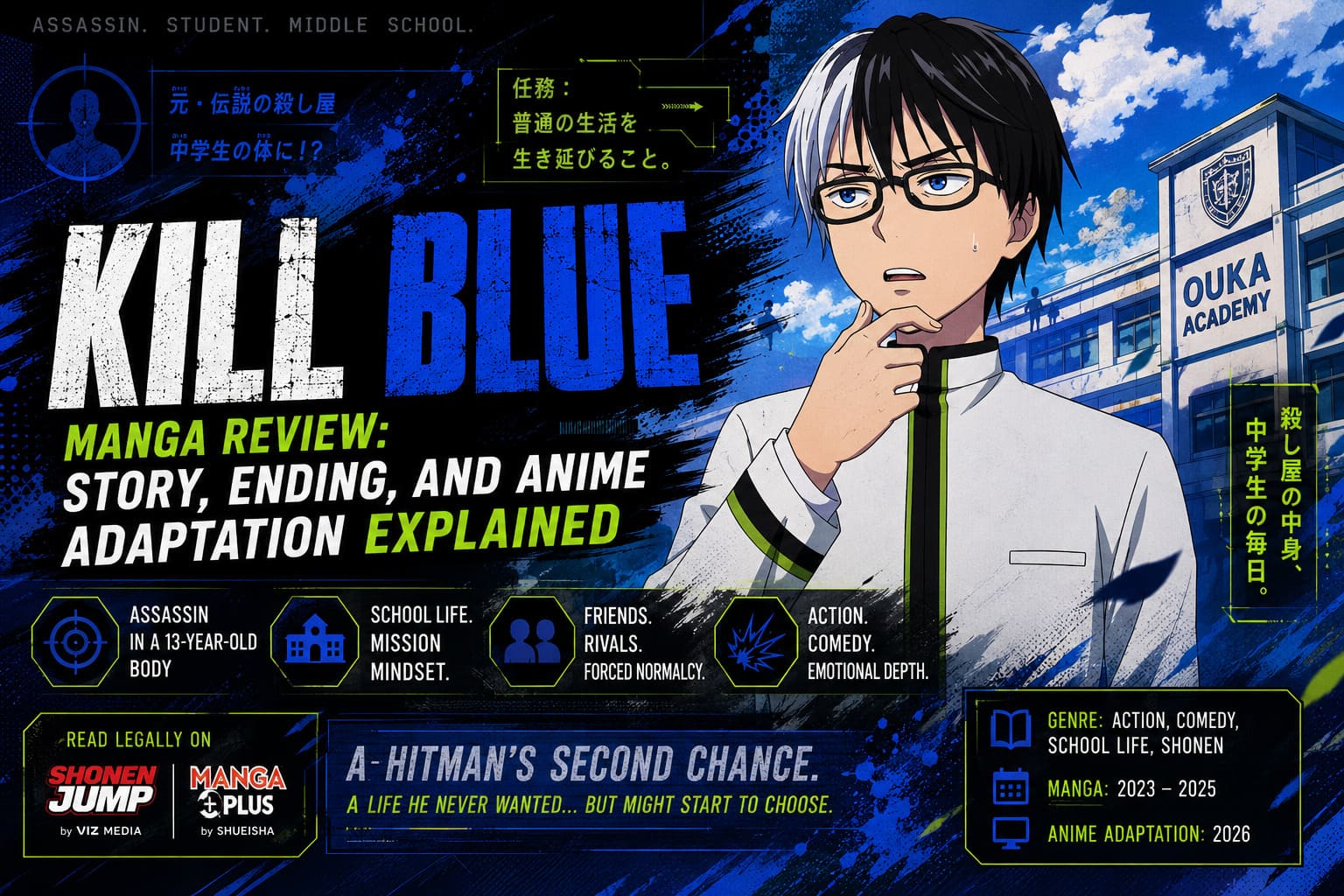
Written by Tadatoshi Fujimaki, best known for Kuroko’s Basketball, the series shows a very different creative direction compared to his earlier work.
Instead of sports intensity, we get a chaotic mix of espionage, school life, and emotional identity struggles wrapped inside a Shonen Jump-style action comedy.
Kill Blue Anime Explained: Studio CUE’s Big Break and Why Fans Are Watching Closely
The Core Concept That Shouldn’t Work (But Does)
At the center of the story is Juzo Ogami, a professional hitman who has spent most of his life in the criminal underworld. After an incident involving a genetically modified wasp, he suddenly finds himself trapped in the body of a 13-year-old boy.
This creates an immediate conflict: mentally, he is an experienced adult who has seen and done everything in the violent world of assassins, but physically, he is forced to attend middle school like a normal student. The contrast is the foundation of both the comedy and drama in the series.
Instead of leaning into fantasy wish fulfillment, Kill Blue makes Juzo’s situation uncomfortable and awkward. He is constantly tired, annoyed, and out of place. Even simple tasks feel strange to him because his mindset is completely disconnected from his environment.
Kill Blue Anime Review and Release Guide (2026 Season)
School Life Through an Assassin’s Perspective
One of the most entertaining aspects of Kill Blue is how Juzo approaches school life with extreme tactical thinking. Everything becomes a “mission” in his mind, even when it’s something completely normal like cooking or playing sports.
This creates a consistent comedic pattern where ordinary school events are treated like life-or-death operations. The humor doesn’t rely on randomness but instead comes from Juzo’s serious, almost exhausted interpretation of everyday life.
Recurring elements that define the tone:
- Overly strategic thinking applied to basic school tasks
- Juzo’s inability to emotionally adapt to teenage life
- Strong contrast between violent past and peaceful school setting
- Side characters reacting to his extreme behavior
This blend of grounded logic and absurd situations gives the manga its unique identity. It is not just a comedy, and not just an action story—it constantly shifts between both.
The World of Ouka Academy
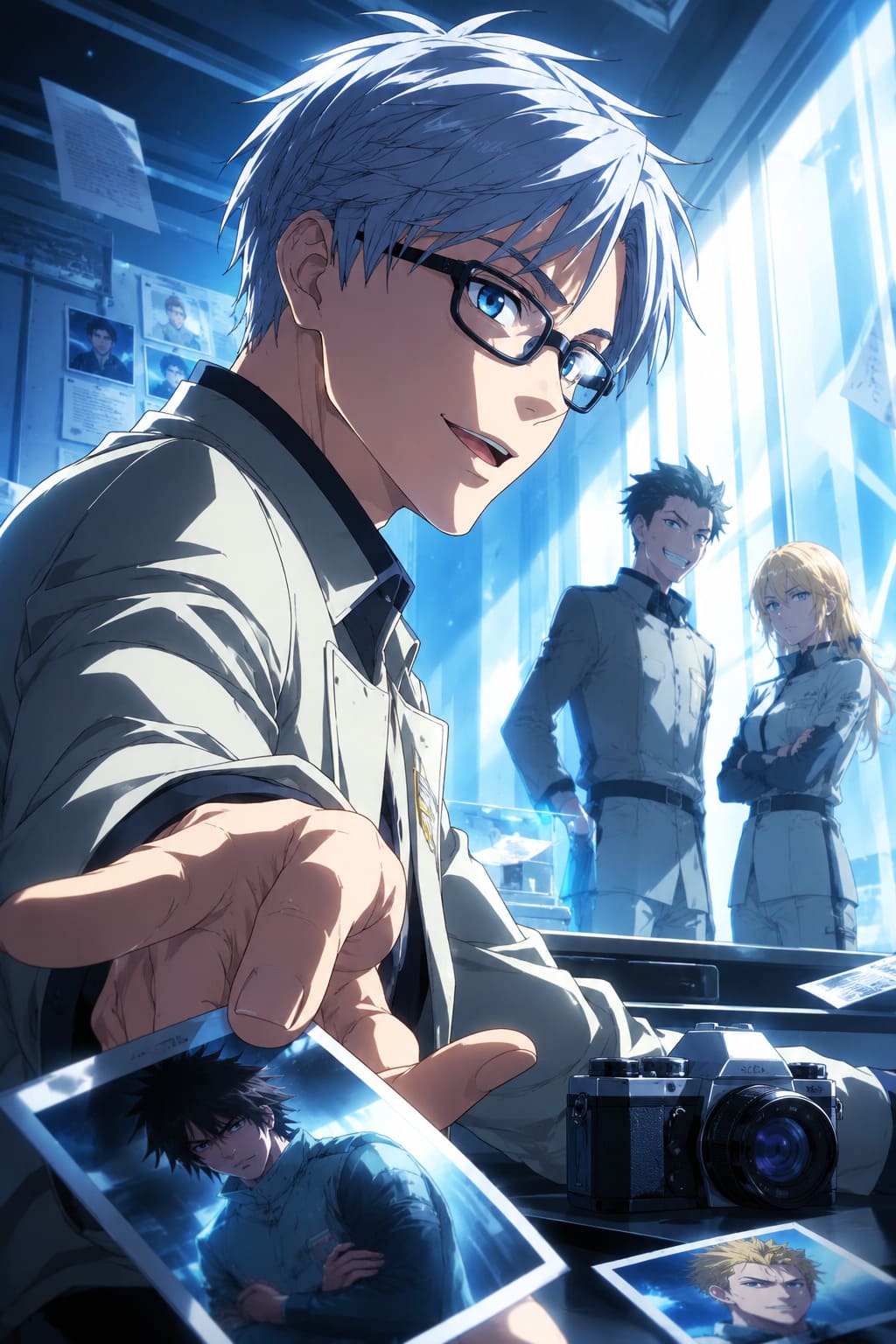
The main setting, Ouka Academy, plays a much larger role than just being a school backdrop. It becomes a structured environment where different personalities and hidden agendas slowly interact with Juzo’s unstable new life.
Supporting characters are not just background figures. Each of them contributes to the tone and emotional development of the story in different ways. Some bring humor, others bring tension, and a few become unexpectedly important to Juzo’s growth.
Key character dynamics include:
- A calm, emotionally distant girl connected to a powerful pharmaceutical family
- A highly competitive student with exceptional athletic abilities
- Classmates who gradually become part of Juzo’s forced “normal life”
What makes this setting interesting is how it slowly changes Juzo himself. Even though he constantly rejects emotional attachment, he begins to unconsciously adapt to the idea of living a normal life again.
Where to Read Kill Blue Manga Online Legally
If you want to read Kill Blue, official platforms are the safest and most reliable option. They offer high-quality translations and directly support the creators.
1. Shonen Jump / VIZ Media
This is the main official platform for readers in supported regions. It offers full chapter access through a subscription model, along with a massive library of other Shonen Jump titles. The reading experience is smooth, and translations are professionally handled.
2. MANGA Plus by Shueisha
This platform is especially useful for international readers. It provides free access to selected chapters and official simultaneous releases. It is one of the most convenient ways to follow ongoing manga without piracy sites.
Community Reception and Reader Reactions
Kill Blue has had a mixed but passionate reception in online communities. Early reactions were cautious because the premise sounded unusual and potentially controversial. However, as the story progressed, opinions started to shift.
Many readers were surprised by how controlled the tone actually is. Instead of relying on uncomfortable humor, the manga establishes clear boundaries around its main character’s perspective. Juzo consistently views younger characters as children, and the story avoids turning the premise into something inappropriate.
What fans generally praise:
- Strong and consistent comedic structure
- Creative action scenes with unique framing
- Interesting supporting cast with personality
- Balance between humor and darker plot elements
Common criticisms include:
- Uneven pacing in early chapters
- Sudden tonal shifts in certain arcs
- A conclusion that feels rushed to some readers
Despite criticism, the series maintains a strong identity and continues to be actively discussed in anime and manga communities.
The Ending and Its Controversy
The final arc of Kill Blue is one of the most debated aspects of the series. As the story approaches its conclusion, the pacing becomes significantly faster, and several plot threads are resolved in a compressed timeframe.
The narrative shifts more heavily into conspiracy elements involving corporations, experiments, and identity revelations. While the ideas themselves are interesting, many readers felt they deserved more development time.
Some subplots appear to be shortened or partially left unresolved, which created a divide in the fanbase. However, the ending still manages to deliver emotional closure for the main character’s journey, even if it feels rushed.
The Anime Adaptation and Its Impact
The anime adaptation released in 2026 has significantly changed how new audiences experience Kill Blue. For many viewers, it is actually their first introduction to the story.
The adaptation improves pacing, especially in early arcs, and gives more breathing room to character interactions. This helps the emotional moments land more effectively compared to the manga’s faster progression.
Key improvements in the anime:
- Smoother pacing for story introduction
- Stronger emotional buildup in character scenes
- More dynamic and fluid action sequences
- Better separation between comedy and serious moments
The action scenes in particular benefit greatly from animation. Juzo’s combat style feels more impactful and easier to follow when brought to life with motion and sound design.
Manga vs Anime Comparison
| Aspect | Manga | Anime |
|---|---|---|
| Pacing | Fast and sometimes uneven | More balanced and structured |
| Comedy | Subtle and rapid | Better timing and delivery |
| Action | Creative but static | Fluid and visually dynamic |
| Emotional impact | Quiet and implied | More explicit and expanded |
Final Thoughts
Kill Blue is not a flawless manga, but it is a memorable one. It takes a strange premise and turns it into something surprisingly emotional and entertaining. The combination of action, comedy, and identity struggle gives it a unique place in modern Shonen Jump storytelling.
If you enjoy action comedies with unusual protagonists, or stories that mix absurd humor with serious undertones, Kill Blue is absolutely worth your time. The anime adaptation makes it even more accessible for new viewers, while the manga offers the full complete experience.
In the end, Kill Blue stands out not because it is perfect, but because it is different enough to be remembered.