Why Nikaido Becomes a Devil in Dorohedoro Explained
The world of Dorohedoro is one of the most chaotic and conceptually dense settings in modern dark fantasy manga. It blends grotesque body horror with absurd humor, emotional character writing, and a magic system that is intentionally unstable and unpredictable.
Among all its strange narrative turns, one of the most debated and misunderstood moments is Nikaido’s transformation into a Devil and the controversial “Devil Meat” storyline. Many fans, especially outside Japan, initially misinterpret what actually happened, leading to theories involving Asu sacrificing his own flesh or Nikaido undergoing an unexplained sudden power spike.
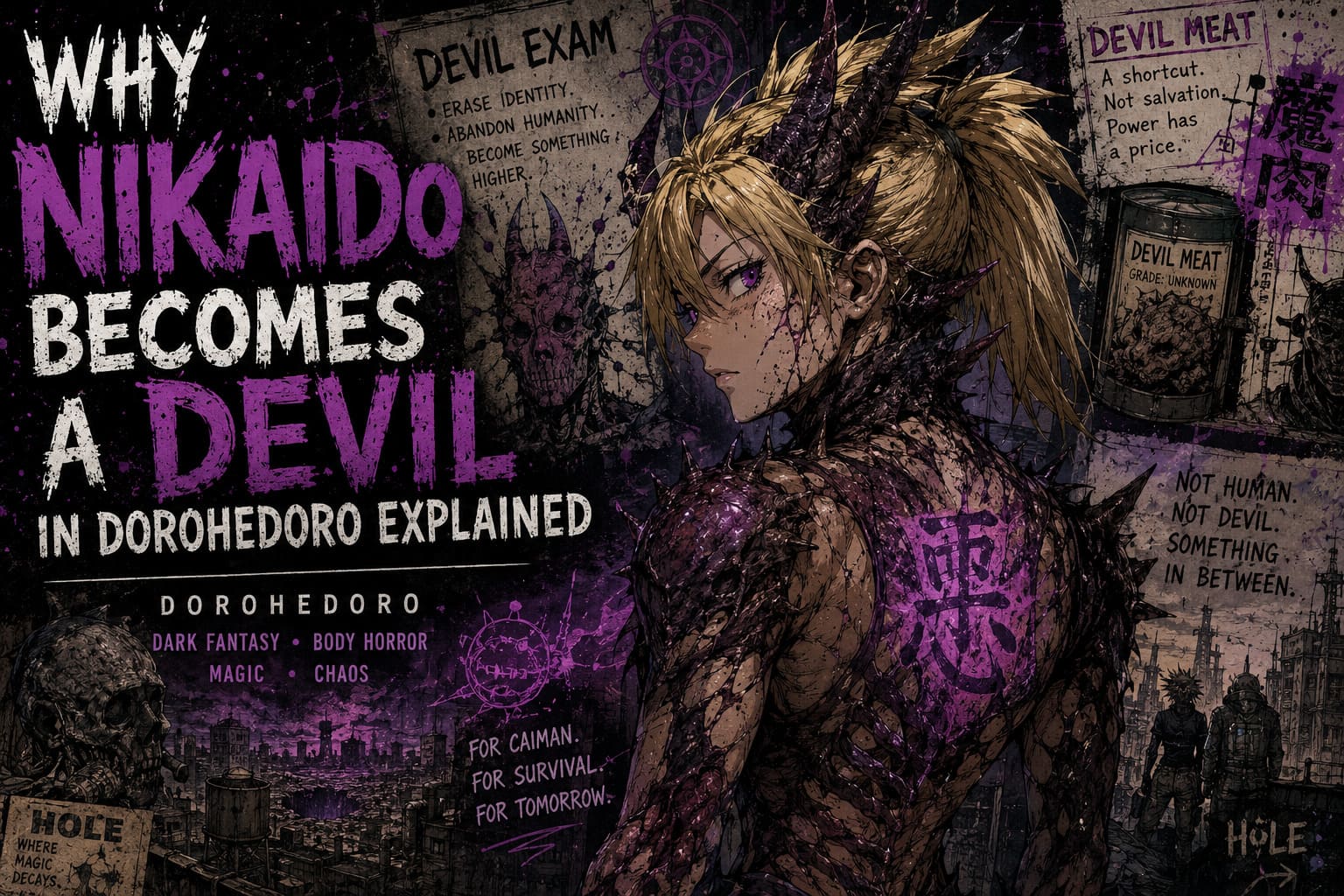
The reality, however, is much more structured within the lore, even if it still feels deeply unsettling.
This article breaks down the transformation in a clearer, more grounded way, focusing on the rules of Devil creation, Nikaido’s motivations, Asu’s role, and why the Devil Meat mechanic exists in the first place. While the series thrives on chaos, this arc actually follows a surprisingly consistent internal logic once all the pieces are connected.
Dorohedoro Season 2 Episode 11 Release Date and Streaming Guide
The True Nature of Devils in Dorohedoro
In Dorohedoro, Devils are not born beings but transformed Sorcerers who have undergone an extreme evolutionary process known as the Devil Exam. The only exception is Chidaruma, the original Devil, who exists outside the transformation system entirely. Every other Devil is the result of a long and often brutal refinement of body, mind, and identity.
The Devil Exam Process
The Devil Exam is not a simple test of strength. It is a multi-layered psychological and physical degradation process designed to erase human attachment and rebuild a Sorcerer into a higher entity.
The key components typically include prolonged exposure to heavy armor, suppression of smoke-based magic, and participation in unpredictable tasks assigned by Devil overseers. These tasks are intentionally irrational, pushing candidates to abandon conventional morality.
The transformation is not just physical but existential. Candidates slowly lose their sense of human identity, replacing it with a detached, Devil-like perspective on life and destruction. Unlike typical shonen transformations, there is nothing triumphant about it. It is closer to erosion than evolution.
Dorohedoro Season 2 Episode 11 Release Time & Finale Guide
Why Nikaido Enters the Devil Path
Nikaido’s decision to undergo Devil transformation is often misunderstood as ambition or power-seeking behavior, but her motivation is far more grounded in survival and protection.
Throughout the series, her primary emotional anchor is her relationship with Caiman, and nearly every major decision she makes revolves around keeping him alive and restoring his identity.
Her Time Magic is one of the most dangerous abilities in the entire world of Sorcerers. It allows her to manipulate time through a limited set of “bullets,” but every use destabilizes both her body and the timeline itself.

This makes her a target for multiple factions, including En’s organization and forces from Hell. As the stakes escalate, Nikaido becomes increasingly unable to survive in her original form.
Key Threats Facing Nikaido
- En’s organization targeting her Time Magic
- Devils observing her unstable abilities
- The escalating chaos surrounding Hole
- Her own physical limitations under Time Magic strain
Without significant enhancement, her survival becomes nearly impossible in the final arcs of the story. The Devil Exam becomes not a choice of ambition but a forced adaptation to an escalating war.
The Role of Asu and the Devil Meat Controversy
One of the most confusing elements for fans is the role of Asu and the so-called Devil Meat. Within the narrative, Asu acts as both mentor and catalyst for Nikaido’s accelerated transformation. His knowledge of Devil physiology allows him to bypass the traditional multi-year process of the Devil Exam.
The Devil Meat itself is not symbolic or abstract. It is a literal commodity in Hell, made from the remains of deceased or demoted Devils. This meat is used as a biological accelerator for Sorcerers undergoing Devil transformation. When consumed, it rapidly enhances physical resilience, smoke output, and overall compatibility with Devil evolution.
Important Clarification
Despite widespread fan confusion, Nikaido does not consume Asu’s body. The Devil Meat she consumes is sourced from the general supply in Hell. The misunderstanding comes from later events where Asu himself suffers a brutal punishment, leading to conflation of separate narrative moments.
| Event | Explanation |
|---|---|
| Nikaido consumes Devil Meat | Asu provides standard Devil Meat obtained from Hell’s supply system |
| Asu’s punishment | Chidaruma later demotes and dismantles Asu for interfering with Devil rules |
These two events are separate but often merged in fan discussions, leading to long-standing misinformation across forums and video essays.
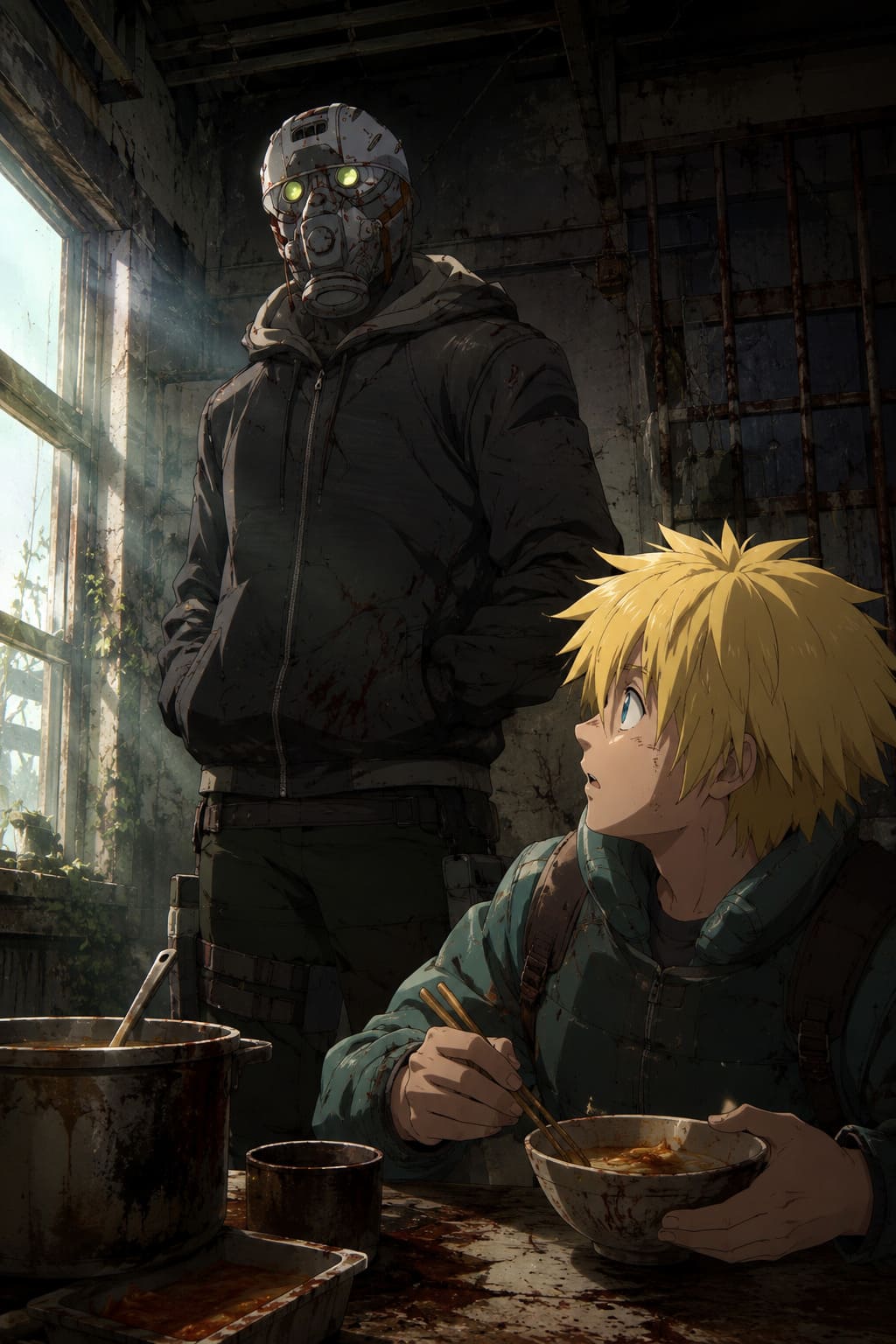
How Devil Meat Accelerates Transformation
The consumption of Devil Meat acts as a shortcut in the Devil Exam process. Instead of spending years under controlled degradation and training, the body is forced into a rapid adaptation state. This produces immediate but unstable enhancements that mimic partial Devil traits.
Effects of Devil Meat
- Rapid increase in physical strength and durability
- Enhanced smoke production capacity
- Partial regeneration abilities
- Increased resistance to magical damage
However, these effects are not stable on their own. Without continued training and exposure to Devil conditions, the transformation would collapse. This is why Asu’s training regimen is equally important as the Devil Meat itself.
Was Nikaido’s Transformation Too Fast?
Within the fan community of Dorohedoro, one of the most common criticisms is that Nikaido’s Devil evolution feels significantly faster compared to characters like Noi or Asu. This perception is understandable, especially when compared to the long training arcs of other Sorcerers.
However, the narrative provides several explanations that justify this acceleration. Nikaido’s Time Magic already places her outside normal biological rules. Combined with Asu’s extreme training methods and the use of Devil Meat, her transformation becomes an emergency adaptation rather than a traditional progression.
Why It Still Works Narratively
The speed of transformation is less about consistency and more about thematic emphasis. Nikaido is constantly portrayed as someone being pushed beyond her limits by external forces. Her evolution into a Devil is not a reward but a survival mechanism imposed by the world around her.
The Emotional Core of Nikaido’s Arc
Despite all the violence and grotesque transformation mechanics, Nikaido’s story remains fundamentally emotional. Her journey is not about becoming stronger but about preserving her humanity while everything around her becomes increasingly inhuman.
Even during her Devil state, she remains emotionally anchored to her life before transformation. She still cares deeply about Caiman, still remembers her life at the Hungry Bug, and still resists full assimilation into Devil society. This internal resistance is what makes her arc stand out compared to other transformations in the series.
Core Emotional Themes
- Identity versus transformation
- Survival under extreme pressure
- Loss of control over one’s fate
- Emotional attachment as resistance
Conclusion: Why This Arc Defines Dorohedoro’s Philosophy
The Devil transformation arc in Dorohedoro encapsulates everything the series stands for: chaos with structure, horror with humor, and power with consequence. Nikaido’s journey is not a simple upgrade path but a descent into a system that demands sacrifice at every level.
By the end of her transformation, she is no longer fully human nor fully Devil, but something in between. And that liminal state reflects the world of Dorohedoro itself—unstable, violent, but strangely coherent when viewed from the right perspective.
Ultimately, Nikaido becomes a Devil not because she wants power, but because the world gives her no other way to survive. And in a story like this, survival itself is already a kind of tragedy.