Re:Zero Season 4 Breakdown: Release Schedule, Arc 6 Analysis, and Plot Twists Explained
When people think about Re:Zero, they usually remember the brutal deaths, shocking twists, and Subaru’s endless suffering. That formula helped turn the series into one of the biggest isekai franchises of the last decade.
But after watching the opening episodes of Season 4, I honestly believe the anime is attempting something far more ambitious than anything we’ve seen before.
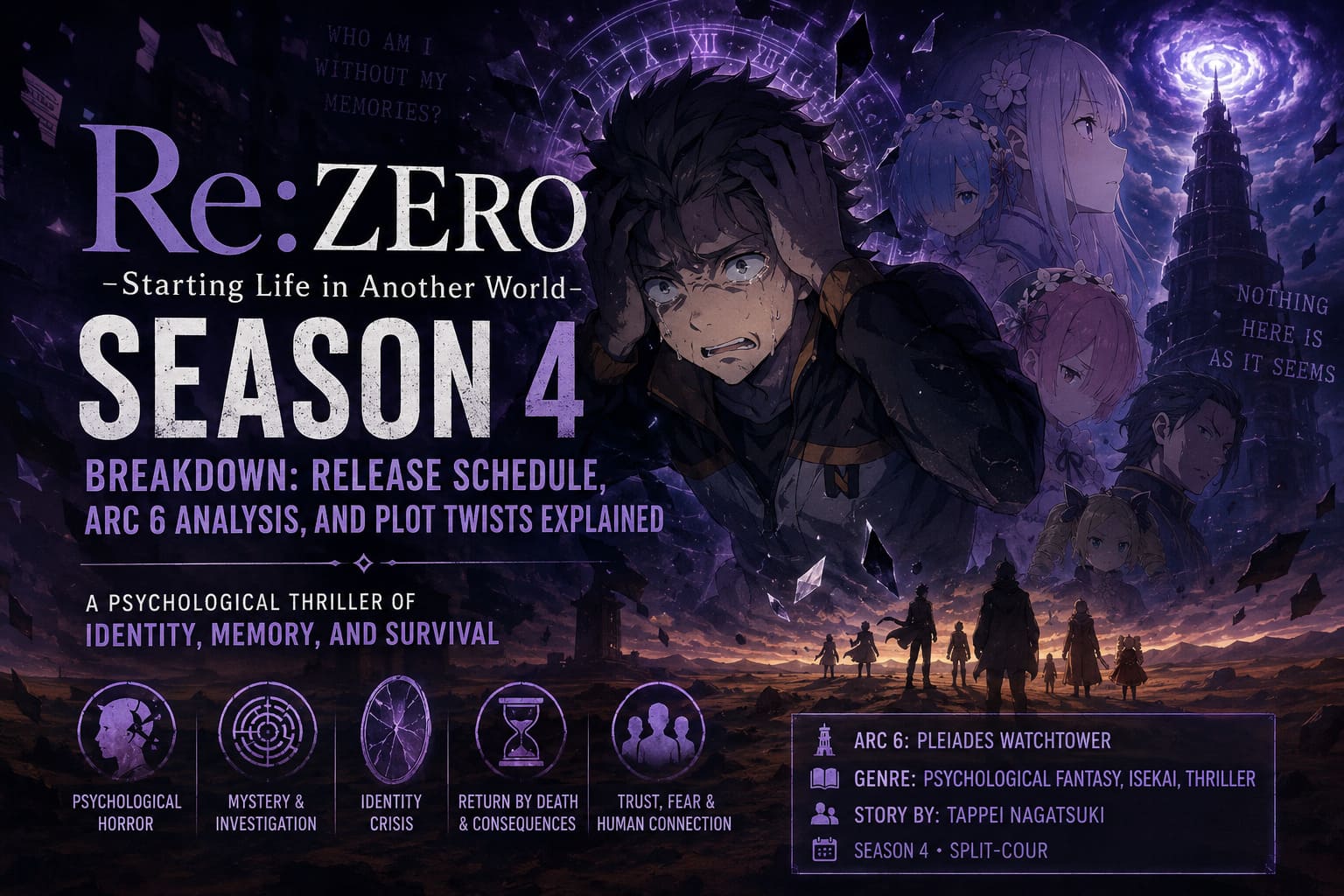
Instead of delivering another action-heavy conflict packed with large-scale battles and flashy confrontations, Re:Zero Season 4 dives headfirst into psychological horror and identity crisis.
It’s uncomfortable, mysterious, and sometimes frustrating by design. Yet that is exactly why Arc 6 has the potential to become the strongest storyline in the entire franchise.
Clevatess Season 2 Magical Core Powers Explained: Every Episode Breakdown
A Different Kind of Re:Zero
Season 4 continues directly after the devastating events in Pristella. While the heroes technically survived their encounter with the Witch Cult, victory came at an enormous cost.
Several key characters remain trapped by the consequences of the battle:
- Rem still suffers from the effects of Gluttony’s Authority.
- Crusch continues to endure the lingering curse of Dragon’s Blood.
- Julius has lost something even more terrifying — the world’s memory of his existence.
These unresolved tragedies become the driving force behind Subaru’s newest journey. Alongside Emilia, Beatrice, Ram, Julius, and Meili, he travels toward the legendary Pleiades Watchtower in search of answers that could save his friends.
At first glance, this sounds like a classic fantasy quest.
It isn’t.
Clevatess Season 2 Total Episode Count Projections: Exhaustive Analytical Breakdown
The Watchtower Feels Like a Psychological Trap
One of the reasons Arc 6 stands out is its atmosphere. The Pleiades Watchtower isn’t simply another dungeon filled with monsters. It feels more like a giant puzzle box designed to break people mentally before it ever harms them physically.
The journey across the desert already creates a sense of isolation, but the true nightmare begins after the group reaches the tower itself.
Unlike previous seasons, the danger here doesn’t come from overwhelming enemies. Instead, it comes from uncertainty.
- Every room seems to hide a secret.
- Every answer creates new questions.
- Every victory feels temporary.
As a viewer, I constantly found myself questioning what was real and what wasn’t.

Subaru’s Greatest Enemy Is Himself
The biggest twist of the season isn’t a new villain.
It’s Subaru.
Without diving into major spoiler territory, Arc 6 places Subaru in a situation where his entire sense of identity is challenged. The confident, battle-scarred version of the protagonist that fans watched develop over multiple seasons suddenly becomes vulnerable in ways we haven’t seen since the beginning of the series.
This is where Season 4 becomes fascinating.
For years, Return by Death allowed Subaru to gradually overcome impossible situations through experience and persistence. Arc 6 strips away that comfort and forces him to confront a much more terrifying question:
Who is Subaru Natsuki without his memories?
Watching him struggle with this question creates some of the most emotionally intense moments in Re:Zero history.
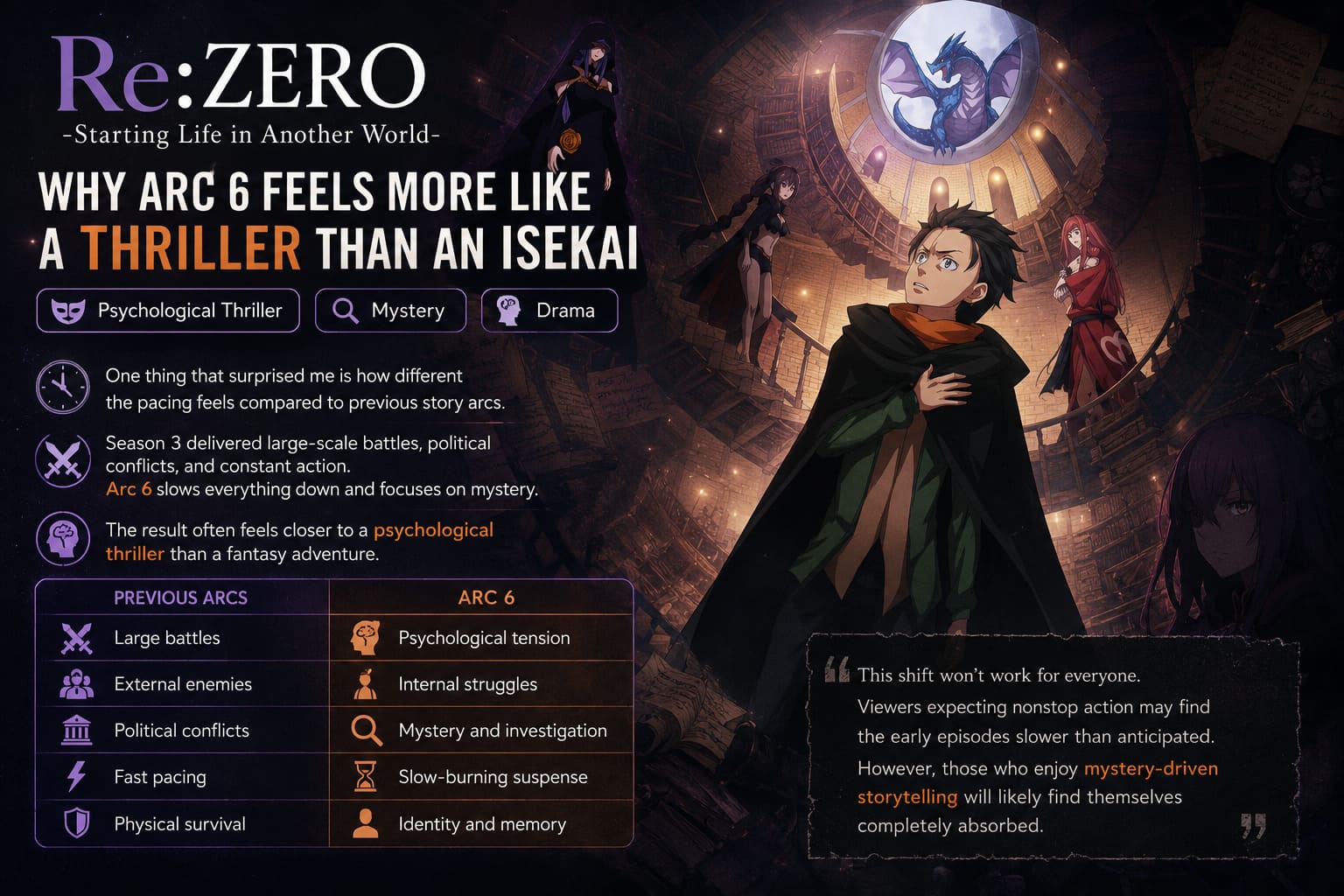
Why Arc 6 Feels More Like a Thriller Than an Isekai
One thing that surprised me is how different the pacing feels compared to previous story arcs.
Season 3 delivered large-scale battles, political conflicts, and constant action. Arc 6 slows everything down and focuses on mystery.
The result often feels closer to a psychological thriller than a fantasy adventure.
| Previous Arcs | Arc 6 |
|---|---|
| Large battles | Psychological tension |
| External enemies | Internal struggles |
| Political conflicts | Mystery and investigation |
| Fast pacing | Slow-burning suspense |
| Physical survival | Identity and memory |
This shift won’t work for everyone.
Viewers expecting nonstop action may find the early episodes slower than anticipated. However, those who enjoy mystery-driven storytelling will likely find themselves completely absorbed.
The Horror Elements Are Surprisingly Effective
I’ve watched plenty of dark anime over the years, but some moments in Season 4 genuinely made me uncomfortable.
The horror isn’t based on jump scares or gore.
Instead, it relies on paranoia.
- Characters begin questioning one another.
- Trust becomes fragile.
- Even ordinary conversations feel dangerous because nobody fully understands what’s happening.
The tower creates an atmosphere where disaster can strike at any moment, and that constant tension keeps every episode engaging.
What impressed me most is how the series uses emotional horror rather than physical horror. Watching relationships fracture or seeing characters lose parts of themselves often feels more painful than any battle scene.
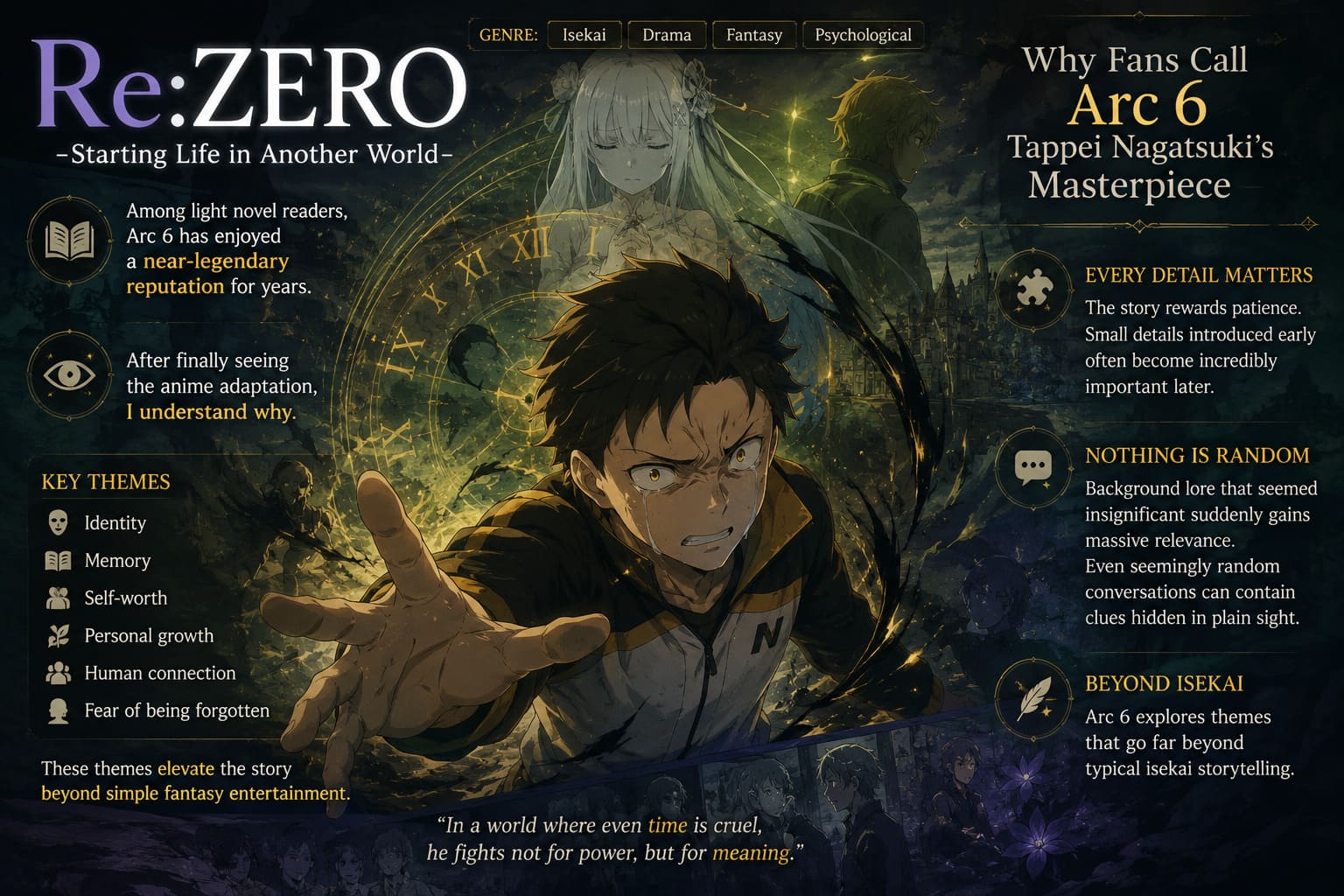
Why Fans Call Arc 6 Tappei Nagatsuki’s Masterpiece
Among light novel readers, Arc 6 has enjoyed a near-legendary reputation for years.
After finally seeing the anime adaptation, I understand why.
The story rewards patience. Small details introduced early often become incredibly important later. Background lore that seemed insignificant suddenly gains massive relevance. Even seemingly random conversations can contain clues hidden in plain sight.
More importantly, Arc 6 explores themes that go far beyond typical isekai storytelling.
- Identity
- Memory
- Self-worth
- Personal growth
- Human connection
- Fear of being forgotten
These themes elevate the story beyond simple fantasy entertainment.
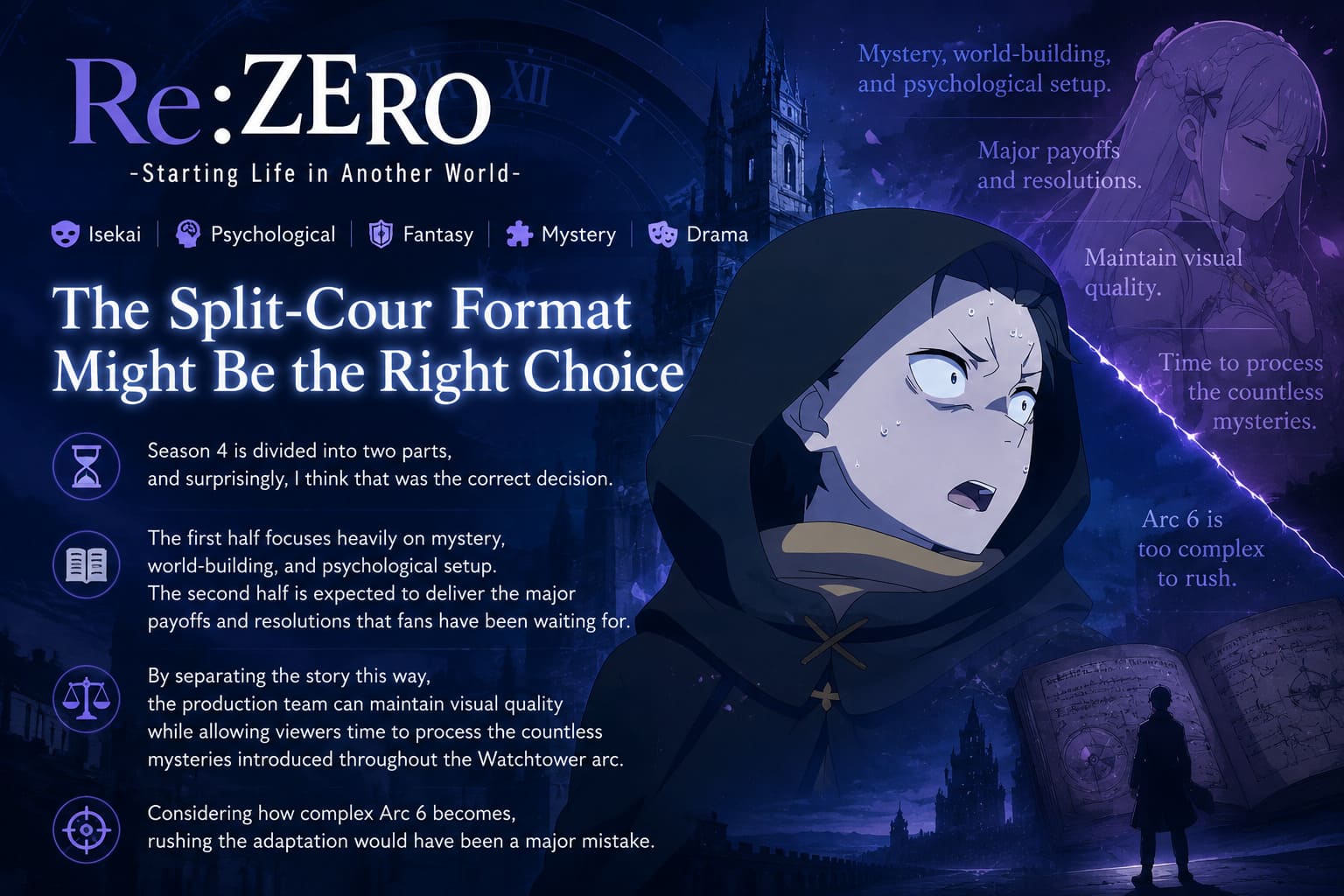
The Split-Cour Format Might Be the Right Choice
Season 4 is divided into two parts, and surprisingly, I think that was the correct decision.
The first half focuses heavily on mystery, world-building, and psychological setup. The second half is expected to deliver the major payoffs and resolutions that fans have been waiting for.
By separating the story this way, the production team can maintain visual quality while allowing viewers time to process the countless mysteries introduced throughout the Watchtower arc.
Considering how complex Arc 6 becomes, rushing the adaptation would have been a major mistake.
Final Thoughts
After several episodes, my biggest takeaway is simple: Re:Zero Season 4 feels different.
Not better because of bigger fights.
Not better because of higher stakes.
Better because it dares to challenge both its characters and its audience.
The Pleiades Watchtower Arc transforms Re:Zero from a dark fantasy adventure into a deeply psychological exploration of identity, memory, and personal growth. While the slower pacing may divide viewers, those willing to embrace the mystery are likely witnessing one of the most ambitious anime storylines in recent years.
If the upcoming episodes successfully deliver on the groundwork established so far, Arc 6 may not only become the best season of Re:Zero — it could become one of the defining anime arcs of the decade.