Akane-banashi Chapter 219 Release Date & Full Chapter 218 Breakdown
Akane-banashi Chapter 219 is shaping up to be one of those chapters where the setup may actually be more exciting than the payoff we were originally expecting. Chapter 218, “Hates to Lose,” did something I really appreciate about this manga: instead of simply pushing Akane toward another performance, it took a step back and showed us why the Arakawa School became what it is today.
And honestly, the more I think about Chapter 218, the more impressive Zensho Arakawa becomes.
At first glance, his history sounds almost ridiculous. He embarrassed himself on television, became a walking punchline, and deliberately turned himself into the kind of celebrity people loved to laugh at. But Chapter 218 makes it clear that none of this was accidental. Zensho understood something that traditional rakugo circles apparently didn’t want to admit: being respected doesn’t matter if nobody knows who you are.
That revelation gives Chapter 219 a lot of pressure to live up to.
When Does Akane-banashi Chapter 219 Release?
According to the current release schedule, Akane-banashi Chapter 219 is expected to release on Sunday, August 16, 2026, at 11:00 AM EST / 8:00 AM PST.
The chapter is expected to become available simultaneously in English through the official Shonen Jump and Manga Plus services.
For readers following the series week to week, Chapter 219 should be particularly interesting because Chapter 218 stopped right when Zensho was about to demonstrate the real reason behind his reputation as the “King of Comedy.”
In other words, we got the explanation.
Now I want to see the performance.
Chapter 218 Was Really a Zensho Arakawa Character Study
What surprised me most about Chapter 218 was how little the chapter actually needed Akane to move the story forward.
Instead, Akane becomes the audience.
She listens, watches, processes the history, and slowly realizes that the ridiculous public image surrounding Zensho was actually part of a much bigger strategy. The Arakawa School didn’t have the same prestige as established rakugo schools. They were outsiders, and that meant playing by the traditional rules wasn’t necessarily going to work.
Zensho’s solution was almost hilariously extreme:
- Put the Arakawa name on television.
- Become recognizable to ordinary people.
- Accept public embarrassment instead of protecting his dignity.
- Turn comedy into a weapon against traditional gatekeeping.
- Use popularity to give the school a place in the national conversation.
That’s what makes his story so fascinating.
Zensho didn’t become famous despite being ridiculous. He became famous because he understood exactly how useful ridiculousness could be.
The Television Persona Was Actually Brilliant
Some of the flashbacks are intentionally absurd. Zensho gets dragged through painful variety-show situations, screams during ridiculous pranks, gets burned, and even becomes the subject of an incredibly unflattering celebrity poll.
On the surface, it’s pure slapstick.
But there’s a second layer underneath it.
Every appearance puts the name Arakawa in front of another audience.
This is one of those moments where Akane-banashi reminds us that rakugo isn’t just about preserving old traditions. It’s also about understanding people. Zensho recognized that a viewer who had never cared about rakugo might still remember the bizarre comedian from television.
And once they remembered him, they remembered his school.
That is a surprisingly modern way of thinking about an ancient performance tradition.
Zensho’s “Time’s Up” Setup Is the Real Game Changer
The funniest part of Chapter 218 eventually leads into something much more serious.
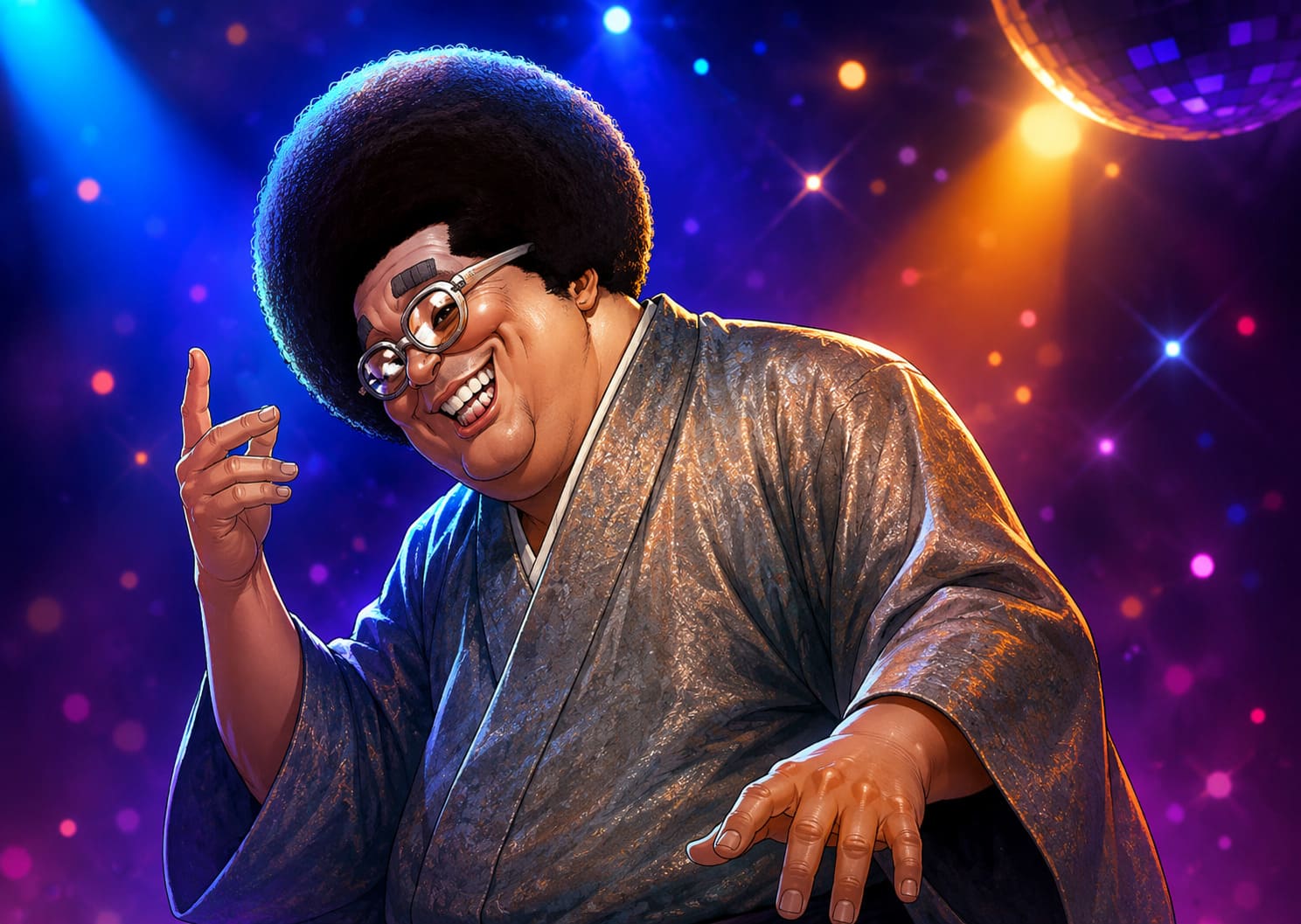
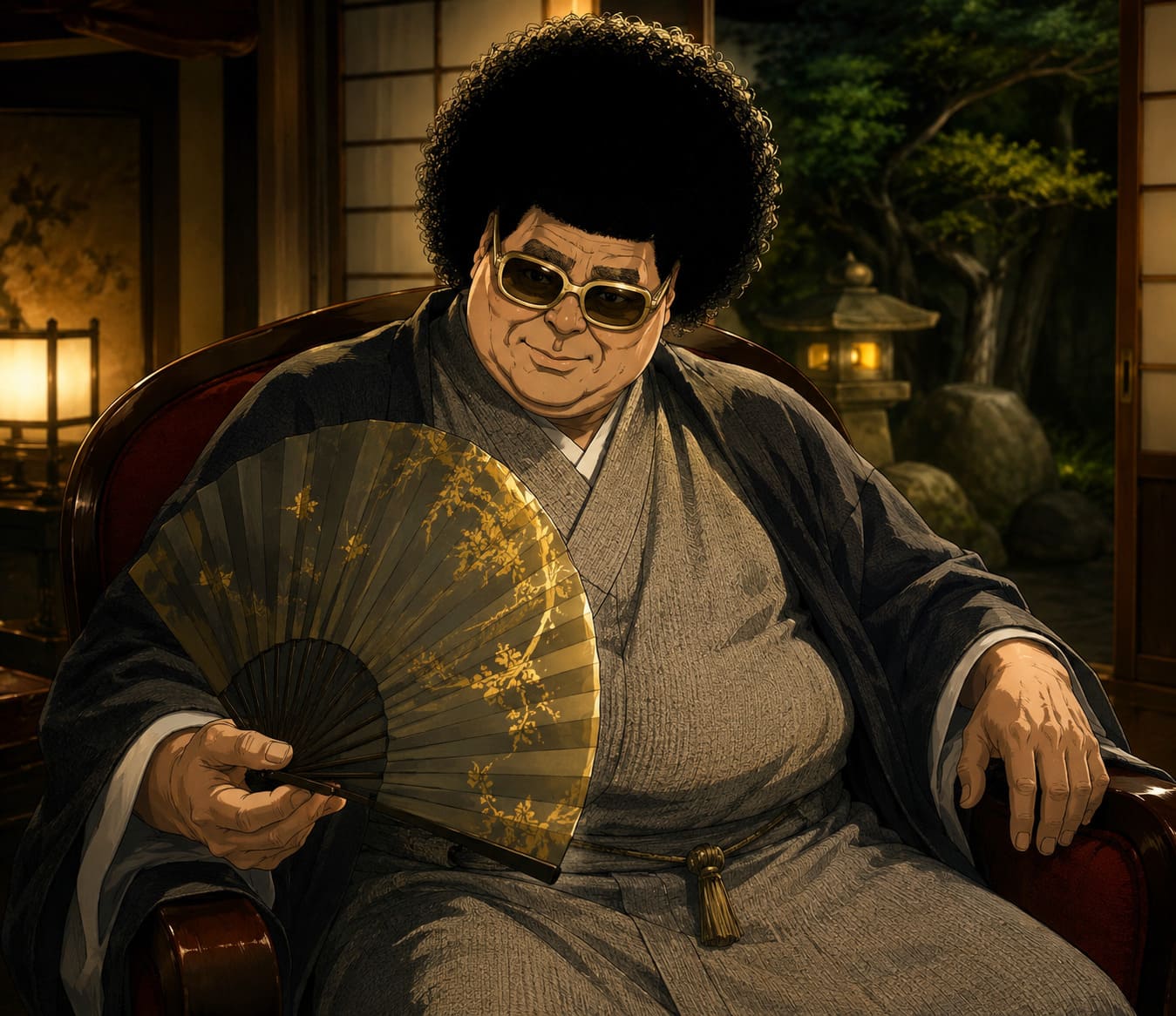
Zensho appears in an exaggerated afro wig and glasses while parodying Master Issho’s intimidating attitude toward performers. He essentially turns the idea of artistic gatekeeping into a joke.
Then comes the moment that completely changes the atmosphere.
After making the audience laugh, Zensho explains the historical meaning behind “Time’s Up.”
The reference to incense sticks being used to measure performances in pleasure districts gives the story a surprisingly elegant foundation. One stick burns down, the performance reaches its end, and eventually comes the inevitable declaration:
Time’s up.
I love how Chapter 218 transitions from absurd comedy into serious rakugo history without making the two elements feel contradictory.
That’s probably the entire point of Zensho’s style.
Akane Finally Understands What Makes Zensho Different
Akane’s reaction is arguably the most important moment in the chapter.
She realizes that Zensho isn’t simply performing another comedy routine. He’s approaching a Ninjo-banashi, a rakugo story built around human emotion and dramatic feeling.
That is a huge deal because Ninjo-banashi traditionally carries a much heavier emotional weight.
And this is where Zensho’s philosophy becomes fascinating.
He isn’t trying to choose between comedy and serious storytelling.
He’s trying to control the audience well enough to use both.
First, make them relax.
Then make them laugh.
Then lower their defenses.
And only after that, hit them with the emotional core of the story.
That is a terrifyingly effective performance strategy.
Why Maikeru’s Reaction Matters
Meanwhile, Maikeru Arakawa is traveling back to Japan and happens to watch Zensho’s performance on his phone.
His reaction is incredibly simple: he basically recognizes Zensho’s personality immediately.
He hates to lose.
That little observation says a lot about their relationship and the broader Arakawa legacy. Maikeru isn’t watching Zensho as some random historical figure. He understands the mentality behind the performance.
That’s why I think Maikeru’s return could become one of the most interesting elements of Chapter 219.
Maikeru physically returning to Japan should have consequences. His presence represents a different kind of authority. He isn’t simply another performer showing up to watch Akane. His connection to the previous Shiguma and his position within the rakugo world give him considerably more weight.
I’m especially interested in what happens when Maikeru and Akane actually discuss what they just witnessed.
Will they interpret Zensho’s performance in the same way?
Probably not.
Ruri Dragon Chapter 51 Release Date, True Chapter 50 Full Recap, and Major Fan Theories Explained
| Character | What Chapter 218 Reveals |
|---|---|
| Zensho Arakawa | He uses comedy and public exposure strategically |
| Akane Osaki | She begins understanding the deeper philosophy behind the Arakawa style |
| Maikeru Arakawa | He recognizes Zensho’s competitive nature immediately |
| Arakawa School | Its survival was built on adaptation rather than pure tradition |
What I Expect From Akane-banashi Chapter 219
Obviously, anything beyond the confirmed Chapter 218 ending is speculation, but I have a few predictions.
1. Zensho Finally Performs “Time’s Up”
This is the obvious one, but it’s also the part I’m most excited about.
Chapter 218 spent so much time explaining Zensho’s philosophy that Chapter 219 almost has to demonstrate it.
I don’t expect a straightforward, solemn Ninjo-banashi.
I think Zensho will find some bizarre way to make the audience laugh before gradually shifting the emotional tone.
And if the manga pulls that off, it could become one of the best demonstrations yet of what makes Akane-banashi different from a conventional competition manga.
2. Maikeru’s Return Will Change the Atmosphere
Maikeru physically returning to Japan should have consequences.
His presence represents a different kind of authority. He isn’t simply another performer showing up to watch Akane. His connection to the previous Shiguma and his position within the rakugo world give him considerably more weight.
I’m especially interested in what happens when Maikeru and Akane actually discuss what they just witnessed.
Will they interpret Zensho’s performance in the same way?
Probably not.
3. Akane Will Start Thinking Differently About Her Own Style
This might ultimately be the most important consequence of Chapter 218.
Akane doesn’t need to copy Zensho.
In fact, copying him would completely miss the point.
What she needs to understand is the principle behind his performance: find your own way to control the audience’s emotions.
Akane already has tremendous dramatic ability. What she may be missing is that final layer of accessibility—the ability to make an audience completely relax before asking them to feel something deeper.
If she can discover her own version of that technique, her upcoming performances could become much more unpredictable.
Why Chapter 219 Could Be a Major Chapter for the Series
One thing I love about Akane-banashi is that its biggest battles aren’t always about who can perform the loudest or deliver the saddest story.
They’re about understanding an audience.
Chapter 218 makes that idea incredibly clear.
Zensho essentially sacrificed his reputation to build something larger than himself. He accepted being mocked because he understood that public recognition could eventually give the Arakawa School the legitimacy it needed.
That makes his “idiot” persona look completely different in hindsight.
He wasn’t losing.
He was playing a much longer game.
And that’s why the title “Hates to Lose” feels so appropriate.
Final Thoughts
I’m genuinely excited for Akane-banashi Chapter 219 because Chapter 218 left us at exactly the right moment. We now understand Zensho’s strategy, his history, and the bizarre philosophy behind his public persona.
But understanding the strategy isn’t the same as seeing it work.
That’s what Chapter 219 needs to deliver.
I want to see whether Zensho can take something traditionally regarded as deeply emotional and prestigious, inject his own chaotic comedic instincts into it, and still make the audience feel the intended emotional impact.
If he can, then Zensho’s reputation as the King of Comedy won’t feel like an exaggerated legend anymore.
It’ll feel completely deserved.
And for Akane, that realization could be even more important than the performance itself.
She isn’t just learning another rakugo technique.
She’s learning that the best performers don’t simply tell stories—they decide how the audience experiences them.
That is a lesson I suspect will stay with Akane for a very long time.