The Hero of Hell: Understanding the Ultimate Transformation in Chainsaw Man
Every long-running manga has that one moment where the story stops feeling like a simple action series and suddenly becomes something darker, stranger, and far more unsettling. For me, that moment in Chainsaw Man was the reveal of the so-called Hero of Hell.
At first, Pochita is easy to love: a goofy, loyal, chainsaw-dog who just wants bread and jam. But the deeper the story goes, the clearer it becomes that what Denji carries inside him isn’t just powerful—it’s something the entire world of Devils genuinely fears.
And honestly, that reveal changed how I read the series forever.

The Moment Everything Breaks
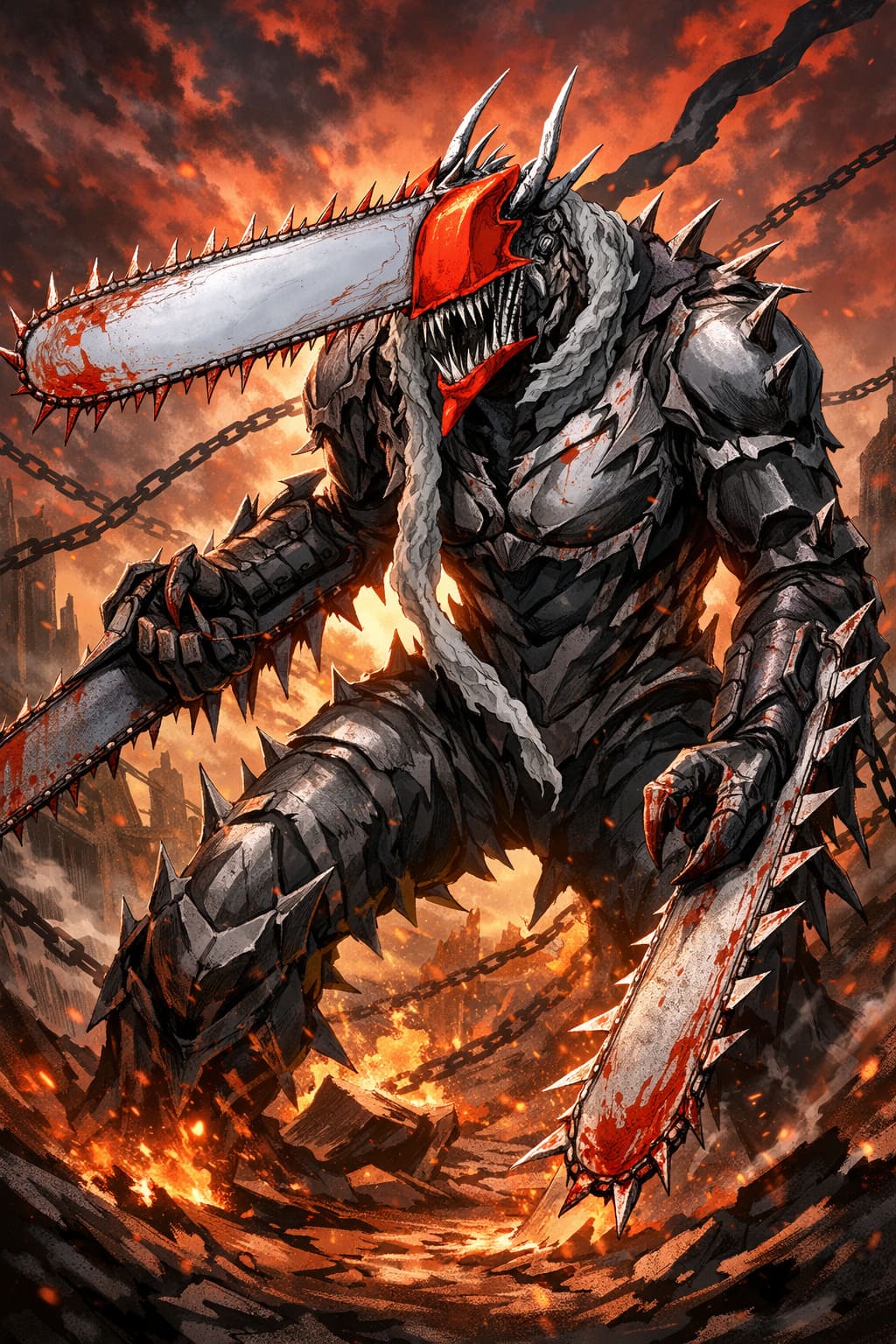
What makes the Hero of Hell transformation so disturbing is that it isn’t a heroic awakening or a power-of-friendship boost. It’s the opposite.
It happens when Denji loses everything that makes him Denji. When his dreams collapse, when his emotional core is destroyed, and when he stops believing he deserves happiness—that’s when Pochita takes over completely. It feels less like a transformation and more like a system failing and switching to emergency mode.
That’s what makes it tragic. The stronger this form becomes, the more absent Denji is.
Why Devils Call Him a “Hero”
The title sounds noble, but the reality is chilling.
The Chainsaw Devil doesn’t save anyone in the way humans understand heroism. In the lore of Hell, when a Devil cries for help, he appears—but he kills everyone involved, including the one who called him.
It’s almost mechanical, like a natural disaster responding to noise.
What makes this idea so fascinating is that “hero” in this context doesn’t mean protector. It means inevitable force.
The Ability That Breaks the Power Scale
Plenty of characters in the series are strong. But the Hero of Hell isn’t just strong—he rewrites reality.
When he consumes a Devil, the concept that Devil represents disappears entirely. Not just physically, but historically, psychologically, and culturally. People don’t remember it. Records don’t exist. It’s as if the idea never existed at all.
That’s a level of power that goes beyond combat. It’s closer to editing reality itself.
And that’s why even the most powerful Devils treat him with fear instead of rivalry.
Fan Theories That Make Too Much Sense
One of the best parts of being in the fandom is seeing the theories people come up with. Some of them actually feel plausible.
- The True Identity Theory – Some fans think the Chainsaw Devil isn’t literally the fear of chainsaws. The power level feels too extreme for something so modern. The idea that he represents oblivion, extinction, or even birth has been floating around for a while—and it’s hard to dismiss.
- The Return of Forgotten Concepts Idea – There’s speculation that erased concepts might come back if forced out of him. If that ever happens, the world in the story could change overnight.
Both theories add a layer of cosmic horror that fits perfectly with the tone of the series.
The Four Horsemen and the Ultimate Wild Card
What makes the Hero of Hell even more interesting is how every major power seems to revolve around him.
Each of the Horsemen wants something different:
- Control wants to use him.
- War wants to weaken him.
- Others seem to be studying or manipulating him.
He isn’t just another character in the story anymore. He’s the center of gravity around which the entire conflict turns.
Why This Transformation Feels Different From Other Anime
A lot of anime use the “inner monster” trope. Usually, mastering that power means growth, confidence, or acceptance.
Here, it feels like loss.
When the Hero of Hell appears, it doesn’t feel exciting in a triumphant way. It feels heavy. Silent. Almost hopeless. The spectacle is incredible, but emotionally it hits like a tragedy unfolding in real time.
Read also: The Control Devil Reborn: Analyzing Nayuta’s Evolving Powers in Chainsaw Man Part 2
That contrast—between visual chaos and emotional emptiness—is what makes the transformation unforgettable.
Final Thoughts
What fascinates me most is the question the story keeps quietly asking:
If the strongest version of you appears only when you’ve given up on living… is that strength worth it?
As the story moves forward, it feels inevitable that this form will return. The real question isn’t whether the Hero of Hell will appear again—it’s whether Denji will still be there when it happens.
And honestly, that uncertainty is what keeps me hooked more than any fight scene ever could.