Blue Lock Chapter 363 Confirmed Release Date & Global Times
Blue Lock Chapter 363 is scheduled to release on Tuesday, October 6, 2026, for international readers and Wednesday, October 7, 2026, in Japan. The timing could not be better, because Chapter 362 has left Japan in one of its most uncomfortable positions yet.
England U20 now leads 3-1, the first half is over, and Japan has just been exposed by a system that doesn’t seem to care about individual brilliance. For a series built around ego, personal evolution, and players forcing themselves above everyone else, watching an entire team get dismantled by coordinated football is genuinely fascinating.
And honestly, that’s what makes Chapter 363 so interesting.
The next chapter, officially titled “Taboo Game,” should be less about another spectacular goal and more about what Japan does when its usual approach stops working. Isagi’s final-panel awakening also suggests that something has clicked in his head. The question is whether he has actually found a way to fight England’s system—or whether we’re simply watching the beginning of another painful lesson.
When Does Blue Lock Chapter 363 Come Out?
According to the current release schedule, Blue Lock Chapter 363 will arrive on October 6, 2026, for international readers. Japanese readers will receive the chapter on October 7 because of the time difference.
Chapter 362 is scheduled for September 29, meaning the manga is currently following its expected weekly schedule.
For readers trying to catch the chapter as soon as possible, the expected international timing is:
- Pacific Time: 8:00 AM, October 6
- Eastern Time: 11:00 AM, October 6
- UK Time: 4:00 PM, October 6
- Central Europe: 5:00 PM, October 6
- Japan: 12:00 AM, October 7
Official readers should check Kodansha’s Blue Lock release platforms for availability in their region.
What Happened in Blue Lock Chapter 362?
Chapter 362, “Obsession,” was one of those chapters where Japan’s problems became impossible to ignore.
The first half is approaching its conclusion, with only around two minutes remaining. Japan is already under pressure, but England’s attack suddenly accelerates.
Teddy Knight and Ashen Pong push forward, and what follows is essentially a demonstration of why England’s U20 setup has been so difficult to stop.
Ashen Pong launches his familiar “one to infinity” sequence, sending the ball over Reo Mikage and Karasu. Childs receives it cleanly and keeps the attack moving instead of allowing Japan to reset.
Karasu immediately recognizes the danger and starts warning his teammates about the incoming cross.
Unfortunately for Japan, recognizing the problem and actually stopping it are two very different things.
England Tears Through Japan’s Defense
This was probably my favorite part of Chapter 362 because it deliberately makes Japan’s defenders look uncomfortable.
Oliver Aiku, who has repeatedly shown why he is considered one of Japan’s strongest defensive players, gets beaten by Lockhart. Rather than giving Aiku an opportunity to challenge him in the air, Lockhart simply changes his movement and gets around him.
That’s important.
England isn’t beating Japan through one ridiculous individual dribble. The attack works because every player understands what the next player is supposed to do.
Even Kiyora Jin disappears during the sequence, which makes his lack of defensive impact particularly noticeable. When an attack moves this quickly, one player being half a step late can completely destroy the defensive structure.
And that’s exactly what happens.
The Japanese backline never really recovers.
Teddy Knight Makes It 3-1
Once the cross reaches Teddy Knight, the situation is basically over.
Knight holds off the Japanese defenders, activates his Predator Eye, and finds the tiny opening in front of him. His finish is precise rather than flashy, which actually makes it feel more dangerous.
The result is brutal:
England U20 3-1 Japan U20.
And the timing makes it even worse.
The goal arrives right before halftime.
England gets to walk into the break with a two-goal advantage while Japan has to sit with the fact that its defensive structure has just been picked apart.
Chris Fox is equally satisfied with what he has seen. His philosophy of organized, system-driven football appears to be producing exactly the result he wanted.
That’s where Blue Lock’s central philosophy gets interesting again.
Ego vs. System: The Real Battle
What makes this match more than another football game is the ideological conflict happening underneath it.
Blue Lock has always pushed the idea that exceptional players need to develop their own weapons. Ego is supposed to create the difference.
England, meanwhile, appears to be presenting the opposite argument.
What if individual ego becomes predictable?
What if eleven players working together can consistently neutralize eleven individuals trying to become the star?
That’s why the 3-1 scoreline matters beyond the numbers.
Japan isn’t simply losing possession or conceding goals. Its entire football philosophy is being challenged.
And then Chapter 362 gives us Isagi.
Isagi’s New Awakening Could Be the Turning Point
The final pages show Yoichi Isagi staring down the pitch as something begins to change in his perception.
This is where I think Chapter 363 could become extremely important.
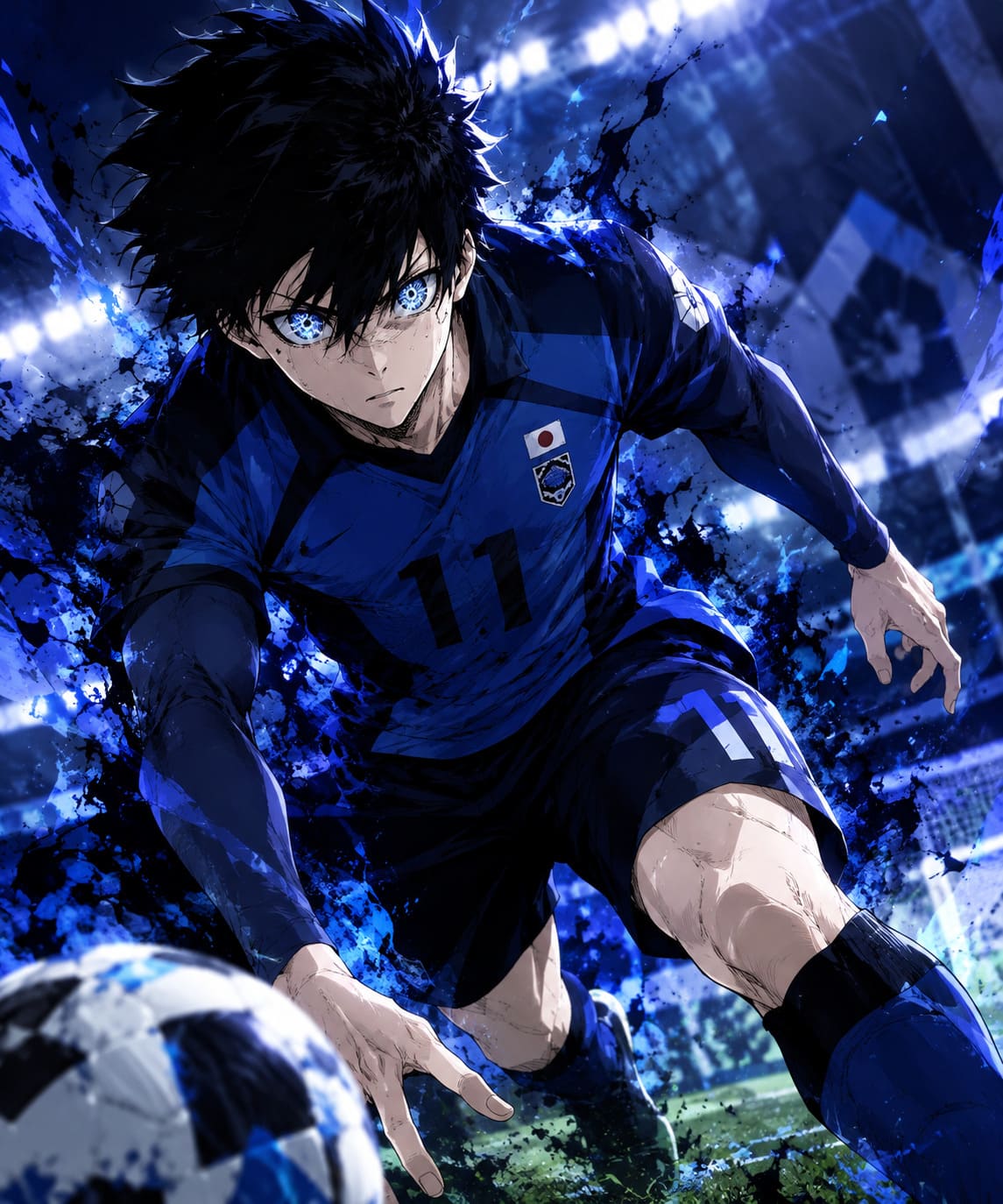
Isagi has always been at his most dangerous when he stops looking at football as a collection of individual duels and starts reading the entire field. His spatial awareness has already evolved several times throughout the story.
But this moment feels different.
England’s players aren’t simply moving randomly. Their movements are connected. Their positioning creates predictable patterns, and those patterns are precisely what makes their system so effective.
If Isagi can recognize those patterns faster than England can execute them, he may have found the crack Japan desperately needs.
The interesting part is that Teddy Knight’s Predator Eye and Isagi’s developing vision appear to represent two very different approaches to reading the game.
Knight finds the perfect moment to finish.
Isagi wants to understand why that moment exists in the first place.
That distinction could become crucial in the second half.
What Could “Taboo Game” Mean in Chapter 363?
The title “Taboo Game” has immediately created plenty of speculation among Blue Lock fans, and there are several ways it could connect to the current situation.
The most obvious possibility is that Japan needs to do something it normally wouldn’t consider acceptable within its tactical structure.
In other words, break the rules of the game as Japan currently understands them.
1. Isagi Breaks the Pattern
My first thought is that Isagi could intentionally disrupt the predictable structure England has created.
England appears strongest when everyone performs their expected role. If Isagi can create situations where players are forced to react instead of follow the established sequence, the entire system could become less efficient.
That would fit Isagi perfectly.
2. Ego Changes Japan’s Approach
The halftime break is another obvious opportunity.
Jinpachi Ego now has roughly 15 minutes to figure out how Japan can respond. A simple tactical adjustment probably won’t be enough after what happened in the opening half.
We could see substitutions, positional changes, or even an entirely different attacking structure.
The key question is whether Ego decides to strengthen Japan’s existing system or deliberately make it more chaotic.
3. Someone on the Bench Gets a Chance
Japan has plenty of players capable of changing the rhythm of a match, and a 3-1 deficit is exactly the kind of situation where Ego could gamble.
If the current lineup cannot match England’s coordinated style, bringing in a player with a completely different weapon could force England to adjust.
That could become especially dangerous if Isagi has already identified how England’s defensive network works.
Chapter 363 Predictions: What I Expect
If I had to guess where the next chapter is going, I wouldn’t expect an immediate goal.
Chapter 363 will probably spend at least part of its pages inside the halftime tactical battle.
That’s actually a good thing.
Blue Lock sometimes gets criticized when matches move from one giant moment to another without enough tactical explanation. Here, the 3-1 scoreline gives the manga an opportunity to slow down and explain why Japan is losing.
I would expect three things to receive the most attention:
- Isagi’s new vision and what exactly he has realized
- Ego’s response to England’s anti-ego system
- The changes Japan needs before the second half begins
The most exciting possibility is that Isagi doesn’t simply discover a way to counter England.
He discovers a way to make England’s greatest strength become a weakness.
If their players are incredibly synchronized, then disrupting that synchronization could be more effective than trying to beat every player individually.
Japan vs. England: Match Situation
| Category | Japan U20 | England U20 |
|---|---|---|
| Score | 1 | 3 |
| Match Status | Halftime | Halftime |
| Main Threat | Defensive breakdown | Coordinated team system |
| Key Player | Yoichi Isagi | Teddy Knight |
| Major Development | Isagi’s awakening | Predator Eye finish |
| Tactical Identity | Ego and individual adaptation | System and coordination |
Why Chapter 363 Could Be So Important
What I like most about this part of Blue Lock is that the story isn’t simply asking, “Who is the strongest player?”
It’s asking something much more uncomfortable:
Can individual ego actually survive against a perfectly coordinated football system?
Japan is currently losing that argument.
England has taken a 3-1 lead, neutralized several Japanese defensive players, and exposed the weaknesses of a team that normally thrives on individual evolution.
But Isagi’s awakening changes the equation.
He doesn’t need to become stronger in the traditional sense. He needs to understand the match faster.
That’s been his greatest weapon from the beginning, and Chapter 362 suggests that weapon may be evolving again.
The title “Taboo Game” could therefore be pointing toward a major shift in how Isagi approaches the field. Maybe he needs to abandon the safe, logical solution. Maybe Japan needs to stop playing the way England expects. Or maybe the “taboo” is something even more fundamental to Blue Lock’s philosophy.
Whatever the answer is, the timing is perfect.
Japan is two goals behind.
The first half has exposed its weaknesses.
England believes its system is the correct future of football.
And Isagi has just started seeing something nobody else seems to see.
That is exactly where Blue Lock is at its best.
Chapter 363 should reveal whether Isagi’s new vision can turn that realization into an actual weapon—or whether England’s 3-1 lead is about to become an even bigger problem.