Ascendance of a Bookworm Part 3 Cour 2: New Creditless Opening and Ending Themes Signal a Bold Transition for Rozemyne
If you’ve been following Ascendance of a Bookworm since Myne’s humble days surrounded by books, paper, and impossible dreams, the second cour of Part 3: Adopted Daughter of an Archduke feels like the moment the anime finally spreads its wings. After watching the new creditless opening and ending, I couldn’t help but replay both of them several times. They’re not just beautiful music videos—they quietly reveal how much Rozemyne has changed, and they perfectly capture the atmosphere waiting for us in the rest of the season.
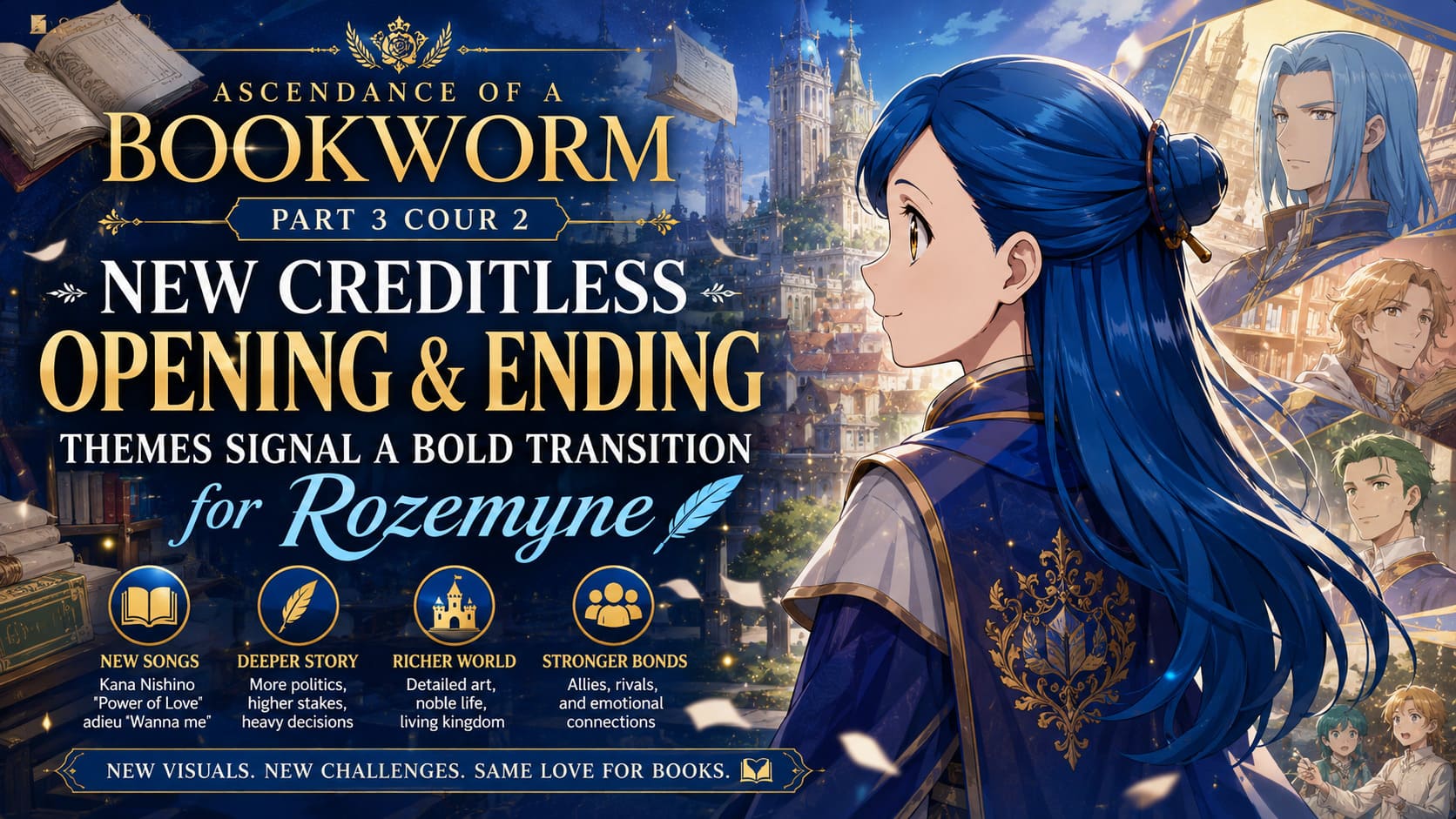
The biggest surprise isn’t simply that we have new songs. It’s the confidence behind every scene. WIT Studio clearly understands that this isn’t the same cozy story about making books anymore. The world has become larger, the politics more dangerous, and Rozemyne herself now carries responsibilities that would crush most adults. Those changes are reflected in every frame of the new sequences.
Blue Box Manga Ending: Chapter 250 Closes the Curtain on Shonen Jump’s Peak Sports Romance
The New Opening Feels Full of Hope Without Ignoring Reality
Kana Nishino’s ‘Power of Love’ immediately caught my attention. It has the kind of upbeat energy that makes you smile, but it doesn’t feel disconnected from the story. Instead, it reminds viewers why Rozemyne keeps fighting despite every obstacle placed in front of her.
The creditless version makes it even easier to notice details that usually disappear beneath rolling staff credits. I found myself paying attention to little visual hints that probably foreshadow future events. WIT Studio seems to enjoy rewarding viewers who pause frames and look closely, something anime fans love doing after every episode.
Highlights That Immediately Stand Out
- Smooth character animation that gives every interaction more personality.
- Rich noble costumes filled with intricate designs and vibrant colors.
- Beautiful architecture that makes Ehrenfest feel like a living kingdom.
- Subtle symbolic imagery instead of obvious spoilers.
That’s honestly what impressed me most. Rather than showing giant action scenes, the opening builds excitement through atmosphere and emotion. Every transition feels carefully planned, encouraging fans to look beyond the surface instead of waiting for explosive moments.
The Ending Is Quiet, Emotional, and Surprisingly Powerful
If the opening celebrates Rozemyne’s determination, the ending gently reminds us of everything she sacrificed to reach this point.
Performed by adieu with the song ‘Wanna me’, the ending slows everything down. Instead of flashy animation, it focuses on softer moments that highlight Rozemyne’s loneliness beneath her noble status. Even though she’s surrounded by influential people now, she can never truly return to the peaceful family life she once knew.
I actually prefer endings like this because they give viewers time to reflect after each episode. The visuals almost feel like pages from a storybook, fitting perfectly with the series’ identity. Several scenes seem intentionally nostalgic, reminding longtime fans that Rozemyne’s greatest treasure was never magic—it was always the people she loved.
WIT Studio Finally Gives This World the Visual Quality It Deserves
Let’s be honest. Earlier seasons were enjoyable because of the writing, not because of spectacular animation.
Ajia-do Animation Works delivered the emotional core of the story well enough, but there were moments where scenes felt static, especially during conversations. Considering how massive Miya Kazuki’s world eventually becomes, many fans always wondered how incredible the anime could look with a bigger production. That’s exactly what this adaptation feels like.
The improvement isn’t only visible during action scenes. Even ordinary conversations now benefit from stronger direction, expressive facial animation, and more cinematic camera work. Backgrounds have noticeably more detail, lighting changes naturally between scenes, and magical effects finally carry the sense of wonder they deserve.
Production Comparison
| Aspect | Earlier Seasons | Part 3 Cour 2 |
|---|---|---|
| Animation | Functional but limited | Smooth and expressive |
| Character Acting | Sometimes stiff | Full of emotion |
| Background Art | Simple | Rich and immersive |
| Camera Direction | Static | Dynamic and cinematic |
| Overall Presentation | Story-focused | Story and visuals equally impressive |
As someone who spends plenty of time reading anime discussions online, this is one of the rare upgrades that nearly everyone seems to agree on. Whether viewers are longtime light novel readers or anime-only fans, the visual improvements have become one of the biggest talking points surrounding the new cour.
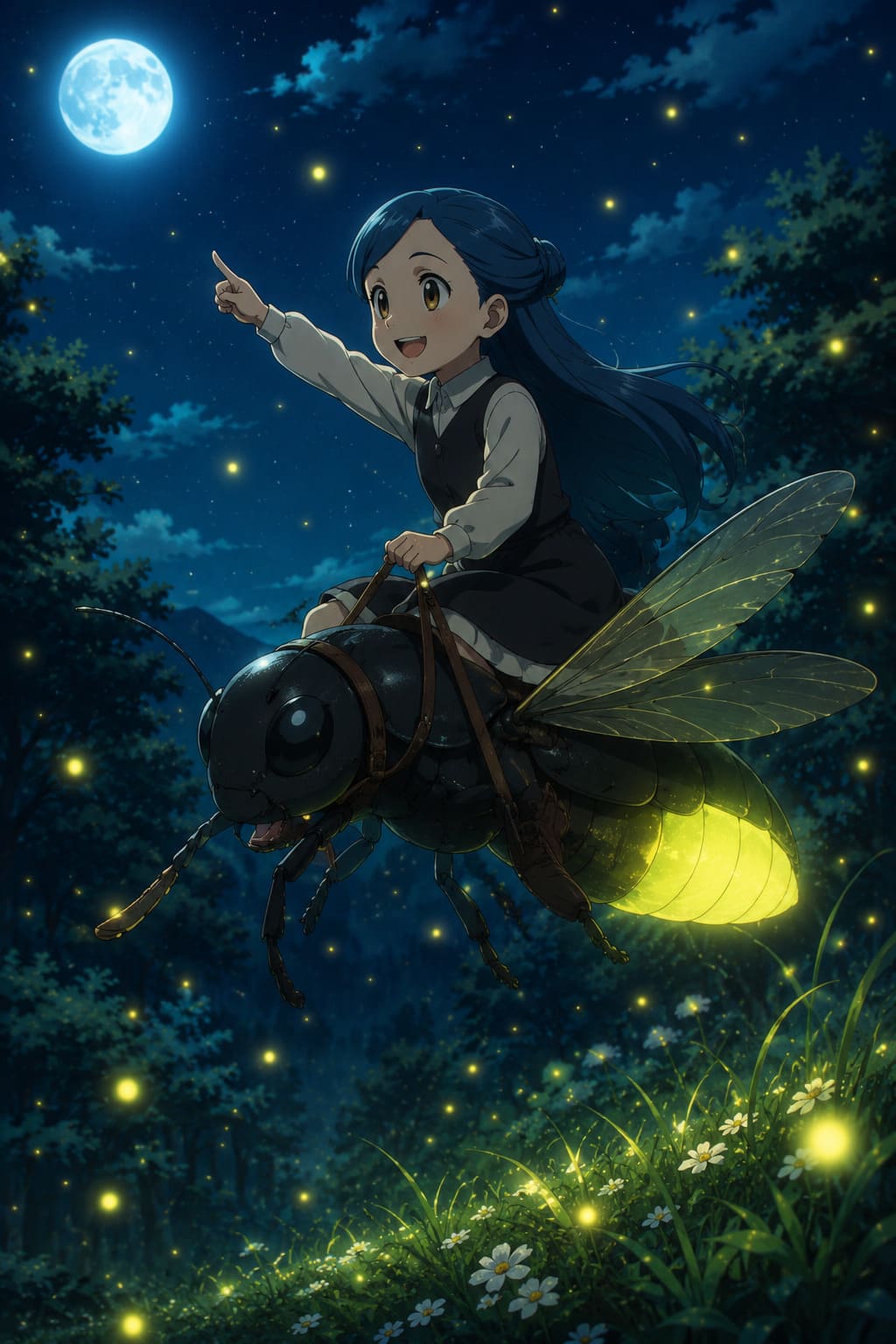
Rozemyne’s Story Has Officially Outgrown Simple Slice-of-Life Fantasy
One reason I continue recommending Ascendance of a Bookworm to friends is because it refuses to stay predictable. Many isekai series introduce political intrigue as an excuse for bigger battles. This series does something much smarter, making politics matter because they directly affect education, religion, commerce, and the everyday lives of ordinary citizens.
Rozemyne is no longer simply chasing her dream of printing books. She’s balancing noble expectations, protecting her loved ones from afar, expanding an industry that could reshape society, and carrying magical responsibilities that grow heavier with every episode. Every promotion opens another opportunity, but it also attracts new enemies who see her as either a threat or a valuable tool.
The anime has finally reached the point where every conversation carries weight. Small decisions can influence the future of Ehrenfest just as much as magical confrontations, making each episode feel meaningful even when swords stay sheathed.
The Supporting Cast Keeps Getting Better
Another reason this arc works so well is the supporting cast. Ferdinand continues to be one of the most compelling mentors in fantasy anime, combining intelligence, caution, and hidden compassion in ways that constantly surprise me. His interactions with Rozemyne remain some of the strongest scenes in the series because neither character ever feels one-dimensional.
Bonifatius adds warmth and humor without undermining the seriousness of noble politics, while retainers like Angelica and Brigitte continue receiving moments that make them feel like genuine people instead of background characters. As the political landscape becomes more dangerous, every ally matters.
At the same time, darker forces are beginning to take center stage. The influence of Veronica and Georgine promises to complicate Rozemyne’s already difficult position, and readers of the original novels know that some of the biggest emotional and political conflicts are still waiting around the corner.

Why Creditless Openings and Endings Matter
Some viewers may wonder why anime fans become excited whenever studios release creditless openings and endings. Personally, I think they’re one of the best ways to appreciate the work of the animation staff.
Without credits covering half the screen, it’s much easier to notice visual storytelling, recurring symbols, hidden expressions, and carefully placed details that often inspire weeks of fan theories. Sometimes an opening quietly reveals themes long before the story reaches those moments, rewarding attentive viewers who love analyzing every frame.
The newest sequences for Ascendance of a Bookworm are packed with that kind of thoughtful direction. I’ve already seen fans discussing possible foreshadowing, symbolic imagery, and subtle references hidden throughout both songs. Even if every theory doesn’t come true, those conversations are part of what makes following a seasonal anime so much fun.
Final Thoughts
Watching the new opening and ending convinced me that Ascendance of a Bookworm Part 3 Cour 2 is entering its strongest stretch yet. The upgraded production, memorable music, and growing emotional complexity combine to create a season that feels more confident than anything the franchise has delivered before.
What keeps bringing me back isn’t flashy combat or overwhelming magical abilities. It’s watching an intelligent protagonist slowly transform an entire society through education, determination, innovation, and an endless passion for books. Very few fantasy anime build excitement through economics, publishing, literacy, and noble politics, yet this series somehow makes every one of those subjects genuinely engaging.
If WIT Studio maintains this level of quality until the finale, I honestly believe this could become the adaptation longtime fans have dreamed about for years. For newcomers, there’s never been a better time to jump into Rozemyne’s incredible journey.