Delicious in Dungeon Ending Explained: Why Laios’s Bittersweet Victory is the Perfect Feast
Few fantasy manga manage to stick the landing after such a long and carefully built journey, but Ryoko Kui’s Delicious in Dungeon (Dungeon Meshi) does something rare: it delivers an ending that feels both satisfying and quietly heartbreaking.
After nearly a hundred chapters of monster cooking, dungeon ecology, and character growth, the finale leaves readers asking a simple question: Was this actually a happy ending?
As someone who genuinely loves anime and manga endings that dare to be a little messy and emotional, I think the answer is yes — but in the most bittersweet way possible. Let’s break down why the ending works so well and why Laios’s fate might be one of the most poetic conclusions in modern fantasy manga.
The Final Battle: Defeating Desire Itself
The climax of the story isn’t your typical sword-swinging showdown.
Instead, the main antagonist — the Winged Lion — represents something far more abstract: desire itself.
The Lion is an ancient mana entity that survives by feeding on the desires of living beings. The stronger the desires, the stronger the Lion becomes. In a way, it’s the ultimate parasite of ambition, greed, and longing.
Laios realizes that simply attacking the creature won’t work.
So he does something completely insane — and very Laios.
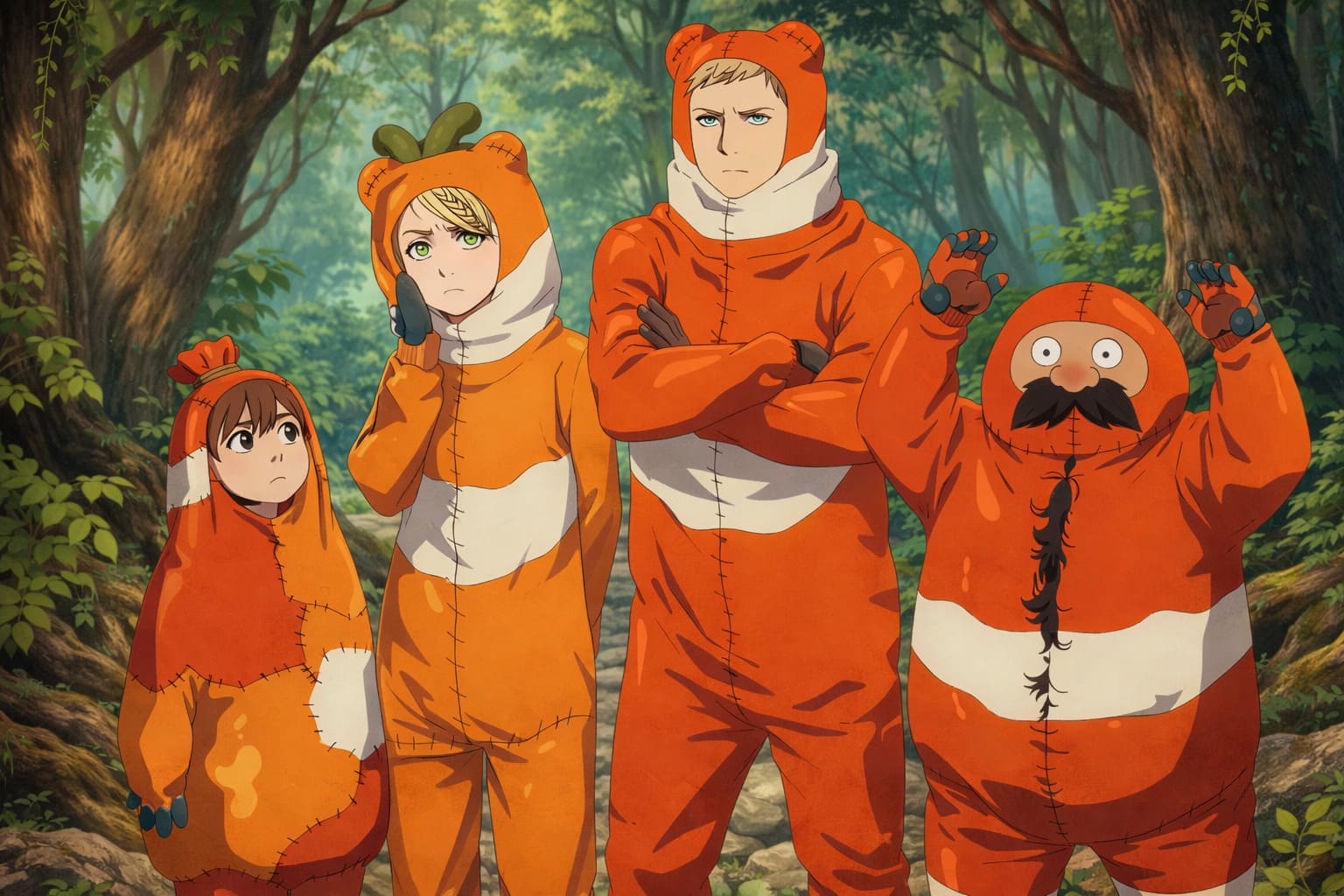
His plan:
- Allow the Winged Lion to consume his soul.
- Transform himself into a monster inside the spiritual realm.
- Devour the Lion’s own hunger.
It’s such a clever narrative twist because it follows the manga’s core philosophy: everything in this world exists in the food chain.
By eating the Lion’s desire to eat, Laios essentially starves the creature. The Lion doesn’t explode or dramatically vanish.
It simply stops wanting anything at all.
And in a story about appetite, survival, and ecosystems, that feels incredibly fitting.
Laios’s Victory Comes With a Cruel Twist
Saving the world should feel triumphant.
But in true Dungeon Meshi fashion, victory comes with a strange and painful cost.
After the battle, Laios becomes the king of the newly formed kingdom of Melini. On paper, this is the perfect outcome: the awkward adventurer who always struggled socially is now surrounded by allies who respect and understand him.
Yet the Winged Lion leaves him with a final curse.
“Your greatest desire will never come true.”
And if you know Laios, you already know what that desire is.
He doesn’t crave power, wealth, or fame.
He loves monsters.
Not just hunting them — understanding them, studying them, living alongside them, and yes… eating them.
The curse manifests in a particularly cruel way: all living monsters instinctively run away from Laios.
For most people, that sounds like a blessing.
For Laios, it’s devastating.
| Aspect | Before the Ending | After the Curse |
|---|---|---|
| Relationship with monsters | Curious, fascinated, obsessed | Monsters flee from him |
| Social status | Awkward adventurer | King of Melini |
| Emotional state | Lonely but curious | Surrounded by people but missing monsters |
It’s a beautifully ironic ending.
Laios gains everything a typical fantasy hero would want — a throne, recognition, stability.
But he loses the one thing he truly loved.
The Hidden Horror of Infinite Desire: Delicious in Dungeon’s Most Terrifying Concept Explained
The Strangest Rescue Plan Ever: Saving Falin
Of course, no ending to Delicious in Dungeon would be complete without one final bizarre culinary solution.
Even after the Winged Lion’s defeat, Falin remains stuck in her chimera form — a fusion of human and dragon created earlier in the story.
Instead of searching for some magical cure, the group comes up with a solution that feels completely on-brand.
They eat the dragon parts of her body.
Yes, really.
The plan works like this:
- The dragon flesh is magically linked to the chimera curse.
- By cooking and eating the dragon meat, they break that magical connection.
- The curse is effectively “digested” out of existence.
Eventually, Falin is restored to her human form — though she still retains some dragon-like features, such as feathers and a huge appetite.
It’s weird.
It’s funny.
And it perfectly reflects the series’ theme that food is literally the mechanism that sustains life and change.
Where Everyone Ends Up
The ending also gives us a glimpse into what life looks like after the dungeon adventure ends.
Some characters move on, others stay close, but everyone grows.
Here’s where the core party lands:
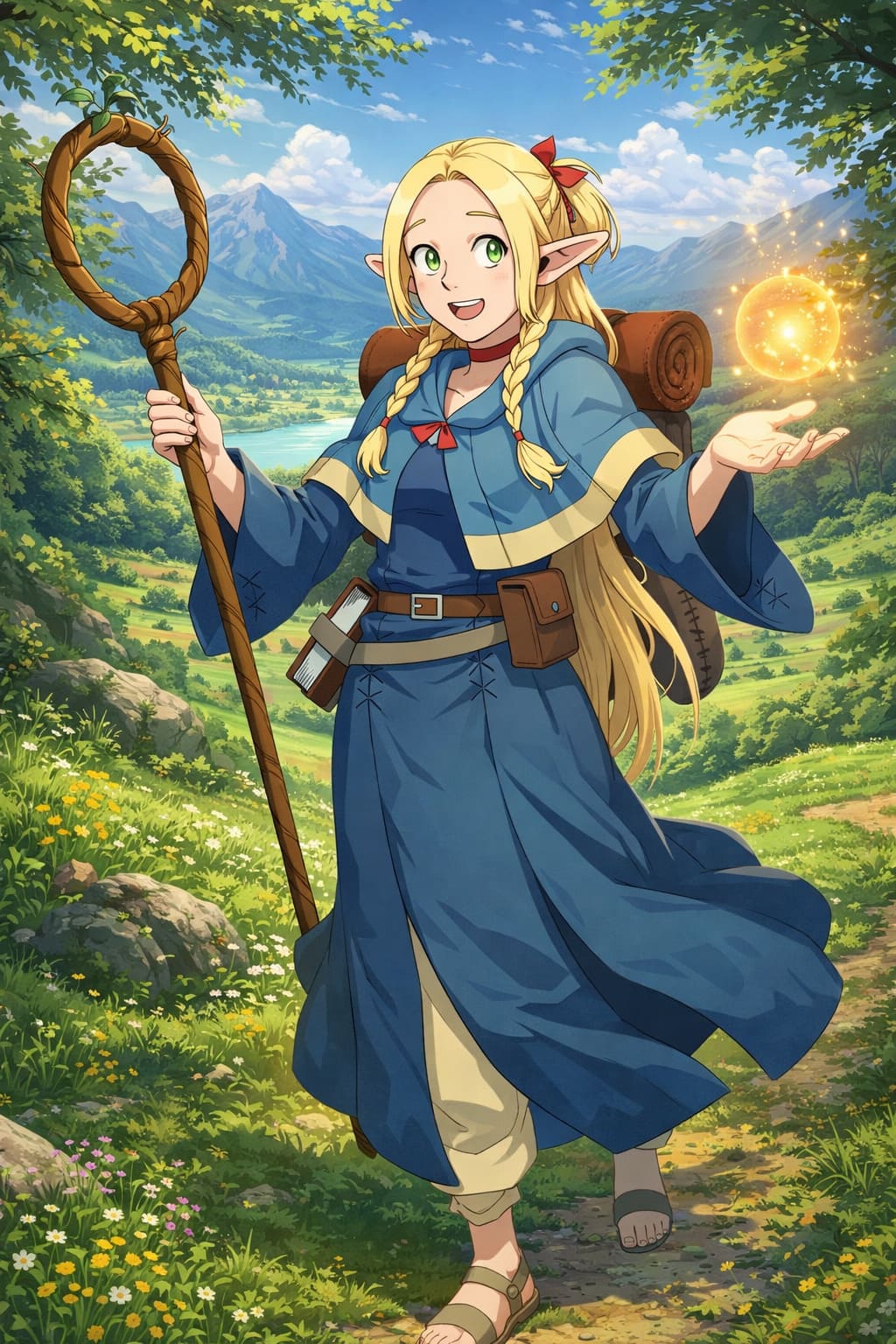
- Marcille – Accepts her long lifespan as a half-elf and serves as Laios’s magical advisor. Instead of fearing the future, she focuses on cherishing the present.
- Chilchuck – Returns to his family and locksmith career but remains a trusted ally of the kingdom.
- Senshi – Continues wandering and studying monster ecosystems, living as the dungeon’s ultimate culinary naturalist.
- Izutsumi – Finds peace with her beast-human identity and travels freely through the kingdom.
The story quietly acknowledges that adventures don’t last forever — but friendships can.
Why the Ending Works So Well
What makes the ending of Delicious in Dungeon so powerful is how perfectly it ties back to the story’s core ideas.
Throughout the manga, we’re constantly reminded of one simple truth:
To live is to eat.
And eating means:
- Taking life
- Sustaining life
- Becoming part of a cycle
The finale reflects that philosophy beautifully.
- The Winged Lion is defeated through consumption.
- Falin is saved through cooking and eating.
- Laios gains a kingdom but must accept loss and sacrifice.
It’s not a perfectly happy ending.
But it’s honest.
And in many ways, that makes it far more satisfying than a clean fairy-tale conclusion.
Final Thoughts
As a fan of fantasy anime and manga, I honestly think the ending of Delicious in Dungeon is one of the most thoughtfully written conclusions in recent years.
It doesn’t rely on shock twists or dramatic tragedies.
Instead, it delivers something rarer:
A quiet, reflective ending that respects the story’s themes and characters.
Laios may never get to chase monsters again, but he ends the journey surrounded by friends, family, and a kingdom that accepts him for who he is.
And maybe that’s the real message of the series.
Even the most incredible feast eventually ends — but the memories and the bonds you build around the table stay with you forever.