The Hidden Horror of Infinite Desire: Delicious in Dungeon’s Most Terrifying Concept Explained
At first glance, Delicious in Dungeon feels like one of the most charming fantasy anime in recent memory. It’s a quirky dungeon-crawling adventure where the biggest problem seems to be figuring out how to cook monsters without getting poisoned. Characters experiment with recipes, joke about survival strategies, and turn classic RPG enemies into surprisingly tasty meals.
But if you’ve followed the story far enough—especially into the manga’s later arcs—you know the series quietly transforms into something far darker.
What begins as a cozy fantasy gradually reveals one of the most unsettling concepts in modern anime: a cosmic entity that feeds on human desire itself.
And honestly? That twist is what elevated Delicious in Dungeon from “fun fantasy show” to something I’d happily discuss for hours on Reddit threads.
The Demon That Eats Desire
At the center of the story’s hidden horror is the so-called Demon of Infinite Desire—the true power lurking behind the dungeon.
Unlike traditional fantasy villains, this entity isn’t driven by revenge, domination, or destruction. Instead, it is essentially living mana from an infinite dimension, an existence that sustains itself by consuming one thing: human desire.
When it first enters the human world, the demon is weak—almost insignificant. But over time it learns something fascinating about people: their emotions, dreams, and ambitions are incredibly flavorful sources of energy.
So it creates the perfect hunting ground.

The dungeon.
Here’s the sinister cycle the demon uses:
- It grants wishes to adventurers who reach deeper layers.
- Those wishes make people’s desires grow stronger and more specific.
- Eventually, when those desires become rich and complex enough, the demon devours them completely.
From the demon’s perspective, it’s basically aging wine before drinking it.
But from a human perspective… the result is terrifying.
The “Hollow” Fate Worse Than Death
One of the creepiest ideas in the series is what happens after the demon consumes someone’s desire.
They don’t explode. They don’t disappear.
Instead, they become empty.
Without desire, a person loses the fundamental drive to live. They stop caring about food, movement, or survival. They become little more than a body that continues existing without purpose.
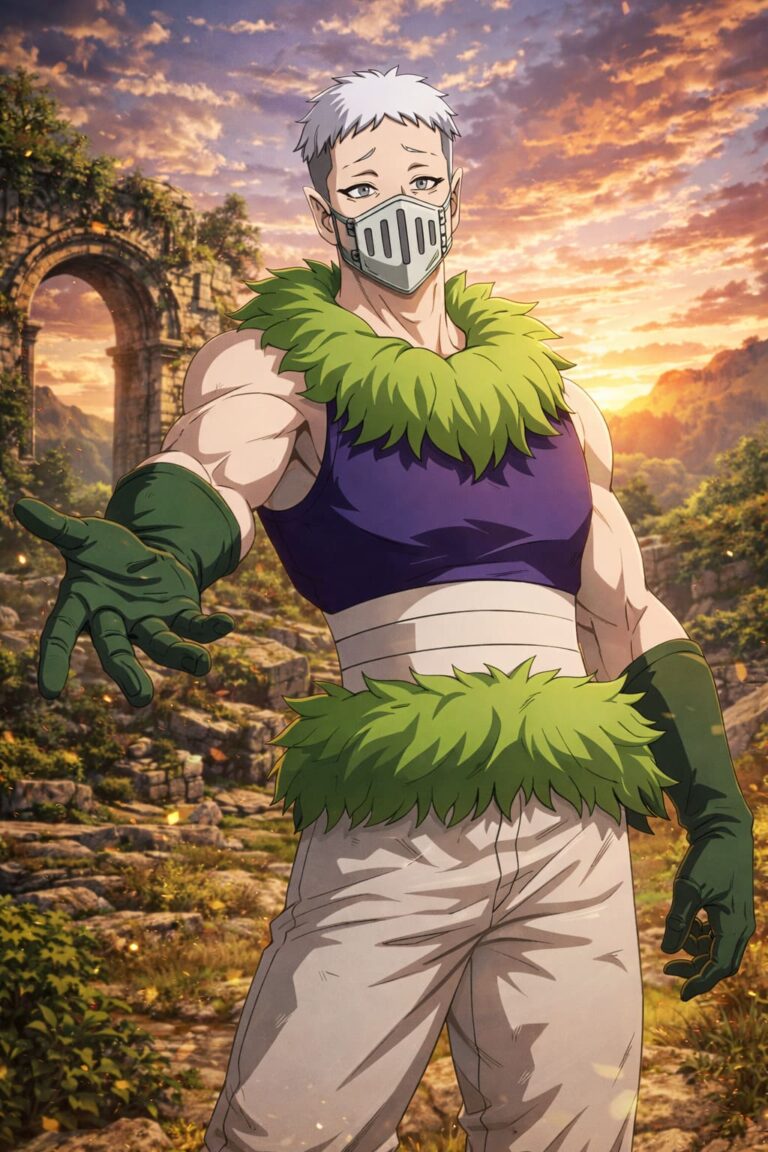
In the story, characters like Mithrun demonstrate this horrifying state.
Think about it for a second: the demon doesn’t kill you.
It removes the reason you ever wanted to live.
That concept alone pushes the series into philosophical territory most fantasy anime never attempt.
The Winged Lion: A Perfectly Misunderstood Monster
The demon doesn’t appear as a terrifying cosmic horror at first. Instead, it presents itself as the Winged Lion, a calm and almost divine guide.
This form offers something incredibly tempting: a world where nobody ever suffers.
No loss. No failure. No pain.
At face value, it sounds like paradise.
But the more you think about it, the more unsettling it becomes.
The Winged Lion genuinely believes it is helping humanity. By removing painful desires—fear, grief, frustration—it thinks it can create eternal happiness.
The problem?
Human happiness doesn’t work that way.
The Paradox of Infinite Happiness
Fans often compare the demon’s worldview to overly optimized systems—like dystopian AI or extreme consumer culture.
The logic is simple:
| Demon’s Logic | Human Reality |
|---|---|
| Remove suffering | Growth disappears |
| Remove difficult desires | Motivation disappears |
| Grant perfect happiness | Meaning disappears |
In other words, the demon misunderstands the core of humanity.
Struggle is part of what makes happiness meaningful.
Without challenges, achievements feel empty. Without risk, love loses its depth. Without desire itself, people stop evolving.
Ironically, the demon tries to create paradise—but ends up designing a static world without life.
Laios’ Wildly Creative Solution
By the final arc, the protagonist Laios Touden faces an enemy that can’t really be beaten through traditional combat.
You can’t stab infinite desire.
So Laios does something extremely Laios.
He leans into his lifelong obsession with monsters.
Using his own powerful wish, he transforms into what might be the most absurd yet brilliant concept in fantasy storytelling: The Ultimate Monster.
But not just any monster.
A monster designed specifically to eat the demon’s own desire to consume.
Let that sink in.
Instead of destroying the demon, Laios essentially devours its hunger.
And once the demon loses its defining purpose—its endless appetite—it becomes harmless. Not dead, but empty. A cosmic presence without function.
It’s one of the most bizarre yet poetic resolutions I’ve seen in a fantasy story.
The Tragic Cost of Victory
Of course, this kind of solution doesn’t come without consequences.
Laios receives a strange curse as a result: his greatest desire will never be fulfilled.
Fans initially feared the worst—thinking it meant he would lose his sister or something equally heartbreaking.
But the truth is both funny and sad.
Laios’ deepest wish has always been simple: he wants to keep discovering and studying monsters.
After defeating the demon, however, the world loses living monsters entirely.
So the biggest monster nerd in the world becomes the king of a monster-free world.
It’s darkly ironic—and very fitting for the series’ tone.
Why This Story Hit So Hard With Western Fans
Part of the reason Delicious in Dungeon exploded in popularity outside Japan is how easily its themes translate into modern anxieties.
The Demon of Infinite Desire feels weirdly familiar in today’s world.
People often compare it to systems that promise perfect convenience or happiness but end up draining meaning from life.
Whether it’s algorithmic entertainment, consumer culture, or hypothetical AI “optimization,” the fear is the same:
What happens if something tries to perfect human happiness without understanding humanity?
The demon isn’t evil in the traditional sense.
It’s just a being that misunderstood us.
And in that way, it becomes one of the most fascinating antagonists in modern anime.
Final Thoughts
What makes Delicious in Dungeon so special is how it hides this existential horror beneath layers of humor, cooking, and classic fantasy adventure.
You start the series laughing at recipes for basilisk stew.
You end it contemplating the philosophy of desire and what it means to live.
And honestly?
That’s the kind of storytelling twist that keeps anime fans talking for years.