Difference between web novel and light novel Kunon the Sorcerer Can See
When people ask whether Kunon the Sorcerer Can See ( Majutsushi Kunon wa Mieteiru ) is worth reading in both Web Novel (WN) and Light Novel (LN) form, the honest answer is: yes—but for very different reasons.
At its core, Kunon’s story doesn’t change. A blind boy discovers a radical way to “see” the world through water magic and slowly breaks every known rule of sorcery. What does change is how that story feels. The shift from a self-published web novel to a professionally edited Kadokawa light novel fundamentally reshapes pacing, tone, and emotional impact.
If the WN is Kunon’s lab notebook, the LN is the published research paper—with illustrations, peer review, and intent.
Below is a fan-level deep dive into what actually changes, and why many readers (especially Western fans) end up preferring the LN as the definitive version.

1. Pacing: From Magical Diary to Narrative Drive
The first thing you’ll notice is momentum.
Web Novel vibes:
The WN reads like a serialized experiment log. Kunon spends a lot of time testing water pressure, refraction angles, and sensory feedback. For hardcore magic-system fans, this is gold. For everyone else, it can feel meandering.
Light Novel glow-up:
The LN trims repetition and reorganizes events into clean arcs. Kunon’s early childhood, which can stretch endlessly in the WN, is streamlined to push toward the Magic Academy faster. Nothing important is lost—but everything feels more purposeful.
Why it matters:
The LN reads like a story that knows where it’s going. The WN reads like a story discovering itself.
2. Kunon’s Inner World Hits Harder in the LN
Kunon has always been eccentric, polite, and quietly terrifying in his genius. But the LN adds something the WN only hints at: emotional contrast.
The “empty years”:
The LN lingers longer on Kunon’s psychological low point before magic. His blindness isn’t just a trait—it’s isolation, sensory deprivation, and resignation. When he finally “sees” through water, it lands as a rebirth, not just a clever trick.
Character growth feels earned:
His later confidence, flirtatious politeness, and dramatic flair work because the LN makes you remember who he was before.
3. Side Characters Stop Being NPCs
This is one of the LN’s quietest but biggest upgrades.
In the WN, many supporting characters function as mechanics—teachers who explain systems, nobles who react, rivals who exist to be surpassed.
The LN changes that.
- Jenie isn’t just a tutor; she actively struggles to understand Kunon’s mindset.
- Milika becomes more than comic relief or flirt target—she reacts, doubts, adapts.
- Authority figures show fear, awe, and disbelief from their point of view.
These changes don’t alter the plot, but they humanize the world Kunon is breaking apart.

4. The Magic System Becomes “Hard Sci-Fantasy”
Kunon’s appeal has always been that his magic feels less like spellcasting and more like engineering.
The LN leans all the way into that.
Expanded explanations include:
- How water density affects sensory resolution
- Why light refraction through droplets forms usable spatial data
- The limits of Kunon’s “sight” under different environments
This turns his abilities from “MC cheat skill” into something closer to a theoretical framework. For readers who love hard magic systems, this is where the LN really shines.
And yes—the illustrations help a lot here.
5. POV Shifts Change the Scale of the Story
One of the LN’s smartest moves is stepping outside Kunon’s head.
The WN stays tightly bound to Kunon’s internal monologue. Because he’s humble (and a little oblivious), his feats sometimes feel smaller than they are.
The LN adds:
- Reactions from royal magicians
- Observers realizing Kunon is doing something unprecedented
- Institutional fear disguised as praise
Seeing the world react to Kunon reframes him from “smart kid” to existential anomaly.
6. The Gentleman Persona Gets Sharper
Kunon is polite to the point of absurdity—but tone matters.
- WN Kunon:
Occasionally blunt, sometimes unintentionally cold, often unintentionally funny. - LN Kunon:
Deliberately eccentric. His dialogue is stylized, rhythmical, and intentionally charming. His flirting is less awkward, more theatrical, and better balanced between comedy and character.
It’s the difference between accidental humor and crafted charm.
7. Illustrations Change Everything
This cannot be overstated.
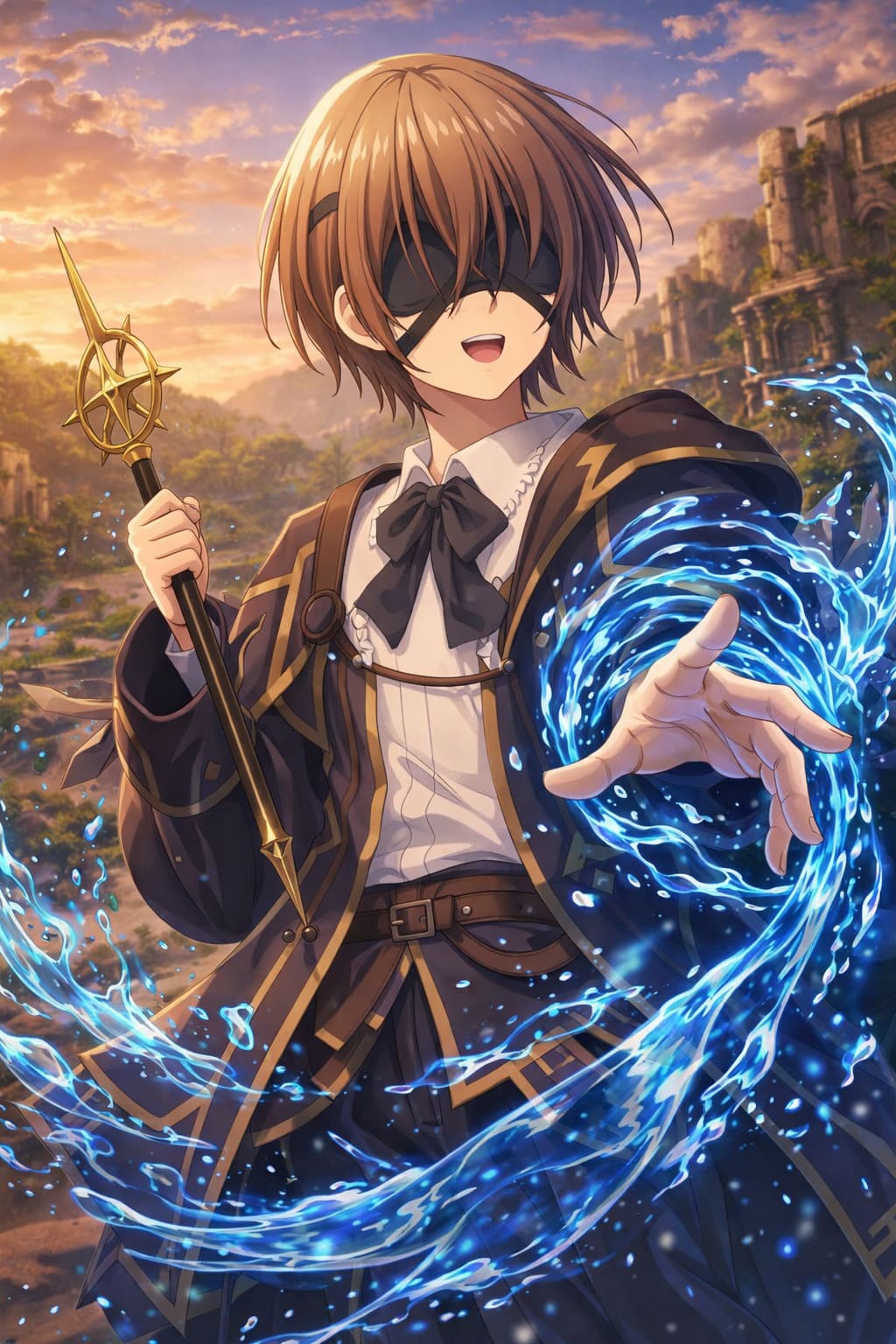
Artist Umibouzu gives visual form to something that’s almost impossible to imagine: how a blind protagonist perceives the world.
- Mana-based vision diagrams
- Water constructs mid-formation
- Spatial “maps” made of droplets
For a story about perception, visual context is narrative power. This alone makes the LN feel like the intended experience.
So… Which One Should You Read?
Read the Web Novel if:
- You want maximum content
- You enjoy raw, experimental storytelling
- You like being far ahead of adaptations
Read the Light Novel if:
- You want the most polished, emotional version
- You care about pacing and character depth
- You’re preparing for the upcoming anime adaptation
The LN isn’t just an edit—it’s a refinement.
Recommended for you: Is Kunon Gurion an overpowered? Kunon the Sorcerer Can See
Final Take
The Web Novel is Kunon learning how to see.
The Light Novel is the world learning how terrifying that vision really is.
If you love Kunon the Sorcerer Can See, the LN doesn’t replace the WN—it elevates it.