Goddess Madoka vs Devil Homura power levels
Power scaling in Puella Magi Madoka Magica has always been a trap for anyone expecting clean numbers or flashy feats. This series doesn’t care about who can blow up more universes. What matters here is authority, narrative position, and who gets to decide how reality itself is allowed to function. When fans debate Goddess Madoka versus Devil Homura, they’re really arguing about two fundamentally different kinds of multiversal dominance.
Both characters operate far beyond conventional power tiers, but their strength comes from radically different places. One becomes a law. The other hijacks the system and locks the administrator in a cage.
Read also: Madoka Magica Movie 4 vs Wraith Arc manga
Ultimate Madoka: Power as Cosmic Law
When Madoka Kaname ascends at the end of the original series, she doesn’t just gain power. She ceases to be a person in the traditional sense. Ultimate Madoka becomes the Law of Cycles, a self-sustaining cosmic principle that governs all magical girl fates across infinite timelines.

Her strength is rooted in karmic destiny. Every timeline Homura ever reset added weight to Madoka’s potential, turning her into a multiversal constant rather than an active ruler.
- Existence Tier: Multiversal+, functioning as a conceptual entity beyond space and time.
- Core Abilities: Preemptive witch erasure, causality manipulation, omnipresent observation.
- Speed And Durability: Immeasurable, as she no longer occupies physical reality.
Importantly, Madoka’s power is largely passive. She doesn’t rule the universe moment to moment. She defines its rules and lets them run automatically. Like gravity, she doesn’t need intent to be absolute.
Read also: Mami Tomoe vs Homura fight breakdown
Devil Homura: Power as Personal Will
Homura Akemi’s transformation in Rebellion breaks every established rule in the franchise. Her power does not come from destiny, contracts, or cosmic balance. It comes from obsession, memory, and love taken to a metaphysical extreme.
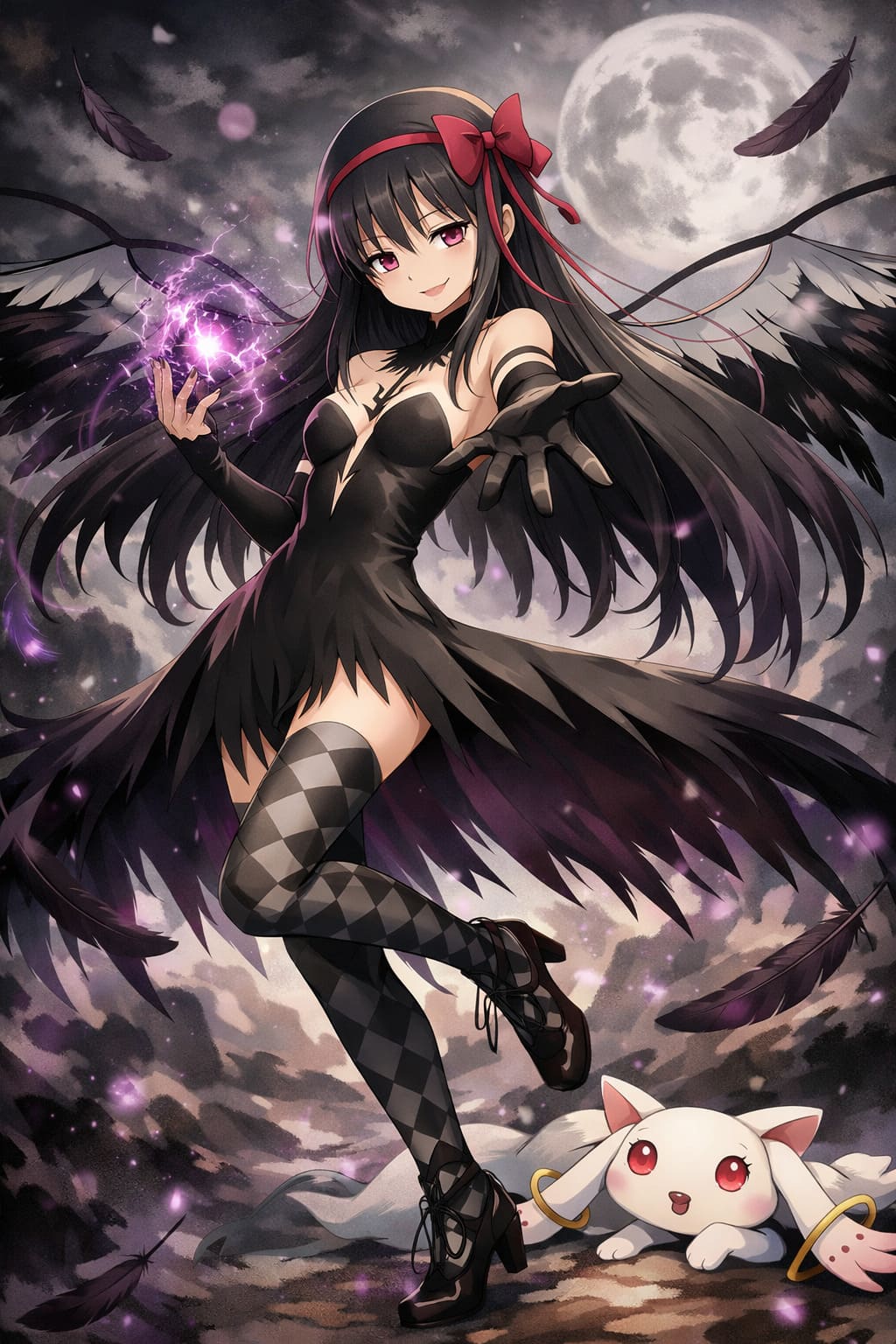
Rather than replacing the Law of Cycles, Homura tears out a piece of it. She isolates Madoka’s human self, suppresses the Goddess aspect, and rewrites reality around that act. This is not lawful power. It is invasive power.
- Existence Tier: Multiversal, with dominance over a suppressed and curated reality.
- Core Abilities: Advanced reality warping, memory rewriting, conceptual containment.
- Source Of Power: Parasitic use of the Law of Cycles combined with overwhelming emotional force.
Unlike Madoka, Homura’s control is active. She micromanages the universe like a personal labyrinth, adjusting memories, roles, and outcomes to maintain stability. Her strength isn’t infinite, but it is deliberate.
Conceptual Strength vs Practical Control
This is where most debates miss the point. In abstract terms, Goddess Madoka should be “stronger.” She is the universe’s logic. Homura is an anomaly exploiting that logic. But Rebellion proves that conceptual superiority does not guarantee dominance.
Homura wins not because she outscales Madoka, but because she acts where Madoka cannot. The Law of Cycles is bound by purpose. Homura is not.
| Aspect | Goddess Madoka | Devil Homura |
|---|---|---|
| Nature | Cosmic Law / Concept | Abstract Ego / Ruler |
| Scale | Infinite Multiverse | Curated Multiverse |
| Agency | Passive Enforcement | Direct Intervention |
| Weakness | Irregular Emotional Events | Long-Term Instability |
Homura’s victory is situational, not absolute. Her system works only as long as her will holds. Madoka’s existence, by contrast, does not rely on emotional maintenance.
Why Homura Is “Winning” Right Now
In the current timeline, Devil Homura is the dominant force because she controls the present. She suppresses Madoka’s memories, neutralizes external interference, and rewrites the emotional landscape of the universe. Madoka may be stronger in theory, but Homura dictates the rules of engagement.
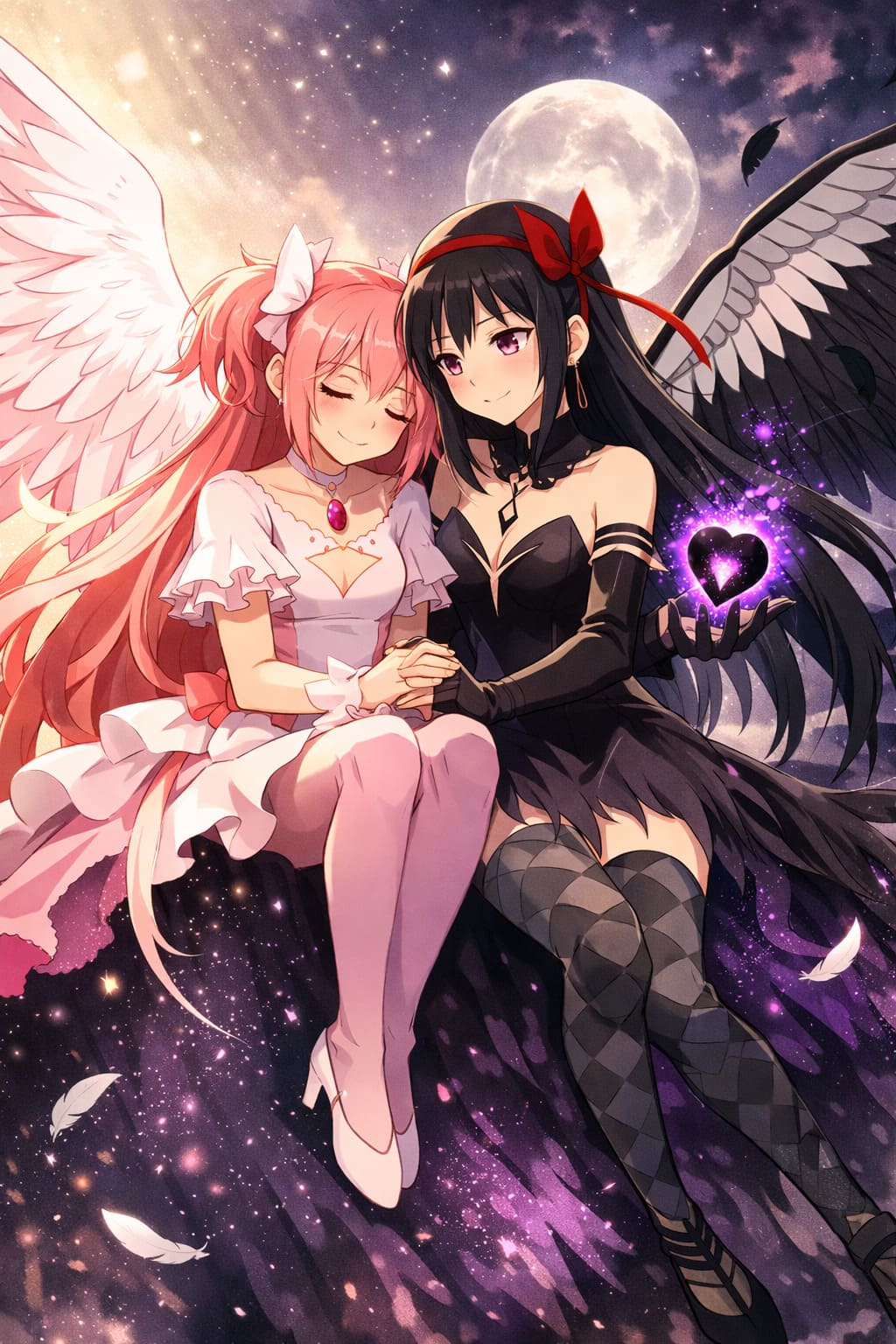
This creates the central tension moving forward. Madoka represents inevitability. Homura represents defiance. One is eternal. The other is burning herself alive to keep the world frozen.
Read also: Tamiya Gantetsusai vs Aza Chōbei: Raw strength comparison Hell’s Paradise
Power in Madoka Magica Is About Choice
Ultimately, Madoka Magica treats power as responsibility rather than firepower. Goddess Madoka sacrifices herself to save everyone. Devil Homura sacrifices everyone’s freedom to save one person. Neither choice is clean. Neither power is stable.
So who is stronger? In a vacuum, Madoka. In reality, Homura. And that contradiction is exactly the point.