Walpurgisnacht witch true identity
Among all the unanswered questions in Puella Magi Madoka Magica, none feels as heavy or as inevitable as Walpurgisnacht. She is not just another Witch on the checklist; she is a force of nature, a recurring apocalypse, and the silent wall that every timeline crashes into. Even after years of guidebooks, interviews, and obsessive frame-by-frame analysis, her true identity remains one of the franchise’s most haunting mysteries.
What makes Walpurgisnacht so fascinating is that the series never treats her like a normal antagonist. She doesn’t stalk alleyways or lure victims into a Labyrinth. She arrives, the world breaks, and everyone else reacts. That alone tells us she exists on a different narrative level than every other Witch we’ve seen.
Related articles: Madoka Magica Movie 4 vs Wraith Arc manga
Official Lore: A Witch Made Of Witches
According to production materials and comments from Gen Urobuchi, Walpurgisnacht is not the corrupted soul of a single magical girl. She is a conglomerate Witch, an evolving disaster born from accumulation rather than transformation. This idea reframes everything we see on screen.

- Fusion Origin: Walpurgisnacht reportedly began as a “Theatre Witch” and expanded by absorbing other Witches over time, stacking despair on despair until she outgrew the need for a Labyrinth.
- Reality As Her Stage: Instead of pulling victims into another space, she overwrites reality itself, turning cities into props and gravity into a joke.
- Shadow Familiars: Her familiars resemble silhouettes of magical girls, often interpreted as visual echoes of the many souls that now exist only as fragments within her body.
This interpretation paints Walpurgisnacht less as a character and more as a system failure. She is what happens when the Incubator cycle runs unchecked for too long.
Related articles: Who is the new girl in Walpurgisnacht Rising trailer
The Mirror Homura Theory
No Madoka discussion stays grounded for long without Homura Akemi entering the picture, and Walpurgisnacht is no exception. One of the most persistent fan theories argues that Walpurgisnacht is a version of Homura from a failed or erased timeline, and the visual language of the series does nothing to shut this down.
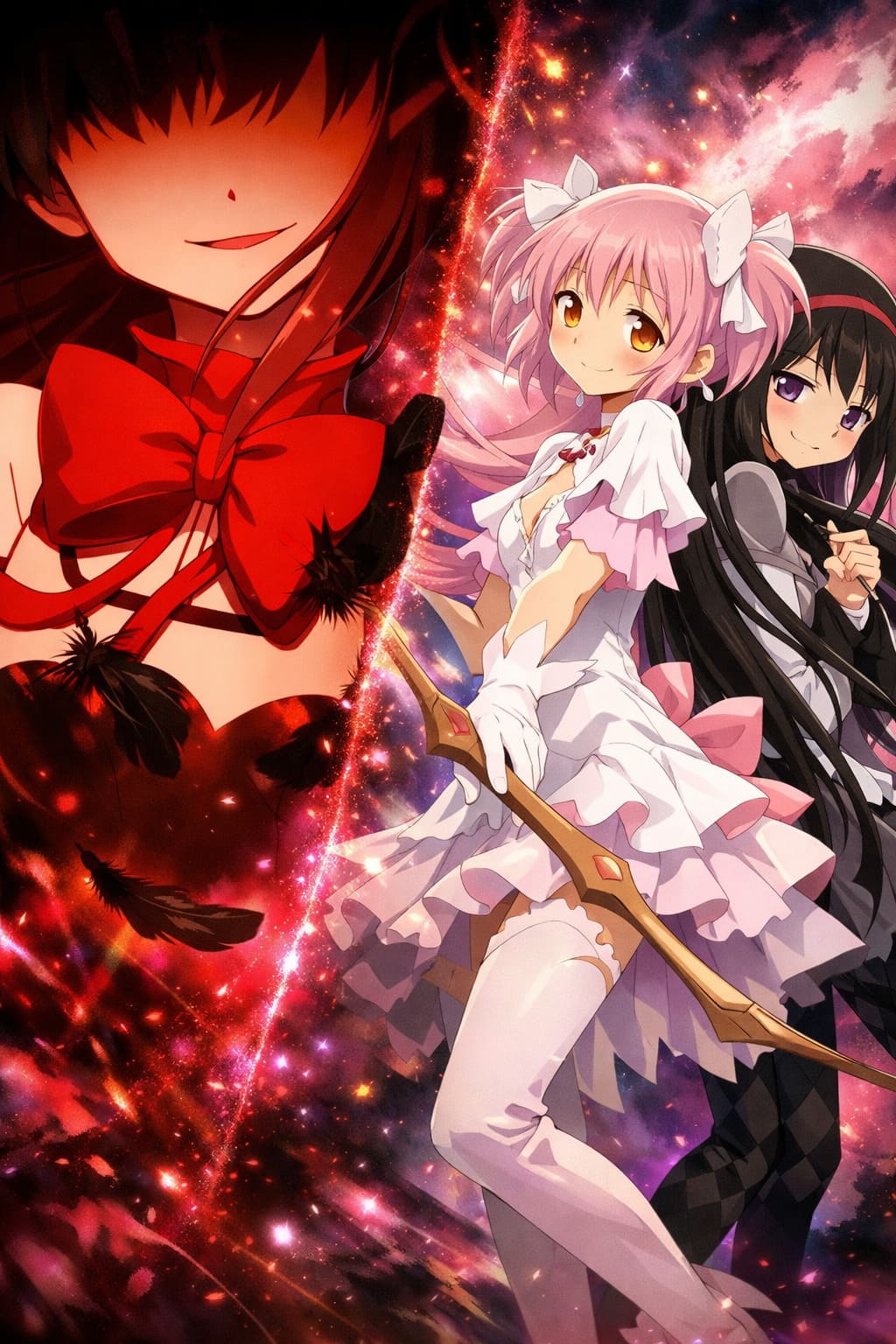
Walpurgisnacht’s clockwork aesthetic, massive gears, and inverted descent from the sky mirror Homura’s obsession with time manipulation. Even more interesting is the symbolic design note from official guidebooks stating that Walpurgisnacht and Madoka’s Witch form, Kriemhild Gretchen, were designed as two halves of an hourglass.
- Upper And Lower Halves: Madoka represents infinite potential and release, while Walpurgisnacht embodies endless repetition.
- Homura As The Sand: Homura’s time loops metaphorically flow between them, grinding both hope and despair into inevitability.
If this theory holds any truth, then Walpurgisnacht is not just a threat Homura faces, but a reflection of what she is constantly becoming.
The First Magical Girl Hypothesis
Another compelling interpretation views Walpurgisnacht as something ancient: possibly the first magical girl, or at least the first to wish on a scale large enough to permanently scar history. Her described nature as a “fool who spins endlessly” aligns disturbingly well with someone who tried to save everyone and instead trapped herself in a repeating curse.
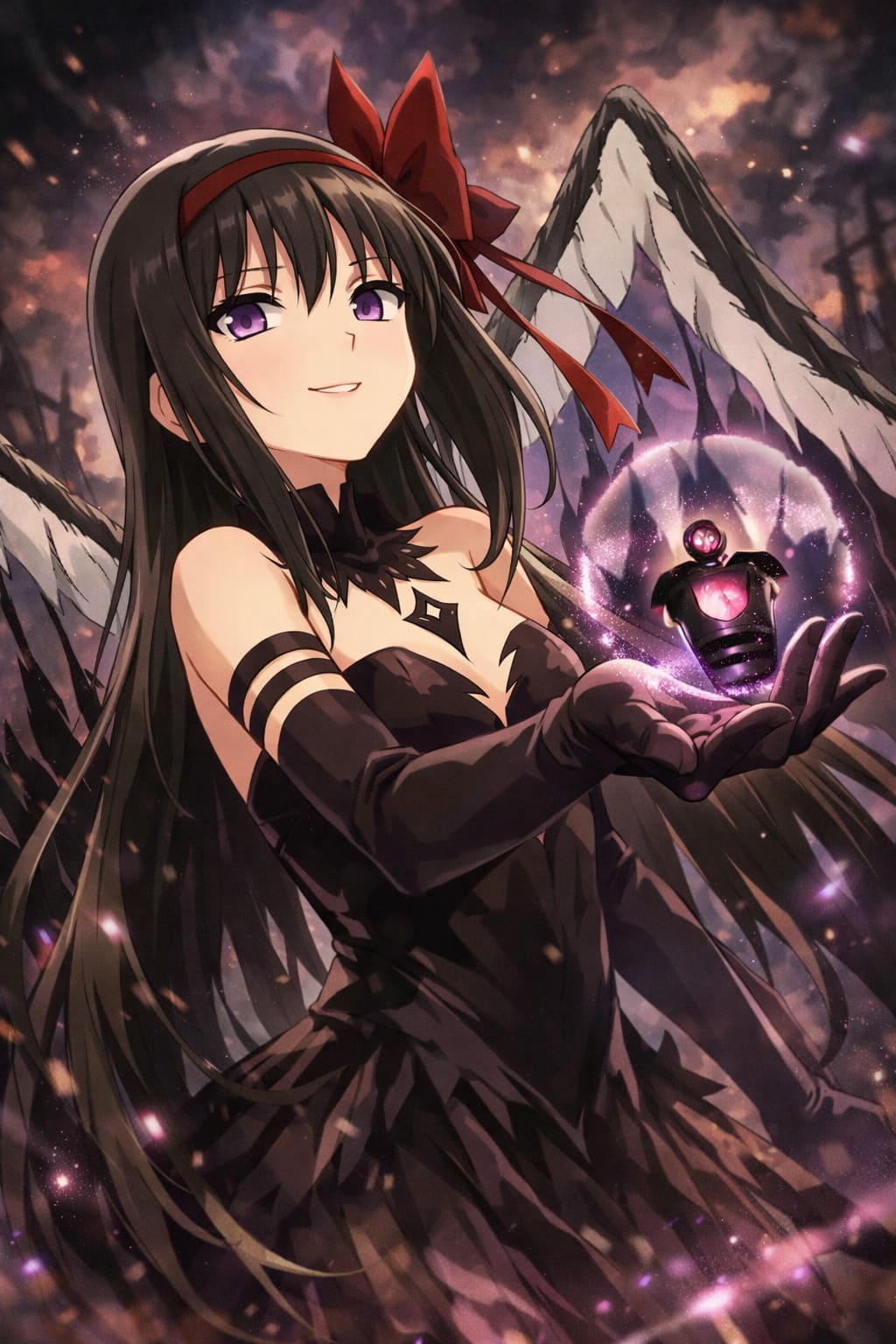
This theory casts Walpurgisnacht as a tragic prototype, a warning sign that the system was broken from the very beginning. Not evil, not malicious, just too large to stop.
Recommended for you: Why Yamada Asaemon Shugen is the most dangerous executioner?
Why Walpurgisnacht Rising Changes Everything
The announcement of Walpurgisnacht Rising feels less like a sequel and more like a promise. The title alone suggests agency, resurgence, and unfinished business. In a world rewritten by Devil Homura, Walpurgisnacht’s return could represent the last remaining contradiction, the original timeline pushing back against artificial order.
Whether the film reveals a single core identity, introduces a new character at the center of the conglomerate, or confirms that Walpurgisnacht is beyond identity altogether, one thing is certain: her mystery was never accidental. It was always waiting for the right moment to collapse inward.
And if Madoka Magica has taught us anything, it’s that inevitability always comes with a face.