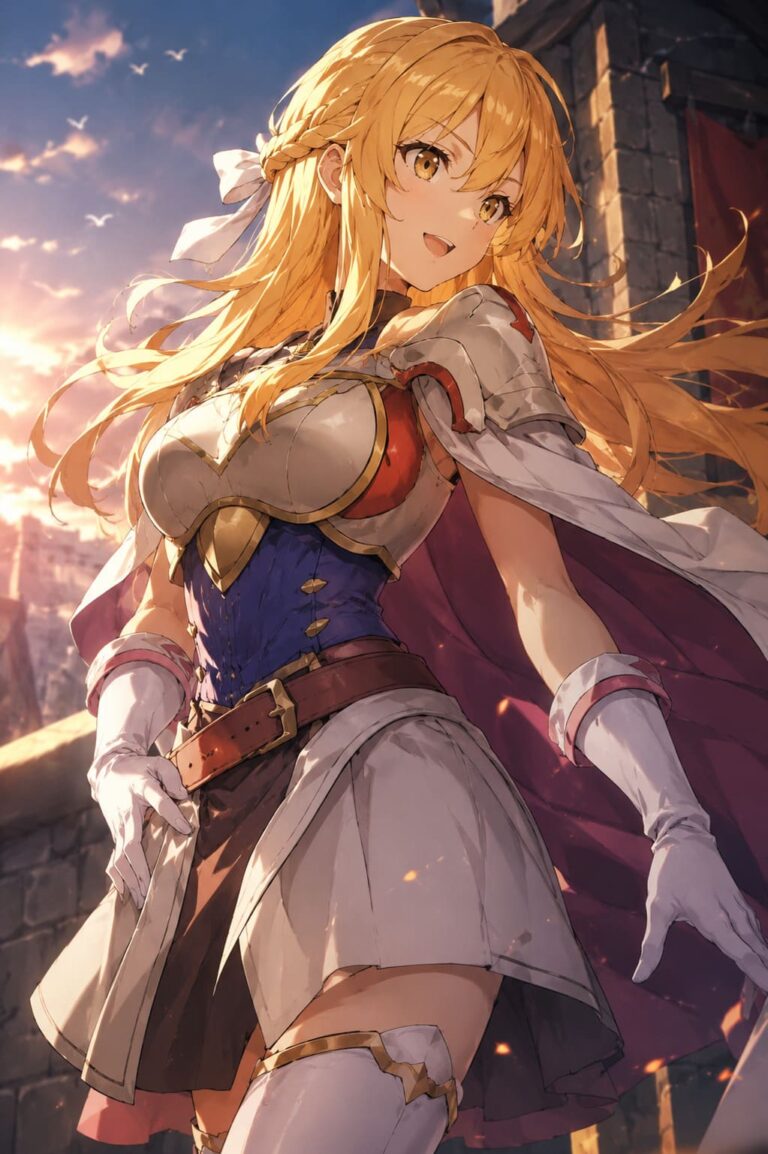
Hitomi Shizuki magical girl theory
For a series built on cosmic despair and god-level entities, it’s strangely fitting that one of the most dangerous characters in Puella Magi Madoka Magica might be the only truly normal girl in the room. Hitomi Shizuki has always existed on the edge of the story, watching magical tragedy unfold just out of sight. And that’s exactly why many fans believe she hasn’t been irrelevant at all, but patiently positioned for something far bigger.
The idea that Hitomi could one day contract with Kyubey refuses to die, and not just because fandom loves a good late-game twist. Narratively, symbolically, and thematically, she may be the one piece still missing from Madoka Magica’s endgame.
Read also: Rien vs Gabimaru: The final boss of Hell’s Paradise
The Missing Third Force
At the highest level of the story, Madoka Magica has evolved into a clash between two absolutes. Ultimate Madoka embodies Hope elevated into law. Devil Homura embodies Love twisted into control. Both are supernatural extremes, locked in a stalemate that no longer has much to do with ordinary human life.

Hitomi represents what neither of them can be anymore: unaltered human reality.
- Power Of Normality: Unlike Madoka and Homura, Hitomi has never stepped outside the human frame.
- Anti-Magic Narrative Role: Gen Urobuchi has suggested in guidebook commentary that Hitomi’s hypothetical wish would be to erase magic entirely.
- Existential Threat: Such a wish would directly negate both the Law of Cycles and Homura’s demon-constructed reality.
If Madoka and Homura are gods arguing over the universe, Hitomi is the human voice asking why gods are involved at all.
Read also: Hatori and Furuta’s Extraordinarily Ordinary Life Chapter 7 Release date, Fan Theories and Spoilers
Karmic Weight Hidden in Plain Sight
One common misconception is that Hitomi lacks karmic potential because she never fought witches or rewound time. But Madoka Magica has always tied karmic weight to proximity, not action. Hitomi is deeply embedded in the emotional core of the original cast.
She is Madoka’s closest friend outside the magical system and the emotional pivot point of Sayaka’s tragedy. Her confession to Kyosuke, often blamed for Sayaka’s fall, actually ties Hitomi directly into the same karmic loop that created Oktavia von Seckendorff.
If Madoka’s godhood was built from timelines, Hitomi’s potential is built from silence. She endured the fallout without answers, without power, and without consent. That kind of unresolved emotional pressure is exactly what Kyubey looks for.
Design Clues and The Green Gap
Fans have long pointed out that the main magical girl lineup is conspicuously missing a green-themed member, a classic staple of mahou shoujo ensembles. Hitomi fits the aesthetic gap almost too perfectly.

- Color Association: Green, traditionally linked to balance, nature, and normalcy.
- Name Symbolism: Shizuki can be read as “quiet moon,” suggesting restraint and observation.
- Possible Magic Type: Sound, resonance, or perception-based abilities.
One popular theory imagines Hitomi wielding a bell or flute, using sound to disrupt illusions and Labyrinths. In the context of Rebellion, this makes her uniquely dangerous. A power that dispels false realities would directly threaten Homura’s constructed world.
Guilt as the Doorway to Despair
Hitomi has always been framed as polite, composed, and emotionally restrained. But Madoka Magica has never treated repression as strength. It treats it as a ticking bomb.
In a universe where memories have been rewritten and happiness carefully curated, Hitomi’s intuition becomes a liability. If she realizes her relationship with Kyosuke is artificial, or that her life has been edited without her consent, her despair would be devastating precisely because it comes from betrayal, not loss.
Theorized Witch forms often describe Hitomi as “The Blind Queen,” a being who enforces silence and ignorance on others. It’s a cruel mirror of her human role: the girl who survived by not seeing, now forcing others to do the same.
Read also: Most powerful characters in Scum of the Brave manga
Why Walpurgisnacht Rising Makes This Theory Stronger
With Walpurgisnacht Rising approaching, the story is poised at a breaking point. Madoka and Homura represent infinite escalation. Neither can truly win without destroying the meaning of their own wishes.

This is where a human wish matters.
- Breaking The Stalemate: A mortal contract could override divine deadlock.
- Ending Interference: Hitomi could be the one to say that gods and demons no longer belong in human lives.
- Homura’s True Fear: Not loss, not death, but a world so normal that her sacrifice becomes meaningless.
If Hitomi ever meets Kyubey under the right circumstances, she wouldn’t become a savior or a villain. She would become a reset button.
The Quietest Ending Possible
Madoka Magica has never been about flashy finales. Its most devastating moments are small, quiet, and deeply personal. Ending the franchise with Hitomi Shizuki erasing magic from the world would be the ultimate thematic conclusion.
No gods. No demons. No contracts. Just a painfully ordinary world where everyone has to live with what they chose.
And that might be the one ending Homura Akemi can’t protect Madoka from.