Is Firefly Wedding Manga Finished or Ongoing? Full Status, Ending Explained, and Anime News
Some manga endings leave you smiling. Others leave you staring at the final page, wondering whether you should feel happy, disappointed, or a little bit of both. Firefly Wedding, also known as Hotaru no Yomeiri, somehow manages to inspire all three reactions.
The good news for anyone waiting to binge the entire story is that the main Firefly Wedding manga is officially finished. Oreco Tachibana’s dark historical romance reached its conclusion with Chapter 79 on February 2, 2026, wrapping up the central story of Satoko Kirigaya and Shinpei Goto.
Originally launched on January 1, 2023, the series ran for just over three years and collected its chapters into 13 volumes. That’s a relatively manageable commitment for readers who want a complete romance with plenty of suspense, emotional turmoil, and genuinely uncomfortable character dynamics.
But finishing the main story doesn’t mean the franchise has disappeared. Official side stories, physical manga releases, and a television anime adaptation have kept Firefly Wedding in the spotlight throughout 2026.
There’s also one detail prospective readers should know before getting attached: the ending is controversial. Some fans consider it a satisfying reward for two characters who have suffered more than enough. Others believe the final chapters undermine the very conflict that made the manga so compelling in the first place.
What Is Firefly Wedding About?
Set during Japan’s Meiji era, Firefly Wedding follows Satoko Kirigaya, the daughter of a wealthy and influential nobleman. From the outside, Satoko seems to have the perfect life. She’s beautiful, comes from a prestigious family, and should have every opportunity to secure a comfortable future.
Unfortunately, her circumstances are much darker than they appear.

Satoko suffers from a severe heart condition that threatens to cut her life short. Aware that she may not have much time left, she becomes determined to arrange a suitable marriage before her health deteriorates. Her goal isn’t simply to find love. She wants to protect her family’s financial security and social standing, even if that means sacrificing her own happiness.
Then everything goes wrong.
Satoko is kidnapped by criminals, and among them is Shinpei Goto, a ruthless assassin hired to kill her. Facing what appears to be certain death, she comes up with a desperate plan: she offers to marry Shinpei if he agrees to spare her life and turn against the people who hired him.
It’s a ridiculous proposal under normal circumstances. Here, it might be her only chance to survive.
Satoko initially treats the promise as a convenient lie. She intends to escape her predicament and deal with the consequences later. Shinpei, however, doesn’t see their arrangement as a temporary bargain. He becomes intensely attached to her, interpreting the proposed marriage as something genuine.
And that’s where the story finds its most fascinating source of tension.
Shinpei isn’t a conventional romantic hero. His devotion can be frightening, his behavior is often disturbing, and his understanding of love is tangled up with obsession and violence. Satoko, meanwhile, has to navigate a relationship in which the person protecting her is also someone she has every reason to fear.
The result is a romance that deliberately makes readers uncomfortable. It asks whether affection can exist alongside manipulation, whether trust can grow out of coercion, and whether two deeply damaged people can build something meaningful together.
I wouldn’t recommend Firefly Wedding to anyone looking for a straightforward, feel-good historical romance. Its appeal lies precisely in how unpredictable and morally complicated the relationship becomes.
Firefly Wedding Chapter 79 Ending Explained
Warning: Major spoilers for the manga finale below.
For much of the series, Satoko’s heart condition hangs over the story like a countdown. Her limited life expectancy gives the romance an additional layer of urgency. Every moment she spends with Shinpei feels precious because the possibility of losing her is always there.
That setup naturally encourages readers to expect a tragic conclusion. The title itself evokes something beautiful but fleeting, and the manga repeatedly reinforces the idea that Satoko might not have a future beyond her immediate struggle for survival.
However, Chapter 79 takes the story in a different direction.
What Happens to Satoko and Shinpei?
In the final stretch, the political and criminal conflicts surrounding the couple reach their resolution. Shinpei receives a pardon for his crimes through the intervention of the Duke’s son, while Satoko’s father is arrested for his involvement in the wider schemes.
With their immediate enemies and obstacles out of the way, the couple finally gets an opportunity to live without constantly running from danger.
Shinpei takes Satoko to a secluded house he has found for them. Compared with the violence and uncertainty that have defined much of their relationship, this quieter setting represents the possibility of a fresh start.
Then comes the biggest surprise.
Satoko survives her supposedly limited lifespan and reaches old age. Rather than ending with her early death, the manga jumps decades into the future, showing the couple reunited in their later years after sharing a long life together.
It’s an unmistakably happy conclusion for the central relationship, at least in terms of the couple’s ultimate fate.
But whether it’s a satisfying ending is another question entirely.
Why the Happy Ending Divided Readers
The controversy isn’t simply about whether Satoko deserved to survive. Of course she did. The problem for some readers is that her illness had been one of the story’s defining narrative stakes.
If the series spends years emphasizing that Satoko’s life could end prematurely, readers naturally build their expectations around that possibility. Her mortality shapes her decisions, influences her marriage plans, and makes her relationship with Shinpei feel so urgent.
When the finale reveals that she lives into old age, some fans feel that the story has sidestepped a conflict it spent years establishing.
Others see it differently. They argue that Satoko and Shinpei have endured enough suffering to justify a peaceful future, and that the manga doesn’t need to punish its characters with tragedy just because the premise initially suggested one.
I can understand both sides. A happy ending isn’t inherently weaker than a tragic one, and nobody should assume that a character must die simply because her illness has been emphasized throughout the story. Still, a major reversal needs to feel earned. For readers who wanted a more gradual explanation of Satoko’s survival, the time jump may feel less like a satisfying resolution and more like a shortcut.
Why Fans Are Still Arguing About the Finale
Following Chapter 79, discussions across Reddit, TikTok, and Instagram reflected just how differently readers interpreted the conclusion. The debate generally falls into two camps.
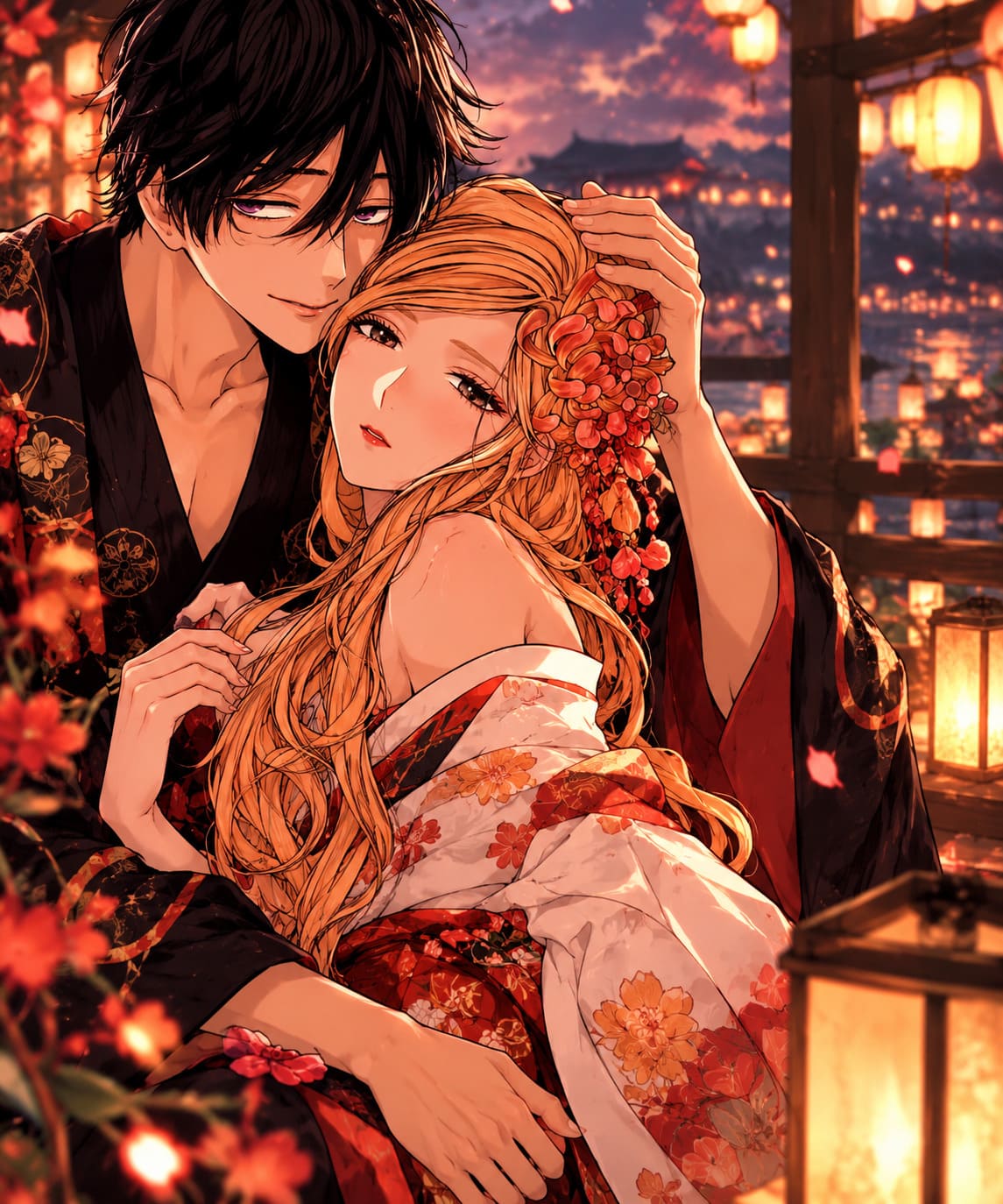
1. The Disappointed Readers: A Rushed Conclusion
Critics argue that the final chapters resolve too much, too quickly. Satoko’s survival is the most obvious sticking point, but it’s not the only complaint.
Some readers also wanted more development for Shinpei, particularly regarding his violent past, obsessive attachment, and the possibility of genuine moral change. His pardon helps resolve the practical consequences of his crimes, but legal forgiveness and personal redemption aren’t necessarily the same thing.
For a character as psychologically complicated as Shinpei, that distinction matters.
The ending also leaves some fans wishing that the final stretch had spent more time exploring how the couple transitions from a relationship built on desperation and control into a lasting partnership.
Their criticism isn’t necessarily that the characters should have ended up unhappy. Rather, they wanted the story to do more work to make its happy ending convincing.
2. The Happy-Ending Supporters: Satoko and Shinpei Deserved Better
On the other side, readers welcomed the decision to let Satoko and Shinpei grow old together.
Their relationship has been shaped by danger, manipulation, trauma, and emotional instability. For fans who became invested in the characters despite their many flaws, the final time jump offers something that dark romances don’t always provide: the chance to imagine what happens after the immediate crisis is over.
The ending also subverts expectations associated with tragic romance. Satoko isn’t defined by an early death, and Shinpei doesn’t have to spend the rest of his life mourning the person who changed him.
Supporters may acknowledge that the conclusion could have used more development while still appreciating its emotional destination.
Ultimately, the debate demonstrates one of Firefly Wedding’s greatest strengths. Its characters inspire strong reactions because the relationship at the center of the story is never simple. Even readers who disagree about the ending can recognize why the couple’s fate matters so much.
And regardless of where you stand, criticism of the manga should never become an excuse to harass Oreco Tachibana. Readers can dislike a creative decision without turning that disagreement into a personal attack on its creator.
Firefly Wedding Spin-Offs: What Happens After Chapter 79?
Although the main manga has concluded, readers aren’t entirely finished with the world of Firefly Wedding. Official side stories have expanded the setting and offered additional perspectives on characters beyond Satoko and Shinpei.
| Spin-Off | What’s It About? |
|---|---|
| Koi to Doku (Love and Poison) | A two-part story focusing on the dark relationship between Asagiri and Mitsueda. |
| Hotaru no Yomeiri Gaiden: Hitokiri to Youdou (The Assassin and the Child) | A five-chapter side story exploring Shinpei’s journey after the events surrounding Chapter 78. |
Koi to Doku shifts attention toward another complicated relationship, giving readers a chance to explore the same unsettling atmosphere from a different perspective. Its focus on an assassin and a prostitute fits naturally into a world where affection, survival, and morally questionable choices frequently collide.
The Assassin and the Child, meanwhile, is particularly interesting for fans who want more insight into Shinpei. The side story explores his past and his attempts at atonement, potentially providing additional context for a character whose development remains one of the most debated aspects of the main manga.
These stories don’t replace the original ending, nor do they mean that the main serialization has resumed. Think of them as supplementary material for readers who aren’t ready to leave the characters and their world behind.
The series’ physical publication is also continuing. Volume 13, the final collected volume, and a special volume were scheduled for release in Japan on October 18, 2026. The franchise’s combined physical and digital circulation has reportedly surpassed five million copies, highlighting just how far the series has reached beyond its original readership.
Firefly Wedding Anime: Release Date and What to Expect
The anime adaptation is another major reason the franchise remains relevant after the manga’s conclusion.
According to the supplied release details, the television adaptation premiered on October 9, 2026, as part of Fuji TV’s Noitamina programming block. David Production, the studio known for JoJo’s Bizarre Adventure and Fire Force, is handling the animation, with Takahiro Kamei directing. International distribution includes Crunchyroll.
For newcomers, the anime offers an opportunity to experience Satoko and Shinpei’s story without having to wait for future manga chapters. Existing readers, meanwhile, can see whether the adaptation captures the unsettling chemistry that makes the original work so distinctive.
I think the casting, atmosphere, and direction will be especially important here. Firefly Wedding isn’t just about what happens between its leads. It’s also about the uncomfortable space between what Satoko says and what she actually feels, or the difference between Shinpei’s apparent tenderness and the frightening intensity beneath it.
If the anime can preserve that tension, it has the potential to appeal to viewers who enjoy psychological drama as much as romance.
The completed source material also gives the production team a clear overall narrative to adapt. That doesn’t guarantee a perfect adaptation, of course. Pacing, episode limits, and decisions about which scenes to emphasize can still make a significant difference.
Some fans have also speculated that the anime could handle the controversial final arc differently through pacing or structural adjustments. At this stage, however, speculation shouldn’t be confused with confirmation. There is no established reason to assume that the anime will change Satoko’s ultimate fate.
For now, the most interesting question is whether the adaptation can make the relationship’s emotional progression feel as compelling on screen as it does on the page.
How Strong Is Shinpei Goto? Firefly Wedding’s Lethal Assassin Analyzed
Should You Read Firefly Wedding After Its Ending?
If you’re considering picking up Hotaru no Yomeiri, I’d say the series is worth a look, provided you know what kind of romance you’re getting into.
Here’s what makes it appealing:
- A memorable central relationship: Satoko and Shinpei are compelling precisely because their dynamic is so far from a conventional romance.
- A strong historical atmosphere: The Meiji-era setting adds social pressure and danger to an already tense story.
- A completed main narrative: You can read all 79 chapters without waiting for the next installment.
- Plenty to discuss afterward: The finale, Shinpei’s character development, and the couple’s future all invite debate.
- Additional content: The official spin-offs provide more material for readers who want to stay in this world.
The biggest caveat is the ending. If you need every plot thread resolved carefully and every character arc to develop at a measured pace, the finale might frustrate you. Readers who prefer tragic romance may also find the final time jump at odds with the expectations established earlier in the story.
But if you’re drawn to morally complicated characters, intense emotional stakes, and romances that refuse to play by comfortable rules, Firefly Wedding has plenty to offer.
Final Verdict: Is Firefly Wedding Worth Reading in 2026?
Yes, the main Firefly Wedding manga is finished, with Chapter 79 marking the end of Satoko and Shinpei’s central story. The spin-offs and anime adaptation have kept the franchise alive, but readers shouldn’t confuse additional content with a continuation of the original serialization.
As for the ending itself, I don’t think every reader needs to love it for the journey to be worthwhile. The manga builds a distinctive romance around fear, obsession, vulnerability, and the desperate desire to survive. Its conclusion may not satisfy everyone, but the questions it raises about love and redemption are a big part of what makes the series memorable.
What matters most is whether the final chapters earn the emotional payoff you’re looking for. Some readers will find Satoko and Shinpei’s long life together genuinely moving. Others will wish the story had stayed more faithful to the tragic possibilities it established from the beginning.
Either way, Firefly Wedding is a fascinating choice for fans of dark romance who want something more complicated than a straightforward love story.
And if you’re planning to watch the anime, reading the manga first gives you the full picture of the relationship—and lets you decide for yourself whether that divisive ending is a beautiful payoff or a missed opportunity.