JoJo Steel Ball Run Anime Ending Theme Revealed: Why Fans Are Furious Over Yuki Chiba and Dr. Luke’s “Dead or Alive”
I knew the return of JoJo’s Bizarre Adventure: Steel Ball Run was going to be chaotic. That is basically the natural state of anything JoJo-related. But I honestly did not expect the ending theme to become one of the biggest talking points around the anime. After the long wait for Stage 2, fans finally got another episode, another chunk of David Production’s gorgeous adaptation, and then the credits rolled with “Dead or Alive” by Yuki Chiba. My immediate reaction was basically: wait, seriously?
The funny thing is that I don’t think the controversy comes from one single problem. It is the combination of everything. Steel Ball Run is one of those stories where the music feels like it should be part of the identity of the adaptation, especially because the manga itself is so strongly connected to American culture, classic rock references, and that strange mixture of Western adventure and completely unhinged JoJo insanity. So when the anime suddenly abandons the familiar licensed-song formula for an original Japanese hip-hop track, it feels like somebody moved the furniture around in your house while you were asleep.
“Dead or Alive” Is a Completely Different Kind of JoJo Ending
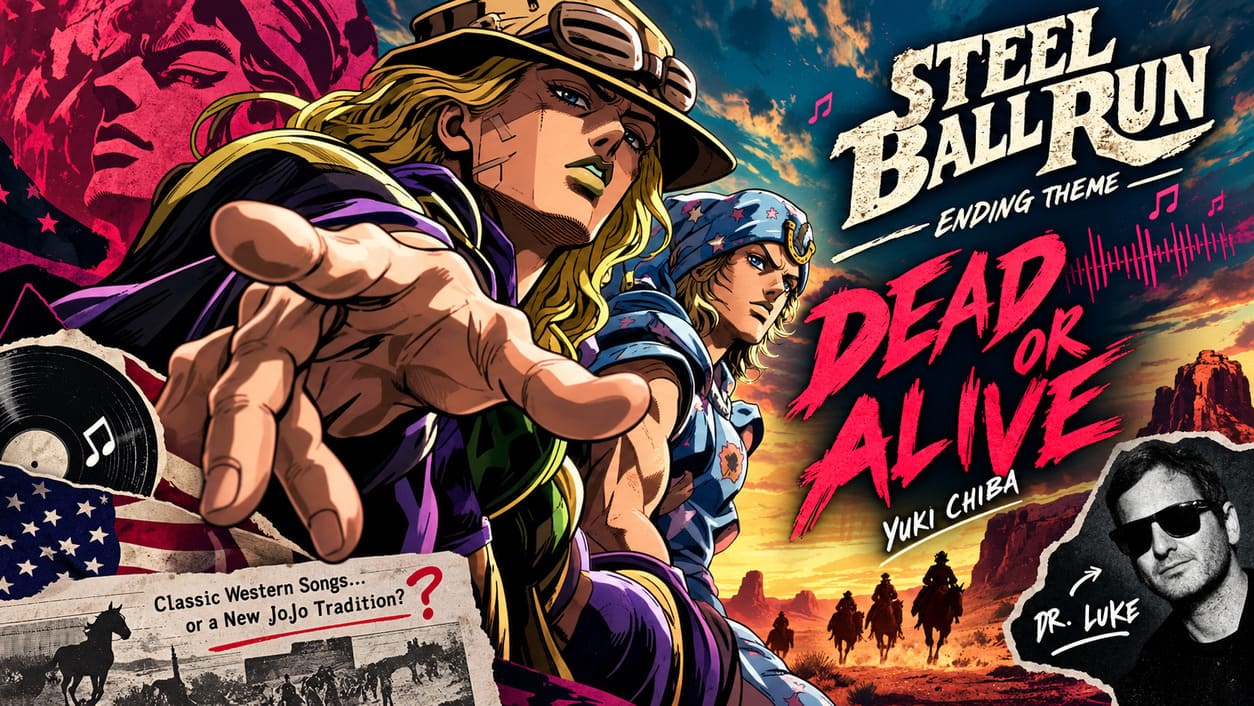
The new ending theme, “Dead or Alive,” is written and performed by Japanese rapper and singer Yuki Chiba. The Japanese title, “Shinukaikiruka,” ties directly into the life-or-death mentality of the Steel Ball Run race, and the production reportedly leans heavily into sparse hip-hop rhythms, percussion, electronic touches, and Chiba’s distinctive vocal style.
On paper, that sounds pretty reasonable. Steel Ball Run is absolutely a story about survival, competition, desperation, and people gambling everything on a race that is much more dangerous than its premise initially suggests. The problem is that the song doesn’t necessarily sound the way many fans imagined Steel Ball Run would sound. There is a huge difference between a song fitting the themes of a story and a song fitting the world of a story, and that distinction is where a lot of the backlash comes from.
There is also a rather unexpected name attached to the track: Dr. Luke, the American producer Lukasz Gottwald. He is credited as composer and producer, while MIO.O handles the string arrangements and Serban Ghenea is credited with mixing. That international combination is certainly unusual for a JoJo ending, and it has made the song much harder to discuss as simply a creative musical choice.
JoJo Fans Were Trained to Expect Something Else
This is the part that I think explains the reaction better than anything else. JoJo endings have never felt like ordinary anime endings. Ever since Phantom Blood arrived in 2012, the series has used famous Western songs to create these bizarre little musical time capsules after episodes full of supernatural violence, dramatic poses, and screaming.
| JoJo Part | Notable Ending Theme | Why Fans Remember It |
|---|---|---|
| Parts 1–2 | “Roundabout” — Yes | The instantly recognizable classic that became inseparable from JoJo memes |
| Part 3 | “Walk Like an Egyptian” — The Bangles | A wildly recognizable pop-rock choice for Stardust Crusaders |
| Part 4 | “I Want You” — Savage Garden | A perfect snapshot of the strange pop atmosphere surrounding Diamond Is Unbreakable |
| Part 5 | “Freek’n You” — Jodeci | Initially shocking, but eventually became part of Golden Wind’s identity |
| Part 6 | “Distant Dreamer” — Duffy | A softer, dreamier contrast to Stone Ocean’s increasingly brutal story |
That history matters. Fans don’t just wait for a JoJo ending to see another cool animation sequence. They wait to discover the song. It became a little tradition inside the larger tradition, and every new part created another opportunity to argue about what classic track would somehow become the soundtrack to thousands of memes.
With Steel Ball Run, the speculation became especially intense because the setting seemed to practically beg for a legendary Western rock song. The story takes place across an alternate-history version of America, with horses, deserts, frontier towns, enormous landscapes, and a dangerous cross-country race at its center. Naturally, fans started throwing around possibilities such as Fleetwood Mac’s “The Chain,” “Tusk,” America’s “A Horse with No Name,” and even more modern options like Lil Nas X’s “Old Town Road.”
So when “Dead or Alive” arrived instead, I completely understood why some people felt disappointed. This wasn’t simply “I don’t like this song.” For longtime fans, it felt like one of the rules of the JoJo experience had quietly disappeared.
The Internet Immediately Did What the Internet Does
Within minutes, fan communities were dissecting the ending from every possible angle. Some people hated the repetitive chorus. Others couldn’t get past the horse-hoof sounds worked into the beat. And then there were the fans who basically shrugged and said, “This is JoJo, of course the ending is weird.” Honestly, that last group has a point.
Personally, the horse sounds are where the track starts feeling a little too literal for me. I understand the idea. Horses are everywhere in Steel Ball Run, the race is the entire premise, and the production wants the ending to communicate that immediately. But when you can almost hear the creative meeting where somebody says, “What if we put horse hooves in the beat?”, the illusion disappears a little.
- The song is dramatically different from previous JoJo endings.
- The repeated references to Steel Ball Run and the race have become a major meme.
- The Western setting makes the modern hip-hop production feel especially unexpected.
- The Dr. Luke credit has created an entirely separate discussion around the song.
But here’s the frustrating part: the actual visuals are incredible. The ending sequence reportedly uses stylized 3D imagery, dramatic lighting, statues, slow camera movements, and striking compositions featuring characters such as Johnny Joestar, Gyro Zeppeli, Mountain Tim, and Funny Valentine. The animation itself feels much closer to the kind of extravagant visual flex fans expect from a JoJo ending.
And that contrast makes the music debate even louder. The visuals are apparently giving people exactly the kind of cinematic Western atmosphere they wanted, while the music is taking them somewhere completely different. It creates the bizarre situation where fans aren’t necessarily asking for a new ending sequence at all. They just want to replace the audio.
Fan-Made Replacements Are Already Part of the Conversation
One of my favorite things about anime fandom is how quickly disappointment turns into creativity. Instead of simply complaining about “Dead or Alive,” fans have started putting different songs over the official visuals, particularly classic Western-flavored tracks that they believe better match the imagery. Fleetwood Mac and America have become obvious candidates, and the resulting edits have turned the ending into a giant community experiment.
That’s actually pretty telling. When people take an official sequence, preserve almost all of the animation, and only change the music, they’re effectively saying that the visual direction works for them. The argument isn’t necessarily that David Production failed at creating a Steel Ball Run ending. It’s that the musical interpretation doesn’t line up with the mental soundtrack many viewers had already built during years of waiting for the adaptation.
And let’s be honest, Steel Ball Run has existed in the imagination of manga readers for a very long time. Everyone already had their own version of this anime in their head. No official ending was ever going to satisfy every imagined version.
Then There’s the Dr. Luke Debate
The Dr. Luke credit makes the situation considerably more complicated because the discussion is no longer only about artistic taste. Gottwald became a controversial figure following his long legal dispute with Kesha, who accused him of sexual, physical, and emotional abuse. The legal conflict was settled, and the parties issued a joint statement in 2023, but debate surrounding the allegations and Gottwald’s public reputation has continued.
For Western JoJo fans who recognized the name immediately, seeing him connected to a major anime ending was surprising. Some viewers have raised ethical concerns about his involvement and about how royalties and production money associated with the track are distributed. Others have separated the song itself from the wider controversy and focused strictly on whether the music works for Steel Ball Run.
Those are two different conversations, and I think it is useful not to blur them together. You can dislike the song because it doesn’t fit your interpretation of the setting, while someone else can have concerns about the producer involved for reasons that have nothing to do with the music. The fact that both debates appeared at the same time is a big reason the reaction became so intense so quickly.
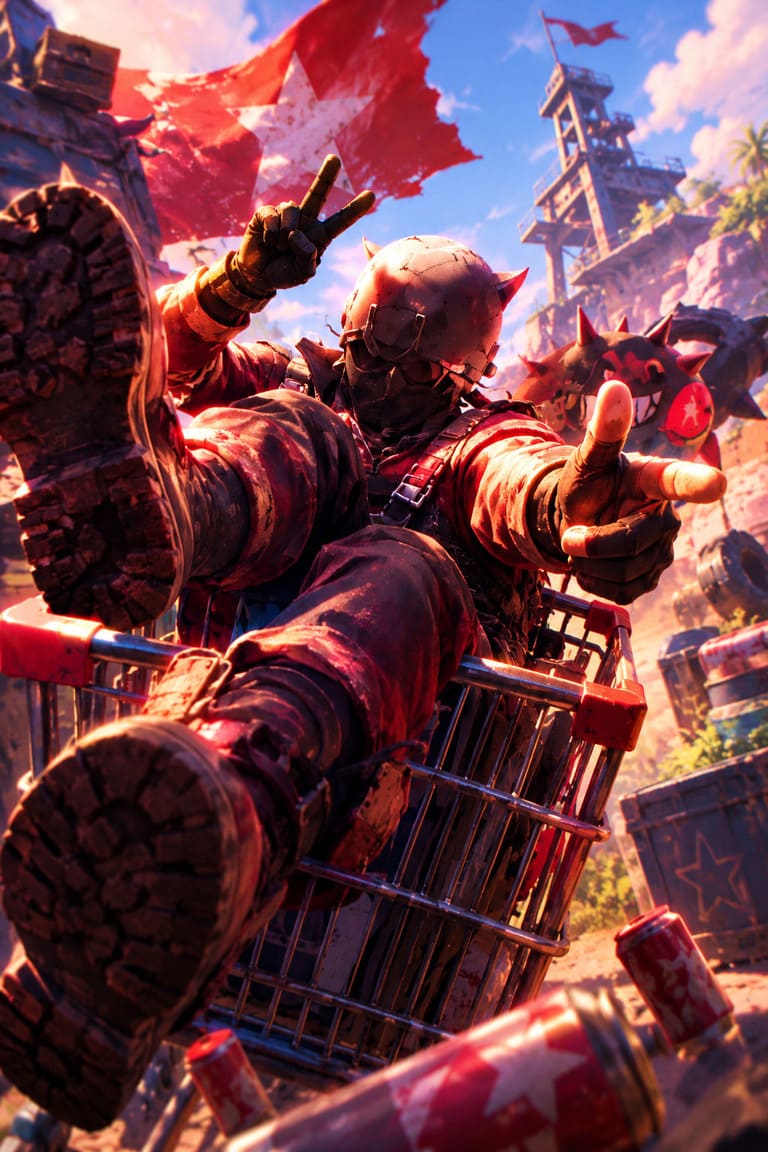
“SPIN” Makes the Comparison Even More Brutal
The timing also doesn’t help “Dead or Alive.” Around the same period, the anime’s new opening theme, “SPIN” by Japanese band Kroi, was receiving an extremely enthusiastic response from fans. And after hearing the two tracks back-to-back, I can understand why the contrast is so obvious.
“SPIN” reportedly pulls from spaghetti Western music, surf rock, funk, soul, and modern hip-hop while still sounding unmistakably like Kroi. That mixture feels almost tailor-made for Steel Ball Run because it acknowledges the American setting without simply pretending the anime was made in the 1890s. It captures the weirdness of JoJo while still giving the world a musical identity.
That’s what I wanted from the ending, too. Not necessarily an old Western song, but something that made me feel like I was riding through the American frontier with Johnny and Gyro. “SPIN” seems to understand that balance immediately, while “Dead or Alive” feels more interested in making a modern statement.
Could “Dead or Alive” Eventually Grow on Fans?
This wouldn’t be the first time JoJo fans hated something at first and then gradually accepted it. The franchise has always enjoyed making choices that sound completely ridiculous when described out loud. Give a strange opening or ending enough weeks, enough memes, and enough emotional association with important episodes, and suddenly the song becomes impossible to imagine without the characters.
That’s the big question for “Dead or Alive.” Right now, fans are hearing it without years of emotional attachment. Once Johnny, Gyro, and the rest of the cast have gone through major turning points while this song plays every week, the association could become much stronger. I wouldn’t be surprised if people who currently want to mute the credits eventually start singing along to the most annoying part of the chorus.
For now, though, I’m firmly in the “I need to hear it a few more times” camp. I don’t think an unconventional JoJo song is automatically a bad choice, and I actually like that David Production isn’t simply repeating a formula forever. But I also understand why longtime fans feel robbed of one of the most fun traditions surrounding each new part.
The Steel Ball Run Experiment Has Only Just Started
At the end of the day, “Dead or Alive” is fascinating precisely because it has created such a strong reaction. The song has forced fans to talk about what makes a JoJo ending feel like a JoJo ending in the first place: the music, the era, the references, the visual style, and the strange ability of the franchise to turn an unexpected song into something permanently associated with its characters.
Steel Ball Run still has a long road ahead, and this is only one piece of a much bigger adaptation. Maybe “Dead or Alive” will eventually become one of those tracks everyone remembers fondly because it was there during the wildest moments of the series. Or maybe the community will keep replacing it with Fleetwood Mac forever. Either way, I have a feeling JoJo fans are going to be arguing about this ending for a very long time.