Just Like Mona Lisa Anime Officially Announced: Studio SHAFT to Animate Transcendent Coming-of-Age Manga
Some anime announcements generate excitement. Others generate curiosity. But every once in a while, a project comes along that immediately makes longtime anime fans stop scrolling and think, “Wait, this could be something special.”
That was exactly my reaction when it was finally confirmed that Just Like Mona Lisa (Seibetsu “Mona Lisa” no Kimi e.) is getting a television anime adaptation, with none other than Studio SHAFT handling production.
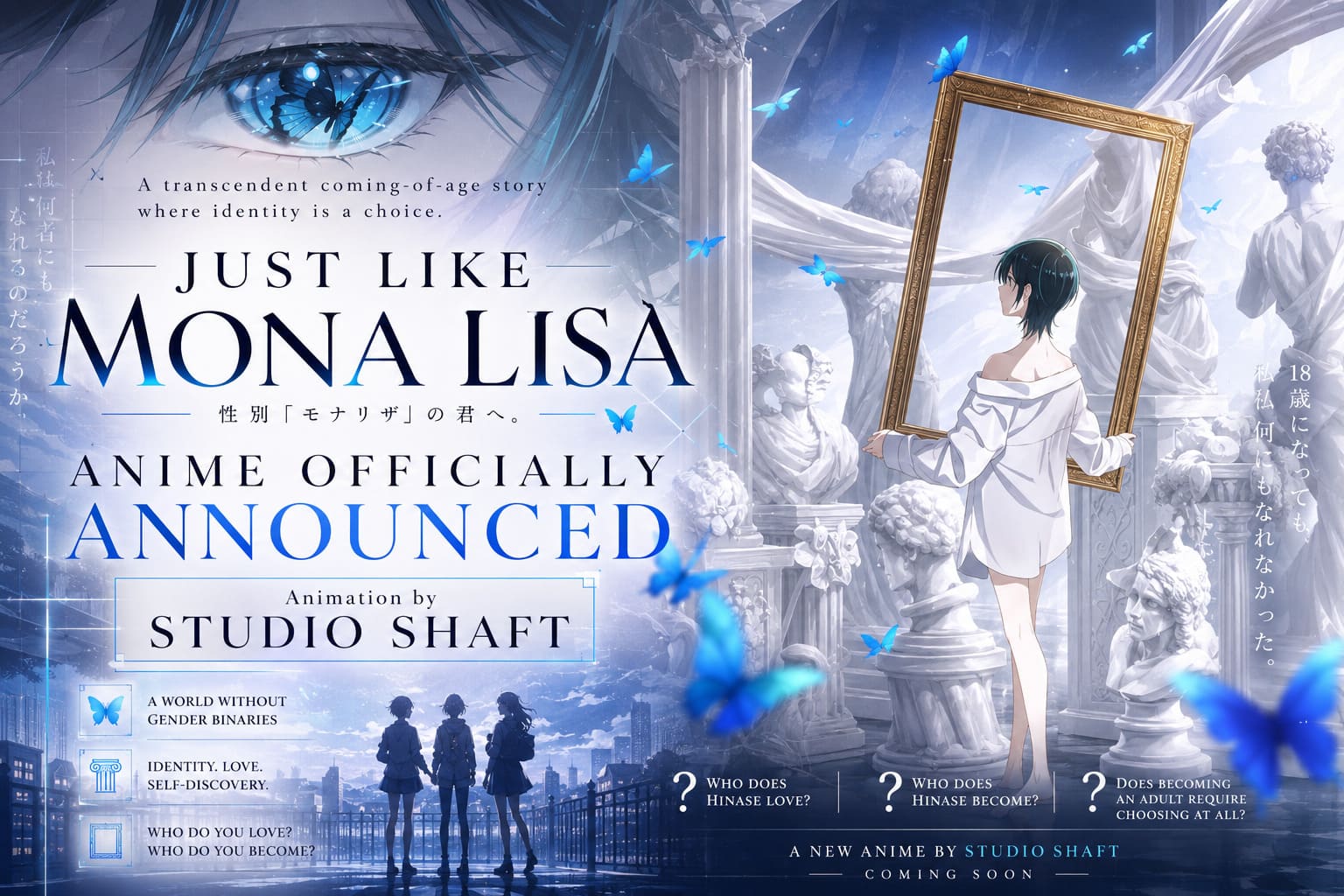
As someone who has spent years watching SHAFT transform unconventional stories into unforgettable visual experiences, I honestly can’t think of a studio more suited for this manga. The moment the announcement dropped, it felt less like a surprise and more like a realization that this adaptation had somehow always been destined to happen.
WITCHRIV Chapter 31 Release Date, Shocking Chapter 30 Ending Recap & US Fan Predictions
Why This Manga Stands Out From Typical Romance Anime
At first glance, Just Like Mona Lisa might look like another coming-of-age romance series. It has a high school setting, childhood friends, romantic tension, and emotional drama.
But the core concept immediately separates it from nearly everything else in the genre.
The story takes place in a world where people are born without a biological gender. As they approach adolescence, their bodies gradually develop into the gender identity they personally desire. For most people, that process is completed by the age of fourteen.
The protagonist, Hinase Arima, is different.
Even after reaching eighteen years old, Hinase remains genderless. While society around them has already settled into clear expectations and identities, Hinase continues existing somewhere in between.
Things become even more complicated when two childhood friends confess their feelings at the same time.
- Ritsu Kaga
- Shiori Takayama
Suddenly, what once felt like a peaceful uncertainty becomes a question that can no longer be avoided.
Who does Hinase love?
Who does Hinase want to become?
And perhaps most importantly, does becoming an adult require choosing at all?
Those questions are what elevate the story beyond a simple romance.
The SHAFT Factor Changes Everything
Let’s be honest.
There are certain studios that can adapt a manga faithfully, and then there are studios that can elevate a story into something entirely new.
SHAFT belongs in the second category.
When fans think of SHAFT, several iconic titles immediately come to mind.
| Anime | Why It Matters |
|---|---|
| Madoka Magica | Revolutionary visual storytelling |
| Monogatari Series | Internal monologues and experimental direction |
| March Comes in Like a Lion | Emotional depth and artistic symbolism |
| Nisekoi | Stylish romantic comedy presentation |
What makes SHAFT unique isn’t simply animation quality.
It’s their ability to visualize emotions.
Many anime tell you what characters are feeling through dialogue. SHAFT often communicates those emotions through architecture, lighting, color palettes, framing, symbolism, and visual metaphors.
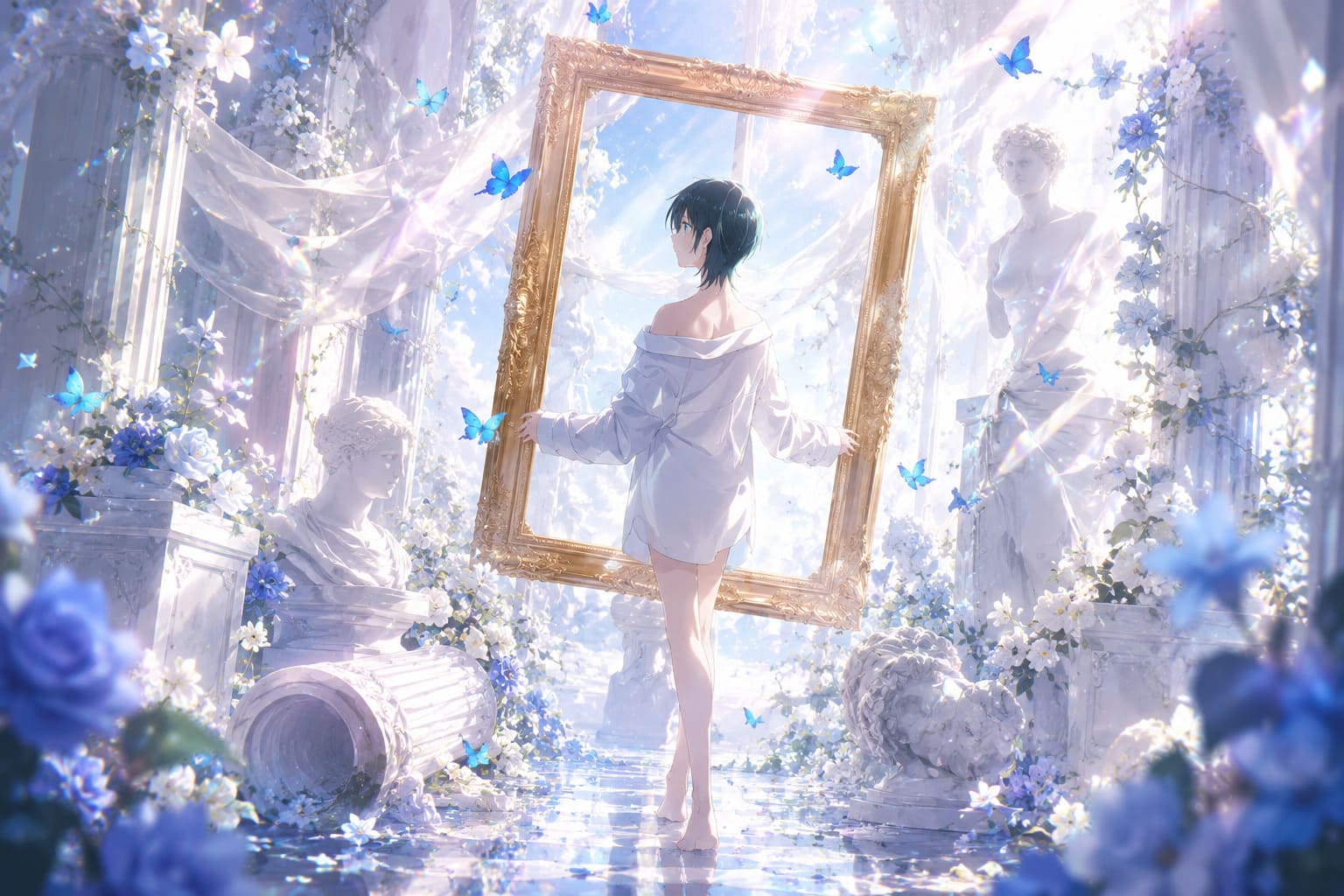
That’s exactly why Just Like Mona Lisa feels like such a natural fit.
The manga constantly uses imagery to represent identity and self-discovery. Frames, statues, butterflies, reflections, and artistic motifs appear throughout the story. These aren’t just decorations; they’re part of the narrative language.
In another studio’s hands, those moments might simply look beautiful.
In SHAFT’s hands, they could become unforgettable.
Fans Are Already Divided — And That’s Not Necessarily Bad
One of the most interesting things about this announcement is how quickly discussion exploded online.
Scrolling through anime communities, you can already see three major reactions forming.
1. Visual Hype Is Through the Roof
This is by far the most common response.
Anime fans know that SHAFT doesn’t often pick projects like this without having a strong creative vision.
Because the adaptation is arriving during the studio’s 50th anniversary period, many viewers expect a particularly ambitious production.
People are already predicting:
- Dreamlike visual sequences
- Heavy symbolism
- Experimental camera work
- Distinctive SHAFT directing techniques
- Gorgeous color design
Whether those expectations are realistic remains to be seen, but the excitement is understandable.
2. Curiosity About the Story’s Identity Themes
The manga’s exploration of gender identity has always generated discussion.
Unlike many modern series that approach the topic through direct social commentary, Just Like Mona Lisa builds an entirely different society and asks readers to consider how identity develops when traditional assumptions don’t exist.
That’s part of what makes the series fascinating.
The story isn’t just asking what gender someone becomes.
It’s asking how much of identity is personal choice, how much is social pressure, and whether uncertainty itself can be a valid state of existence.
Those themes feel especially relevant today, which is one reason the adaptation has already attracted attention beyond traditional anime audiences.
3. Concerns About the Ending
This is where things get complicated.
Readers who finished the manga know that the ending remains one of the most debated aspects of the series.
Without diving too deeply into spoilers, the later parts of the story explore multiple narrative possibilities and relationship outcomes.
As a result, fans are now wondering how the anime will handle the material.
Possible approaches include:
- Adapting one definitive route
- Presenting multiple outcomes
- Creating an anime-original conclusion
- Expanding the source material with new perspectives
Personally, I think this uncertainty is actually helping build anticipation.
For once, even many manga readers aren’t entirely sure what the final anime experience will look like.
The Teaser Visual Already Feels Like SHAFT
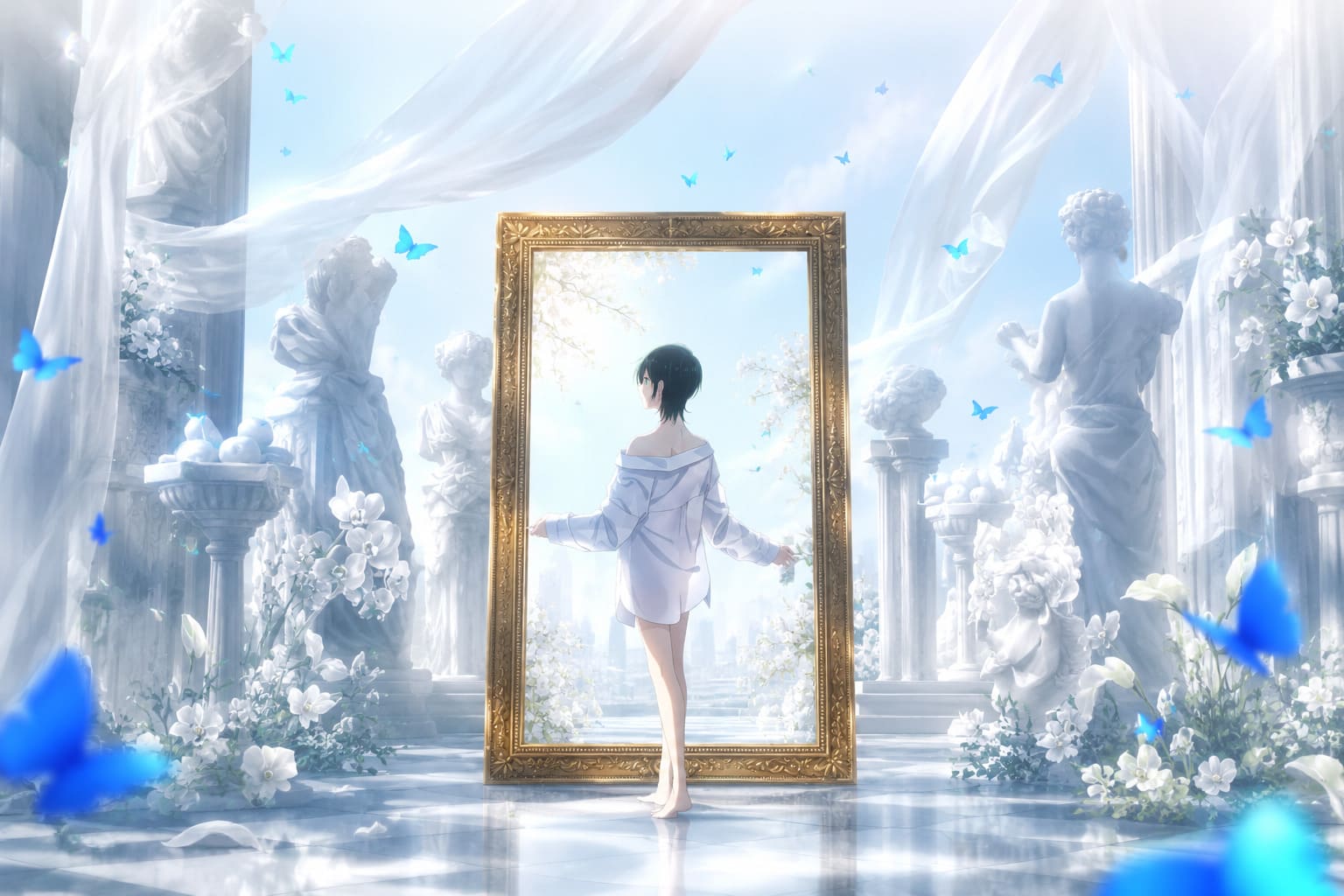
The first promotional artwork may be simple, but it immediately captures the atmosphere of the original manga.
Hinase stands before an empty golden frame while surrounded by classical sculptures and delicate blue butterflies.
It’s elegant.
It’s symbolic.
And it feels exactly like the kind of imagery SHAFT loves to work with.
The visual doesn’t reveal much about the plot, but it communicates the emotional core of the story perfectly: a character standing between definitions, searching for a place to belong.
Sometimes a single image says more than a full trailer.
Why This Could Become One of the Most Important Upcoming Anime
Every year brings dozens of romance anime.
Most are entertaining.
Some are memorable.
Very few feel genuinely unique.
Just Like Mona Lisa has the potential to be one of those rare adaptations that people continue discussing years after it airs.
Not because it’s controversial.
Not because it’s trying to shock audiences.
But because it explores universal questions through an unusual lens.
Questions about identity.
Questions about growing up.
Questions about expectations, love, and self-acceptance.
Combined with SHAFT’s visual creativity and reputation for handling emotionally complex stories, the project has all the ingredients necessary to become one of the most talked-about anime releases in recent years.
Of course, success ultimately depends on execution.
But right now, it’s difficult not to be excited.
For longtime SHAFT fans, this feels like a return to the kind of ambitious storytelling that helped define the studio’s legacy.
For manga readers, it’s finally the adaptation they’ve been waiting for.
And for newcomers, it might become the perfect introduction to one of the most distinctive coming-of-age stories released in the last decade.
If the first trailer delivers on even half of the promise shown by this announcement, Just Like Mona Lisa could easily become one of the standout anime events of the coming years.