Mushoku Tensei Season 3 Confirms Tomokazu Sugita as Voice of Future Old Rudeus
I’ll be honest: Mushoku Tensei: Jobless Reincarnation has pulled off plenty of emotional punches over the years, but the arrival of Oldeus feels different. Season 3’s eleventh episode, “Turning Point 4,” doesn’t just move the story forward—it finally puts a voice to one of the most disturbing versions of Rudeus Greyrat we’ve been waiting to see. The confirmation that Tomokazu Sugita voices future Rudeus is one of those casting decisions that makes almost too much sense, especially if you understand what this broken version of Rudeus represents.
Sugita has been part of Rudeus’s identity since the beginning, of course. He voices the protagonist’s original adult personality and inner thoughts, giving us that cynical, sarcastic, sometimes downright ridiculous voice inside Rudeus’s head. But Oldeus is not that guy anymore. This is Rudeus after years of failure, grief, isolation, rage, and desperation, and hearing Sugita completely strip away the humor makes the character feel genuinely frightening.
Old Rudeus Finally Sounds as Broken as He Looks
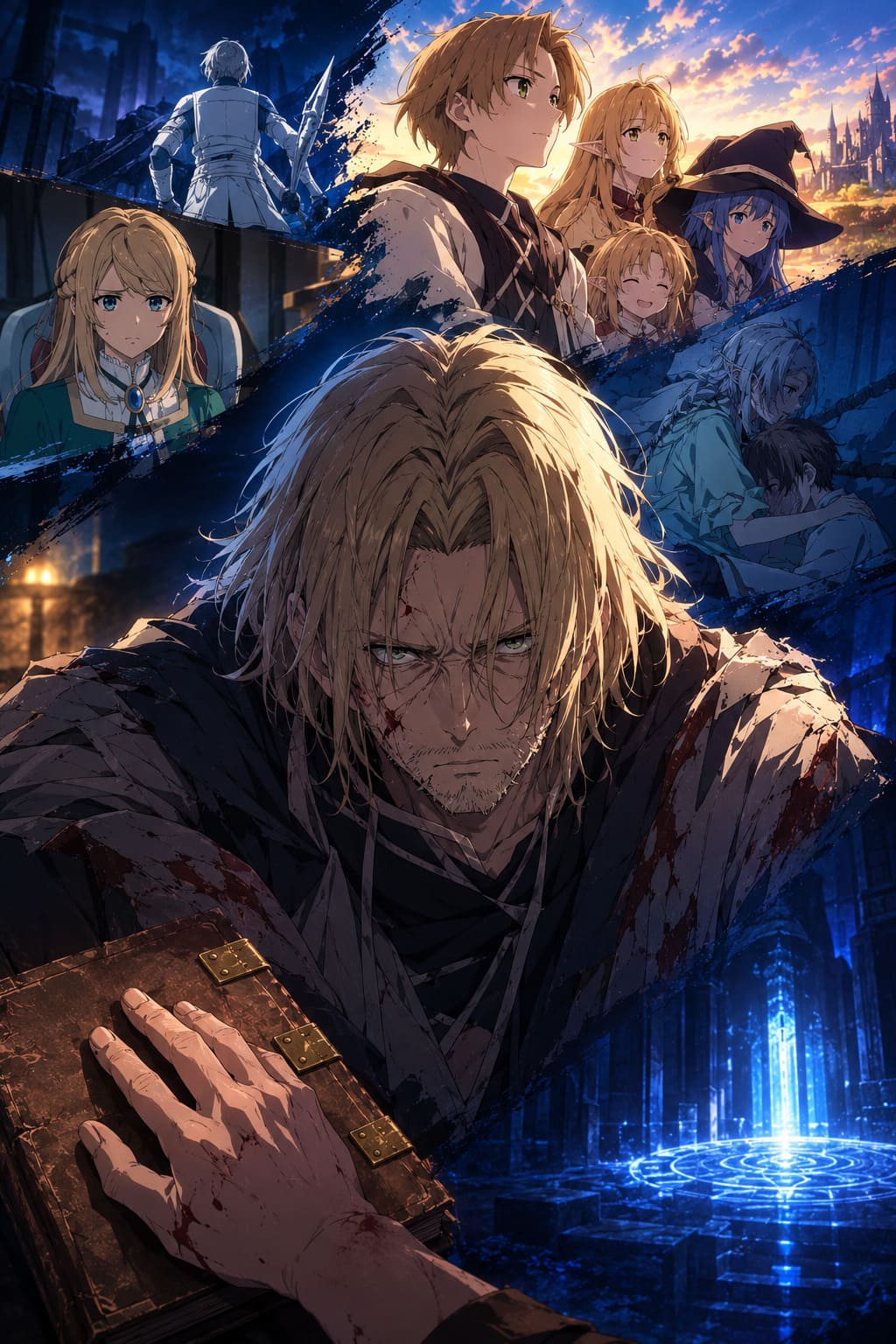
The visual design of Oldeus is already nightmare fuel. He arrives looking like someone who has survived things no human being should have survived, with a battered body, missing organs, scars everywhere, and absolutely nothing left in his expression except exhaustion. What really sells the scene for me, though, is the voice. Sugita doesn’t sound like the familiar adult Rudeus making jokes from inside his younger body; he sounds like a man who has spent decades watching his life collapse piece by piece.
That distinction is incredibly important. Oldeus is not simply an older Rudeus. He is the result of Rudeus taking a completely different road. Every mistake has compounded, every loss has become another layer of bitterness, and eventually the person underneath all that pain has almost disappeared. The rough vocal performance makes that idea immediately understandable, even if you have never read the light novels.
There is something particularly effective about using Sugita here because fans already associate his voice with Rudeus’s original adult consciousness. We know what that voice sounds like when it is sarcastic, horny, insecure, funny, or genuinely vulnerable. Now we hear essentially the same identity after everything has gone wrong, and the contrast is brutal.
“Turning Point 4” Was Never Going to Be a Normal Episode
The episode itself has the kind of structure that makes Mushoku Tensei so addictive. Rudeus has just gone through another exhausting stretch of his journey, dealing with the pursuit of Atofe and the desperate search for a cure for Nanahoshi’s illness. Eventually he gets back to Sharia and, for a brief moment, it feels like the story might actually allow him to breathe. He has his family around him, his wives are there, and his life seems more stable than it has been for a long time.
Then Hitogami shows up in his dreams.
That alone should be enough to make any veteran fan nervous. Hitogami rarely gives Rudeus advice without expecting something in return, and the instructions concerning the basement immediately feel suspicious. Rudeus is understandably tempted to trust the information because Hitogami has manipulated his decisions so effectively in the past. The fact that this seemingly small decision becomes the gateway to one of the biggest revelations in the story is exactly the kind of cruel storytelling I expect from Mushoku Tensei.
The Basement Scene Is Pure Psychological Horror
When the mysterious old man appears through the magic circle, the mood completely changes. There is no heroic entrance, no triumphant reveal, and certainly no feeling that this older Rudeus has arrived to save the day. He looks destroyed. His body is barely functioning, his existence feels unnatural, and his desperation tells you immediately that something has gone catastrophically wrong.
And then comes the voice.
That is the moment where Tomokazu Sugita’s casting really pays off. The performance feels heavier than the character’s physical appearance. Oldeus sounds like someone who has already lost everything and is running purely on whatever tiny fragment of determination remains. There is no need for exaggerated screaming or melodrama. The exhaustion in his voice does most of the work.
For me, that is what makes the scene more disturbing than a typical time-travel reveal. Oldeus is basically a warning from Rudeus himself. He is proof that the future isn’t some abstract possibility—it is a version of Rudeus that can actually exist. The protagonist is being forced to look at the consequences of decisions he has not even made yet.
Why Sugita Was the Perfect Choice
I’ve seen the usual debates from anime fans about Rudeus’s voice, particularly the fact that Yumi Uchiyama continues to voice the younger Rudeus in Japanese as the character physically ages. Some viewers find it strange that Rudeus can be an adult, husband, and father while still having a voice traditionally associated with a younger character. I understand where that criticism comes from, but I think the Japanese casting works much better when you consider what the series is actually doing with Rudeus’s identity.
Rudeus is not simply growing older physically. The entire point is that his personality, memories, trauma, and reincarnated consciousness remain tied together. Keeping Uchiyama as the main Rudeus creates continuity, while Sugita being reserved for Oldeus creates a very clear auditory separation between the two timelines. That contrast is more valuable than simply changing Rudeus’s voice because he got older.
It also follows a long-running anime tradition where one performer can remain attached to a protagonist for years or even decades of fictional aging. The voice becomes part of the character rather than a literal indicator of biological age. In Oldeus’s case, Sugita already carries the baggage of Rudeus’s previous life, so his presence feels almost like the character’s original soul returning in a completely corrupted form.
Oldeus Is More Than a Cool Alternate Version
This is where I think some reactions to the reveal miss the point. It would be easy to look at Oldeus and think, “Wow, future Rudeus is insanely powerful and badass.” Sure, the design is cool, and the idea of a future version of the protagonist appearing out of nowhere is naturally exciting. But the character is much more interesting because he represents failure rather than power.
Oldeus is what happens when Rudeus stops moving forward emotionally. He becomes isolated, consumed by revenge and survival, and eventually turns his intelligence toward solving problems through increasingly extreme methods. The fact that he develops time-travel magic doesn’t make his story triumphant—it makes it tragic. Imagine becoming so desperate to undo your mistakes that you spend years trying to break the rules of reality itself.
That is why his warning matters so much. Rudeus isn’t being told that he needs to become stronger. He is being shown that strength alone isn’t enough. The future version of himself has already learned that lesson in the worst possible way.
The Hitogami Problem Just Got Much Bigger
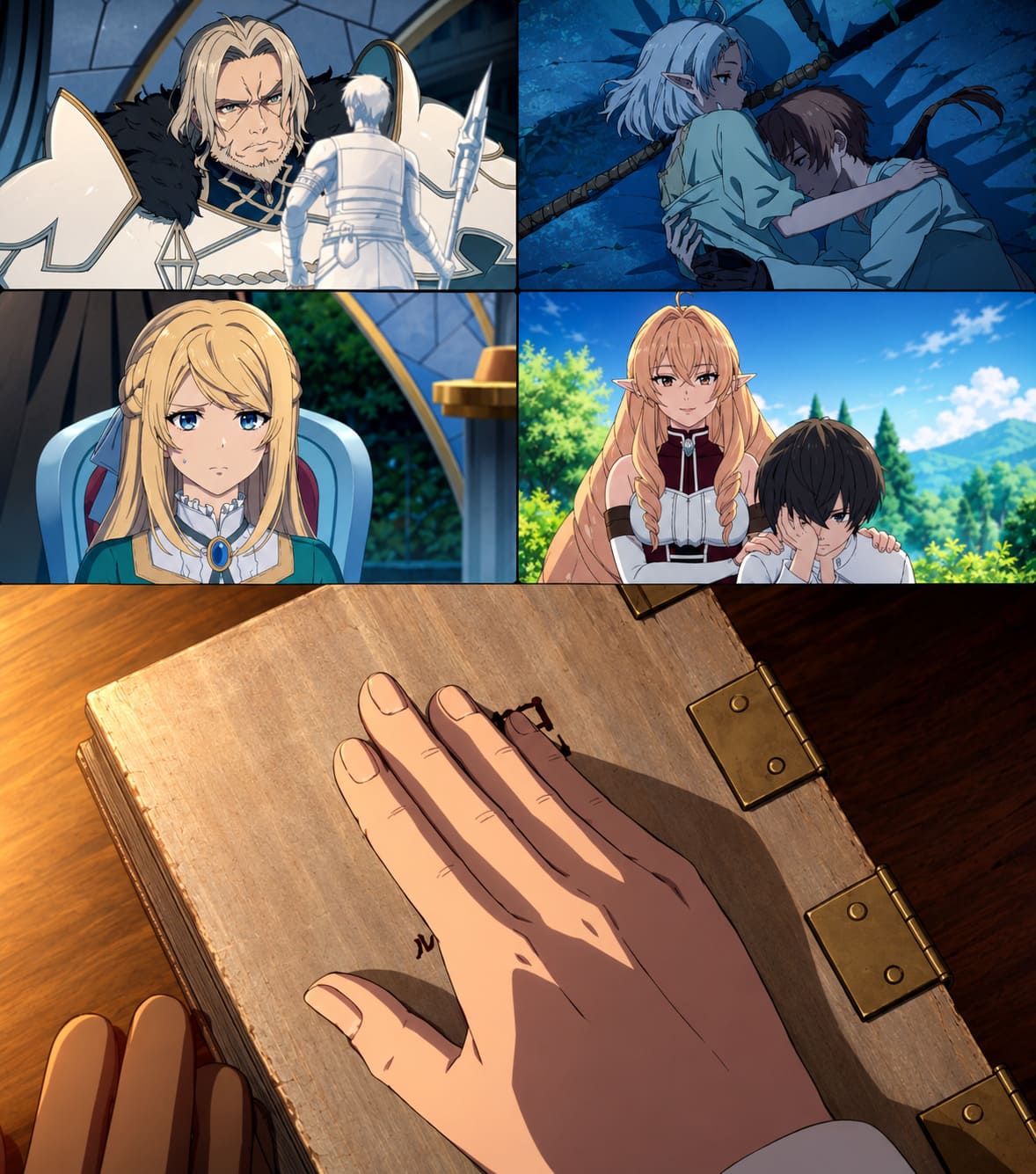
The biggest consequence of Oldeus’s appearance isn’t actually the reveal itself. It is the information he leaves behind. His diary gives the current Rudeus access to knowledge that could completely change how he approaches the people around him, especially Hitogami and the decisions connected to him.
Suddenly, Rudeus has something he has rarely possessed in this story: proof that his trust can destroy everything. Before this point, warnings about Hitogami could always be dismissed as uncertainty or manipulation. Now Rudeus has a physical message from a future version of himself who apparently lived through the consequences.
That changes the entire strategic game. Rudeus has to question who he can trust, what information he has been given, and whether the seemingly harmless choices placed in front of him are actually traps. And considering how often Hitogami has managed to stay several steps ahead, I wouldn’t expect this conflict to become simple just because Rudeus now knows more.
What This Means for Rudeus Going Forward
The Oldeus reveal also makes Rudeus’s current family life feel much more important. His relationship with Sylphiette, Roxy, and the rest of his family isn’t just background material anymore. These are the people whose existence can determine whether he follows the path toward becoming Oldeus or avoids that future entirely.
That makes every decision suddenly carry more weight. A normal conversation, a questionable alliance, or one bad piece of advice could potentially send Rudeus down the same road. Mushoku Tensei has always been interested in consequences, but Oldeus turns those consequences into something Rudeus can literally see and hear.
| Element | Why It Matters |
|---|---|
| Tomokazu Sugita | Connects Oldeus directly to Rudeus’s original adult consciousness. |
| Oldeus | Represents the disastrous future Rudeus is trying to avoid. |
| Hitogami | Becomes an even more dangerous figure after the future warning. |
| The Diary | Gives present-day Rudeus crucial information about future tragedies. |
| Rudeus’s Family | Becomes central to preventing the alternate future from happening. |
My Take: This Casting Choice Makes the Reveal Hit Harder
If I’m being completely honest, I think using Tomokazu Sugita for Oldeus was one of the smartest choices the production could have made. They could have hired a completely different older-sounding actor and still delivered the basic plot point, but that would have lost something important. Sugita already represents the adult consciousness inside Rudeus, so hearing him return as this destroyed future version creates an uncomfortable connection between the two.
It almost feels like the anime is saying, “This is the man who was inside you all along—and this is what he can become.” That’s much more powerful than simply hearing an older voice. The performance turns Oldeus from an interesting plot device into a genuine warning about what happens when Rudeus’s worst instincts win.
And honestly, this is why I’m so invested in Mushoku Tensei. The series can give us magic battles, bizarre monsters, huge fantasy landscapes, and ridiculously powerful characters, but its best moments are usually much quieter. A ruined version of the protagonist appearing in his basement and speaking with a voice fans already know can carry more emotional weight than an entire action sequence.
Now the real question isn’t whether Rudeus can become strong enough to defeat whatever comes next. It’s whether he can remain the person he is becoming without turning into the person Oldeus became. That is a much more interesting conflict, and with Tomokazu Sugita giving Old Rudeus such a broken, unforgettable voice, the anime has made that question impossible to ignore.