Solo Leveling vs The Beginning After the End: Which Has Better World-Building?
There are some anime and manhwa debates that never die, and one of the biggest right now is definitely Solo Leveling versus The Beginning After the End. I’ve seen this argument everywhere — Reddit threads, TikTok edits, YouTube comments, Discord servers — and honestly, both sides have good points.
As someone who genuinely enjoys both series, I think the conversation becomes way more interesting when you stop asking “Which protagonist is stronger?” and instead ask:
Which story actually built the better world?
Because flashy fights and overpowered main characters can carry a series for a while, but truly memorable fantasy stories usually live or die by the worlds they create.
And after spending way too many late nights rereading arcs from both series, I’ve come to one conclusion:
Solo Leveling delivers one of the coolest power fantasies ever made, but TBATE creates a world that feels far more alive.
Why Solo Leveling Became a Global Phenomenon
Before comparing them, it’s important to understand why Solo Leveling exploded worldwide in the first place.
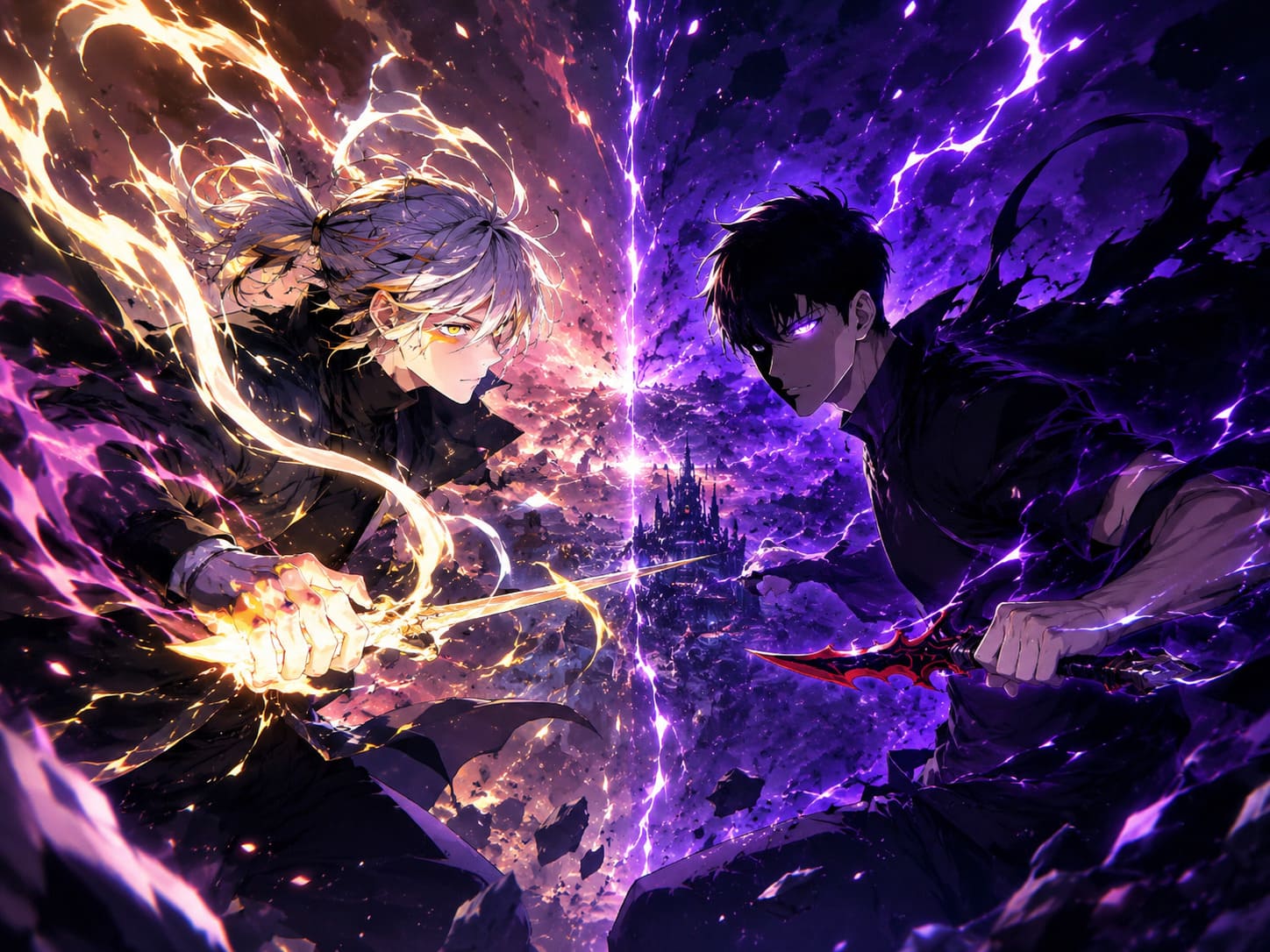
The series is incredibly efficient. It throws you directly into the action:
- Hunters
- Dungeon Gates
- Monster raids
- Leveling systems
- Boss fights
- Overpowered transformations
Everything is built to maximize hype.
The world itself is basically modern Earth with one major twist: mysterious Gates began appearing everywhere, connecting humanity to deadly dungeons filled with monsters. Hunters awakened supernatural abilities to fight them, and society adapted around this new reality.
It’s simple, easy to understand, and insanely addictive.
That simplicity is actually one of Solo Leveling’s biggest strengths. You never feel lost in complicated politics or endless lore explanations. The story always stays focused on Sung Jinwoo’s rise from the weakest hunter alive to an unstoppable force of nature.
And honestly? That approach works perfectly for the type of story it wants to tell.
But TBATE Feels Like a Real Fantasy Universe
Where Solo Leveling feels like a highly polished action game, The Beginning After the End feels like a full fantasy novel universe.
That’s the biggest difference.
TBATE doesn’t just introduce kingdoms and races because fantasy stories are “supposed” to have them. The world actually feels shaped by its history, conflicts, and cultures.
The continent of Dicathen alone already has more environmental identity than most modern fantasy manhwa:
| Region | Identity |
|---|---|
| Sapin | Human kingdom with noble politics |
| Elenoir | Elven forests with ancient traditions |
| Darv | Underground dwarf civilization |
| Beast Glades | Dangerous untamed wilderness |
And once Alacrya enters the story, the scale becomes even larger.
What makes this world-building work so well is that every nation feels like it existed long before Arthur Leywin was born. That’s something many power fantasy series struggle with.
The world doesn’t revolve entirely around the protagonist.
The Beginning After the End Season 3 Anime Release Date, Rumors, and What to Expect
The Magic System Is Where TBATE Really Wins
I’ll be honest — Solo Leveling’s system is cool as hell.
Watching Jinwoo level up like a video game character never gets old. The interface, shadow summons, stat increases, dungeon rewards — it scratches the same part of your brain as RPG progression systems.
But if we’re talking strictly about world-building, the system has limitations.
Most Hunters are permanently locked into their ranks. Once the story escalates, almost every side character becomes irrelevant compared to Jinwoo. The power structure starts feeling narrow because the entire universe bends around one person.
TBATE handles progression differently.
Mana in TBATE feels natural, almost scientific at times. Characters train, experiment, evolve, and discover new applications for magic. Arthur’s past-life intelligence allows him to approach mana differently from everyone else, which makes his growth feel earned rather than simply gifted.
The mana core stages also create a strong sense of progression:
- Black
- Red
- Orange
- Yellow
- Silver
- White
And unlike many fantasy systems, TBATE keeps introducing new layers without making the old ones meaningless.
Aether, runes, elemental deviants, Asura techniques — it all expands the universe instead of replacing it.
That depth gives the world more longevity.
Solo Leveling Focuses on Coolness — And That’s Fine
One thing I think people misunderstand is that Solo Leveling was never trying to become a massive political fantasy epic.
Its purpose is momentum.
Every arc is designed to push the excitement higher: Jinwoo gets stronger, enemies become scarier, summons become more insane, and the fights become increasingly cinematic.
The world exists to support that adrenaline.
And to be fair, the series absolutely succeeds at it.
Some moments still hit unbelievably hard:
- The Job Change quest
- Igris’ introduction
- Jeju Island
- “Arise”
- Shadow Army reveals
- The Monarch battles
Few manhwa deliver hype on that level.
But outside the Hunter system and Monarch lore, everyday society doesn’t evolve very much. Regular civilians rarely feel deeply connected to the supernatural world beyond occasional news coverage or disasters.
That’s where TBATE separates itself.
TBATE Makes Politics and Society Matter
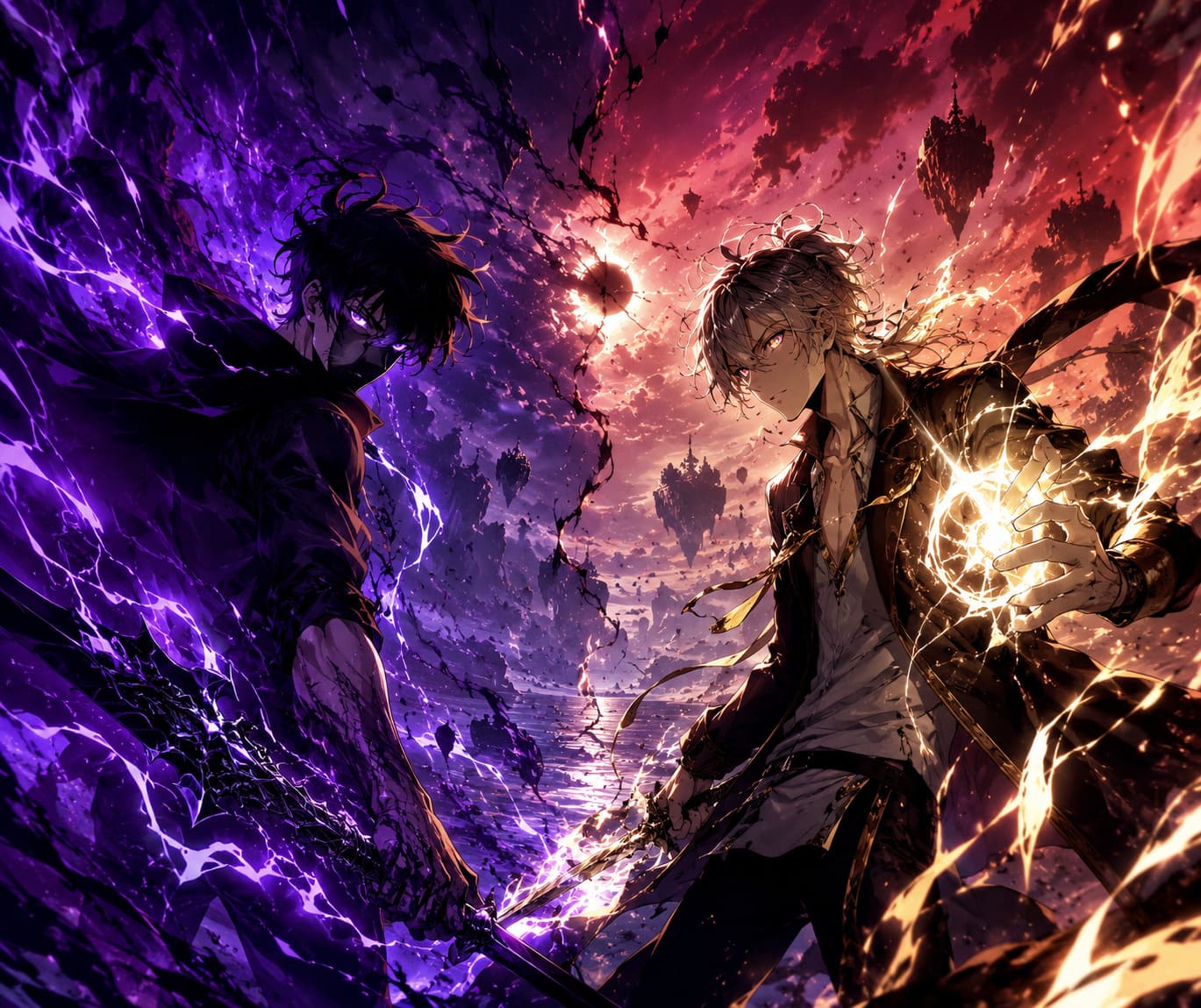
One of my favorite things about TBATE is how magic changes society itself.
In Alacrya especially, power determines social status, education, military opportunity, and even family reputation. Children are evaluated based on magical potential, and entire bloodlines rise or fall because of rune manifestations.
That level of integration makes the world believable.
The Asuras also feel far more involved in the world compared to Solo Leveling’s Monarchs and Rulers. Instead of distant cosmic entities that mostly exist for late-story reveals, the Asuras actively manipulate civilizations, wage proxy wars, and shape history.
There’s also a darker tone underneath TBATE’s world-building that I really appreciate.
The story constantly reminds you that powerful beings see ordinary humans as expendable tools. Ancient genocides, hidden experiments, political manipulation — the deeper Arthur digs into the truth, the more disturbing the world becomes.
That layered history gives the universe emotional weight.
Which Series Has Better World-Building?
If I had to summarize it simply:
| Category | Winner |
|---|---|
| Hype & Action | Solo Leveling |
| Fantasy Depth | TBATE |
| Simplicity & Accessibility | Solo Leveling |
| Political Complexity | TBATE |
| Magic System Depth | TBATE |
| Cinematic Moments | Solo Leveling |
| Long-Term Lore | TBATE |
At the end of the day, both series succeed at very different goals.
Solo Leveling is one of the cleanest and most satisfying modern power fantasies ever created. It understands pacing better than almost any manhwa in its genre.
But The Beginning After the End builds a world that feels bigger than its protagonist. The cultures, politics, history, races, and magic systems all connect together in ways that make the universe feel genuinely alive.
And for me personally, that’s what makes world-building unforgettable.
Final Thoughts
I still think Solo Leveling is easier to recommend to newcomers because it hooks people instantly. The pacing is addictive, the visuals are iconic, and Sung Jinwoo’s rise is legendary for a reason.
But if you’re the kind of anime or fantasy fan who loves:
- deep lore,
- evolving political conflict,
- layered magic systems,
- ancient civilizations,
- and morally gray world history,
then TBATE probably gives you more to sink your teeth into.
Both series dominate the modern manhwa scene for different reasons.
One delivers pure hype.
The other delivers a living fantasy world.