Sparks of Tomorrow: What Chapter and Volume to Read After the Anime
There’s something about Sparks of Tomorrow that makes you want to keep going the moment the final episode ends.
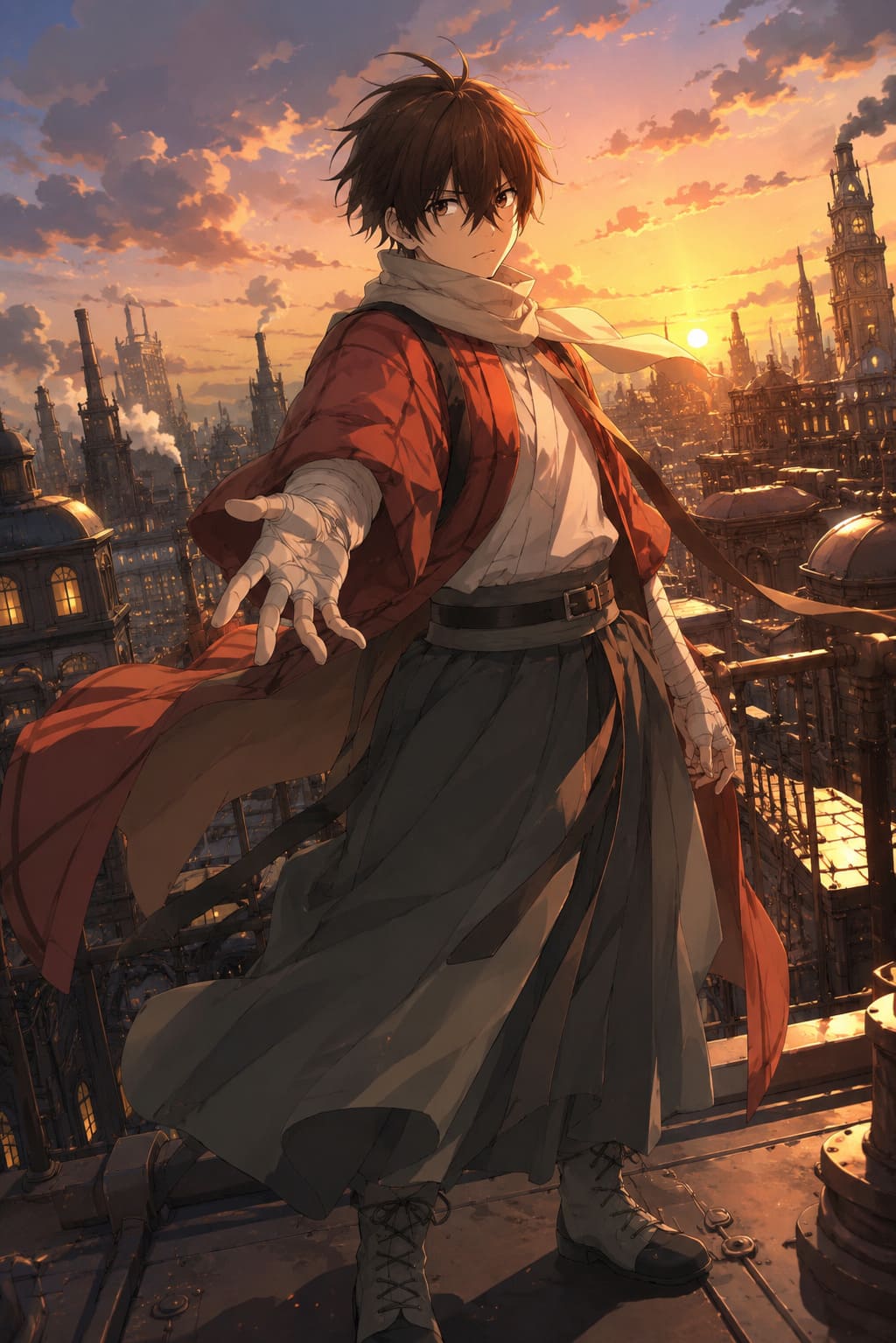
Maybe it’s the strange beauty of its steam-powered Kyoto. Maybe it’s Kihachi Sakamoto, whose constant cynicism makes his rare moments of sincerity hit much harder. Or maybe it’s Inako Momokawa, whose optimism somehow survives in a world that seems determined to crush it.
Whatever the reason, I completely understand the urge to search for “what chapter does Sparks of Tomorrow anime end on?” right after finishing the series.
The problem is that this isn’t one of those anime adaptations where you can simply jump into Volume 7 and continue the adventure.
Sparks of Tomorrow has a rather unusual source-material situation. The anime is based on 20th Century Electricity Catalog (20 Seiki Denki Mokuroku), a single-volume light novel written by Hiro Yuki, with illustrations by Kazumi Ikeda and background work by Momoka Nagatani.
So, What Chapter Should You Read After the Anime?
Here’s the short version: there is no Chapter 14 or Volume 2 waiting after the anime.
The original light novel is a complete one-volume story, and the 13-episode anime adaptation covers the narrative of that book.
That means if you finished the anime hoping to pick up the novel at some later chapter and discover a continuation, you’re going to hit a dead end. There simply isn’t an official second volume continuing Kihachi and Inako’s story in the way fans of ongoing light novels might expect.
Honestly, I think that’s both disappointing and refreshing.
It’s disappointing because I would absolutely watch another season or read another volume with these characters. But it’s refreshing because the story was created with an actual beginning, middle, and ending rather than being stretched indefinitely.
Quick Answer
| Question | Answer |
|---|---|
| Original source | 20th Century Electricity Catalog |
| Source format | Light novel |
| Number of volumes | 1 |
| Anime episodes | 13 |
| Does the anime adapt the complete story? | Yes |
| Is there a Volume 2? | No official continuation |
| Best place to start the novel | Chapter 1 / Volume 1 |
So if your goal is to experience more of the story that the anime adapted, the best option is actually to go back to the beginning.
And I know that sounds counterintuitive.
Usually, when someone asks where an anime ends in the light novel, they want a number. “Start at Chapter 38.” “Continue with Volume 5.” Something simple.
With Sparks of Tomorrow, the answer is basically: start from Chapter 1 because the entire source is only one book.
Why I’d Still Read the Light Novel After Watching the Anime
This is where I think the situation gets more interesting.
If the anime already tells the complete story, why bother reading the novel?
For me, the answer is atmosphere.
Kyoto Animation’s adaptation does a fantastic job of turning the alternate Meiji-era setting into something you can almost smell. The streets are covered in smoke, enormous steam machinery dominates the skyline, and the absence of electricity feels like a genuine historical consequence rather than a gimmick.
But animation has limits.
A visual can communicate the look of a steam-powered city instantly. A novel can spend pages explaining why that world developed the way it did.
That extra context matters in Sparks of Tomorrow.
1. The Worldbuilding Goes Deeper
The alternate history is one of the biggest reasons I enjoyed the series.
The story isn’t simply saying, “Imagine Meiji Japan, but with steampunk machines.”
Instead, the lack of widespread electricity affects technology, economics, social structures, and the way people think about progress.
The light novel has more room to explore these ideas.
You get additional details about the steam technology that dominates everyday life, the cultural resistance surrounding electrical innovation, and the historical circumstances that created this unusual version of Kyoto.
If you liked the setting as much as the characters, the novel is absolutely worth reading from the beginning.
2. Kihachi Makes More Sense on the Page
Kihachi is the kind of protagonist who can be difficult to fully understand if you’re only watching him.
He’s brilliant, stubborn, cynical, and often seems completely uninterested in playing by anyone else’s rules.
But underneath all of that is a character carrying some serious emotional baggage.
His relationship with his missing older brother, Seiroku, is particularly important to understanding his obsession with the electrical catalog and his attitude toward the world around him.
The novel has more space for Kihachi’s thoughts.
That means his decisions don’t always feel as abrupt, and his emotional reactions can carry considerably more weight.
I actually think this is one of the strongest reasons to read the book after finishing the anime. You already know what Kihachi does. Now you get to understand why he thinks the way he does.
3. Inako Gets More Emotional Depth
Inako is another character who benefits from the novel format.
Her optimism is easy to appreciate in the anime, but there is considerably more going on beneath that cheerful exterior.
Her relationship with her family, her connection to her late mother, and the expectations placed upon her give her character more emotional texture.
The anime naturally has to prioritize the central plot.
The novel can slow down.
Those quieter conversations and personal moments help explain why Inako makes certain choices and why her relationship with Kihachi develops the way it does.
And personally, I always appreciate these quieter scenes more after watching an adaptation. Once I already know the major plot beats, the smaller character moments become the part I pay attention to.
What the Anime Changes or Leaves Out
The anime isn’t a bad adaptation because it streamlines material. That’s simply how adaptations work.
A television series has a fixed runtime. A light novel doesn’t have to worry about fitting a scene into 90 seconds before the next major plot point.
Some conversations, character interactions, and everyday moments are therefore shortened or rearranged.
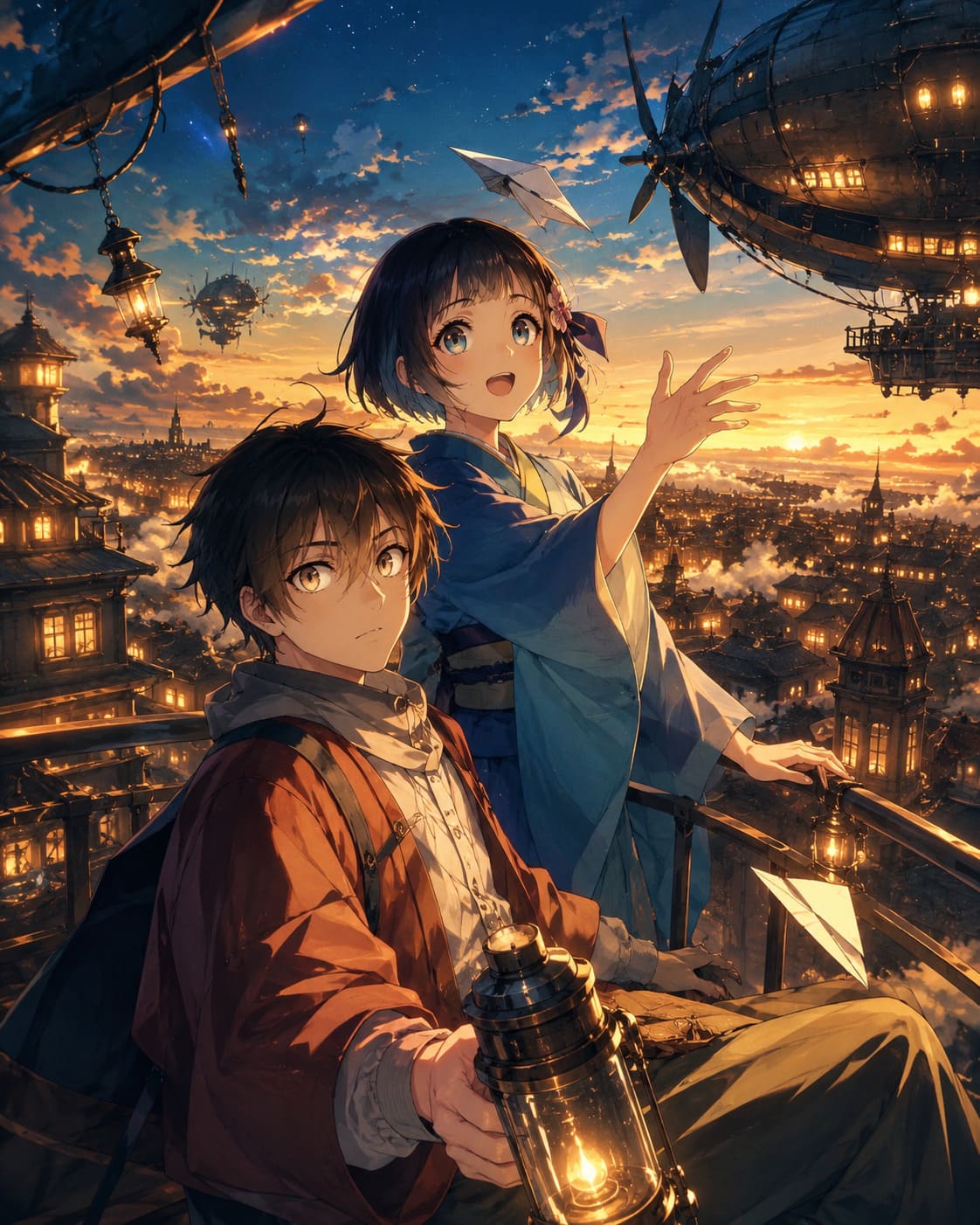
The novel gives readers more time with characters such as Noriko, Inako’s protective older sister, while also providing additional context for the relationships between the various social circles surrounding Kihachi and Inako.
There are also more subtle emotional beats surrounding the Master-Servant relationships and the political ambitions of Yosuke Mizoe.
These aren’t necessarily giant missing plot twists.
Instead, they’re the little details that make the original story feel more complete.
The Mystery of the 20th Century Electrical Catalog
The titular catalog is obviously one of the most important elements of the story.
It isn’t merely an excuse to introduce electricity into an alternate version of Japan. Its existence is tied closely to Kihachi’s personal history, Seiroku’s disappearance, and the larger question of what technological progress means for this world.
The anime gives viewers the broad picture.
The light novel gives you more room to sit with the mystery.
I won’t spoil the ending here, but if the catalog itself was one of the things that kept you watching, reading the original novel is probably the best way to squeeze more enjoyment out of the story without inventing a nonexistent sequel.
Is There a Volume 2 of Sparks of Tomorrow?
As far as the original source material is concerned, no official Volume 2 exists.
The light novel was published as a single-volume work under Kyoto Animation’s KA Esuma Bunko imprint on August 10, 2018.
That is important because there is sometimes confusion surrounding anime adaptations with unusual titles or localized names. Fans may see discussions about “future volumes,” “Chapter 14,” or potential sequel material and assume there must be another book somewhere.
For Sparks of Tomorrow, that isn’t the case.
The one-volume novel is the complete source story.
So don’t waste hours hunting for a mysterious Volume 2 that isn’t there.
Where Can You Read the Original?
The original Japanese release is titled 20 Seiki Denki Mokuroku (20th Century Electricity Catalog).
For readers who want the original text, the Japanese edition is the obvious place to start looking, particularly through Japanese bookstores and Kyoto Animation’s publishing channels.
English readers have a tougher time.
Because this is a relatively niche single-volume light novel, official English availability is much more limited than for major ongoing light novel franchises. Fan translations and community discussions may exist, but readers should be careful about assuming that every unofficial translation is authorized or complete.
If you want the legitimate release, it’s better to check for an official licensed edition rather than relying on random uploads.
How Many Episodes in Sparks of Tomorrow Season 1? Full Episode Guide and Schedule
Should You Read It If You’ve Already Watched the Anime?
Absolutely.
But I wouldn’t recommend reading it because you’re expecting a hidden continuation.
Read it because it’s the original version of the story you already enjoyed.
If you loved the anime’s visual atmosphere, the novel gives you more worldbuilding.
If Kihachi was your favorite character, the novel gives you more of his internal perspective.
If Inako’s relationship with her family and Kihachi interested you, the novel spends more time on those emotional connections.
And if you’re simply frustrated that there isn’t a Volume 2, going back to Chapter 1 is probably the closest thing to getting more Sparks of Tomorrow without waiting for an entirely new project.
Final Verdict: Where to Continue After the Anime?
So, here’s the answer I’d give to a friend who had just finished the show:
Don’t look for Chapter 14. There isn’t an official continuation waiting there.
The 13-episode anime adapts the complete single-volume light novel 20th Century Electricity Catalog. There is no official Volume 2 that continues Kihachi and Inako’s story after the anime.
Instead, pick up Volume 1 and start from Chapter 1.
You’ll see familiar events, but the experience isn’t identical. The novel provides additional character thoughts, more detailed worldbuilding, extra conversations, and a deeper look at the ideas behind this alternate-history Kyoto.
And honestly, that’s probably the best possible reason to read it.
Sparks of Tomorrow is the kind of story where the destination isn’t the only thing that matters. The atmosphere, characters, technology, and strange little details are what make the journey memorable.
So if you’re already missing Kihachi, Inako, and that smoke-filled steampunk Kyoto, don’t go searching for a nonexistent Volume 2.
Go back to the beginning.
Sometimes the best way to continue an anime is to experience its original story all over again.