Tokyo Revengers Season 4: Mikey Dark Impulsivity Form and Powers Explained
There is something genuinely unsettling about watching Manjiro Sano lose control. Throughout Tokyo Revengers, Mikey has been presented as the kind of character who can walk into a room full of dangerous delinquents and make everyone reconsider their life choices. He is charismatic, ridiculously powerful, and fiercely protective of the people he considers family. Yet beneath that carefree personality lies a darkness that becomes increasingly difficult to ignore.
What makes Mikey so interesting is that his greatest strength is also the thing that makes him terrifying. He can defeat opponents who seem physically impossible to overcome, but he cannot always protect himself from his own mind.
As the story moves toward its final arcs, Mikey’s transformation into the ruthless leader of the Kanto Manji Gang reveals just how far he has fallen. His Dark Impulses turn him from the Invincible Mikey into someone even his closest friends struggle to recognize. The conflicts surrounding the Three Deities take this development to another level, showing that the biggest threat in Tokyo Revengers might not be another gang at all.
For me, that is what makes this storyline so compelling. Mikey does not simply become a stronger villain who needs to be defeated. He becomes a friend who desperately needs to be saved.
What Are Mikey’s Dark Impulses? The Truth Behind His Transformation
One of the biggest misconceptions about Mikey’s Dark Impulses is that they function like a traditional shonen transformation. Fans might compare them to a berserk mode or a power-up that unlocks a character’s hidden strength. However, that interpretation misses much of what makes this part of the story so disturbing.

Dark Impulses are better understood as a destructive state in which Mikey loses his emotional restraint and becomes consumed by violent instincts. His fighting ability is already extraordinary before this transformation, so the frightening difference is not simply that he suddenly gains a new set of physical abilities.
The real danger is that Mikey stops holding himself back.
Normally, even when Mikey fights seriously, his relationships and emotions influence his decisions. He has people he wants to protect, friends whose opinions matter to him, and a sense of loyalty that defines his identity as the leader of Toman.
When his Dark Impulses take over, those emotional connections seem to disappear beneath overwhelming aggression. He becomes far less concerned with the consequences of his actions, and his opponents face someone who no longer fights with the same limitations.
This is why the transformation feels so different from a conventional anime power-up. It is not a triumphant moment in which the hero discovers a new level of strength. It is a disturbing glimpse of what happens when a person loses the qualities that once made that strength meaningful.
Why Does Mikey Become So Dark? The Trauma Behind His Impulses
To understand Mikey, it is impossible to ignore the losses that shape his life. His descent into darkness does not happen in isolation. It follows a series of tragedies that repeatedly strip away the people who help him maintain his emotional balance.
Among the most significant losses are:
- Shinichiro Sano: Mikey’s older brother and one of the most important figures in his life.
- Keisuke Baji: His close friend whose loyalty and sacrifice leave a lasting mark on Toman.
- Emma Sano: His younger sister, whose death becomes another devastating blow to his already fragile emotional world.
- Izana Kurokawa: His adoptive brother, whose complicated family history adds another layer of tragedy to Mikey’s life.
Each loss contributes to the sense that Mikey is running out of reasons to remain the person everyone remembers.
What makes this especially painful is that Mikey does not always respond to suffering by asking his friends for help. Instead, he increasingly distances himself from them. His decision to push away the original Toman members can be interpreted as an attempt to protect them from the darkness he believes is growing inside him.
That decision is understandable, but it is also deeply destructive.
Mikey’s isolation creates the very conditions that allow his situation to deteriorate. By refusing to rely on the people who care about him, he loses access to the emotional support that might help him resist his worst impulses.
This is one of the most tragic contradictions in Tokyo Revengers: Mikey wants to protect his friends, yet his efforts to keep them safe threaten to destroy the relationships that give his life meaning.
The Supernatural Origin of Mikey’s Dark Impulses
Warning: Major manga spoilers below.
The later revelations surrounding Mikey’s condition introduce a supernatural explanation that changes how readers interpret his suffering.
Initially, his darkness can be understood through trauma, grief, and emotional instability. However, the manga eventually connects the Dark Impulses to the story’s time-leaping mythology and a curse associated with Shinichiro’s attempt to save his younger brother.
Shinichiro’s desperation to prevent Mikey’s tragic fate leads him to pursue the ability to travel through time. His actions have devastating consequences, and the curse connected to this act becomes part of the explanation for Mikey’s dark transformation.
This revelation adds a new dimension to the story. Mikey is not simply struggling with accumulated grief or making increasingly destructive choices. His suffering is also tied to events that began before he could understand their consequences.
Personally, I find this twist fascinating but somewhat divisive. The supernatural explanation gives the final storyline a larger sense of inevitability, connecting Mikey’s personal tragedy to the series’ central time-travel premise. At the same time, it changes the tone of a story that initially felt grounded in the emotional consequences of violence, loyalty, and gang life.
Some readers may prefer the earlier interpretation, in which Mikey’s darkness emerges primarily from his experiences and decisions. Others will appreciate how the curse connects the story’s seemingly separate tragedies.
Either way, the revelation reinforces one important idea: Mikey’s greatest battle is not against another delinquent gang, but against the chain of events that has shaped his life.
Mikey’s Dark Impulses: Powers and Combat Abilities Explained
Mikey is already one of the strongest fighters in Tokyo Revengers, even without giving in to his darkest instincts. His signature kicks, extraordinary timing, and ability to finish fights with frightening efficiency make him a nightmare for nearly every opponent.
Dark Impulses make those qualities even more dangerous by removing much of his emotional restraint.
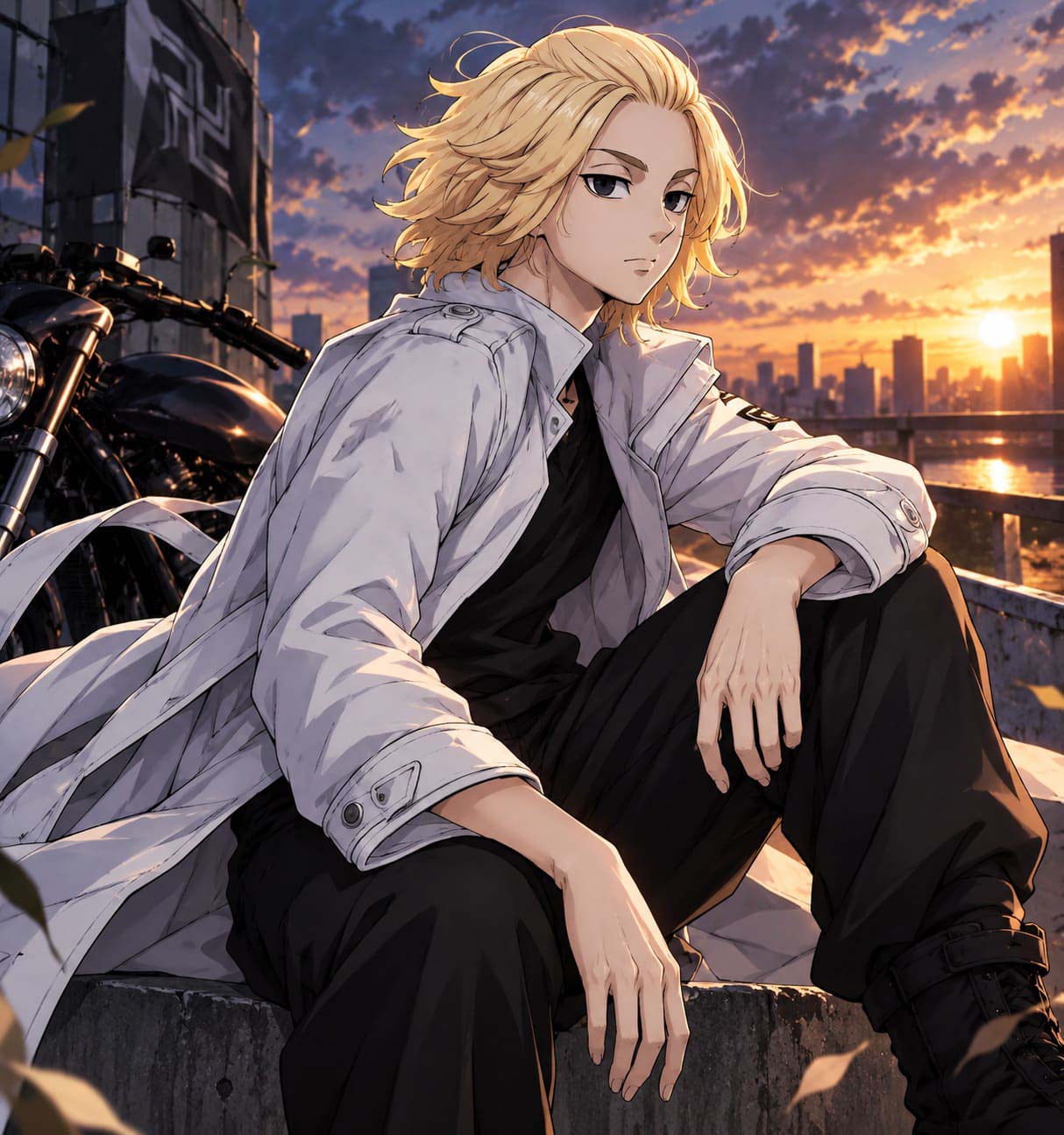
1. Unrestrained Fighting and Lethal Intent
Mikey’s normal fighting style combines exceptional technique with an almost effortless ability to overpower opponents. He does not need elaborate combinations or flashy movements to establish dominance.
When his Dark Impulses take over, the distinction between winning a fight and seriously harming someone becomes increasingly blurred. He appears far less concerned with controlling the damage he inflicts.
This is not necessarily a clearly defined supernatural increase in physical strength. Rather, the transformation allows Mikey to use his existing abilities with terrifying aggression and little concern for the consequences.
2. Psychological Pressure and Intimidation
Mikey’s presence has always affected the people around him. Even experienced fighters recognize that facing him is different from confronting an ordinary opponent.
His Dark Impulses amplify that impression. His vacant expression, relentless attacks, and apparent lack of hesitation make it difficult for enemies to predict how far he will go.
Characters such as Senju Kawaragi and Kakucho demonstrate how intimidating Mikey can become, even to formidable fighters.
Although fans sometimes describe this effect as a literal fear-inducing aura, it is more accurate to treat it as a combination of visual storytelling, reputation, and the psychological impact of facing someone so overwhelmingly dangerous.
3. Combat Instincts and Difficult-to-Read Movements
Mikey’s speed, timing, and technical precision are central to his reputation. He can exploit openings before opponents have enough time to respond, making his kicks particularly difficult to defend against.
In his darker state, that skill becomes even more frightening because his opponents cannot rely on the same emotional cues they might expect from him.
There is little reason to assume he will stop when someone is injured or reconsider an attack because of their relationship. His unpredictability comes primarily from his behavior and relentless offense, rather than any confirmed ability to create illusions or manipulate perception supernaturally.
4. Pain Tolerance and Relentless Aggression
Mikey often appears almost indifferent to the physical consequences of a fight. When consumed by his Dark Impulses, that impression becomes even stronger.
However, it is worth distinguishing between supernatural durability and a willingness to continue fighting despite pain. The story emphasizes his frightening determination, but it does not establish that he becomes literally invulnerable.
His greatest advantage is the combination of technique, speed, aggression, and a willingness to cross boundaries that would normally restrain him.
Mikey vs. Terano South: The Fight That Changes Everything
The confrontation between Mikey and Terano South during the Three Deities conflict is one of the clearest demonstrations of how dangerous Mikey becomes when he completely loses control.
South is an intimidating opponent in his own right. His size, aggression, and brutal fighting style make him a major threat, and his violent personality has already established him as one of the most dangerous figures in the conflict.
Yet Mikey’s arrival changes the atmosphere of the battle.
What begins as a confrontation between powerful fighters becomes something far more disturbing when Mikey’s Dark Impulses take control. He overwhelms South and ultimately beats him to death, turning what might have been another gang battle into a devastating moment that permanently changes the stakes.
The most shocking part is not simply that Mikey wins. It is how little his victory resembles the behavior of the person fans have followed throughout the series.
He does not emerge as a triumphant leader defending his friends. Instead, he becomes a frightening figure whose violence can no longer be separated from the tragedy surrounding him.
For me, this confrontation works because it forces the audience to reconsider what strength means in Tokyo Revengers. Mikey has always been capable of winning fights. The real question is whether he can remain himself when he does.
Is Dark Mikey Stronger Than Normal Mikey?
This question regularly appears in fan discussions, but it needs a little nuance.
| Aspect | Normal Mikey | Mikey Under Dark Impulses |
|---|---|---|
| Fighting technique | Exceptional precision and timing | The same dangerous skills used with greater aggression |
| Emotional restraint | Influenced by friends and personal attachments | Severely compromised |
| Fighting mindset | Can protect others while confronting enemies | Increasingly consumed by violence |
| Threat to opponents | An elite fighter capable of overwhelming powerful rivals | An unpredictable and potentially lethal opponent |
| Biggest weakness | Emotional vulnerability and accumulated trauma | Loss of control and destructive isolation |
The important distinction is that Dark Impulses do not need to grant Mikey an entirely new power set to make him more dangerous.
His normal self is already a formidable fighter. The transformation changes the way he uses that strength, making him less predictable and far more willing to inflict irreversible harm.
In practical terms, Dark Mikey may be more dangerous in a confrontation, but that does not automatically mean every aspect of his physical abilities has been upgraded through supernatural means.
Why Fans Are Divided Over Dark Mikey
The Dark Impulses storyline has inspired plenty of debate among Tokyo Revengers readers, and I can understand both sides.
Some fans believe the supernatural curse complicates a story that was initially powerful because of its emotional realism. Mikey’s grief, loneliness, and fear of hurting his friends already provide enough material for a tragic character arc. Introducing a curse risks making his behavior feel predetermined rather than allowing his personal choices to carry the full weight of the narrative.
Others appreciate the reveal because it ties Mikey’s fate to the series’ time-travel mythology. Instead of treating his downfall as an isolated tragedy, the story connects it to the consequences of attempts to rewrite the past.
I lean toward appreciating the ambition behind the idea, even if the execution leaves room for debate. Mikey’s darkness is most effective when the supernatural elements complement his emotional struggles rather than replace them.
After all, the curse alone is not what makes his story heartbreaking. It is the knowledge that the boy everyone once admired has become someone who can barely accept the help of the people who love him.
Senju Kawaragi Fighting Style and Speed Stats: Tokyo Revengers Season 4 Analysis
Can Takemichi Save Mikey From His Dark Impulses?
If Mikey represents the destructive consequences of isolation, Takemichi Hanagaki represents the possibility of refusing to give up on someone.
Takemichi is not the strongest fighter in the series. He cannot simply defeat Mikey through superior martial arts, nor can he reliably solve every problem by predicting what will happen next.
His defining strength is his persistence.
Even when confronted with overwhelming violence, Takemichi continues searching for a way to save the people he cares about. His connection to Mikey gives the final conflict its emotional center, because he sees something worth saving in a person whom others might consider beyond redemption.
This is what separates their roles. Mikey’s strength allows him to dominate almost any physical confrontation, while Takemichi’s determination allows him to keep pursuing a solution when violence has failed.
The time-leaping mythology eventually becomes crucial to the resolution of their story, but the emotional foundation remains the same: Takemichi refuses to accept that Mikey must inevitably lose himself.
Whether readers find the final supernatural resolution satisfying or not, their relationship is what gives the conflict its meaning.
Final Verdict: Dark Impulses Are Mikey’s Greatest Weakness
Mikey’s Dark Impulses are among the most disturbing developments in Tokyo Revengers because they turn the series’ most iconic fighter into a symbol of everything that has gone wrong in his life.
His terrifying combat abilities matter, and the confrontation with Terano South demonstrates just how devastating his violence can become. However, the real tragedy lies beneath those fights. Mikey is surrounded by memories of people he has lost, convinced that keeping others away is the best way to protect them, and increasingly unable to escape the darkness consuming him.
The supernatural curse adds another layer to that tragedy, even if its introduction remains a point of debate among fans.
Ultimately, Mikey does not need another opponent who can hit harder than he can. He needs someone who refuses to abandon him. That is why Takemichi remains so important to the story. His role is not merely to challenge the Invincible Mikey, but to reach the person still buried beneath the violence.
And honestly, that is a far more interesting conflict than another fight to decide which delinquent is the strongest.