
Why Eating Monsters in Delicious in Dungeon is the Ultimate Strategy for Survival
When most fantasy adventurers enter a dungeon, they prepare the same way: armor, weapons, potions, and a mountain of rations. But anyone who has watched Delicious in Dungeon knows that the party led by Laios Touden takes a completely different approach. Instead of hauling sacks of dried meat and bread through dangerous corridors, they do something that initially sounds insane: they cook and eat the monsters they defeat.
At first glance it feels like a comedic gimmick. But the deeper you get into the story, the clearer it becomes that this strategy is actually brilliant. From logistics and nutrition to understanding the dungeon’s ecosystem, monster cuisine might be the most efficient survival method ever portrayed in fantasy.
As a longtime fantasy anime fan, I genuinely think the series quietly delivers one of the most realistic takes on dungeon exploration we’ve seen in years.
The Real Problem With Traditional Adventuring
In most RPG-style stories, characters magically carry endless food supplies. But if you think about it realistically, traditional dungeon logistics are terrible.
Food is heavy. It spoils. And worst of all, it slows you down.
This is exactly the problem faced by the party that includes Marcille Donato, Chilchuck Tims, and the legendary dungeon chef Senshi.
After a disastrous encounter with a Red Dragon, they lose their supplies and money. Most adventuring groups would simply abandon the mission at that point.
Instead, they adapt.
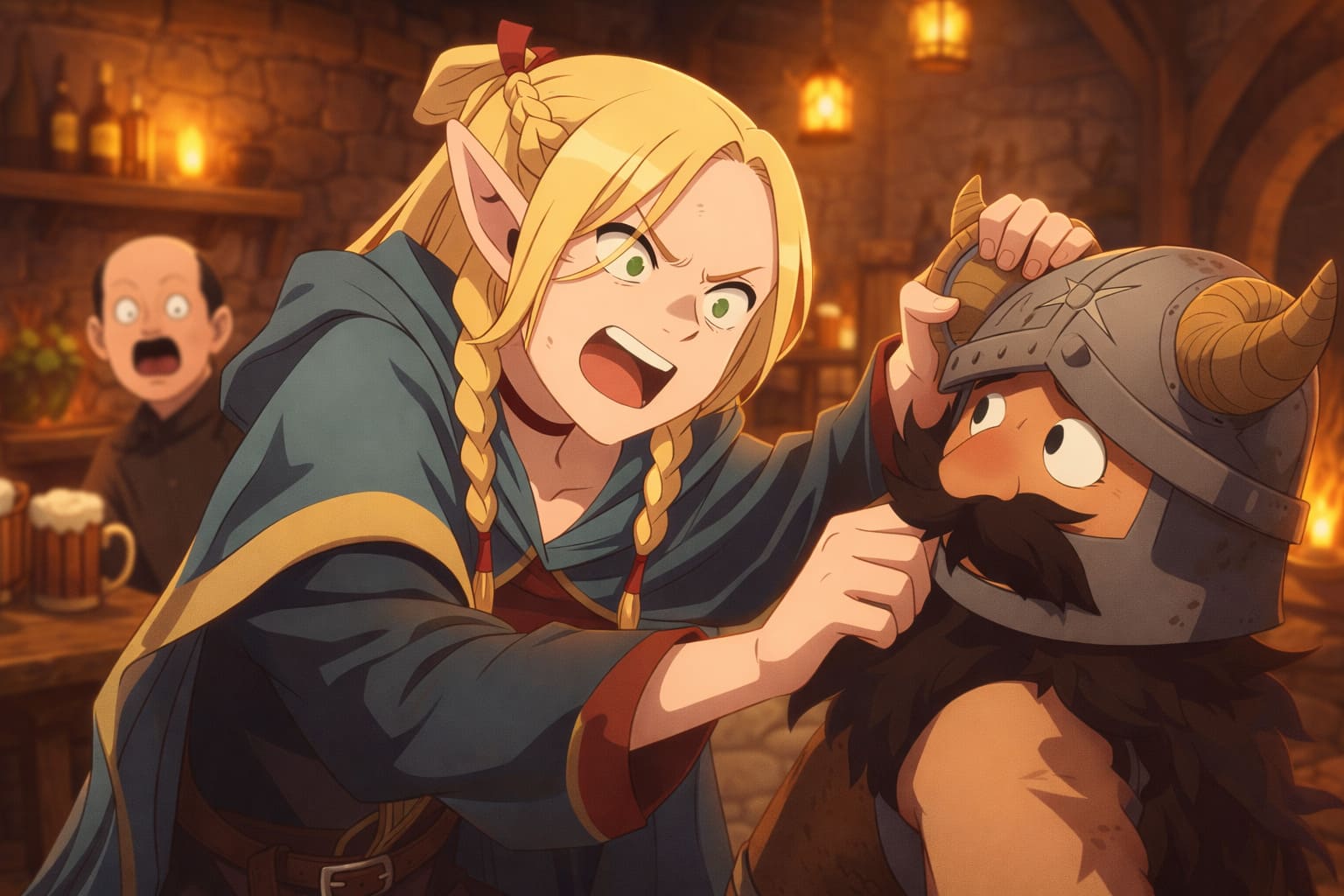
Why hunting monsters makes sense
- Less weight to carry – No giant backpacks full of rations
- Unlimited food source – The dungeon constantly generates monsters
- Faster travel – A lighter party moves quicker and reaches deeper levels faster
This simple change transforms the dungeon from a hostile environment into something closer to a self-sustaining ecosystem.
And honestly, that idea alone is why the anime feels so refreshing.
Senshi: The Dungeon’s Ultimate Survival Expert
If Laios is the monster enthusiast, Senshi is the practical mastermind.
Unlike typical fantasy dwarves obsessed with mining or treasure, Senshi has spent years studying dungeon wildlife and learning how to cook it properly.
His philosophy is simple:
If you’re going to survive here, you need to understand what lives here.
This means learning which monsters are edible, which parts contain nutrients, and how to prepare them safely.
For example, what looks like a terrifying suit of armor turns out to be something completely different.
The Delicious Truth Behind Monster Biology
One of the most fascinating moments in the series comes when the party discovers the truth about Living Armor.
Instead of being a haunted knight or magical construct, the armor is actually inhabited by a colony of mollusk-like creatures.
Once that realization hits, the fight completely changes.
Instead of destroying the armor outright, the party extracts the organisms and cooks them like seafood.
It’s one of those moments where you realize knowledge is more powerful than brute force.
Top 10 Dark Fantasy Anime Like Delicious in Dungeon: Deep World Building You Can’t Miss
Monster → Meal transformation
| Monster | Discovery | Resulting Dish |
|---|---|---|
| Living Armor | Colony of mollusks | Shellfish-style meal |
| Giant Scorpion | High protein meat | Hearty roasted dish |
| Slime | Gel-like body | Used in creative recipes |
| Mandrake | Magical root | Mana-restoring meals |
Nutrition Is the Hidden Key to Combat
Another underrated theme in the show is how much proper nutrition affects adventuring performance.
Too many fantasy stories skip this detail. Characters fight for days without rest, meals, or recovery.
But Delicious in Dungeon treats food like the fuel it actually is.
Balanced monster meals provide energy for combat, recovery after battles, and mana restoration for mages.
This is especially important for Marcille, whose magic relies heavily on maintaining her mana reserves.
In other words, cooking isn’t just survival—it’s combat preparation.
Breaking the “Gross Food” Barrier
One of the funniest ongoing dynamics in the story is Marcille’s reaction to monster cooking.
At first, she absolutely refuses to eat it.
To her, monsters are disgusting, unnatural, and probably unsafe.
But over time, reality wins.
When you’re deep underground with no other options, your perspective changes quickly.
The series cleverly explores how social taboos from the surface world don’t really apply in extreme environments.
Senshi even frames the act of eating monsters as a form of respect.
Instead of wasting the creature’s life, the party uses it fully.
That philosophy gives the meals a surprising sense of gratitude rather than desperation.

Laios and the Food Chain Mentality
What makes Laios such a fascinating protagonist is that he genuinely loves monsters.
Not in a villainous way—more like a wildlife researcher trapped in a fantasy RPG.
For him, eating monsters represents something deeper.
It’s proof that humans can integrate into the dungeon ecosystem rather than simply conquer it.
The ultimate example of this idea comes after the party defeats the Red Dragon.
By cooking and eating the creature that once devoured their companion, the team symbolically reclaims their place at the top of the food chain.
It’s weirdly satisfying in a way that only this anime could pull off.
Why This Concept Makes the Series Stand Out
Many fantasy shows focus on power scaling or epic battles.
But Delicious in Dungeon builds its identity around something far more grounded: survival through understanding the environment.
Instead of asking “How strong is the hero?” the story asks “How well does the hero understand the world they’re in?”
That shift changes everything.
Final Thoughts
What started as a quirky concept—cooking monsters—turns out to be one of the most intelligent survival strategies in fantasy anime.
By combining ecology, cooking, strategy, and humor, the series creates a dungeon adventure that feels surprisingly believable.
And honestly?
After watching a few episodes, you might start thinking the same thing I did: if I were trapped in a dungeon, I’d probably want Senshi cooking too.


