Why Yuri on Ice’s 10th Anniversary Feels Like a Farewell
When the new Yuri on Ice 10th Anniversary visual was revealed, my first reaction wasn’t excitement.
It was heartbreak.
Don’t get me wrong—the artwork is beautiful. Seeing Yuri Katsuki, Victor Nikiforov, and the rest of the cast together again instantly brought back memories of late 2016, when the anime world seemed completely obsessed with figure skating. For a few minutes, it felt like nothing had changed.
Then reality kicked in.
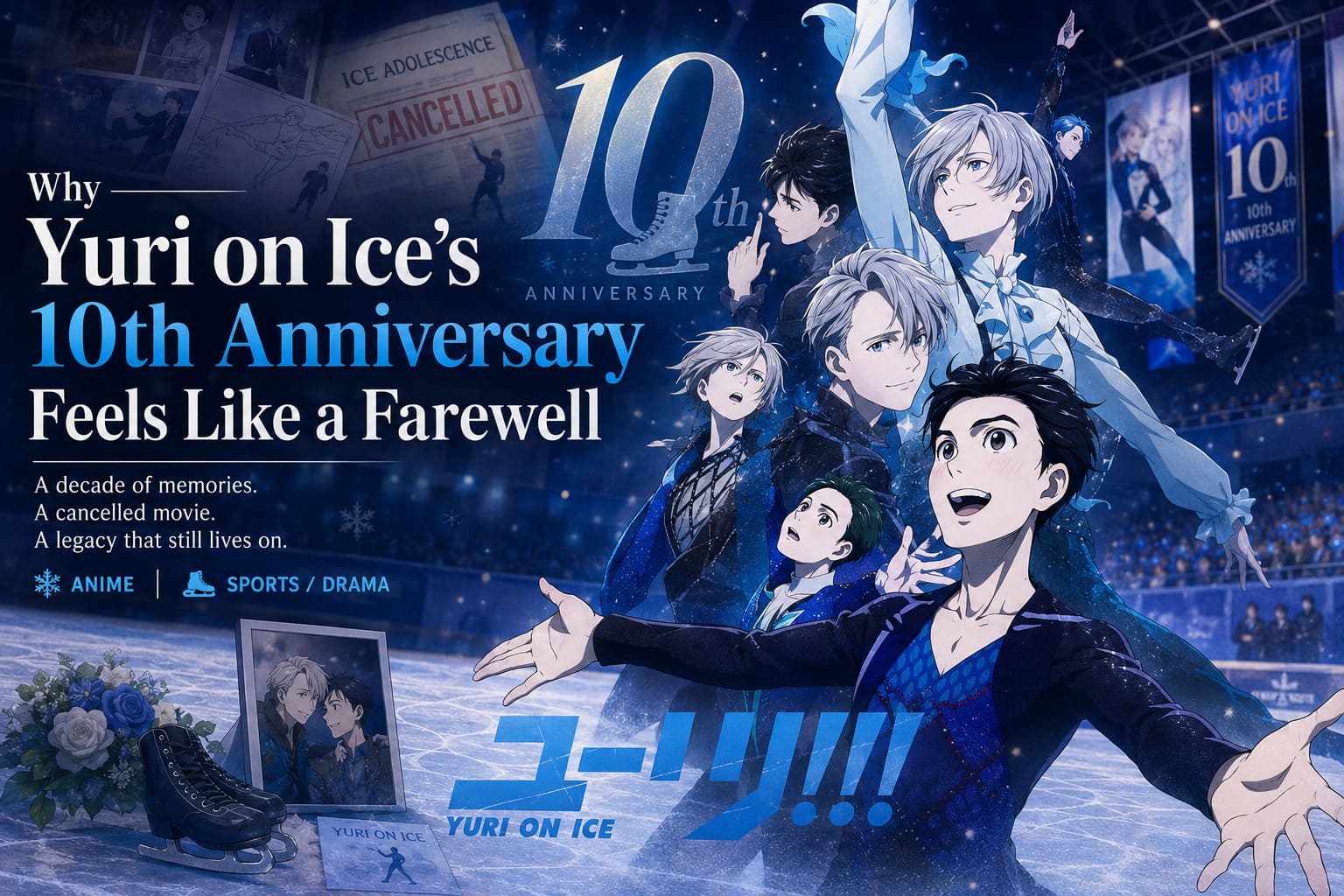
The same franchise that just received a major anniversary campaign, a commemorative Blu-ray release, and a special exhibition is also the franchise that officially buried its long-awaited movie, Ice Adolescence. For many fans, that contradiction is impossible to ignore.
And honestly, I think that’s exactly why this anniversary announcement hit so hard.
Dr. Stone Science Future Finale Review: A Perfect Ending for the Kingdom of Science
A Decade Later, Yuri on Ice Still Matters
There are very few anime that can genuinely claim they changed the industry.
Yuri on Ice did.
Back in 2016, sports anime were already popular, but Yuri on Ice felt different. It wasn’t just about competition. It wasn’t just about winning medals. It was about identity, vulnerability, relationships, and finding confidence in yourself.
The chemistry between Yuri and Victor became one of the most talked-about relationships in anime. The skating performances went viral. Real-world figure skaters referenced the series. Even people who never watched anime suddenly knew what Yuri on Ice was.
That’s why fans waited so patiently for Ice Adolescence.
At first, the delays didn’t seem unusual.
Anime movies get postponed all the time.
Then months became years.
Years became silence.
And eventually silence became cancellation.
The Movie’s Biggest Problem Wasn’t Money
For the longest time, the internet created its own explanation.
The popular theory was simple:
- MAPPA became too busy.
- Bigger franchises arrived.
- Yuri on Ice was pushed aside.
- Resources went elsewhere.
It sounded believable.
After all, MAPPA transformed into one of the industry’s biggest powerhouses thanks to blockbuster properties like Jujutsu Kaisen, Chainsaw Man, Attack on Titan, and Hell’s Paradise.
Black Clover Manga Ending Explained: Why the Finale Feels Like the End of an Era
From the outside, it looked like Yuri on Ice simply lost priority.
But the reality appears much more complicated.
Recent comments from people involved with the project suggest that creative disagreements may have been the real reason production collapsed.
That explanation actually makes sense when you think about it.
Unlike manga adaptations, original anime projects don’t have a roadmap. There is no source material waiting to be adapted. Every story decision depends on the creators sharing the same vision.
If key creative figures stop agreeing on what the project should be, everything stalls.
And once a project stalls for years, momentum disappears.
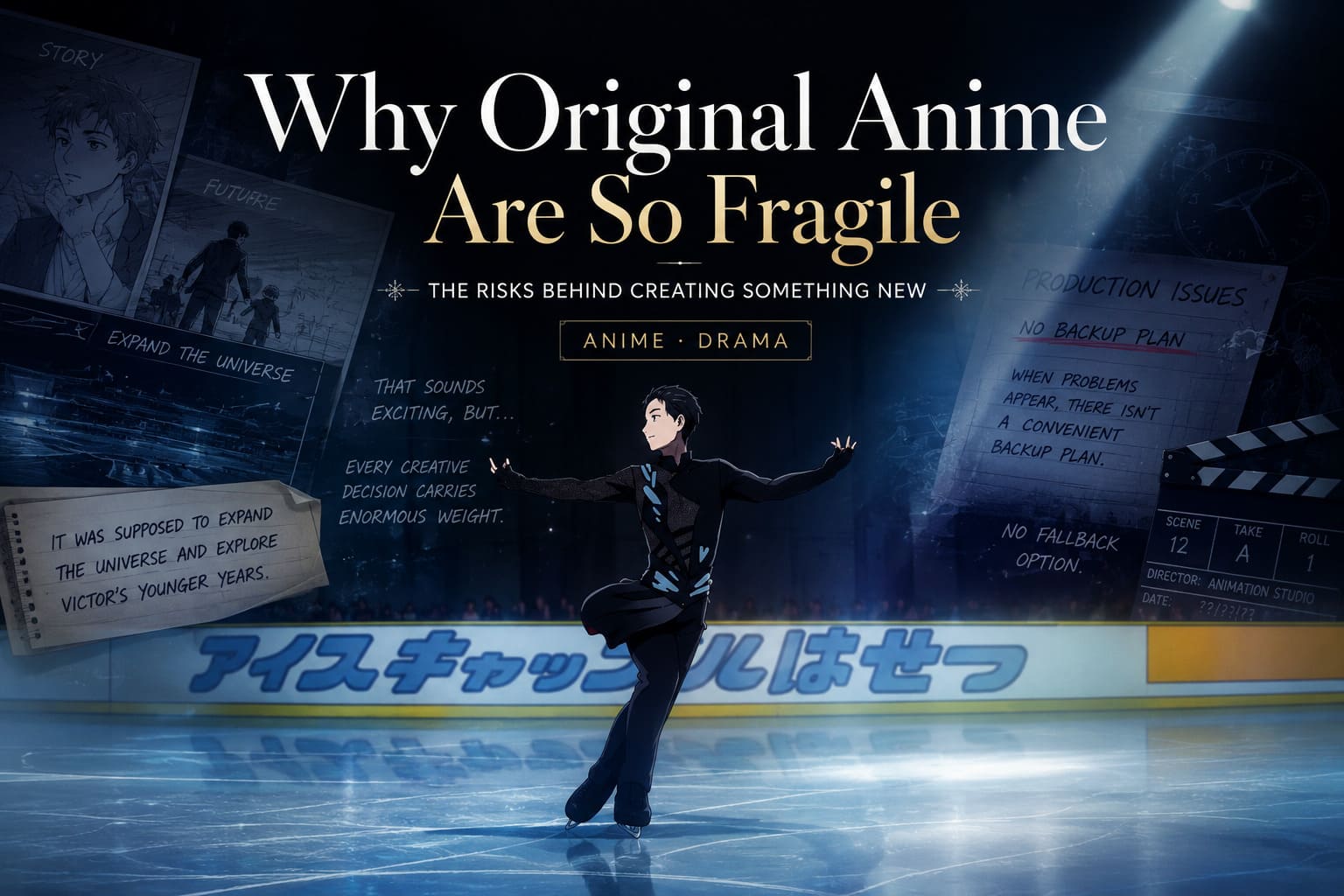
Why Original Anime Are So Fragile
One thing many fans overlook is how risky original anime can be.
| Manga Adaptation | Original Anime |
|---|---|
| Existing storyline | Story created from scratch |
| Clear future direction | Depends on creators’ vision |
| Easier to continue | Harder to recover from disputes |
| Source material remains | No fallback option |
Yuri on Ice belonged entirely to the second category.
The movie wasn’t adapting an existing manga arc.
It was supposed to expand the universe and explore Victor’s younger years.
That sounds exciting, but it also means every creative decision carries enormous weight.
When production problems appear, there isn’t a convenient backup plan.
The Business Side Nobody Likes Talking About
As fans, we often assume successful anime automatically make studios rich.
Unfortunately, that’s not always true.
The anime production committee system can create situations where a series becomes a global phenomenon while the animation studio receives a surprisingly small piece of the profits.
Yuri on Ice exploded worldwide.
- Merchandise sold.
- Blu-rays sold.
- Events sold out.
- The fandom became massive.
Yet industry discussions over the years have repeatedly suggested that the financial structure behind the project wasn’t nearly as beneficial for MAPPA as many people assumed.
If you’re a studio executive looking at years of production delays, creative conflicts, and uncertain returns, the decision becomes easier.
From a business perspective, focusing on projects where you own a larger stake is simply safer.
Fans may hate hearing that.
But it’s the reality of modern anime production.
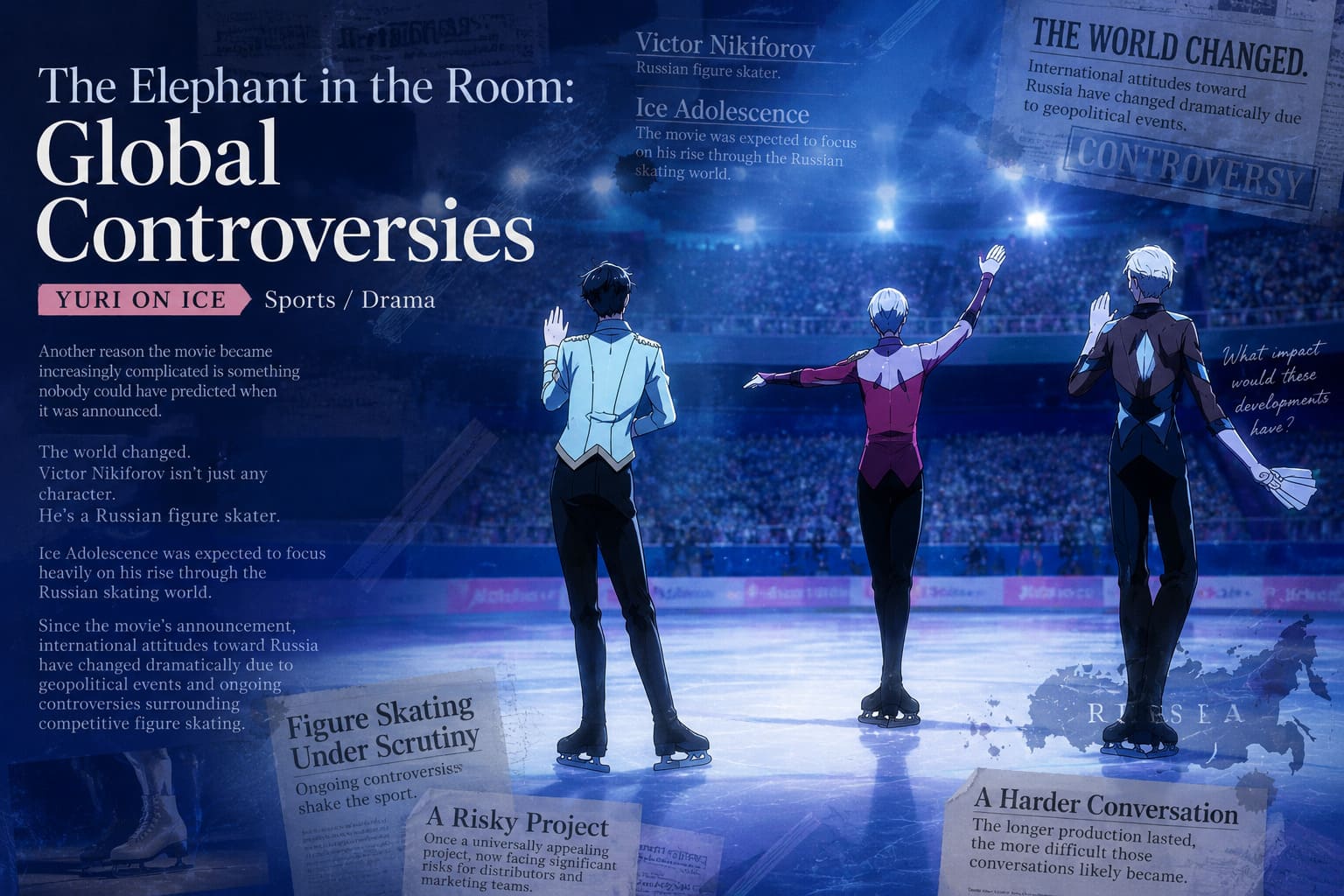
The Elephant in the Room: Global Controversies
Another reason the movie became increasingly complicated is something nobody could have predicted when it was announced.
The world changed.
Victor Nikiforov isn’t just any character.
He’s a Russian figure skater.
Ice Adolescence was expected to focus heavily on his rise through the Russian skating world.
Since the movie’s announcement, international attitudes toward Russia have changed dramatically due to geopolitical events and ongoing controversies surrounding competitive figure skating.
Whether people agree or disagree on the impact, it would be naive to pretend these developments had no effect on a globally marketed film.
A project that once looked universally appealing suddenly carried significant risks for distributors and marketing teams.
The longer production lasted, the more difficult those conversations likely became.
Why the 10th Anniversary Campaign Still Happened
This is the question I see most often online.
“”If the movie is dead, why celebrate the franchise?””
The answer is actually pretty simple.
Because Yuri on Ice is still valuable.
Not as a future anime.
Not as an ongoing series.
But as a legacy brand.
The original anime remains beloved.
Fans still buy merchandise.
Collectors still want premium releases.
Exhibitions still attract attention.
Creating a new anniversary illustration costs infinitely less than producing a theatrical feature film.
One is a relatively low-risk investment.
The other could require years of work and millions of dollars.
From a business standpoint, the anniversary campaign makes perfect sense.
From an emotional standpoint, it feels bittersweet.
A Beautiful Reminder of What We Lost
When I look at the anniversary visual, I don’t just see beloved characters.
I see unrealized potential.
I see a movie that spent nearly a decade trapped in development limbo.
I see one of anime’s most influential original series becoming a cautionary tale about how difficult long-term productions can be.
But I also see something positive.
Even after ten years, people still care.
Fans are still discussing Yuri and Victor.
They’re still sharing clips.
They’re still recommending the series to newcomers.
Very few anime manage to remain culturally relevant for an entire decade.
Yuri on Ice did exactly that.
Maybe Ice Adolescence will forever remain one of anime’s biggest “”what if”” stories.
Maybe we’ll never know what Victor’s full journey was supposed to look like.
But the original series hasn’t lost its magic.
The performances still hit.
The emotions still land.
And the relationship at the heart of the story still resonates with audiences around the world.
In that sense, Yuri on Ice never really disappeared.
The anniversary visual isn’t the beginning of a comeback.
It’s something more complicated.
A celebration, a memorial, and a thank-you letter to fans—all at the same time.
Final Thoughts
For longtime anime fans, the Yuri on Ice 10th Anniversary project is both wonderful and painful. It proves the series remains influential, beloved, and commercially valuable, while also reminding everyone that some stories never receive the ending fans hoped for.
Even without a movie, Yuri on Ice’s legacy remains secure. Few anime have left such a lasting mark on sports anime, LGBTQ+ representation, and anime fandom as a whole.