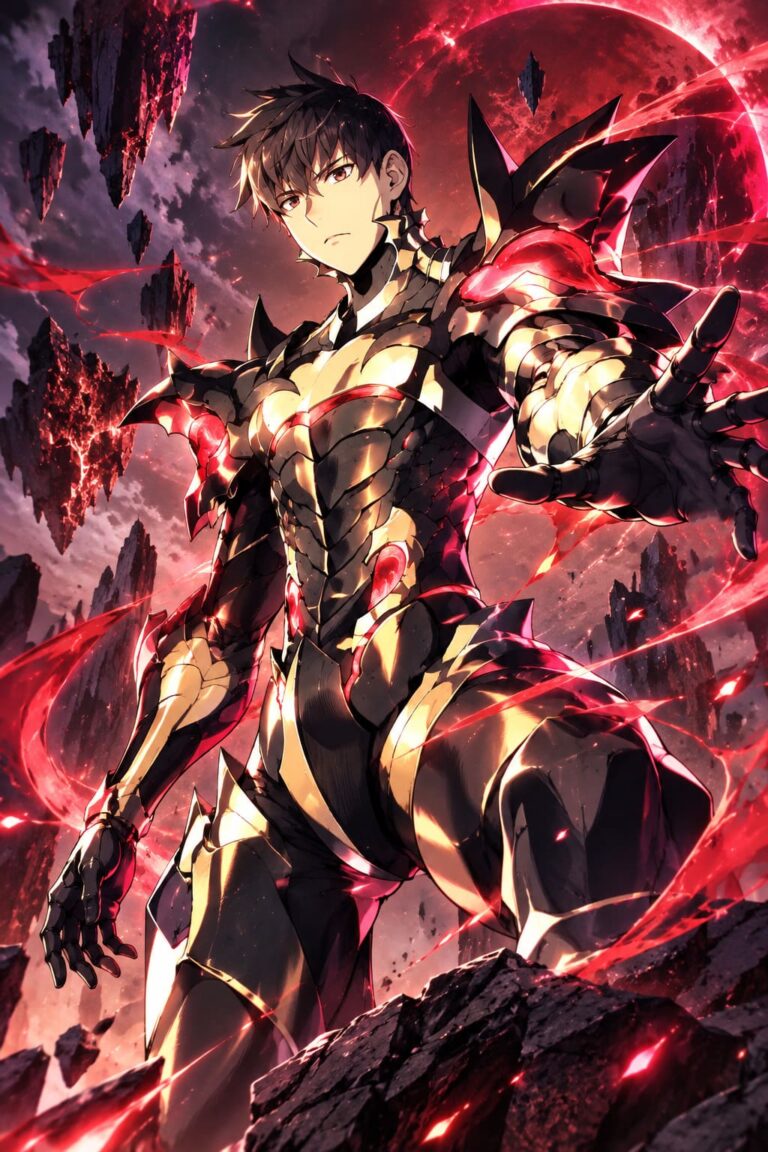
Wistoria: Wand and Sword Part 1 Ending Explained – Will Will Serfort Reach the Tower?
If you’ve just finished Part 1 of Wistoria: Wand and Sword, you’re probably sitting there thinking: “Wait… that wasn’t just a magic school story, was it?”
Yeah—same here.
What started as a pretty familiar underdog setup quietly transforms into something much bigger, darker, and honestly way more interesting. As someone who’s followed a lot of shonen series, I didn’t expect Wistoria to hit this hard by the end of its first major arc—but it absolutely does.
Let’s break it down in a way that actually makes sense (and feels like a real fan talking, not a wiki page).
The Ending Isn’t About Winning—It’s About Revealing the Truth
On the surface, Part 1 wraps up with a classic climax: Will Serfort, the so-called “magicless failure,” proves everyone wrong in a brutal, high-stakes battle.

But that’s not really what makes the ending impactful.
What actually matters is this:
- The world’s power system gets flipped upside down
- The Tower’s “truth” starts cracking
- Will is revealed to be something completely different from everyone else
And that’s where things get interesting.
Wistoria: Wand and Sword – Where to Start the Manga After Season 1?
What Is “Wis”? (And Why It’s More Than Anti-Magic)
At first, it’s easy to compare Will to characters like Asta—no magic, big sword, fights anyway.
But Wis is not just anti-magic. It feels way more ancient and fundamental.
Here’s the simplest way to understand it:
| Concept | Magic (Mana) | Wis |
|---|---|---|
| Source | Internal mana | External absorption |
| Function | Casting spells | Consuming magic |
| Nature | Structured, learned | Instinctive, primal |
| Weakness | Can be disrupted | Hard to counter |
What we see in the finale is Will absorbing magic and converting it into raw destructive force. That glowing white energy isn’t just flashy anime power—it feels almost unnatural, like something that doesn’t belong in the current world system.
And that’s probably the point.
Will Was Never “Broken” — He Was Built Different
One of the most satisfying parts of the ending is how it reframes everything we thought about Will.
He’s not a failure, not a late bloomer, and not someone who just needs to unlock magic.
He’s something else entirely—a vessel.
And once you realize that, a lot of things click into place:
- Why magic never worked for him
- Why his physical abilities are absurd
- Why his power feels incompatible with the world
It also hints that Will might be connected to something older than the current magical system—possibly even predating the Tower itself.

The Tower Isn’t What It Seems
Let’s talk about the biggest twist: the Tower and the Magia Vende.
Up until now, they’ve been portrayed as the strongest mages, protectors of the world, and symbols of ultimate achievement.
But the ending drops a quiet bombshell—they’re not just rulers… they’re maintainers of a lie.
The “False Sky” Reveal
The sky isn’t real.
It’s a magical barrier.
And its purpose is to protect the world from something called the Outer Heavens.
That changes everything.
Suddenly, the Tower isn’t just a goal—it’s a frontline defense system, the Magia Vende aren’t just elites—they’re essentially living batteries, and the world itself feels fragile, like it’s one crack away from collapse.
Elfaria’s Role Hits Harder Than Expected
Elfaria could’ve easily been just “the motivation character”—the friend Will wants to reunite with.
But the ending gives her a lot more weight.
She’s the youngest among the strongest mages, burdened with maintaining the system, and emotionally distant not by choice, but by responsibility.
And honestly, that makes her situation kind of tragic.
While Will is fighting to reach her, she’s stuck at the top, holding up a world that might not even deserve saving.
Why Will Might Be the Only One Who Can Save the World
Here’s where the story gets really clever.
If the invaders from the Outer Heavens can manipulate or suppress mana, then every mage is at a disadvantage.
Except Will.
Because he doesn’t rely on mana, his power feeds on magic instead of using it, and his fighting style is physical, grounded, and unpredictable.
That makes him something the world desperately needs—a counter-system weapon.
The Real Conflict Going Forward
Part 1 doesn’t end with a clear villain—and that’s a good thing.
Instead, it sets up multiple layers of conflict:
- External threat: The Outer Heavens
- Internal conflict: The Tower’s hidden truth
- Social tension: A “magicless” boy threatening the hierarchy
And honestly, the political angle might end up being just as important as the battles.
Because if Will reaches the top, the entire system collapses.
Why This Ending Works So Well
As a fan, what made this ending hit differently is how it earns its twist.
It doesn’t just throw in a surprise—it builds toward it.
The bullying at the academy now feels intentional, the obsession with magic starts to look suspicious, and the Tower’s prestige begins to feel artificial.
And then suddenly, everything clicks.
What to Expect in Part 2
If Part 1 was the “academy arc,” then Part 2 is shaping up to be something much bigger.
Expect climbing the Tower, more focus on the Magia Vende, deeper lore about Wis and ancient history, and direct confrontation with the world’s true enemies.
And most importantly—Will stepping into a role that’s way beyond “student.”
Final Thoughts
Wistoria: Wand and Sword could’ve easily stayed a simple underdog story.
Instead, it evolves into something closer to a system critique, a hidden-world mystery, and a slow-burn apocalypse setup.
And Will isn’t just trying to reach the Tower anymore.
He might be the one who breaks it.